


On this page 8 sections
Your guide
What you'll learn
The fitness landscape is ever-evolving, with new exercises and training methods being introduced regularly. But some exercises, despite their vast benefits, remain under the radar. The Copenhagen Plank has been a best kept secret in the athletic world and it emerges as a standout exercise, particularly for athletes and individuals focused on improving core strength and hip stability. If you haven't yet incorporated Copenhagen Planks into your routine, here's why you should consider doing so.
What is the Copenhagen Plank?
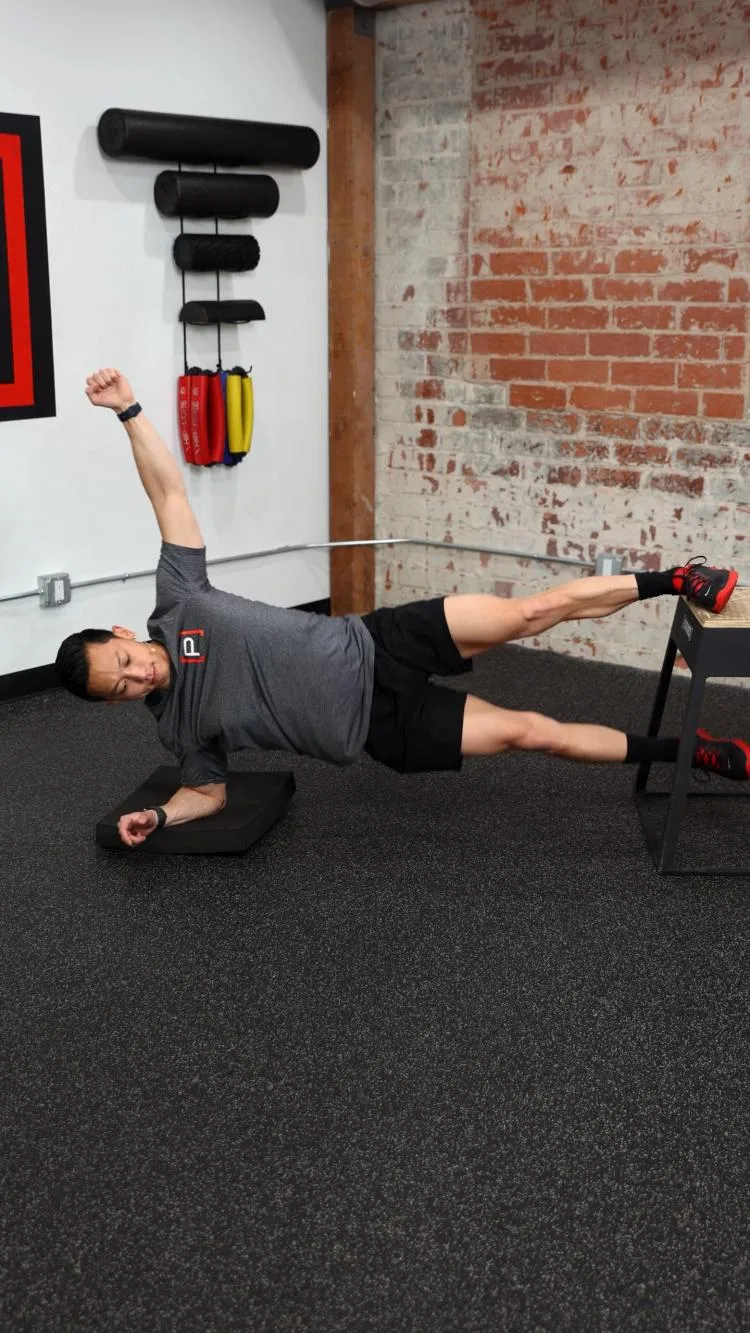
Before diving into the benefits, let's first clarify what a Copenhagen Plank is. Named after the FC Copenhagen soccer team, where it was popularized, this exercise targets the adductor muscles located on the inside of your thighs. To perform a Copenhagen Plank, you'll need a bench or a raised platform. Place one leg on the platform with the inside of your ankle and foot resting on it. The other leg remains beneath the bench, straight and touching the ground. With your upper body supported by your elbow, maintain a straight line from your head to your feet, similar to a traditional side plank. Hold the position for a set duration, then switch sides.
Exercise 01 of 05
Exercise demonstration
Copenhagen Plank
View exercise instructions
- HOW: Using some sort of elevates surface like a box or bench, place the side you want to target on the box. Place the inside part of your ankle on this surface, use something soft for padding if you like. Lift your hips in the arm by driving the inside part of your ankle downward into the box. After lifting your hips up, lower yourself back down to the floor.
- FEEL: You should feel all the muscles on the inside part of your thigh working, in particular, your groin region. You will also feel your core and shoulder muscles working. If you feel the inside part of your knee hurting with this exercise, put your knee on the elevated surface instead of your ankle.
- COMPENSATION: Keep your hips stacked on top of each other, do not rotate them forward or back. Put your elbow directly below your shoulder.
The primary benefit of the Copenhagen Plank is the strengthening of the adductor muscles. These muscles often don't get the attention they deserve in conventional workout routines. By working on these inner thigh muscles, you can expect improved overall leg strength and fewer imbalances.
 Several adductor muscles help to make up the groin muscle group
Here are lesser-known reasons why you should do Copenhagen Planks:
The Copenhagen Plank - A Prehab Powerhouse
The Copenhagen Plank excels in prehab by strengthening the often neglected adductors, or groin muscles. These muscles, when undertrained, are prone to strains and pulls, especially during high-intensity activities. Regularly practicing this exercise acts as a safeguard, preparing your body for rigorous physical challenges.
The addition of a Copenhagen Plank is an important part of the rehab process for individuals dealing with adductor strains and tendinopathies, and is a staple of any prehab or injury prevention program (psst take a peek at our groin programs below for more).
The adductors also play a pivotal role in our everyday movements. In each step we take, every time we stand from a seated position, or even when we balance on one foot, the adductors are at work.
Dealing with a groin strain? Be sure to check out this YouTube video to get an idea of some stretches and resistance exercises to try!
Strengthening them with the Copenhagen Plank ensures efficient movement patterns, reduces the strain on surrounding muscle groups, and aids in tasks we often take for granted. In addition, strong adductors contribute to hip stability. Given the hip's role in connecting the upper and lower body, its stability greatly affects overall movement and health. Strengthening the adductors with the Copenhagen Plank ensures that the hip joint remains stable, reducing the risk of related injuries.
Copenhagen Planks & Athletic Performance
Athletes understand the importance of every muscle group playing its part cohesively. The adductors are crucial for stabilizing movements such as a squat, changing directions quickly, and ensuring fluidity in actions. Whether you're a soccer player making a sudden dash, a basketball player pivoting, or a runner wanting to improve stride efficiency, the adductors come into play.

Incorporating the Copenhagen Plank into your routine can be a game-changer. A stronger adductor group translates to improved performance, stability, and agility on the field or court. And for those thinking: "But I'm not an athlete!", remember that life is unpredictable, and whether it's a spontaneous sprint to catch a bus or playing with your kids in the park, athletic movements pop up in our day-to-day lives.
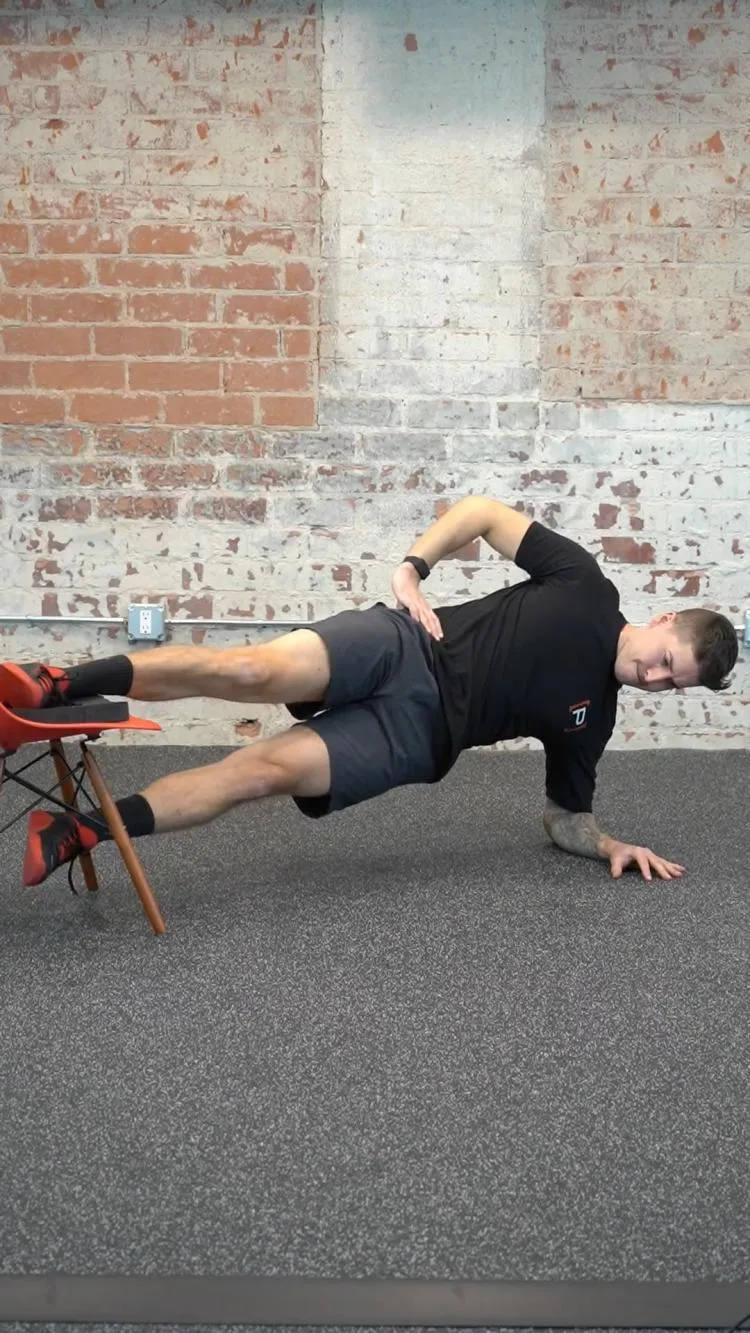
Try a Copenhagen variation such as the one seen below! Adding in a bit more speed helps to train our groin muscles for those quicker movements that it needs to have strength for!
Exercise 02 of 05
Exercise demonstration
Copenhagen Plank - Quick
View exercise instructions
- HOW: Use a stable surface or chair with a pad placed on top of it. Position your body side lying and put one leg on top of the pad on the chair or raised surface. The inside part ankle/lower leg should be comfortably on the pad. Place your bottom forearm on the ground under your shoulder. Push into the ground with the inside of your foot to help lift your hips off of the ground. Then quickly lower yourself down into the starting position.
- FEEL: You should feel your inner thigh muscles working in your leg, shoulder and core muscles working while in the plank position.
- COMPENSATION: Don’t use the bottom leg, keep that leg straight.
Copenhagen Planks & Posture
A lesser-known fact is that the adductors, when strong and well-trained, contribute significantly to maintaining good posture. Given the sedentary lifestyles many lead today thanks to long hours at a desk in one position or excessive screen time, posture-related issues are rampant.
READ: THE BEST POSTURE EXERCISES

The Copenhagen Plank's focus on the adductors aids in movement of the pelvis which affects the positioning of the spine. A healthy, strong, and moving spine is the cornerstone of good posture, reducing the risk of backaches, neck strains, and other musculoskeletal issues.
Copenhagen Planks & Improved Core Strength
While the emphasis is on the adductors, Copenhagen Planks also engage the core muscles significantly. The obliques, rectus abdominis, and transversus abdominis all fire up to stabilize the body during the exercise. Over time, this can lead to improved core strength, which is vital for almost every physical activity and even daily tasks.

Easier to Modify Than You Think
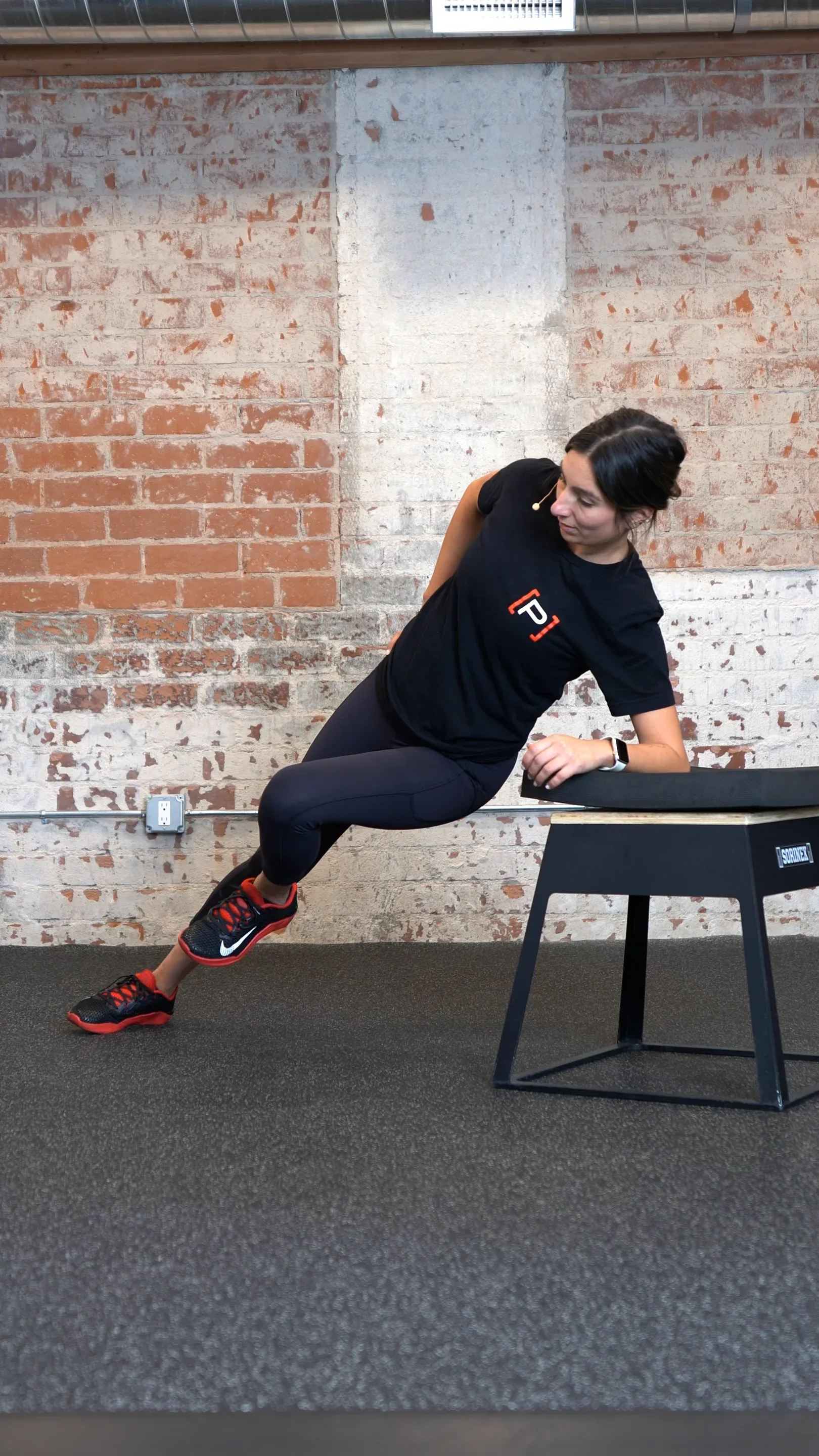
One of the standout features of the Copenhagen Plank is its adaptability. Beginners can start with shorter durations or even partial elevations, or having your upper body elevated as seen below!
Exercise 03 of 05
Exercise demonstration
Incline Adductor Side Plank
View exercise instructions
- HOW: Set up an elevated surface that you will lean onto. The lower the surface the more challenging the plank will be. Place your elbow on the surface and make sure your feet, hips, and shoulders are in line with each other. Lift your bottom leg off of the ground, hold the plank position with your top leg and core muscles.
- FEEL: You should feel your inner thigh muscles on the top leg and core working.
- COMPENSATION: Don’t let your hips drop, keep everything in line with each other.
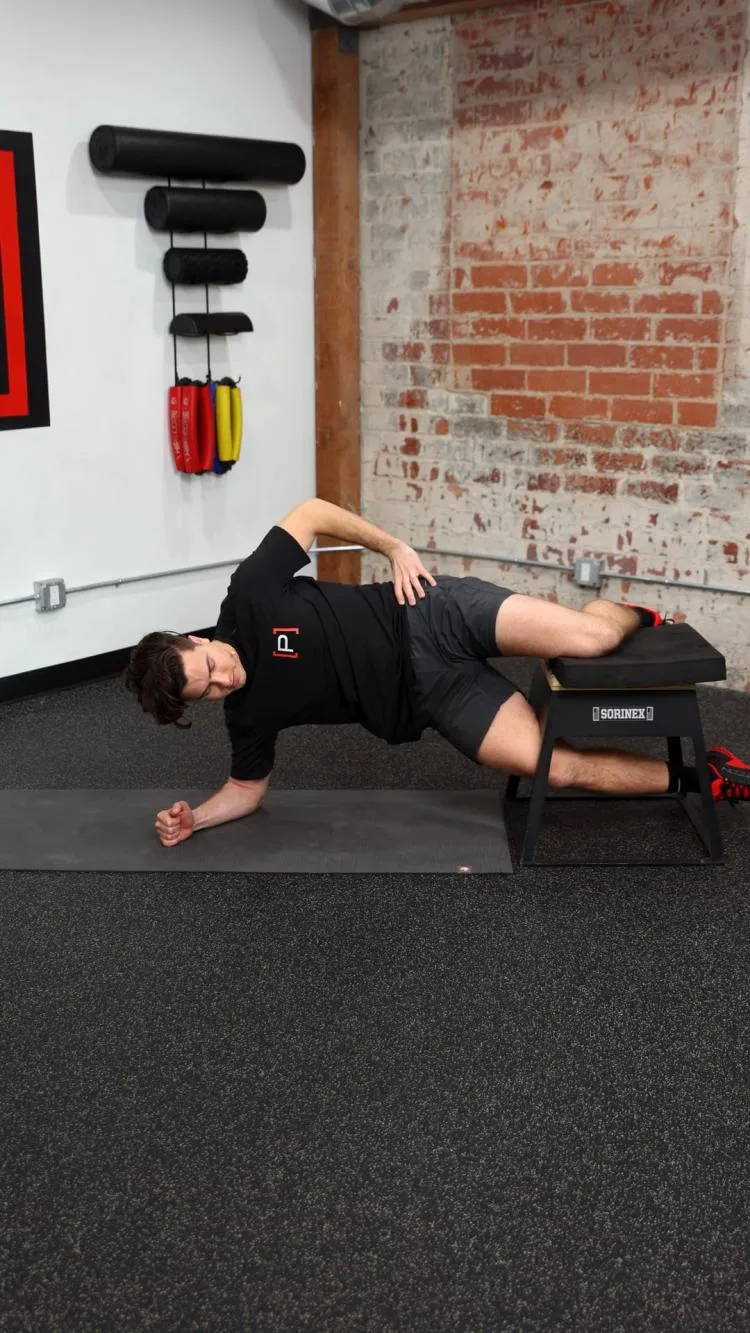
As strength and endurance build, elevations can be increased, and hold times extended. Beginners can also start with a bent knee position, which decreases lateral strain on the knee. Once the adductors adapt to the bent knee position, you can transition to the straight leg version. The ability to modify ensures that the exercise grows with you, continuously challenging and benefiting you at every fitness level.
Exercise 04 of 05
Exercise demonstration
Copenhagen Plank - On Knees
View exercise instructions
- HOW: Using some sort of elevated surface like a box or bench, place the side you want to target on the box. Place the inside part of your knee on this surface, use something soft for padding if you'd like. Lift your hips in the air by driving the inside part of your knee downward into the box. After lifting your hips up, lower yourself back down to the floor slowly and repeat.
- FEEL: You should feel all the muscles on the inside part of your thigh working, in particular, your groin region. You will also feel your core and shoulder muscles working.
- COMPENSATION: Keep your hips stacked on top of each other, do not rotate them forward or back. Put your elbow directly below your shoulder.
Minimal Equipment Required
In an age where elaborate gym setups are sold as being necessary for an effective workout, the Copenhagen plank is refreshingly minimalistic. All you need is a sturdy elevated surface, which could be a bench, chair, or box. This simplicity means it's an exercise you can integrate anywhere: at home, in the park, or during a hotel stay. The lack of required equipment ensures that your workout regimen remains uninterrupted.
Exercise 05 of 05
Exercise demonstration
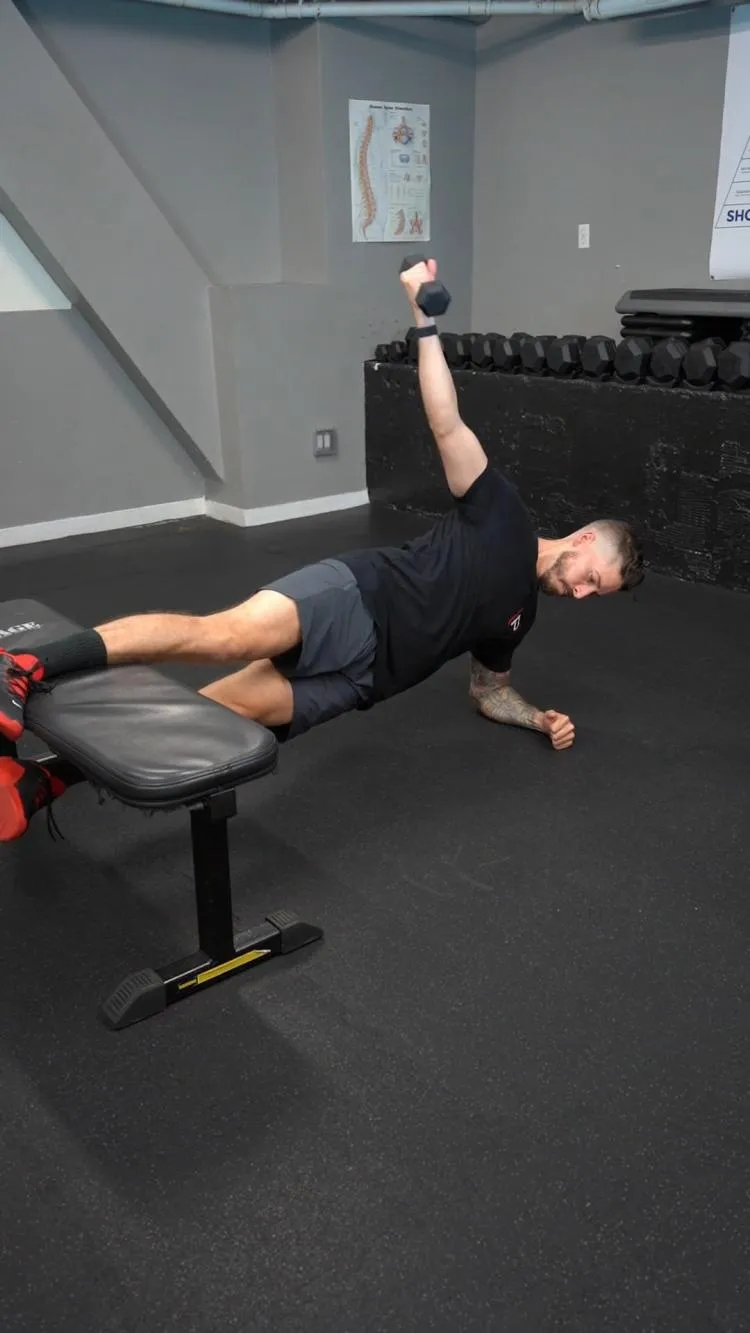
Copenhagen T - Dumbbell
View exercise instructions
- HOW: Begin on your side with one foot on top of a bench and the other below the bench on the ground. Keep your knees straight, and your elbow on the ground underneath your shoulder. Hold a dumbbell in the other hand out in the front at chest level. From here, lift your hips into the air with your leg pushing into the bench creating a side plank position. With your thumb up and elbow straight, lift the dumbbell up until you get to be straight up from your shoulder.
- FEEL: You should feel your shoulder and core muscles working.
- COMPENSATION: Keep your hips off the ground in the plank position. Keep your thumb up as you bring the dumbbell up.
Why You Should Do Copenhagen Planks - Closing Thoughts
- The Copenhagen Plank strengthens the adductor muscles which leads to improved overall leg strength, and increased hip stability, and can help with posture - the addition of them to your program can help with preventing groin injuries!
- The adductors are crucial for athletic performance since they aid in stabilizing movements, changing directions quickly, and ensuring fluidity in actions.
- Copenhagen planks also serve as a great core exercise and are easy to modify or progress for beginners or advanced trainees.
- Copenhagen planks require minimal equipment making it an easy exercise to add to your routine.
LEARN MORE ABOUT OUR GROIN REHAB PROGRAM
About The Author
Ryan Nosak, MS, CSCS
Prehab Writer & Content Creator
 Ryan was born and raised in Throop, Pennsylvania and he has worked in the world of fitness since he was 15 years old. Ryan realized he had a deep affinity for strength training and how it can alter the human mind, body, and spirit. He began his coaching career in high school by coaching his friends through strength training sessions, which inspired him to pursue a career in strength and conditioning.
Ryan spent 10 years as a Division 1 strength and conditioning coach with stops along the way at Penn State, Tennessee State, Vanderbilt, Robert Morris, Charlotte, and DePaul. He is a Certified Strength and Conditioning Specialist and operates his own training practice, RyNo Strength, out of Studio DelCorpo in Chicago, IL. He specializes in fat loss, body composition, strength, and sports performance training programs.
Ryan received his Bachelor’s Degree in Kinesiology from Penn State and a Master’s in Sport Management from Western Carolina University. In his free time, Ryan enjoys training for bodybuilding, eating at amazing restaurants in Chicago, and spending time with his wife, daughter, and dog.