


On this page 9 sections
Your guide
What you'll learn
There is a problem with ACL Rehab. If you tore your ACL, were you told that surgery was your only option? Were you told that after having surgery to address a torn ACL your risk of re-tear is twice as high as the population at large? Were you told that returning to sport within a year after surgery significantly increases your risk of re-tear? Did a physical therapist ever explain to you the importance of regaining quad strength and using that to dictate your return to activities like running, jumping, and playing sports, rather than just time alone? Did anyone tell you that your chances of developing osteoarthritis increase substantially after an ACL tear, whether you have surgery or not? If your answer to any of the above questions was no, then the current system is doing you a disservice. This article will take a look at what is missing in our current model for ACL rehab programs and how technology can help you safely return to sport and protect the long-term health of your knee.
Is something Missing in ACL Rehab?
Yes. In fact, many things are missing. First, some numbers:
- Up to 30% of young active patients who have ACL surgery suffer a second ACL rupture in the first few years after surgery.
- After ACL surgery, females are 5x more likely to either re-tear or tear their other ACL.
- Within 5 years of an ACL injury, up to 50% of patients had an injury to their meniscus.
- This leads to a higher prevalence of developing osteoarthritis and increases the need for an early knee replacement.
Simply put, we NEED to do better!
ACL Anatomy
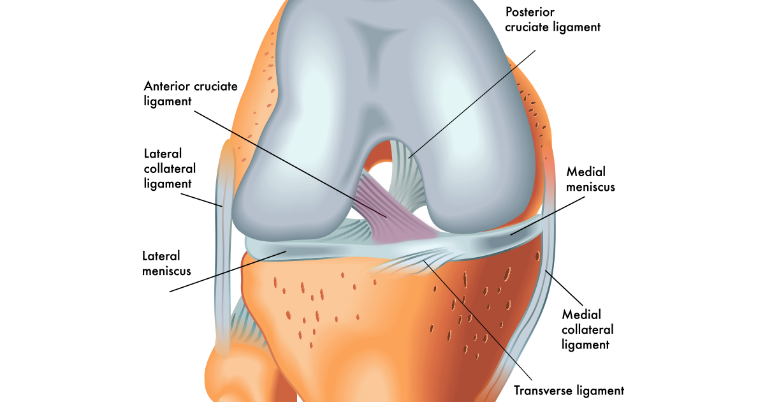 Image courtesy of FixKnee
Before I go any further, I want to make one note. Throughout this article, you will hear me reference the importance of knowing your quad strength. A couple of ways to measure your quad strength indirectly that you can do on your own is a single-leg squat test or indirect strength testing!
PREPARE FOR ACL SURGERY WITH OUR ACL SURGERY PREHAB PROGRAM

Our 8-week ACL Surgery Prehab program is for you! This is a Doctor of Physical Therapy designed program, that will take you step-by-step through progressive phases of exercises, mobility and education to help you feel prepared for your upcoming surgery. Get started today!
So What is Missing in ACL Rehab Programs?
Recent advances in ACL research have brought to light the need for a 12 month guided rehab progression and unfortunately, our current model of insurance-based visits simply hasn't caught up. Some patients are wisely advised that they should not return to playing sports within a year of their surgery. Unfortunately, our insurance-based model has failed to keep up with this burgeoning research, and most patients are forced to stop physical therapy after about 4 months. This leaves many patients guessing as to when and how much they should run, how to incorporate plyometrics, and how to safely progress back to sport.
As most patients have this surgery to allow them to return to these high level activities, they miss guidance through ACL rehab during the portion that is most important to them! When it comes to returning to sport and fitness and protecting the long term health of their knee, nobody should have to guess!
Knee Extensions: Safe and Functional?
Watch this youtube video as Mike breaks down the truth behind knee extension exercises not only for ACL rehab but for other knee-related injuries!
Why do we need to wait so long?
While a year may seem like a long time, we need to remember what an ACL Reconstruction is. A surgeon is taking a portion of a tendon, usually from your hamstring or patella, and replacing your Anterior Cruciate Ligament (ACL) with it. Want to learn more about ACL grafts? Read this article!
- Tendons connect muscle to bone
- Ligaments connect bone to bone
Tendons and ligaments have different properties. Fortunately, we aren't relying on the tendon graft itself to immediately hold up as a functioning ACL. A successful ACL reconstruction relies on your body's ability to incorporate the tendon graft into your knee and change the properties of that tendon into those of a ligament. Nobody spent a lot of time trying to come up with a cool name for this and it is simply called the ligamentization of the graft. It requires two things:
- Time
- Gradual exposure to load
READ: WHAT TO KNOW ABOUT ACL REHAB

In fact, this process is so critical that researchers found that for every additional month a patient waited to return to sport after surgery, all the way up to 9 months, the reinjury rate was reduced by 51%!
- This means that if you are itching to play soccer 8 months after your surgery, you can decrease your chance of re-tearing your ACL simply by waiting another month!
While the numbers might not be quite as staggering, many of these researchers still recommend waiting until a full year after surgery to return to playing sports for young athletes and weekend warriors.
What can I do to get ready?
The most important thing you can do during your rehabilitation is build up as much quadriceps strength as you possibly can.
Unfortunately, this basic principle is often sped through for more exciting, "functional" exercises. Tearing your ACL leads to a cascade of biological events that decrease both your quadriceps strength and your nervous system's ability to use your quadriceps! A similar cascade takes place after surgical intervention. This means that you need to spend months isolating and directly building your quadriceps after surgery. Read this article to learn how you can stay strong after surgery! Remember that other muscles (and your other leg) can compensate for your quadriceps during functional exercises. For example, if you are squatting without altering the exercise to focus on your surgical quadriceps or first establishing a foundation of quad strength: you are literally training yourself not to use your quad!
If this sounds simple, recognize that:
- 2 years after surgery only ~60% of patients had quadriceps strength within 90% of their nonsurgical leg.
- Every 1% increase in quadriceps strength (compared to the nonsurgical leg) leads to a 3% reduction in re-injury rate.
Listen: Is It Safe To Use the Knee Extension Machine to Train your Quads?

- Not easy to get back
- Not everyone does get it back
- Is a major contributor to the high rates of re-injury after ACL surgery.
Gradual Progression For ACL Rehab Programs
Another factor that is critical for success is following a step-wise progression that gradually exposes your knee to increasing loads. Our bodies are smart and adapt to the load they are placed under. The process of ligamentization actually would not occur in full if there was no stress placed on the graft.
The "Goldilocks Principle" applies here! You want enough load that you are stressing the knee to induce a response, but not so much load that you are overstressing your joint and ligament and delaying healing.
The entire ACL rehab process is unique to each person and beyond the scope of this article but generally, it should include:
- Establishing symmetrical strength and range of motion
- Progression to increased weight-bearing activities
- A Walk/run progression
- Incorporation of plyometrics
- A gradual introduction of sport-specific activities
- Inclusion of reactive activities
Throughout this process, your swelling and soreness should be monitored as this is the best way to tell if you are ready for the stage of rehab you are doing! An increase in swelling and soreness means you are doing more than your knee is ready for and need to take a step back!
How will I know I am ready?
"The future is already here, it's just not very evenly distributed" - William Gibson.
Despite all of the statistics I've thrown out above, if you are struggling with ACL rehab, there is hope! Proper and full rehabilitation, culminating in a battery of tests to determine readiness for return to sport has shown to reduce re-injury rates by 84%! You can return to sport after ACL surgery and you can do so with full confidence in your operative leg but it takes a few things:
- Time
- Patience
- Consistency
- Hard work
Return To Sport Testing
Prior to return to sport, you want to have symmetry of >90% when comparing your surgical leg to your nonsurgical leg for the following tests:
- Quad strength - this is most easily done by comparing 1 rep max on a knee extension machine
- Single Leg Hop for Distance
- Crossover Hop for Distance
- Triple Hop for Distance
- 6 meter timed hop test
When in doubt, strengthen your quads!
- Every 1 percentage point increase in strength symmetry decreased reinjury rate by 3%. You can read more on return to sport testing after ACL Reconstruction HERE!
Closing thoughts
- The current model of ACL rehab is insufficient to address the needs of this population.
- Patients are given just 4-6 months of physical therapy for 12 month ACL rehab programs.
- We know this model isn't working:
- 30% of young active patients suffer a second ACL rupture.
- Up to 50% of patients suffer a meniscus injury within 5 years
- There are options to improve these statistics:
- Proper rehabilitation and testing is shown to reduce re-injury rates by 84%!
- The rise of the internet and technology offers patients the ability to access digital programming and ACL rehab specialists from anywhere in the world for as long as they need to complete their rehab journey.
PREPARE FOR ACL SURGERY WITH OUR ACL SURGERY PREHAB PROGRAM
Our 8-week ACL Surgery Prehab program is for you! This is a Doctor of Physical Therapy designed program, that will take you step-by-step through progressive phases of exercises, mobility and education to help you feel prepared for your upcoming surgery. Get started today!
References
- Paterno MV, Rauh MJ, Schmitt LC, Ford KR, Hewett TE. Incidence of Second ACL Injuries 2 Years After Primary ACL Reconstruction and Return to Sport. Am J Sports Med. 2014;42(7):1567-1573. doi:10.1177/0363546514530088
- Grindem, Hege PT, PhD1; Eitzen, Ingrid PT, PhD2; Engebretsen, Lars MD, PhD3; Snyder-Mackler, Lynn PT, ScD, SCS, ATC, FAPTA4; Risberg, May Arna PT, PhD1 Nonsurgical or Surgical Treatment of ACL Injuries: Knee Function, Sports Participation, and Knee Reinjury, The Journal of Bone and Joint Surgery: August 6, 2014 - Volume 96 - Issue 15 - p 1233-1241 doi: 10.2106/JBJS.M.01054
- Øiestad BE, Engebretsen L, Storheim K, Risberg MA. Winner of the 2008 Systematic Review Competition: Knee Osteoarthritis after Anterior Cruciate Ligament Injury. The American Journal of Sports Medicine. 2009;37(7):1434-1443. doi:10.1177/0363546509338827
- Claes S, Verdonk P, Forsyth R, Bellemans J. The "ligamentization" process in anterior cruciate ligament reconstruction: what happens to the human graft? A systematic review of the literature. Am J Sports Med. 2011;39(11):2476-2483. doi:10.1177/0363546511402662
- Grindem H, Snyder-Mackler L, Moksnes H, Engebretsen L, Risberg MA. Simple decision rules can reduce reinjury risk by 84% after ACL reconstruction: the Delaware-Oslo ACL cohort study. Br J Sports Med. 2016;50(13):804-808. doi:10.1136/bjsports-2016-096031
About The Author
Tommy Mandala, PT, DPT, SCS, OCS, CSCS
Prehab Writer & Content Creator

Tommy Mandala is a Doctor of Physical Therapy, Board Certified Clinical Specialist in Sports & Orthopedics, and Certified Strength and Conditioning Specialist in New York City. He is the founder of ALL IN ACL, a digital coaching platform dedicated exclusively to helping ACLers return to the life they had before their injury with full confidence in their knee. Prior to that, he worked in the sports clinic at Hospital for Special Surgery, the #1 Orthopedic Hospital in the country. While there, he had the opportunity to hone his skills as an ACL specialist working closely with world renowned surgeons and evaluating patients from all over the world. He completed his sports residency training at the University of Delaware where he had opportunities to work with many of their Division I sports teams as well as the Philadelphia 76’ers NBA G-league affiliate, the Delaware Blue Coats. He also trained at Champion Sports Medicine in Birmingham, Alabama where he had the opportunity to learn from researchers in the American Sports Medicine Institute. Currently, Tommy works exclusively with ACLers through his digital coaching model. While many of these clients are athletes, Tommy works with ACLers of all different abilities helping them to build the strength they need to overcome this unique injury. One of his favorite aspects of his job is taking active clients who have never been a “gym person” before and showing them the amazing things that happen when they learn to strength train.
Instagram: @All_In_ACL