

On this page 6 sections
Your guide
What you'll learn
A deep squat is one of the most functional and foundational movements we can do. It’s not just about strength; it’s about mobility, balance, and control. And if you’re struggling to hit proper squat depth or find your heels popping off the ground, your ankle mobility may be the culprit.
The ankles play a pivotal role in squatting. They allow your knees to move forward while keeping your heels grounded and your body balanced. But when your ankles are stiff or lack mobility, your entire squat pattern suffers. In this article, we’ll dive into why ankle mobility is crucial for squatting, how to assess your own mobility, and which exercises can help unlock your deep squat with ankle mobility.
Why Do Ankles Affect Squat Mobility?
The ankle joint is a hinge joint that allows dorsiflexion, which is bringing the top of your foot toward your shin and plantarflexion, which is pointing your toes down. During a squat, dorsiflexion is the key movement that allows your knees to move forward, maintaining balance, and helping you achieve proper depth.
When your ankles are stiff or restricted, your body is forced to compensate. Common compensations include:
- Leaning your torso forward to shift weight away from your ankles
- Lifting your heels off the ground
- Flaring your knees out excessively or excessive collapsing of the knees inward
The Secret To Deep Squats: Unlock Your Tibia & Ankle Mobility

These compensations can lead to poor movement patterns and reduced performance making it extremely difficult to achieve a deep squat.
Why Do Ankles Get Stiff in the First Place?
Stiff ankles are a common problem, and they don’t just happen overnight. Here are some reasons your ankle mobility might be limited:
- Prolonged Sitting: Many of us spend most of the day seated, which reduces active use of the ankles and calves. Over time, this inactivity can lead to stiffness.
- Previous Injuries: Sprains, fractures, or other ankle injuries can cause joint stiffness, scar tissue, or fear of movement, all of which limit mobility.
- Tight Calves and Achilles Tendons: The muscles and tendons surrounding the ankle often become tight, restricting dorsiflexion.
- Poor Footwear: Shoes with elevated heels or poor support (like high heels or rigid dress shoes) can negatively impact ankle mobility over time if we are spending a significant amount of time in these types of footwear
The Importance of An Ankle Mobility Assessment
Before jumping into exercises, it’s crucial to assess your current mobility. Why? Because an assessment can pinpoint whether ankle stiffness is holding you back and gives you a baseline to measure progress.
Here’s how to assess your ankle mobility:
Exercise 01 of 04
Exercise demonstration
Knee To Wall Ankle Dorsiflexion Assessment
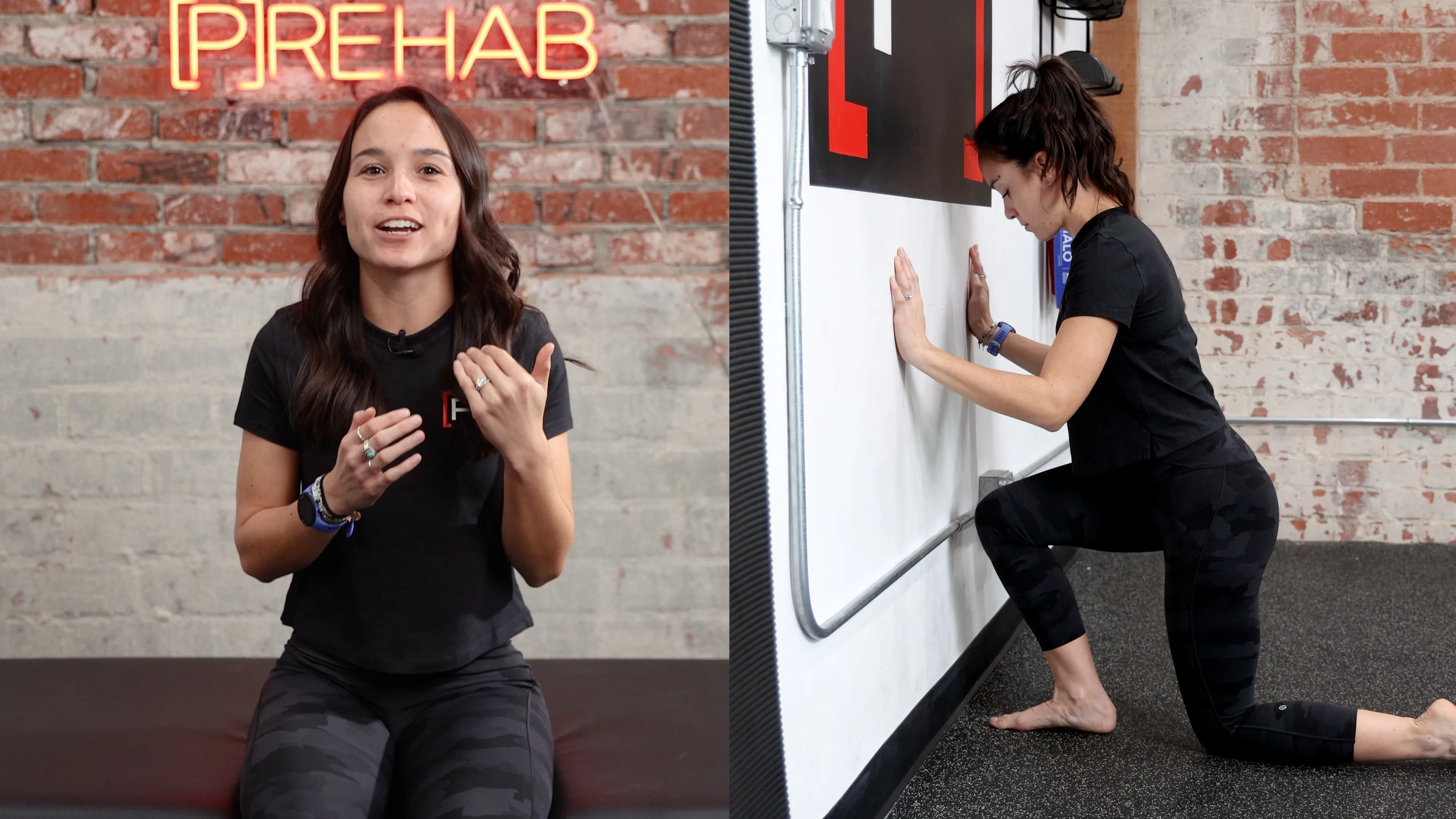
View exercise instructions
Looking for more ways to assess your ankle mobility? Find this assessment as well as other key assessments in our Ankle Dorsiflexion Mobility Overhaul program! It's time to assess your ankle mobility, not guess!

Exercises to Unlock Your Deep Squat with Ankle Mobility
Now that you know where you stand, let’s focus on improving mobility. These exercises target both dorsiflexion and tibial rotation, addressing the key components of unlocking your deep squat with ankle mobility.
Exercise 02 of 04
Exercise demonstration
Ankle CARs
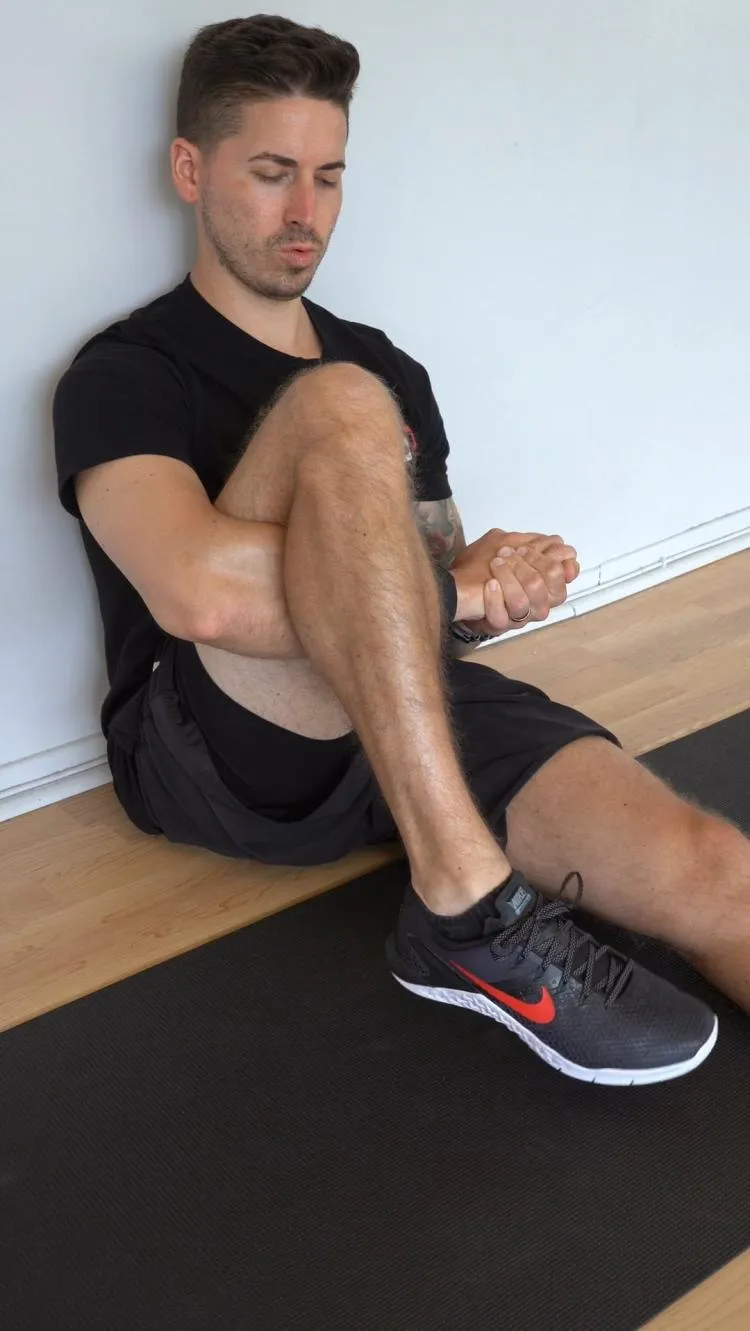
View exercise instructions
- HOW: Get set-up seated with your back supported and support your leg by wrapping your arm under your knee. While keeping your thigh still, draw large circles in a clockwise and counter-clockwise direction with your ankle.
- FEEL: You should feel your calf and ankle muscles working to control the movement.
- COMPENSATION: Keep the rest of your leg and thigh still, focus on movement at the ankle.
Why it works: This improves joint control and range of motion, targeting both the ankle and tibia. The great thing about CARs are that they don't just address one plane of motion but all planes of motion making it a stellar exercise to truly target that mobility.
Exercise 03 of 04
Exercise demonstration
Ankle Dorsiflexion Mobilization - Tibial Internal and External Rotation
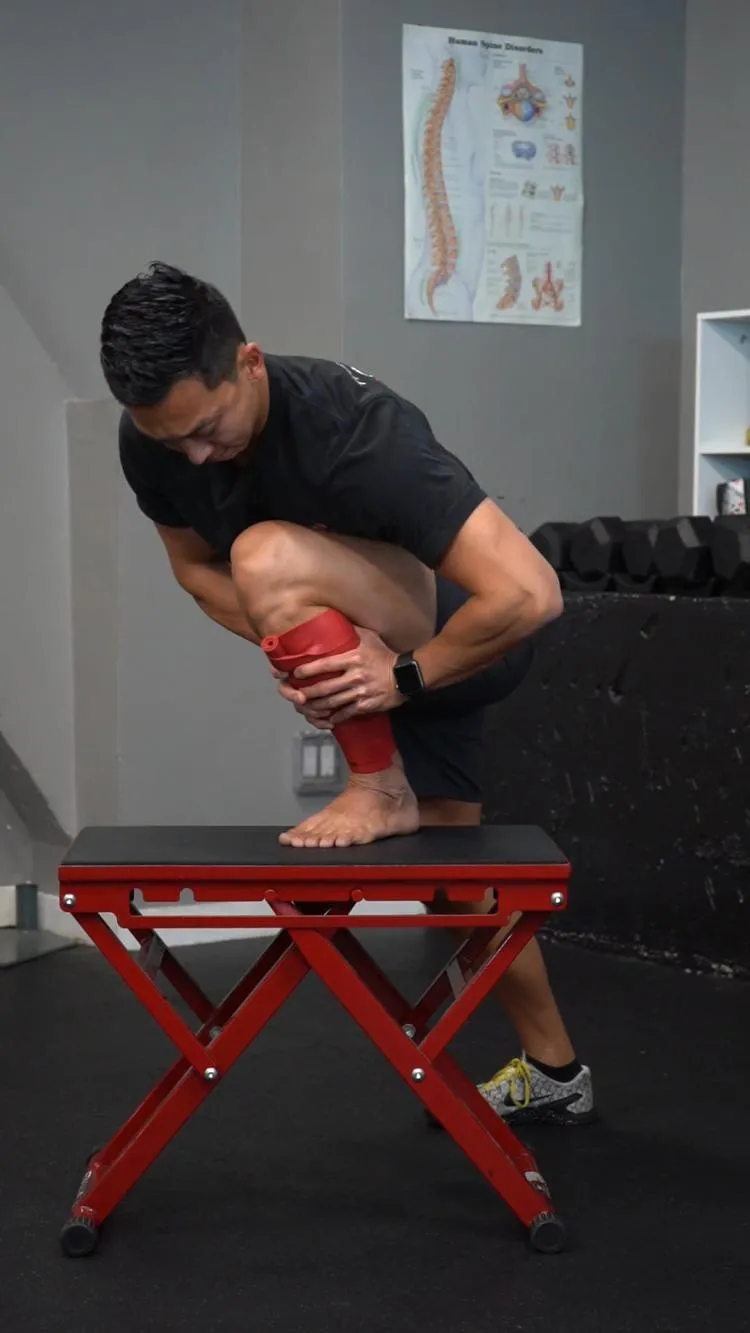
View exercise instructions
- HOW: Place a step in front of you or use an elevated surface. Bend one knee and place your foot on top of step. Wrap a band around your lower leg to provide extra friction - if you have it available to you. Twist your lower leg inwards and hold that position while driving your knee forward. Do the same while also twisting your ankle outwards as well. Be sure to keep your heel on the step as your knee goes over your toes. Move your knee straight over and out to the side for different reps, changing the way your ankle feels the stretch.
- FEEL: You should feel a stretch in your ankle and your calf muscle.
- COMPENSATION: Keep your heel flat on the surface, don’t let it come up.
Why it works: This combines dorsiflexion and tibial rotation, improving both aspects of squat mobility. Remember - the the ankle has to move but the tibia also has to undergo a given amount of rotation.
Exercise 04 of 04
Exercise demonstration
Ankle Dorsiflexion Mobilization - Dynamic, Kettlebell
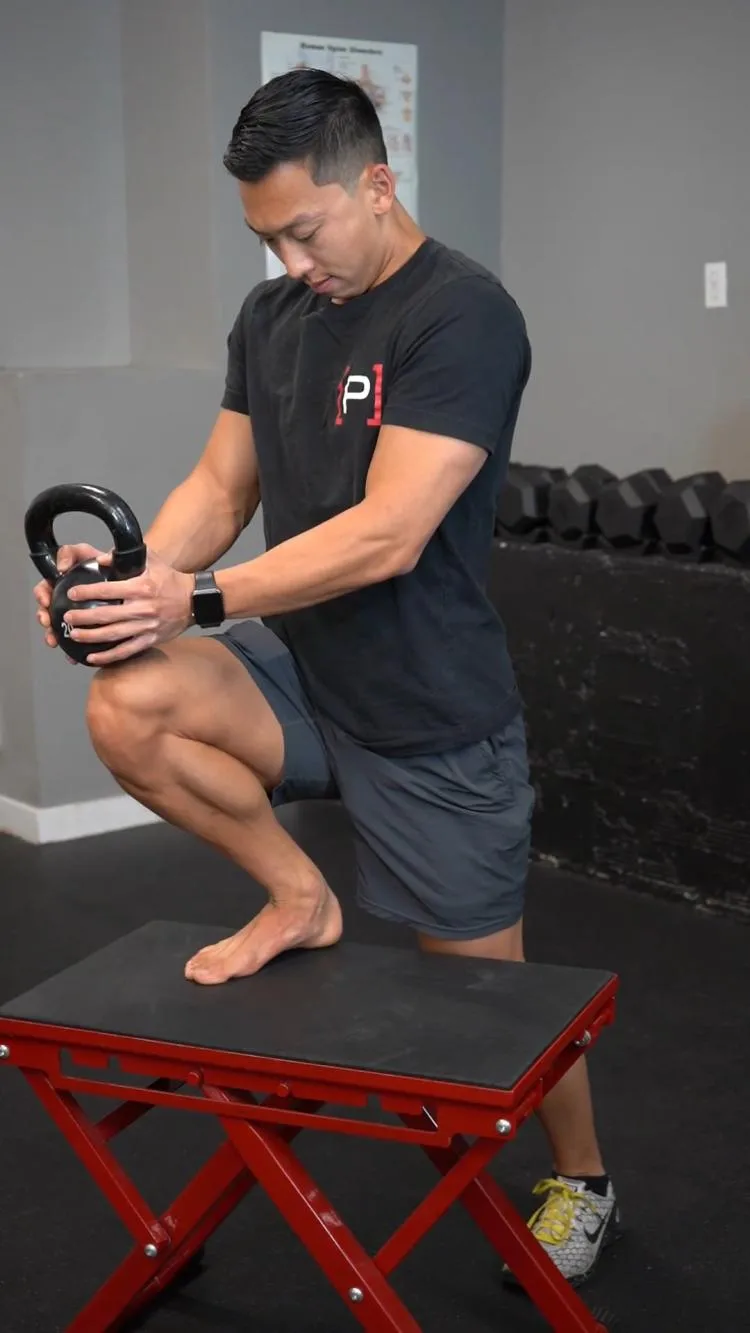
View exercise instructions
- HOW: Place a step in front of you or use an elevated surface. Bend one knee and place your foot on top of step. Hold a kettlebell on top of your knee as you shift your weight forward. Be sure to keep your heel on the step as your knee goes over your toes. Move your knee straight over and out to the side for different reps, changing the way your ankle feels the stretch.
- FEEL: You should feel a stretch in your ankle and your calf muscle.
- COMPENSATION: Keep your heel flat on the surface, don’t let it come up.
Why it works: Adding weight enhances the stretch in the ankle and calf, increasing dorsiflexion. Be sure to strive to keep your ankle on the ground for this exercise.
When and How Often to Perform These Exercises
Consistency is key when it comes to improving mobility. Here’s how to incorporate these exercises into your routine:
- Frequency: Aim for 3-5 times per week, especially on squat-focused training days. Consistency is key with mobility based work.
- Timing: Perform these exercises during your warm-up to prepare your ankles for movement or as part of your recovery routine after a workout.
- Duration: Spend 10-15 minutes on ankle mobility drills per session.
Closing Thoughts
Improving your squat starts from the ground up, literally! Assess your ankle mobility, identify your limitations, and commit to the exercises that will help you unlock your deep squat. With consistent effort, you’ll see improvements not just in your squat, but in your overall movement and performance.
Are your ankles holding you back? Start implementing these tips today, and let’s unlock that deep squat together!
Stiff Ankles Limiting Your Squat? Get Started with our Program!

About The Author
Ryan Nosak, MS, CSCS
Prehab Writer & Content Creator
 Ryan was born and raised in Throop, Pennsylvania and he has worked in the world of fitness since he was 15 years old. Ryan realized he had a deep affinity for strength training and how it can alter the human mind, body, and spirit. He began his coaching career in high school by coaching his friends through strength training sessions, which inspired him to pursue a career in strength and conditioning.
Ryan spent 10 years as a Division 1 strength and conditioning coach with stops along the way at Penn State, Tennessee State, Vanderbilt, Robert Morris, Charlotte, and DePaul. He is a Certified Strength and Conditioning Specialist and operates RyNo Strength in Chicago, IL working as a personal trainer and online fitness coach. He specializes in fat loss, body composition, strength, and sports performance training programs.
Ryan received his Bachelor’s Degree in Kinesiology from Penn State and a Master’s in Sport Management from Western Carolina University. In his free time, Ryan enjoys training for bodybuilding, eating at amazing restaurants in Chicago, and spending time with his wife, daughter, and dog.