


On this page 8 sections
Your guide
What you'll learn
When it comes to building strong, well-defined arms, it’s not about throwing around some dumbbells and doing hundreds of reps—there’s a method to the madness. Whether you’re looking to build serious muscle or just add definition to your arms, dedicating a day to focused arm training can make a big difference. In this article, we’ll break down everything you need to know to get the most out of your arm day, from understanding the importance of training the arms in both shortened and lengthened positions, to how often and when you should be training your arms.
Why Training Arms is Important
Training your arms can do more than just improve aesthetics—it can also serve as an important component of prehab by strengthening the muscles, tendons, and joints that are essential for upper body function. Regular and well-balanced arm training can reduce the risk of injury, improve joint stability, and correct muscular imbalances that often lead to pain and dysfunction.
Bounce Back from Biceps Pain - 4 Essential Exercises for Distal Biceps Tendinopathy Relief

For example, the biceps and triceps play a major role in stabilizing the elbow and shoulder joints during everyday movements and exercises. Weak or imbalanced arm muscles can place excessive strain on these joints, leading to overuse injuries, tendonitis, or even muscle tears. By consistently training the arms, particularly by targeting both the shortened and lengthened positions, you can improve overall joint resilience and flexibility, which helps prevent these common issues.
Training Shortened vs. Lengthened Positions
One key aspect of training arms that often gets overlooked is the importance of working the muscles in both shortened and lengthened positions. The biceps and triceps have different ranges where they’re most engaged, and hitting both ranges can lead to better muscle growth and strength.

For example, when performing bicep curls, you’re in a shortened position at the top of the curl, where your elbow is fully bent and the biceps are contracted. On the other hand, exercises like incline dumbbell curls work your biceps in a lengthened position, stretching the muscle at the bottom of the movement. Similarly, tricep pushdowns emphasize the shortened position of the triceps, while exercises like overhead tricep extensions work them in the lengthened position.
Incorporating both types of exercises ensures balanced development and better overall strength. When muscles are trained in different ranges of motion, it helps stimulate more muscle fibers, leading to improved growth and function.
How Often Should You Train Arms?
While arm day is important, you don’t need to train your arms daily to see results. That can lead to overtraining and hinder your progress. Ideally, you should train your arms 2–3 times per week. This can include a dedicated arm day and incorporating arm-focused exercises into other workouts, such as a full-body strength day. Giving your muscles time to recover between sessions is crucial for muscle repair and growth.
For example:
• On a day where you might be doing more pulling exercises like rows and pulldowns, incorporate bicep exercises since the biceps are also worked during pulling movements.
• On a day where you might be doing more pushing exercises like bench presses and shoulder presses, throw in a few tricep-focused movements since the triceps assist in pushing exercises.
How Many Sets and Reps for Ultimate Arm Growth?
When it comes to the number of sets and reps for arms, volume is key. Aim to complete around 12–20 sets per week if your goal is muscle hypertrophy (Krzysztofik et al., 2019). If you’re splitting your workouts into different days, this can mean 6–10 sets per muscle group per session. Breaking this down further, aim to perform 3 to 4 sets of 6–12 reps per exercise. This rep range is often considered optimal for hypertrophy, which is what most people are aiming for on arm day.
READ: AT HOME WORKOUTS

Make sure to include a mix of compound movements (like close-grip bench presses) and isolation exercises (like cable tricep pushdowns) to maximize arm development. Compound lifts help engage multiple muscle groups, while isolation exercises target specific muscles for more concentrated work.
Sample Arm Day Workout
Here’s a sample arm day workout that balances working both shortened and lengthened positions for the biceps and triceps:
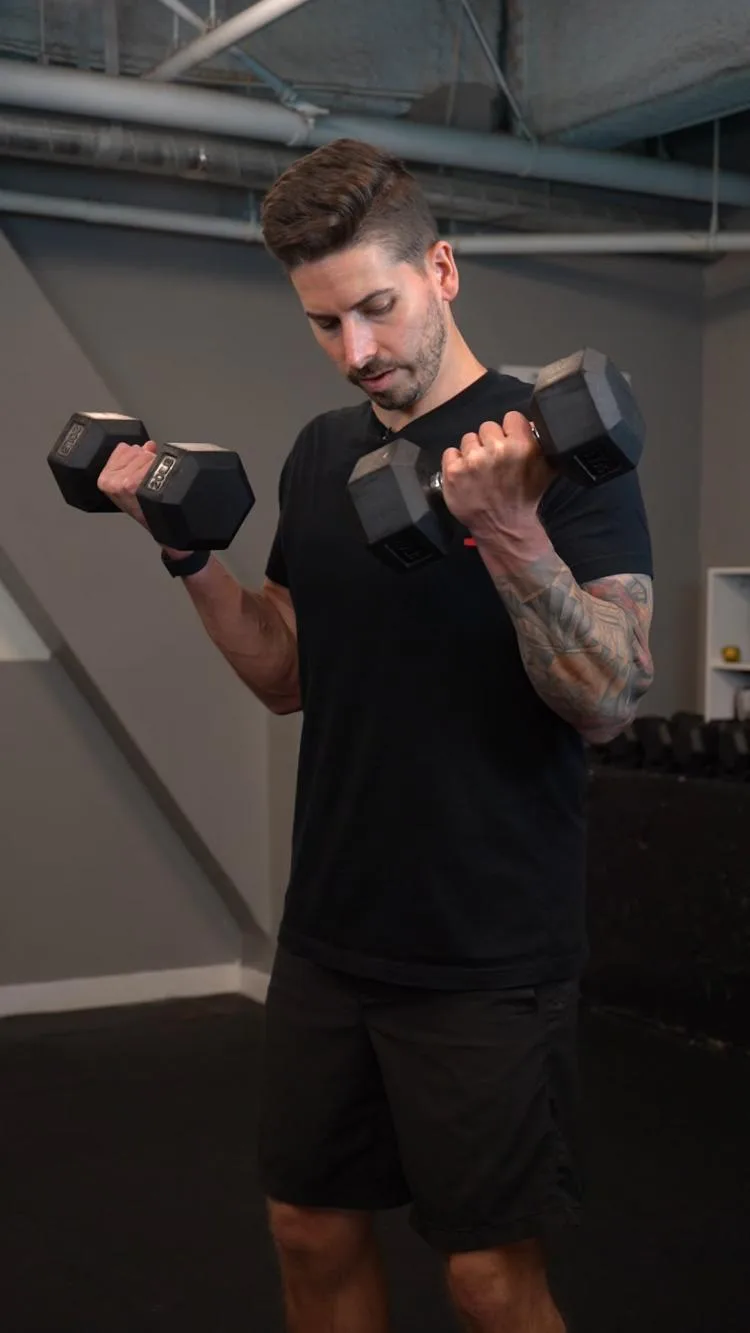
1. Standing Bicep Curl (3 sets of 6-8 reps) – Trains the biceps in the shortened position.
Exercise 01 of 04
Exercise demonstration
Bicep Curl - Dumbbell
View exercise instructions
- HOW: Start by standing straight up with a dumbbell in each hand. With your elbows squeezing your side and your shoulder blades back, bend your elbows up towards you as you rotate your hands out. Lower the dumbbells back down into the starting position and repeat.
- FEEL: You should feel your biceps muscle working.
- COMPENSATION: Don’t lean back as you curl up, stay straight up. Keep your traps relaxed, don’t shrug as your curl.
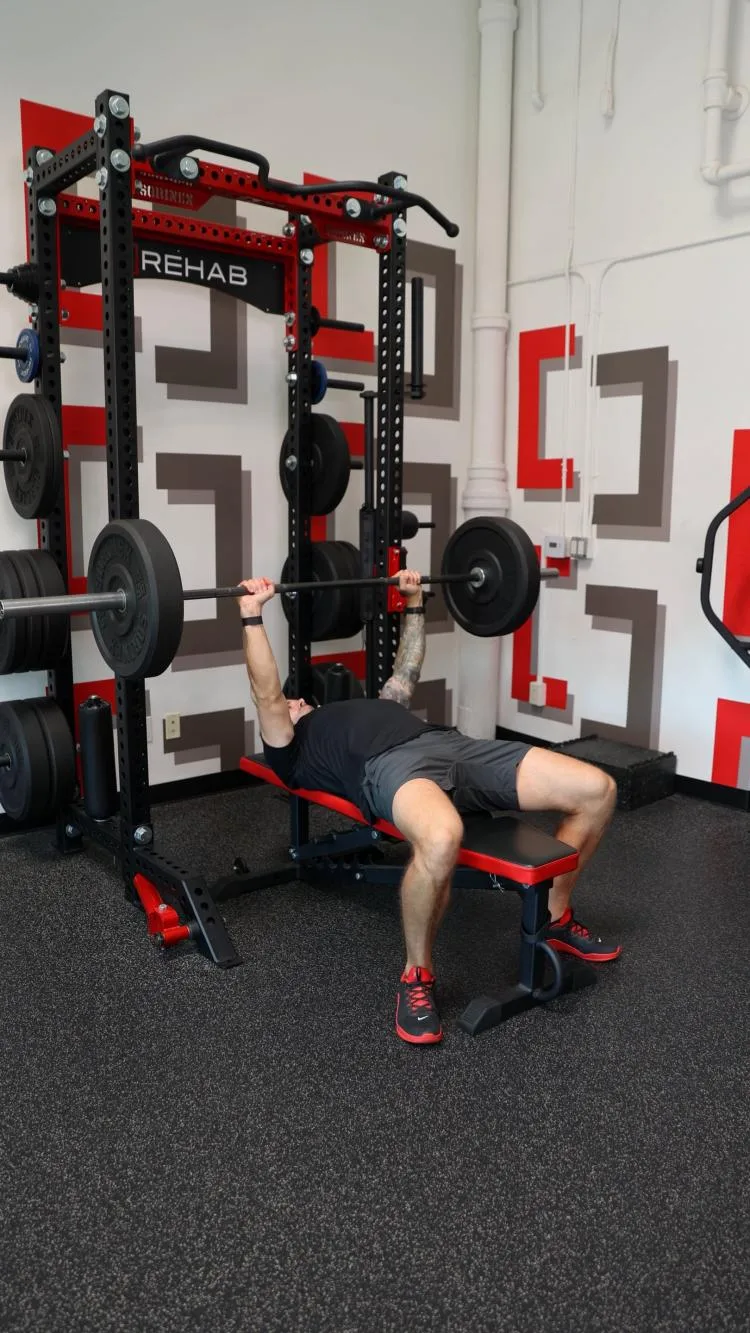
2. Bench Press (3 sets of 6-8 reps) – A compound lift that emphasizes the triceps with a more narrow grip
Exercise 02 of 04
Exercise demonstration
Bench Press - Barbell
View exercise instructions
- FEEL: You should feel your chest and core muscles working as you perform this exercise.
- COMPENSATION: Keep your core engaged and feet pressed into the ground. A slight arch in the back is okay but do not overextend with a focus on keeping your core muscles engaged.
3. Incline Dumbbell Curl (3 sets of 8-10 reps) – Trains the biceps in the lengthened position.
4. Dumbbell skullcrushers (3 sets of 8-10 reps) – Trains the triceps in the lengthened position.
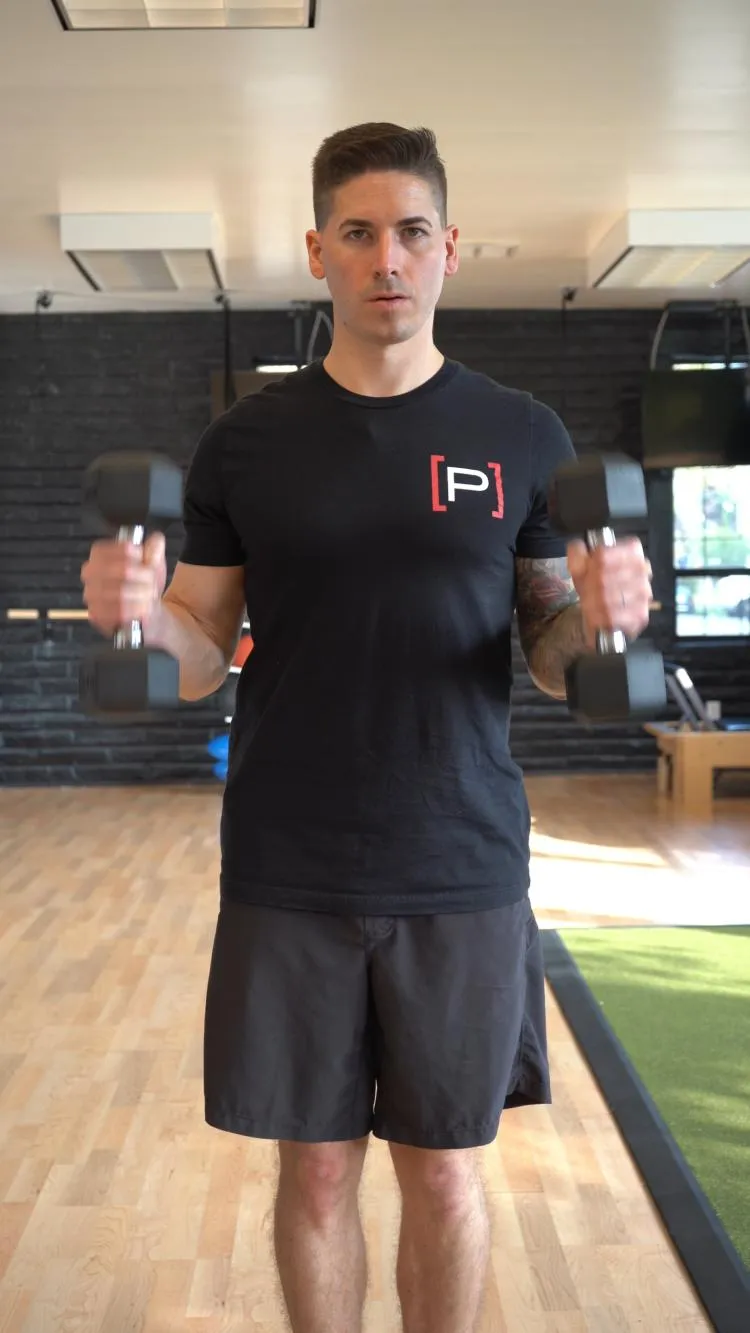
5. Dumbbell Hammer Curl (3 sets of 10–12 reps) – Targets the brachialis which helps create more stability around the elbow joint.
Exercise 03 of 04
Exercise demonstration
Hammer Curl - Dumbbell
View exercise instructions
- HOW: Get set up with dumbbells or weights in each hand. Perform bicep curls with your thumbs facing and your forearm in a neutral position, both of your palms should be facing one another as you perform the curls.
- FEEL: You should feel your biceps and the top of your forearm muscles working with this exercise.
- COMPENSATION: Maintain good back, shoulder, arm, and wrist position while performing the curls. Keep your thumbs facing up with your forearm in a neutral position.
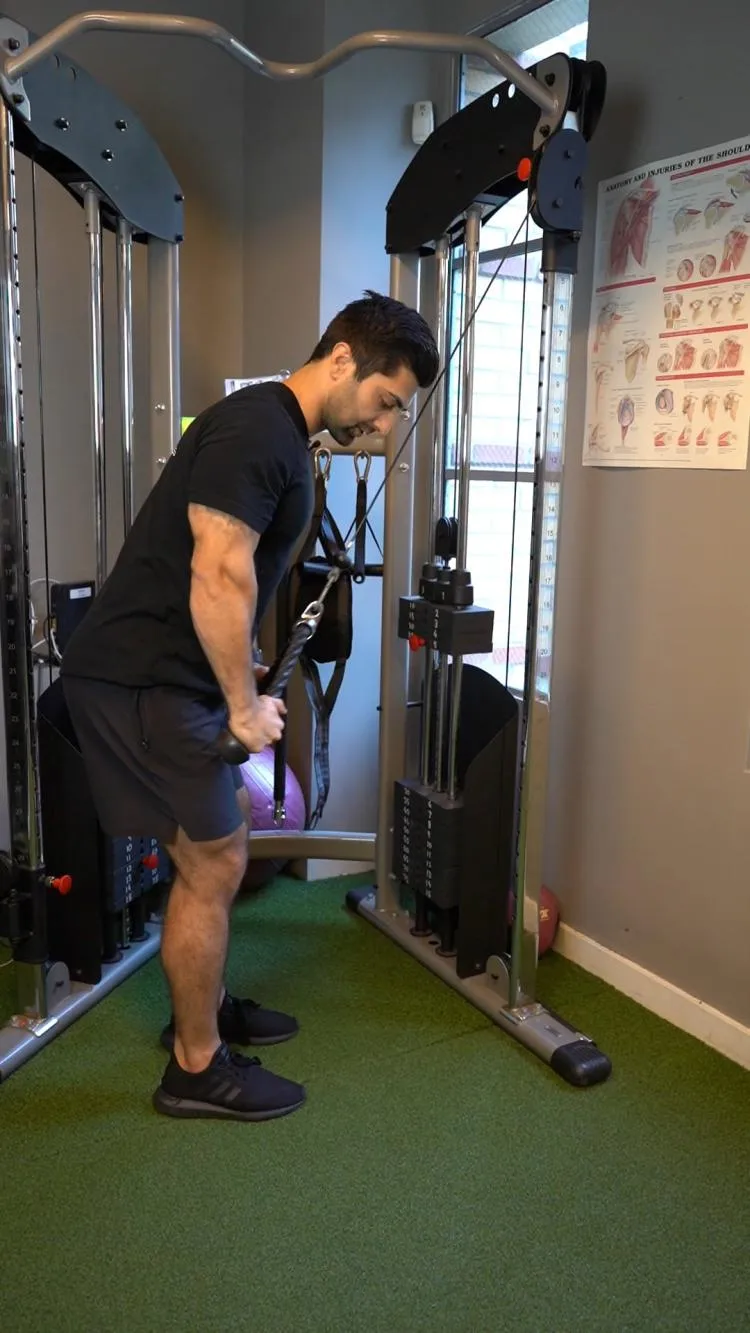
6. Cable Tricep Pushdown (3 sets of 10-12 reps) – Trains the triceps in the shortened position.
Exercise 04 of 04
Exercise demonstration
Tricep Pushdown - Rope
View exercise instructions
- HOW: Stand up holding onto the rope with your elbows bent, with your body facing the pulley system. Slowly straighten your elbows engaging the muscles in the back of your arm. Once elbows are straight, return to the starting position.
- FEEL: You will feel the muscles on the back of the upper arm work with this exercise, these are your triceps.
- COMPENSATION: Don't arch your back while performing this exercise, keep your shoulders stable as well.
By training your arms in a balanced way, hitting multiple ranges of motion, and focusing on progressive overload, you’ll see noticeable improvements in strength, muscle size, and definition.
Rest Periods
Rest periods play a crucial role in training, particularly in balancing performance and hypertrophy goals. When training for performance, where quality and maximal effort are paramount, longer rest periods are essential. This allows for full recovery between sets, ensuring that each lift or exercise is performed with optimal strength and technique. Typically, this means resting 2-5 minutes between sets. In contrast, hypertrophy training can benefit from shorter rest intervals, typically 30-90 seconds, which maintain a higher level of muscle fatigue and metabolic stress, both of which are key drivers of muscle growth. Shorter rest periods can enhance the metabolic effect, promoting greater muscle endurance and size by keeping the muscles under constant tension.
Closing Thoughts
A strong arm day isn’t just about volume—it’s about variety and strategy. Incorporating exercises that target the arms in both shortened and lengthened positions, using an appropriate amount of volume, and strategically placing your arm training in your program will ensure you maximize growth and performance. Remember, consistency and progressive overload are key to building the arms you want. So, go out there, follow these tips, and crush your next arm day!
LEARN MORE ABOUT OUR UPPER EXTREMITY PERFORMANCE PROGRAMS

About The Author
Ryan Nosak, MS, CSCS
Prehab Writer & Content Creator
 Ryan was born and raised in Throop, Pennsylvania and he has worked in the world of fitness since he was 15 years old. Ryan realized he had a deep affinity for strength training and how it can alter the human mind, body, and spirit. He began his coaching career in high school by coaching his friends through strength training sessions, which inspired him to pursue a career in strength and conditioning.
Ryan spent 10 years as a Division 1 strength and conditioning coach with stops along the way at Penn State, Tennessee State, Vanderbilt, Robert Morris, Charlotte, and DePaul. He is a Certified Strength and Conditioning Specialist and operates his own training practice, RyNo Strength, out of Studio DelCorpo in Chicago, IL. He specializes in fat loss, body composition, strength, and sports performance training programs.
Ryan received his Bachelor’s Degree in Kinesiology from Penn State and a Master’s in Sport Management from Western Carolina University. In his free time, Ryan enjoys training for bodybuilding, eating at amazing restaurants in Chicago, and spending time with his wife, daughter, and dog.