

On this page 10 sections
Your guide
What you'll learn
Got a pain in the front of your shins that just does not want to go away? Have you been running a lot or playing a lot of sports that involve jumping activity? If so, you may be dealing with what is known as 'shin splints'. This lower leg injury often due to overuse is a difficult one to rehabilitate for many reasons, one of which being its obscurity. Shin splints, which is better known as 'medial tibial stress syndrome', is an injury more common in endurance athletes such as runners, as well as athletes involved in jumping sports such as basketball or volleyball, who are placing large amounts of stress with high volume through their lower extremities. In this article, we are going to show you the best shin splints exercises that will get you out of pain and back to your activities!
What Exactly Are Shin Splints?
Usually, shin splints will start as an insidious onset of pain in the lower leg that increases with activity. The pain can be present either on the inside of the shin bone (the medial aspect of the tibia) or even on the front of the shin. The pain is usually described as a deep, dull boring pain, but if becoming more severe, it can be described as sharp.
Get rid of Shin Splint Pain with this FREE Workout!
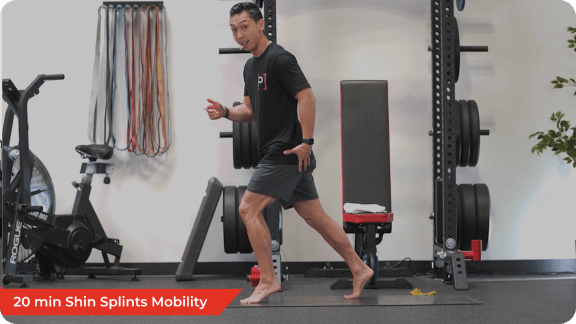
Shin splints can linger unless we take the necessary steps to get rid of them. Our 20-min Shin Splint Strength workout helps with just that! Get started for free today!
Presented in an article by Winters et al, Medial tibial stress syndrome (MTSS) is currently defined as pain that is present along the posteromedial border of the tibia that occurs during exercise or pain with palpation over a 5 centimeter or greater area of the posteromedial border of the tibia. This is more commonly seen in individuals who place a large amount of stress on their lower legs, with the highest incidences being present in long-distance runners, dancers, and military personnel.
Take Care of Shin Splints and Avoid Bigger Issues With Prehab

The muscles of the lower leg play a vital role in our foot and ankle health. This program will build a proper foundation from the ground up, with evidence-based exercises and education being at the forefront. Get started HERE.
How Do I Get Rid Of Shin Splints?
The first step in treating shin splints is easy, but not so easy. In most instances, simply reducing the amount of volume, duration, and/or frequency an individual is engaging in is half the battle! Yes, this is challenging for many of us as innately when trying to train for a race or simply stay active. However, we know there is still a lot that can be done from an exercise perspective even when allowing a particular area of the body to heal (Read this article on staying strong after surgery!) Relative rest is important to allow the area to calm down before moving towards more progressive exercises.
How Do I Know If I Have Shin Splints?
Here are some potential causes of shin splints:
- Training on an incline or doing a lot of hill training increases the use of the ankle dorsiflexors (muscles that bring your foot towards your nose)
- Increased ankle joint plantar flexion: The proposed theory behind this is this foot position (toes pointed downward) may predispose an individual to more of a forefoot landing with running. which can place more stress through the tibia
- Changes in hip joint range of motion may alter running kinematics leading to excessive loading at the tibia. Want to increase your hip mobility? Check this article out!
- Increased foot pronation (flat foot position) may also place more stress on the medial aspect of the tibia. Here are some exercises to combat this!
- Other studies have also supported increased BMI, excessive foot varus, female sex, and training errors.
We have often discussed that overuse injuries, especially in runners is often due to training errors. Training errors related to running has been related to an abrupt increase in volume, duration, and/or frequency of the activity, switching terrain to a harder surface, and excessive hill training. Moreover, the combination of running on hard surfaces and downhill places more eccentric load and ground reaction forces through the body.

Don't Let Shin Shin Splints Turn Into A Bigger Problem...Stress Fractures!
Stress fractures occur when there is repetitive load to areas of the body without proper recovery, which leads to an imbalance between bone formation and absorption. Moreover, the osteoclasts (breaking down bone cells) start to overpower the work of the osteoblasts (building up bone cells). Most of these will occur in the cortical region of the bone, the diaphysis of long bone, or the shell of square bone where the remodeling process is slower.
Exercise 01 of 07
Exercise demonstration
The Truth About Shin Splints - Causes, Fixes, and What NOT to Do

View exercise instructions
How Are Stress Fractures Different From Shin Splints?
Similar to shin splints, usually people will have an insidious onset of pain that is worse with activity and better with rest. In this case, the front of the shin (anterior tibia) will usually be tender upon palpation. In contrast to shin splints, stress fractures usually are going to be more intense in regards to pain, and more focal in regards to where the pain is located, whereas shin splints have more of a diffuse, aching type of pain.
In addition, stress fractures are more often unilateral, whereas shin splints can often be bilateral. Yes, they both are related to an increase in workload; however, stress fractures have more localized, sharp, intense pain reporting than shin splints.

Shin Splints Rehab Principles
Now that you have an understanding of what shin splints are and what can contribute to them, let's get into the meat and potatoes of how to tackle shin splints with rehab!
- Acute Phase: Relative rest utilizing POLICE principle (RICE is OUT!), which is protection, optimal loading, ice, compression, and elevation. Ice which is heavily debated within literature may be used in this acute phase as an analgesic. Whether it will address any swelling at the level of the tissue is still debated within literature. Listen to our podcast on this topic to learn more about icing and its indications!
LISTEN: THE TRUTH ABOUT ICING INJURIES

- Alter training program: Address the volume, duration, and frequency of the specific training program for the individual to prevent overload to the body. Also, educate on proper sleep and recovery!
- Start with cross-training as well as more forgiving training surfaces: The ground reaction force through the foot up to the shins needs to be reduced initially to allow for adequate recovery before graded exposure.
- Examples of better surfaces would be even surfaces such as a track.
-
- Cross training such as swimming, biking, and other lower to minimal impact activities are great. This allows for continued conditioning of the cardiovascular system, which helps maintain fitness levels aerobically in addition to creating a pumping mechanism throughout the body, that assists with tissue healing!
- Address muscle strength and/or flexibility imbalances:
- Flexibility: Play special attention to the calf complex, as this area is highly associated with medial tibial stress syndrome
-
- Strength:
- Core weakness is a risk factor for lower extremity injuries
- Strength:
-
-
- Foot intrinsic strengthening especially if individuals are over pronated (have a flat arch)
-
-
-
- Muscle imbalances throughout the kinetic chain
-
- Female Athletes: Consider the female athlete triad, as additional consults with nutrition, primary care physicians, and sports medicine psychologists may be warranted. Interdisciplinary care is essential in this situation!
- Check Footwear: This is variable depending on who you discuss this topic with, but generally, shoes should change around every 200-500 miles of usage, and in some instances, a consult with a podiatrist for orthotics may be warranted.
Best Exercises For Shin Splints
Here are some progressive exercises as well as indications as to why these are some of the best exercises for shin splints rehab!
Exercise 02 of 07
Exercise demonstration
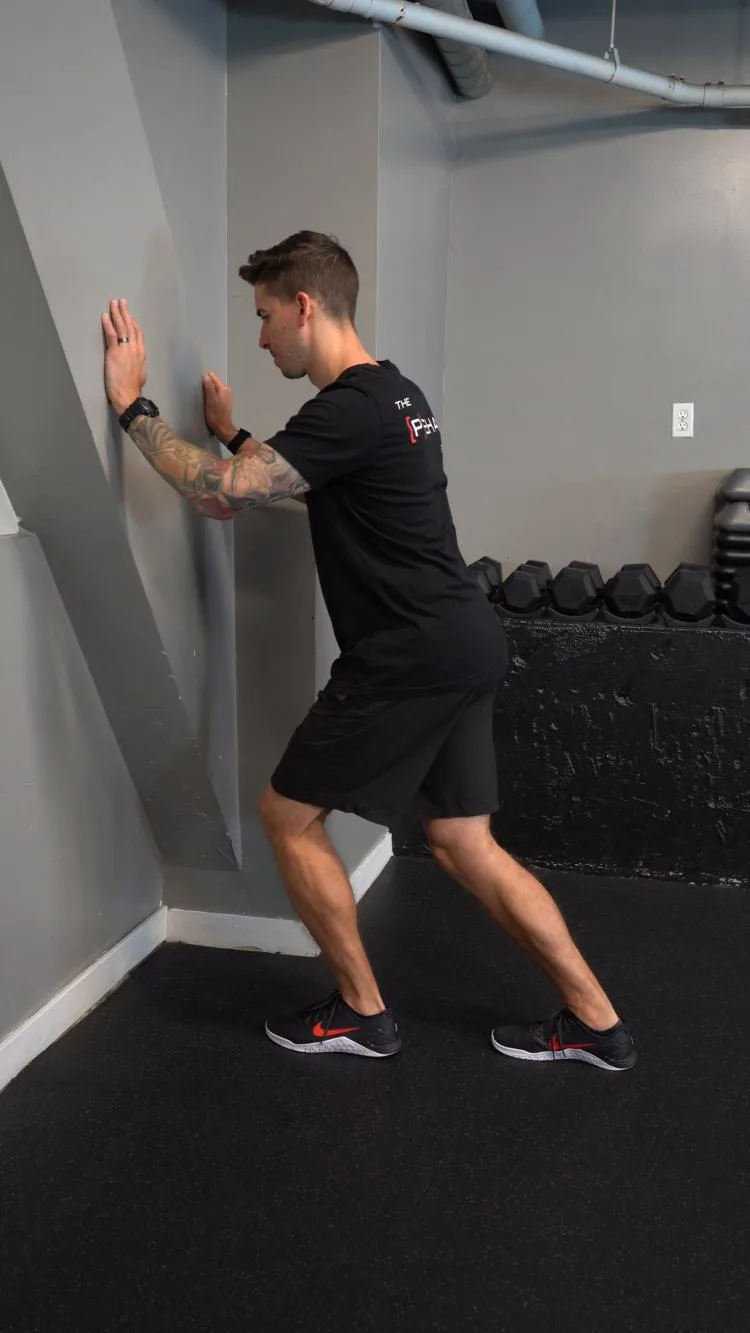
Wall Calf Stretch - Knee Bent
View exercise instructions
- HOW: Get set-up standing with a wall in front of you and place your hands on the wall. Take a step back with the side you plan to stretch, let the knee be bent and keep it bent. While keeping the foot you stepped back with flat on the ground, knee bent, and toes facing 12 o’clock, slowly lean and shift your weight forward until you feel a stretch.
- FEEL: You should feel a stretch in the calf of the foot that is behind you, specifically lower in your calf above your ankle. You shouldn’t feel pain or a pinch in front of your ankle.
- COMPENSATION: Be sure to keep your back foot facing 12 o’clock, do not let your foot turn out or in. Try to keep your heel down. Be sure to keep the knee bent
Exercise 03 of 07
Exercise demonstration
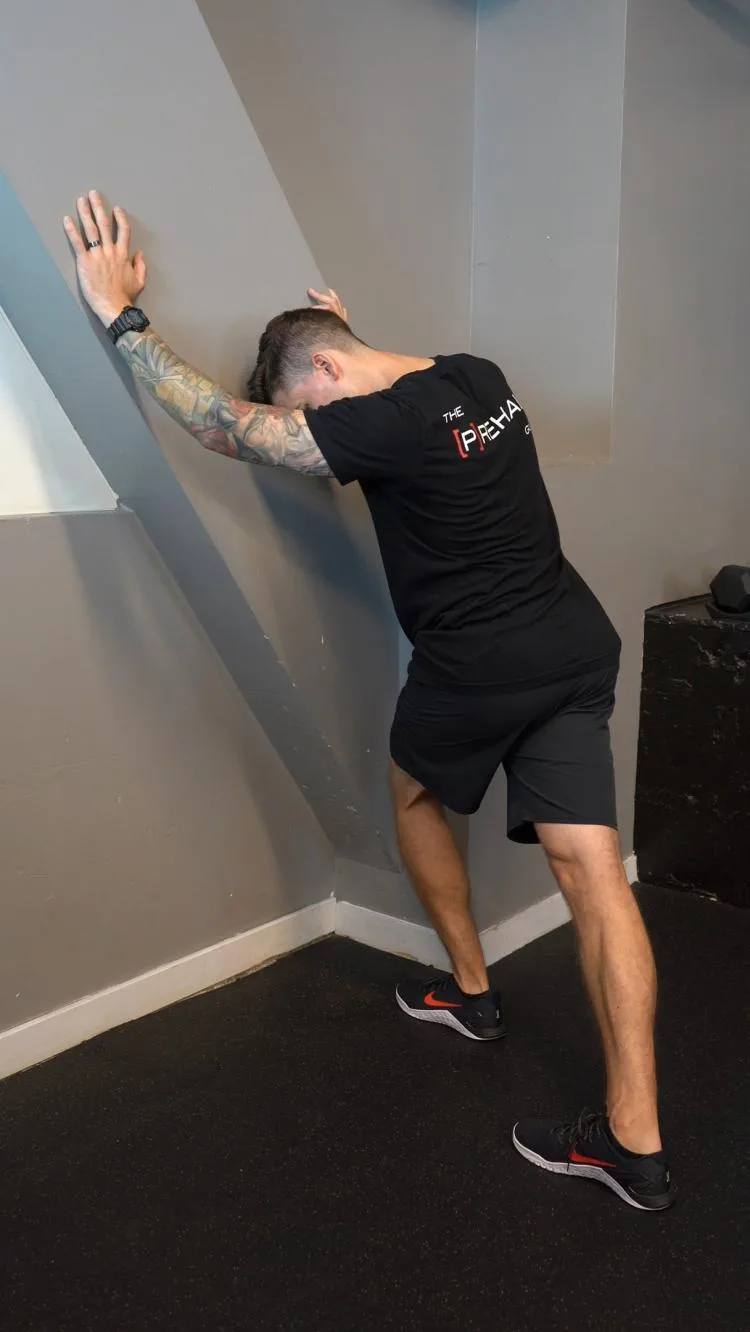
Wall Calf Stretch - Knee Straight, 3D
View exercise instructions
- HOW: Get set-up standing with a wall in front of you and place your hands on the wall. Take a step backwards with the side you plan to stretch, have that foot facing 12 o'clock the entire time with the heel flat on the ground. Start out by having the front foot facing 12 o’clock then lean and shift your weight forward until you feel a stretch in the calf of the foot that is behind you, then repeat by stepping with the front foot to 10 o’clock and shift your weight in that direction, then 2 o’clock, then repeat
- FEEL: You should feel a stretch in the calf of the foot that is behind you and depending on the direction you're shifting your weight to - you will feel the stretch on the inside or outside. You shouldn’t feel pain or a pinch in front of your ankle.
- COMPENSATION: Be sure to keep your back foot facing 12 o’clock, do not let your foot turn out or in. Try to keep your heel down.
The calf complex is often involved in the development of shin splints, specifically tightness of the muscles and/or weakness. This 3D stretch with the knee straight will bias the gastrocnemius calf muscle that cross the knee joint and ankle joint.
Best Stretches After Running
Looking for more awesome stretches post-run? Check out this video and follow along!
Exercise 04 of 07
Exercise demonstration
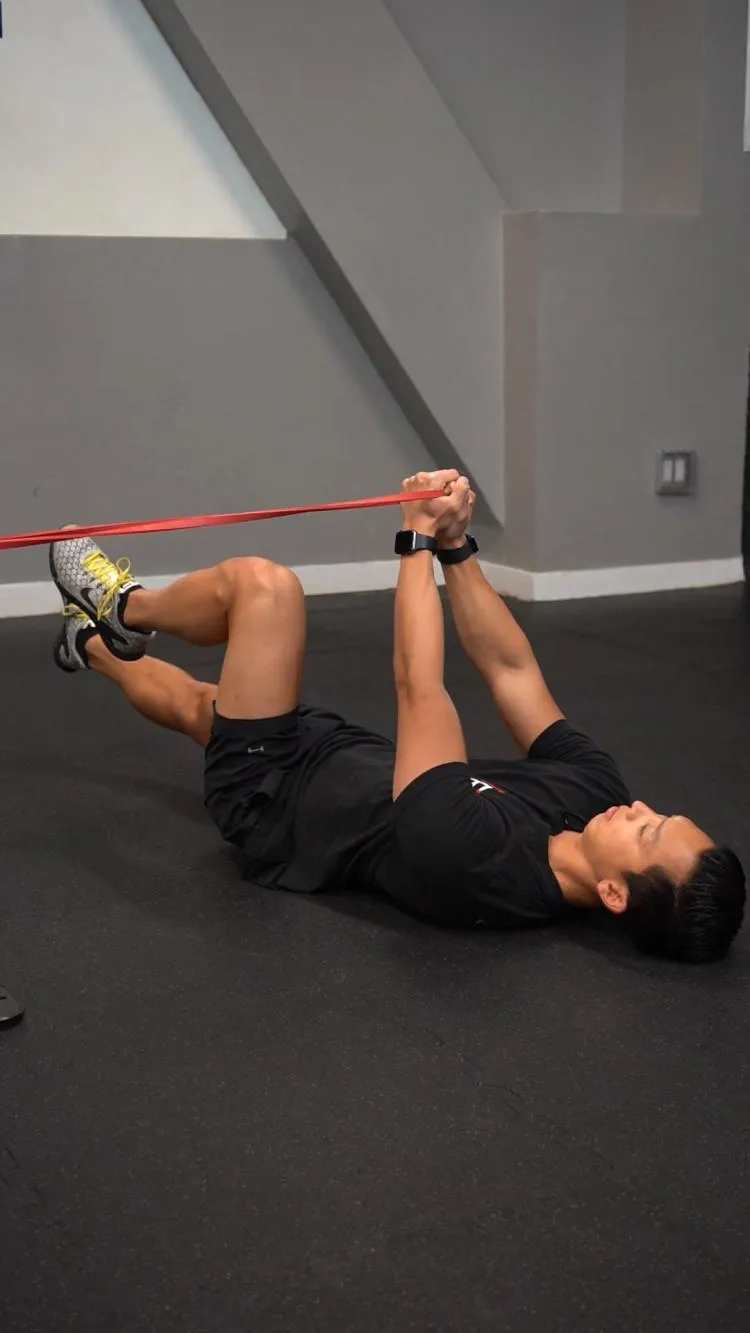
Dead Bug - Anti-rotation, Band
View exercise instructions
- HOW: Start by lying on your back. Bring your knees up towards your chest and bend your knees making an “L” shape. Grab a band that is anchored to the side of you and with both arms straight, pull it over your chest. The band should feel like it is trying to pull you on your side, do not let it by engaging your core and keeping your back flat on the ground. While holding the tension from the band, straighten one leg out until it is a few inches off of the ground, and return to the starting position. Alternate straightening each leg all while holding the tension in the band.
- FEEL: You should feel your core muscles working as well as your lats and arm muscles.
- COMPENSATION: Keep your core engaged during the process, don’t arch your back. Keep your arms straight up at chest level and don’t bend your elbows. Don’t let your leg rest on the ground as you straighten it.
Core imbalances are important to address, as this is a risk factor for lower extremity injuries.
Exercise 05 of 07
Exercise demonstration
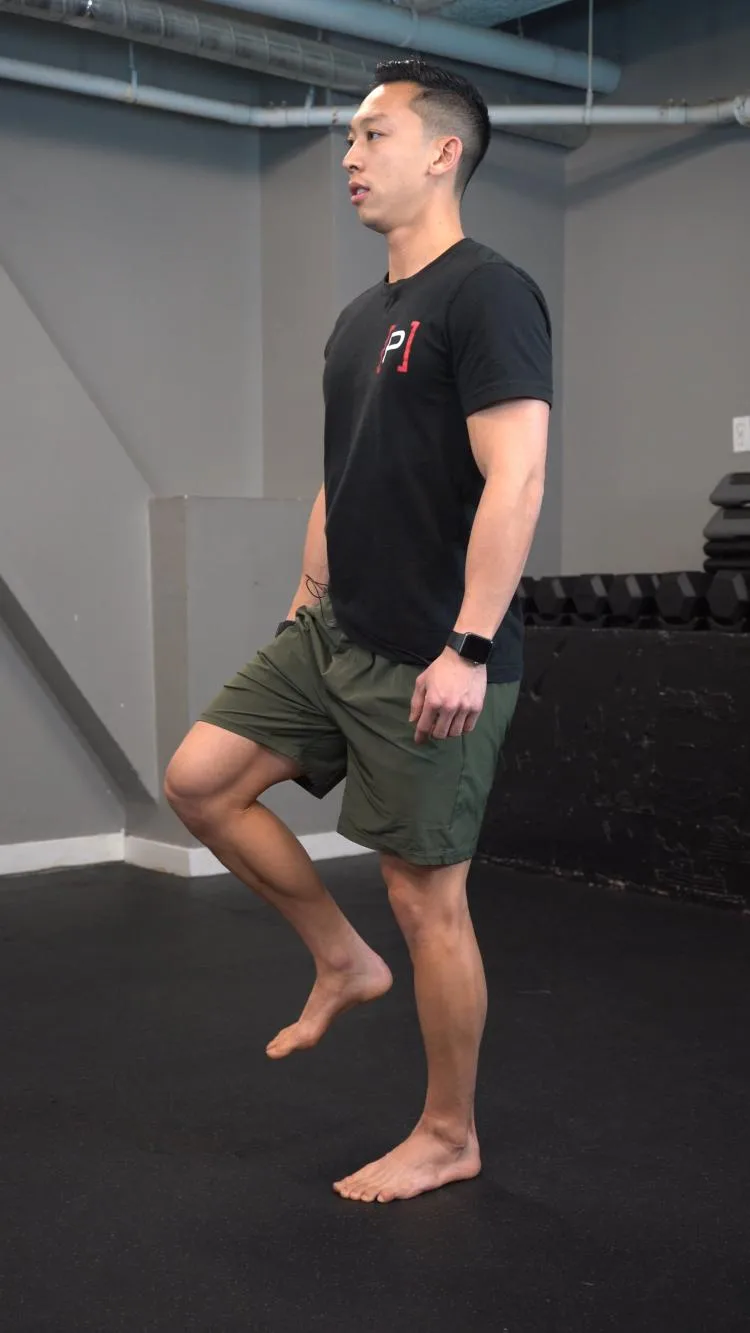
Single Leg Woodpecker
View exercise instructions
- HOW: Get set up balancing on one leg with good arch position. Begin the exercise by leaning forward and shifting your weight and center of gravity towards your toes. Go just until the point that you can control and not let your heel lift off the ground. Push the front of your foot into the ground to return to starting position and repeat.
- FEEL: This should feel like a control exercise, specifically your calf and foot muscles working to control your center of gravity shifting forward. You should also feel your calf and foot intrinsic muscles working to return your body to starting position.
- COMPENSATION: Keep your body straight, don't fold at your hips or arch your back with this exercise. Use your calf and foot muscles to do the work.
Sample Shin Splints Prehab Program Exercise Video
Foot intrinsic strengthening is very important, especially if flat footed or if one has poor control of their foot.
Exercise 06 of 07
Exercise demonstration
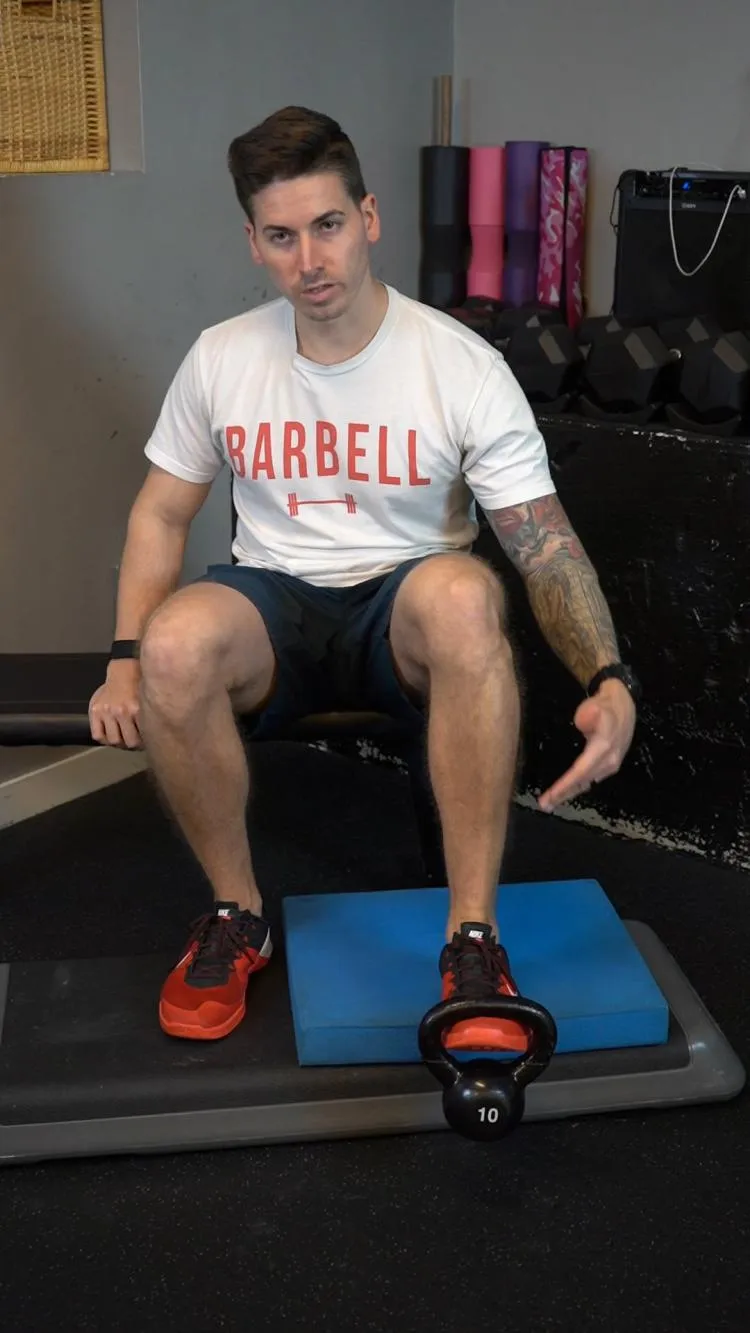
Seated Ankle Dorsiflexion - Kettlebell
View exercise instructions
- HOW: Get set-up seated with the handle of a kettlebell around the top of your foot. Get it as high as you can on your foot, not just on your toes. Have your heel supported on an elevated position to go through your full ankle range of motion. While keeping the kettlebell on your foot, raise and lower your foot to perform concentric and eccentric ankle dorsiflexion.
- FEEL: You should feel the muscles in the front of your shin and on the outside of your shin working.
- COMPENSATION: Do not lift your heel, maintain knee and heel position.
This is a great way to train the dorsiflexors of the foot/ankle complex, which is often a culprit of shin splints. Focus on slowly lowering the weight back towards the floor to gain the biggest benefit from this movement.
Return to Activity
Here are some other key points and exercise indications for getting back to your activity after having shin splints!
Rules to Follow to Return to Running After a Knee Injury
When it comes time to run, the University of Delaware Return To Running Protocol is one we highly recommend. Two simple modifications with running that can also help with avoiding further shin splint aggravations are:
- Running ‘soft’ – think about making less noise with each step
- Increase step rate – increased step rate is associated with lower Ground Reaction Forces (GRF), which is basically the forces imposed on the body with running everytime you make contact with the ground. A great article recently came out supporting this can reduce the risk of bone stress injuries!
Exercise 07 of 07
Exercise demonstration
Pogos – Wall Support
View exercise instructions
- HOW: Keeping your hands on the wall for balance, hop on both legs. Don’t allow your knee to collapse in, most of the motion should be coming from your ankles. Think of yourself as a rubber band or a spring loaded coil. Be bouncy!
- FEEL: You will feel the calf muscles working with this exercise.
- COMPENSATION: Do not let your ankle “roll out”. You should feel even pressure between the inside and outside of the balls of your foot. Don’t fully lock out your knees, have a slight bend as you hop up and down.
This is an example of a lower-level plyometric exercise that can be added when an athlete is starting to be exposed to jumping activity. There is a systematic approach to progressing jumping and plyometric exercises. Read more on Plyometric Progressions For Rehab!
Closing Thoughts
Differentiating why an individual is experiencing lower leg pain can be difficult to ascertain as a healthcare provider. Moreover, it is of utmost importance to make an accurate diagnosis to ensure these injuries do not become more serious. Shin splints start as a gradual pain in the lower leg and can become more severe the more that one places stress through this area of the body. Starting with relative rest and progressing towards fundamental exercises to address any deficits present will help optimize the recovery process! If you are dealing with lower leg pain that is not responding to rest, be sure to seek medical advice from a trained healthcare professional.
Take Care of Shin Splints and Avoid Bigger Issues With Prehab
The muscles of the lower leg play a vital role in our foot and ankle health. This program will build a proper foundation from the ground up, with evidence-based exercises and education being at the forefront. Get started HERE.
References
- Winters, K. K., Kostishak, N., McLeod, T. V., & Welch Bacon, C. E. (2014). Treatment of Medial Tibial Stress Syndrome: A Critical Review. International Journal of Athletic Therapy & Training, 19(4), 27-31.
- Fredericson, M., Bergman, A. G., Hoffman, K. L., & Dillingham, M. S. (1994). Tibial stress reaction in runners: Correction of clinical symptoms and scintigraphy with a new magnetic resonance imaging grading system to define a progression of injury from shin splints to stress fracture. Archives of Physical Medicine and Rehabilitation, 75(9), 1026. doi:10.1016/0003-9993(94)90699-8
- Hak, D. J., Fitzpatrick, D., Bishop, J. A., Marsh, J. L., Tilp, S., Schnettler, R., Alt, V. (2014). Delayed union and nonunions: Epidemiology, clinical issues, and financial aspects. Injury, 45. doi:10.1016/j.injury.2014.04.002
- Moen, M. H., Bongers, T., Bakker, E. W., Zimmermann, W. O., Weir, A., Tol, J. L., & Backx, F. J. (2010). Risk factors and prognostic indicators for medial tibial stress syndrome. Scandinavian Journal of Medicine & Science in Sports, 22(1), 34-39. doi:10.1111/j.1600-0838.2010.01144.x
About The Author
Sherif Elnaggar, PT, DPT, OCS, SCS
Prehab Head of Content
 Sherif graduated from Temple University with a Bachelor’s of Science Degree and a concentration in Kinesiology. He then received his Doctorate of Physical Therapy Degree from DeSales University, graduating with honors of the professional excellence award and research excellence award. After his graduate studies, he served as Chief Resident of the St. Luke’s Orthopedic Physical Therapy Residency Program. Sherif is a Board Certified Orthopedic Clinical Specialist. Sherif focuses on understanding how movement impairments are affecting function while also promoting lifestyle changes in order to prevent recurrences of injury. His early treatment interests include running related injuries, adolescent sports rehab, and ACL rehab in lower extremity athletes. He also has been involved in performance training for youth soccer players. Outside of working as a physical therapist, he enjoys traveling, running and cycling, following Philadelphia sports teams, and spending time with his family.
Disclaimer - The content here is designed for information & education purposes only and is not intended for medical advice.