
On this page 6 sections
Your guide
What you'll learn
Part 2 of this Clinical Pearl series will focus on runner's knee return to running implications. It is during these phases that there will be a larger emphasis on advanced strengthening, single limb loading that simulates running activity, reintegration of running, and power-based exercises! By this point, the runner should have lower symptom irritability, and a solid foundation of motor control, stability, and strength before progressing towards this part of rehab.
“This blog is one of our ‘clinical pearls’, which is designed to assist clinicians in understanding exercise progressions for various clinical conditions. Throughout each of these clinical pearls, you will learn multiple ways to attack similar issues we all see when treating our patients. We also highlight many of our personal exercise library videos throughout these pearls, all of which you can gain access to as an exercise library member!”
Why Do Runners Need Strength and Power Training?
What you will notice is that this runner's knee clinical pearl places a heavy emphasis on strength training. Why is this important for runners? Simply put, it not only helps prevent injuries, but it also improves running efficiency. When rehabbing runners, you not only want to help them get back to the sport they love, but you also want them to become even better at it than they were before their injury! This is why we must not only implement strengthening exercises but also power-based exercises. If runners can improve their running economy, they will be able to run after faster speeds with a lower rate of perceived exertion (RPE).
If you think about the process of running, our feet are only in the contact with the ground for a split-second. It is a purely single limb stance sport! With strength training, muscles are able to adapt to running by increasing the RATE of force production, ultimately leading to increases in muscular contractions in a shorter amount of time.
Strength training will focus on heavier loads, whereas our power will incorporate load as well, but with an emphasis on speed!
The Ultimate Resource For Educating and Programming For Your Patients

Are you searching for a better way to provide education and exercise programming for your patients? The Prehab Exercise Library is the best library available to the public that can optimize the resources you are providing for your patients and clients! Click HERE to gain access today.
What About Return To Running?
The University of Delaware has developed the soreness rules that are great to utilize in rehab. Watch along in this video for an explanation on tips to keep in mind when initiating a return to running.
Some important tips to keep in mind:
- Start on flat surfaces that are more forgiving, such as a track or trail, both of which will decrease ground reaction forces in comparison to road surface.
- Based on the runner's experience, that will dictate what volume threshold he or she will start with. For example, an experienced marathon runner may be able to start with jogging for a longer period of time versus a more novice runner who may need to start with a walk/run program
- Ensure the runner has an understanding of symptom threshold and how to interpret soreness rules
Phase 3 Strengthening Exercises
In this phase, we place a further emphasis on single limb loading, eccentric control, posterior chain strengthening, and bulletproofing the lower body and core! We also will transition the runner to more plyometric-based exercises that promote more power.
Exercise 01 of 08
Exercise demonstration
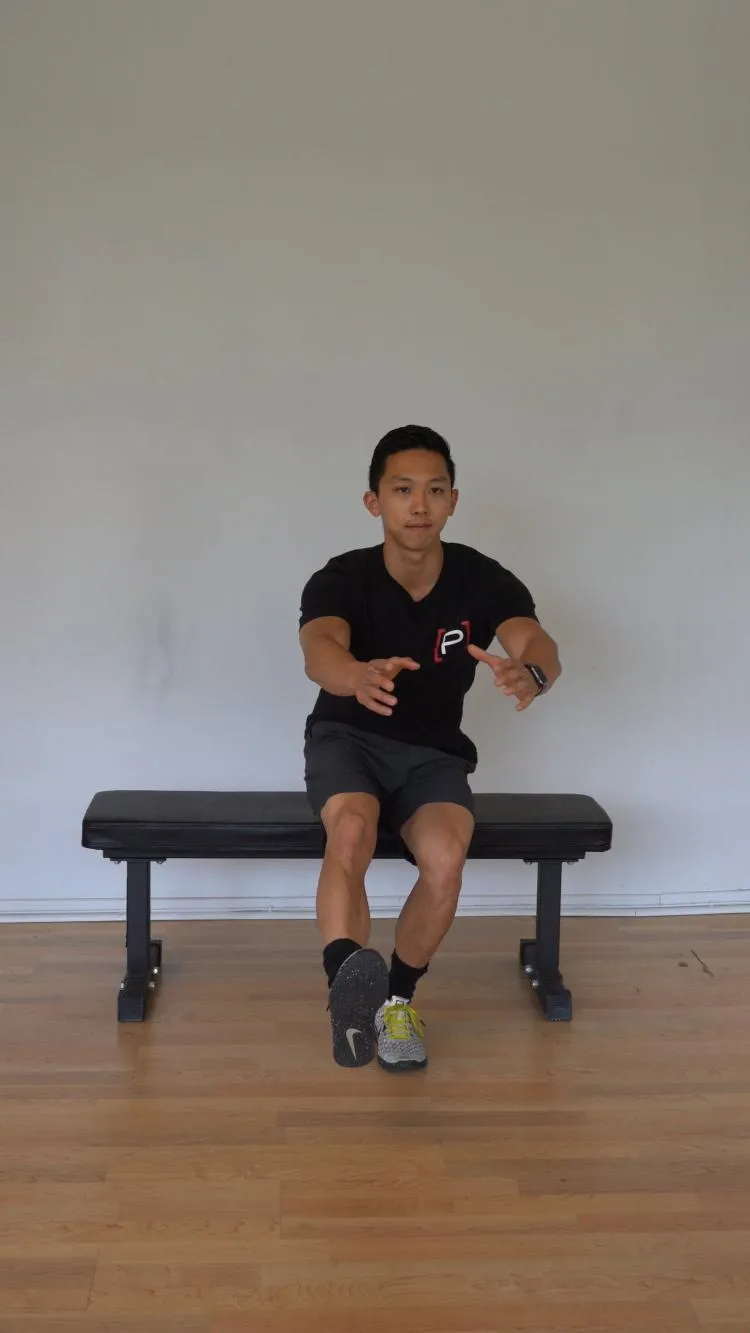
Single Leg Eccentric Box Squat
View exercise instructions
- HOW: Sit on a box/bench/object of the desired height. The taller, the easier. Stand up from the box using both of your legs. Once standing, shift all your weight to one leg and lift the opposite leg in the air. Slowly lower yourself down to the box with only the one leg. Repeat
- FEEL: You should feel your glutes, quads, and core working to slowly lower yourself down to the box.
- COMPENSATION: Try not to lean over to one side with your shoulders. Use your core to stay as centered as possible. Do not let your knee dive inward or outward excessively.
Take the eccentric single leg squat to the next level by taking away hand support and purely relying on your own body weight, stability, eccentric strength, and joint proprioception.
Exercise 02 of 08
Exercise demonstration
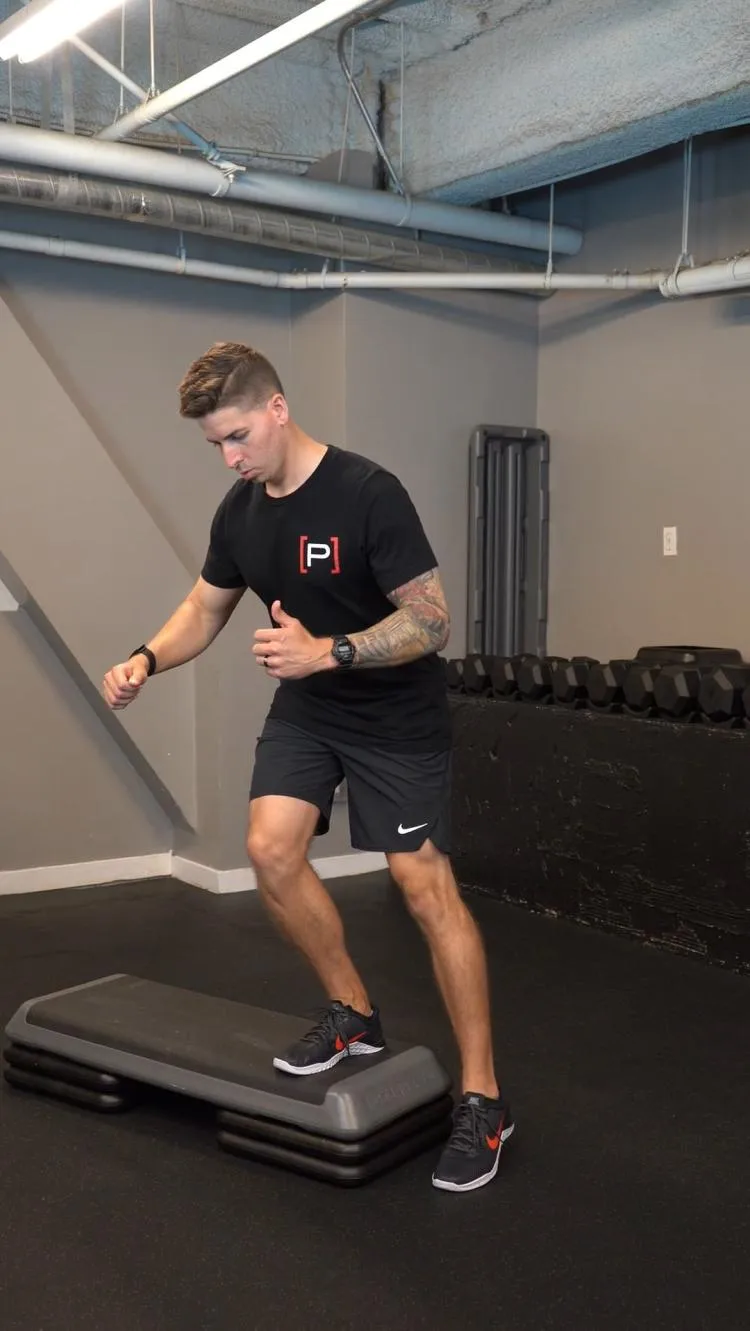
Lateral Step Down
View exercise instructions
- HOW: Stand on the edge of a box/step and balance with all of your weight on the leg you want to exercise. The other leg will be hovering off the edge of the step. Slowly lower your hips, lightly tap the ground with your leg that is in the air, and then come back up.
- FEEL: You should feel all of the thigh muscles and butt muscles working in the leg that you are standing on.
- COMPENSATION: Don’t let the knees cave in or bow out. Be sure to maintain equal weight distribution throughout the entire foot of the standing leg.
Our quads and hip abductors are 2 of the most used muscles during running. The lateral step down will help increase strength, control the knee joint, promote eccentric strength, and promote proper control in the frontal plane.
Exercise 03 of 08
Exercise demonstration
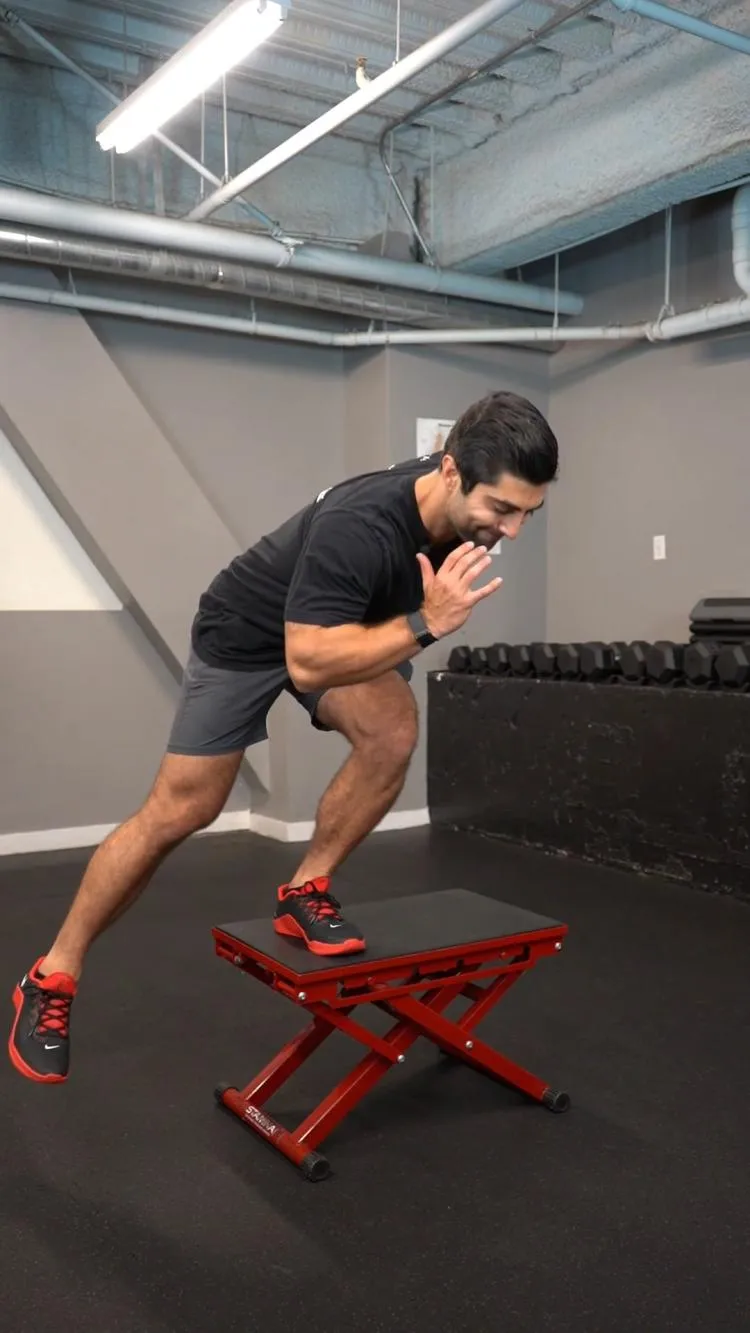
Lateral Step Down To Single Leg Balance
View exercise instructions
- HOW: Stand on top of an elevated surface. Shift your weight to one leg and bend the other knee up. Begin to bend the knee you are standing on and hinge forward at the hips as you straighten your other leg down to the side of the surface. Once you have reached a point that is as low as you can comfortably go, push back into the surface and return to the single leg balance position.
- FEEL: You should feel the muscles in your thigh working.
- COMPENSATION: Don’t twist your body as you squat down on the one leg.
You can progress the lateral step down by increasing the depth of your step down as well as incorporating single limb balance to further emphasize stability.
Exercise 04 of 08
Exercise demonstration
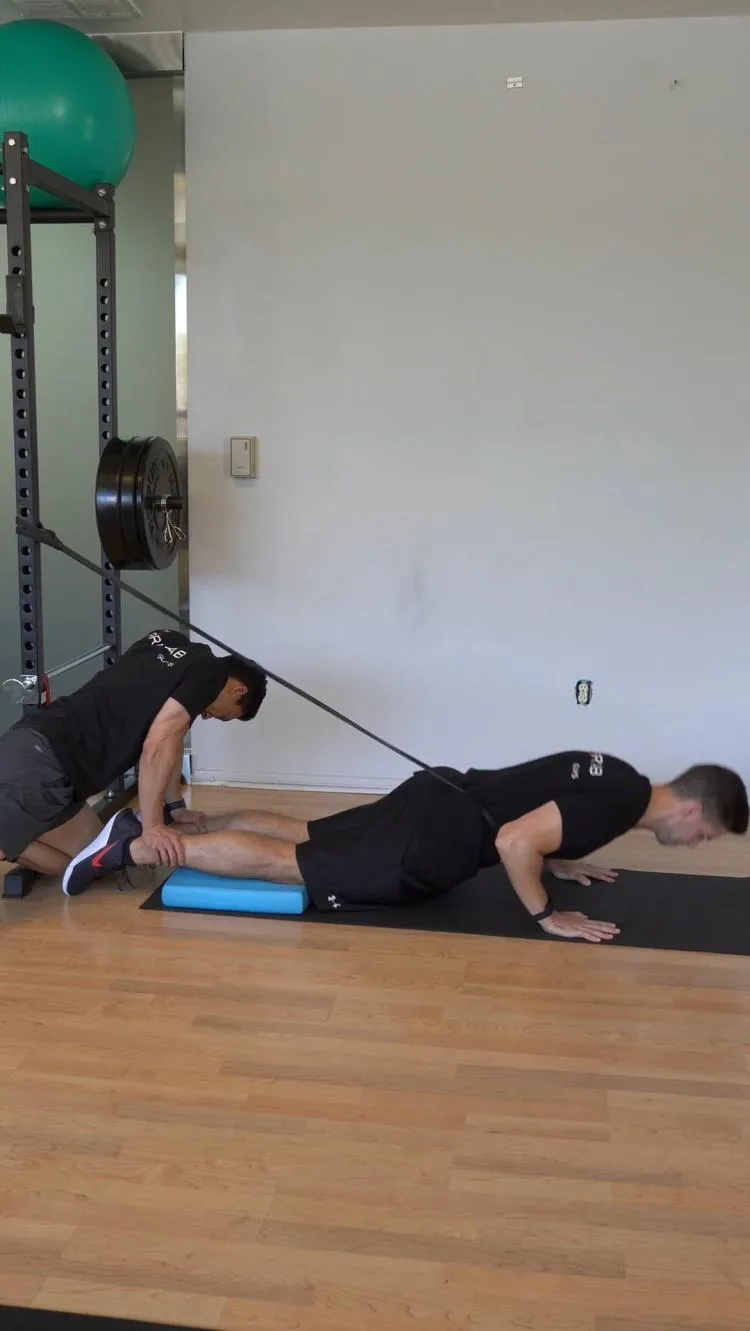
Nordic Hamstring Curl - Assisted
View exercise instructions
- HOW: Get set-up in a tall kneeling position with something under your knees for comfort and with a partner or weight holding your ankles down. Have a band around your torso that is anchored behind you with tension on it for assistance with the exercise. While keeping your core tight and trunk straight, perform the exercise by leaning forward as far as you can that you can control, then quickly lower yourself down, catch yourself with your hands, and push yourself away from the ground to return to starting position.
- FEEL: You will feel your hamstring muscles working very hard with this exercise. You will also feel your core muscles working to keep your trunk in a good position.
- COMPENSATION: Do not round or bend your back. You should be able to draw a straight line from your knees to your forehead throughout the exercise
/8c847c7c77
The Nordic Hamstring Curl is the gold standard for improving eccentric hamstring strength. However, this is an advanced eccentric strengthening exercise and extremely challenging for the average person to begin with.
To work up to the Nordic Hamstring Curl, use your arms to slowly lower yourself to the ground and to help you push up. As you get better at this exercise, incrementally reduce how much you depend on your arms!
The 5 MOST IMPORTANT Exercises for Runners
Phase 3 Power Exercises
Exercise 05 of 08
Exercise demonstration
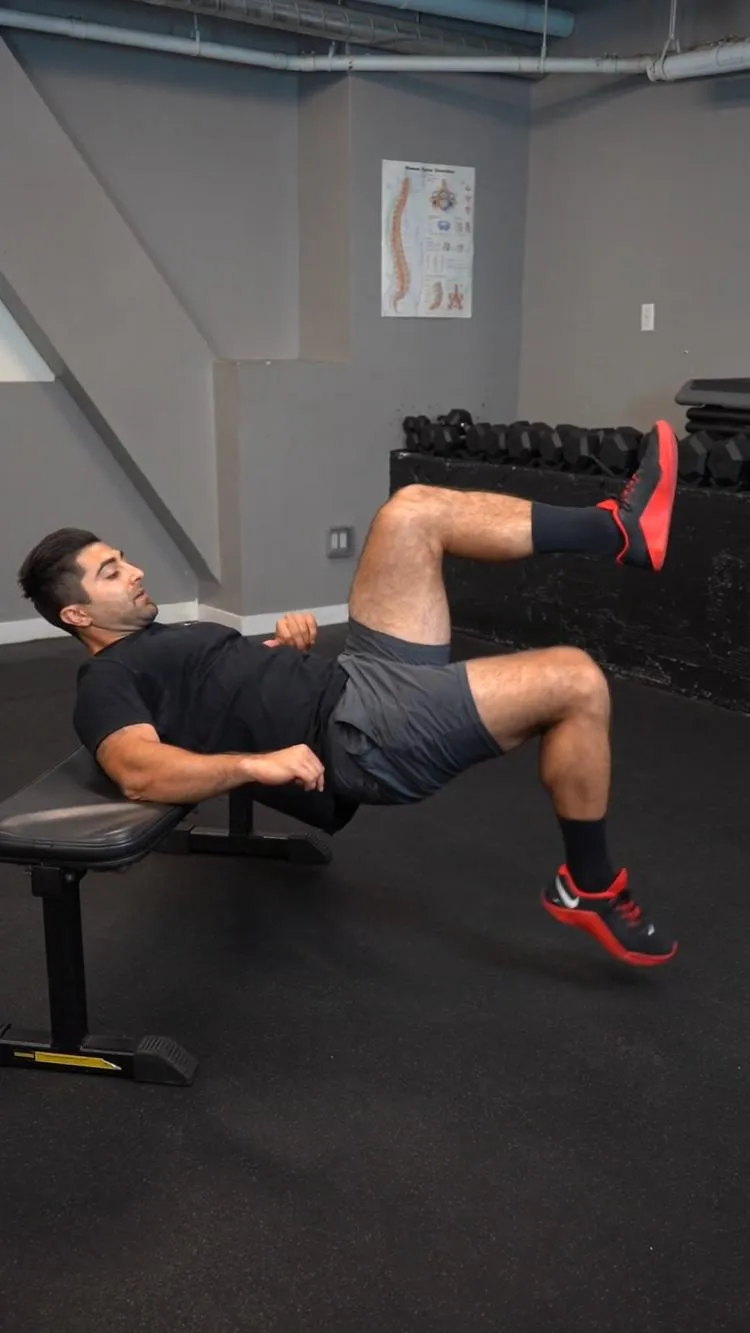
Single Leg Hip Thrust - Jump
View exercise instructions
- HOW: Begin by placing your upper back on an elevated bench surface. Your shoulder blades should be just above the edge. Have your feet shoulder width apart and flat on the ground. Your knees bent with your feet slightly behind your knees. Push into the ground with one leg creating power pushing your hips up towards the ceiling. As your hips come up, hop up with that foot and land in the same spot.
- FEEL: You should feel your hamstring and core muscles working as you thrust your hips and hop off of the ground
- COMPENSATION: Keep your back on the bench. Don’t hop up with your foot until your hips are up.
Runner's need great hip extension strength to improve their efficiency with swing though, promoting greater knee flexion angles, ultimately promoting improvements in speed
Exercise 06 of 08
Exercise demonstration
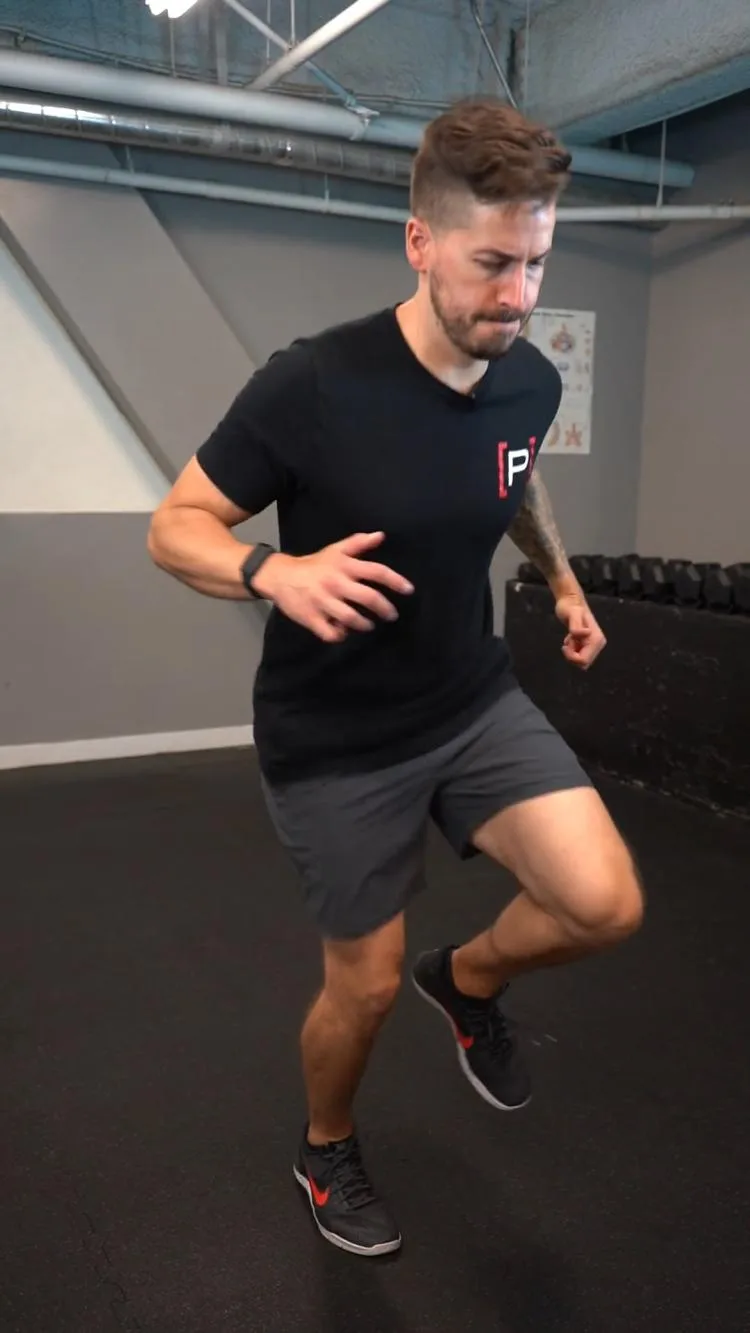
Single Leg Pogos - Sagittal
View exercise instructions
- HOW: While standing, shift your weight to one leg with your knee slightly bent and the opposite knee bent causing lifting your foot off of the ground. From this position, raise your heel off the ground pushing the balls of your feet into the ground and hop forwards and backwards in a continuous, controlled, motion. Try to be as springy as possible and quickly absorb the force and explode off the ground with your ankle!
- FEEL: You will feel all the muscles in your legs working.
- COMPENSATION: Landing Position. Make sure your knees are aligned over your toes. They should not dive inwards on the landing. Your goal is to absorb as much of the landing forces as you can and land softly. That means that you want your hips and knees to bend as much as they need to, to absorb the force. If you do not let them bend much, you will land "stiff" and hard. Let your hips go back and while keeping your chest up to help absorb the forces. Your toes should touch the ground first when you land and quickly your heels will follow. You should land in a "ready position" like you would if you were playing sports, with your weight ever so slightly forward on the balls of your feet. You should not fall forward or backwards after landing.
- For a detailed video on landing mechanics on one leg, click here: https://www.youtube.com/watch?v=6RCOGM5tZRM
Pogos are a great way to promote stiffness through the gastrocnemius/soleus complex as well as the Achilles tendon, which is often the culprit of pain for runners.
Exercise 07 of 08
Exercise demonstration
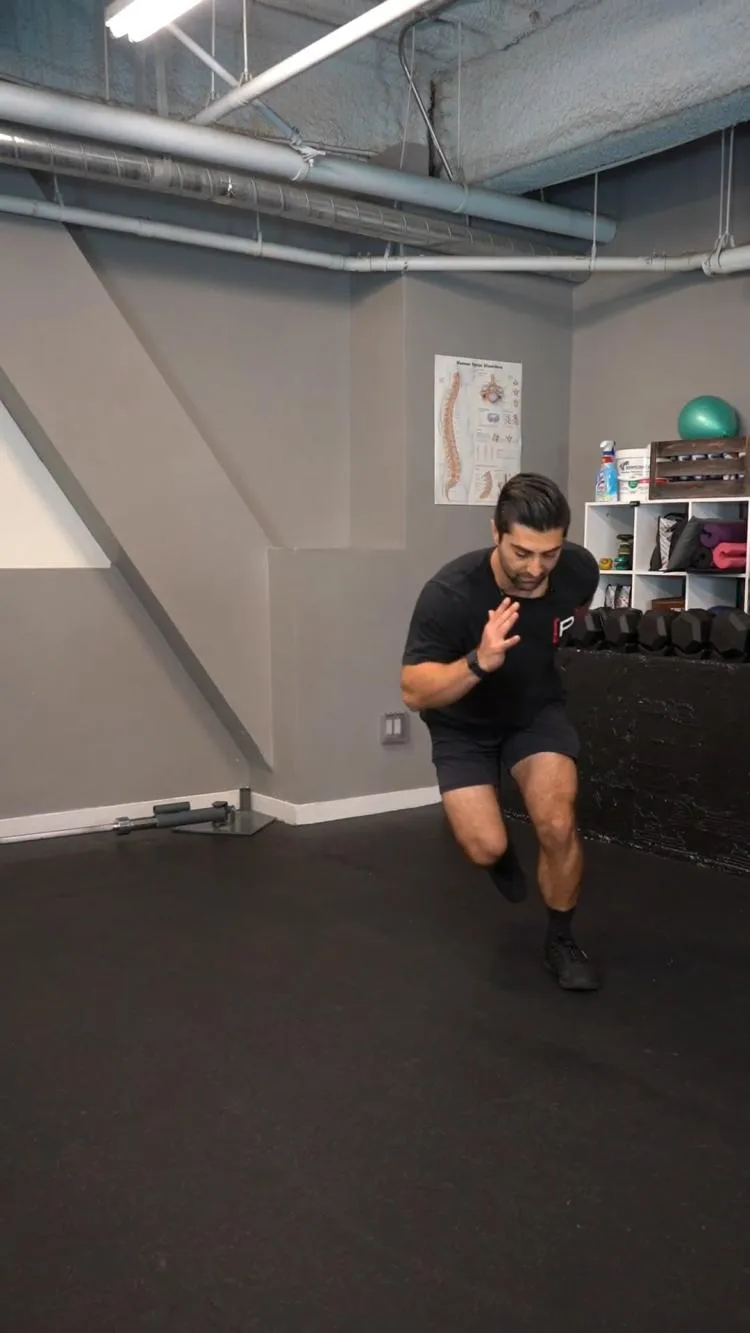
Lateral Bounding - Continuous
View exercise instructions
- HOW: Start in a standing athletic position. Shift your bodyweight to one side, then jump to the other side landing with the opposite foot. Land softly and stay strong in the hip, knee, and ankle as you land. Then, rapidly push off with that leg and land back on your other leg, where you started. Repeat this going in a side to side motion trying to minimize how long you stay on leg.
- FEEL: You should feel your hip, thigh, and calf muscles working.
- COMPENSATION: Keep your chest up, don’t arch at the back as you go side to side. Jump in a lateral motion, not forward or backward. Land on the balls of your feet, not flat footed.
Lateral bounding helps the runner improve propulsion in the frontal plane. You may think that because running is a sagittal sport, you should only train in the sagittal plane. However, it is still beneficial to work on running-based exercises in all planes of motion!
A great exercise to work on power through the legs. You can even focus more on the power by working on continuous box jumps, as the runner gets back down from the box, they spring back up as quickly as possible, which promotes increases in type II muscle fiber recruitment.
Exercise 08 of 08
Exercise demonstration
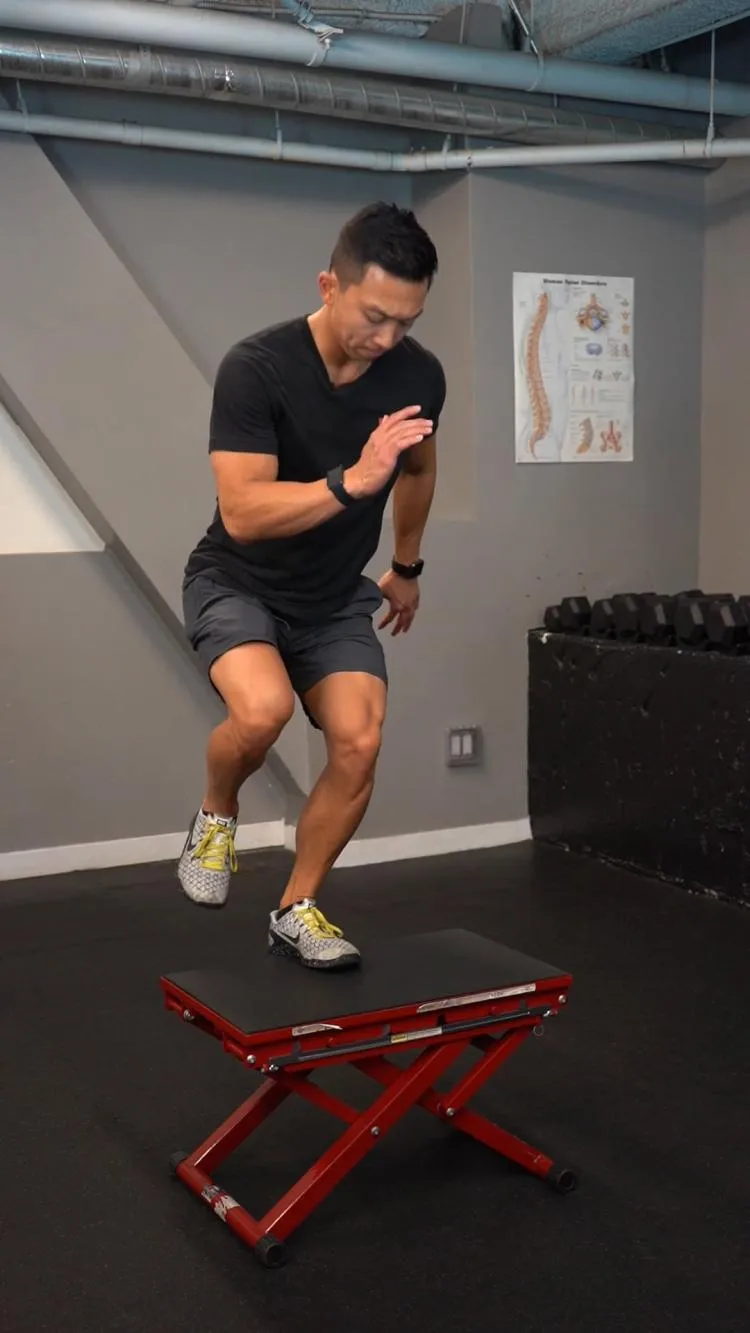
Forward Box Hop
View exercise instructions
- HOW: Shift your weight to one leg with your knee slightly bent and the other leg off of the ground. Slightly bend down and push into the ground, jump up onto the box landing on the same leg.
- FEEL: You will feel all the muscles in your legs working.
- COMPENSATION: Landing Position. Make sure your knees are aligned over your toes. They should not dive inwards on the landing. Your goal is to absorb as much of the landing forces as you can and land softly. That means that you want your hips and knees to bend as much as they need to, to absorb the force. If you do not let them bend much, you will land "stiff" and hard. Let your hips go back and while keeping your chest up to help absorb the forces. Your toes should touch the ground first when you land and quickly your heels will follow. You should land in a "ready position" like you would if you were playing sports, with your weight ever so slightly forward on the balls of your feet. You should not fall forward or backwards after landing.
- For a detailed video on landing mechanics on one leg, click here: https://www.youtube.com/watch?v=6RCOGM5tZRM
This is a progression of the double leg box jump where the runner now works on power through one limb at a time!
Closing Thoughts
In regards to runner's knee, it is a complex diagnosis that is multifactorial. When first evaluating your runner, gather a detailed subjective that gives you a great background in regards to the runner's history. When you first are starting rehab for your runner, ensure they are bought into the fact that he or she may not be able to run for a period of time to avoid further disruption at the knee! The progressive phases of rehab are focused not only on dynamic mobility initially, but largely focused on progressive strengthening, stability, and power-based exercises to not only promote increased stiffness of the tendons and other soft tissue but also improve the efficiency of the runner!
Take The Struggles Away From Your Programming For Runners
The Prehab Exercise Library is the best library available to the public that can optimize the resources you are providing for your patients and clients! Click HERE to gain access today.
Clinician
Sherif Elnaggar, PT, DPT, OCS, SCS
Prehab Head of Content
 Sherif graduated from Temple University with a Bachelor’s of Science Degree and a concentration in Kinesiology. He then received his Doctorate of Physical Therapy Degree from DeSales University, graduating with honors of the professional excellence award and research excellence award. After his graduate studies, he served as Chief Resident of the St. Luke’s Orthopedic Physical Therapy Residency Program. Sherif is a Board Certified Orthopedic Clinical Specialist. Sherif focuses on understanding how movement impairments are affecting function while also promoting lifestyle changes in order to prevent recurrences of injury. His early treatment interests include running related injuries, adolescent sports rehab, and ACL rehab in lower extremity athletes. He also has been involved in performance training for youth soccer players. Outside of working as a physical therapist, he enjoys traveling, running and cycling, following Philadelphia sports teams, and spending time with his family.
Disclaimer - The content here is designed for information & education purposes only and is not intended for medical advice.