

On this page 5 sections
Your guide
What you'll learn
Have you ever played the game “Two Truths and a Lie”? You are given two factual statements and then one that is incorrect. Give it a try.
- Pelvic organ prolapse (POP) is a common sign that is often experienced after multiple births.
- If you have pelvic organ prolapse, you should never squat again.
- Strength training over time, as well as a proper pelvic floor contraction with increased intraabdominal pressure, has the potential to prevent and treat pelvic organ prolapse for those performing strenuous exercise.
If you selected fact number two, you correctly identified the lie. You see, POP has been thought to be negatively impacted by exercise. It has been speculated that weight lifting, long distance running, and even triathlons could increase the risk of POP. However, we are seeing a shift in this thought process. In this blog we will review what pelvic organ prolapse is, pelvic organ prolapse and exercise, and ways that we can ensure we are best supporting our pelvic floor when lifting weights…and yes, folks, car seats, kettlebells, toddlers, grocery bags, and helping Grandma up from her recliner all count as lifting heavy!
What is Pelvic Organ Prolapse?
Pelvic organ prolapse refers to the descent of organs of urination, defecation, or sexual function into the vagina. While POP can seem very daunting, it is not uncommon. Roughly 50% of women who have had kids experience POP, with roughly 3%-21% experiencing symptoms such as vaginal protrusion, pelvic heaviness, bladder, bowel, and sexual dysfunction (1). Those who experience POP may feel discomfort after long days of being on their feet, may have pain with intercourse, difficulty with urination or defecation, or simply not like the way that POP presents aesthetically.

There are a handful of risk factors that can contribute to POP including obesity, genetics, number of pregnancies, method of delivery, and menopause (2). Let’s take a minute to discuss the impact of childbearing and delivery on POP. Multiparity, defined as an individual who has given birth more than once, is a strong predisposing factor. Those with one child have demonstrated a fourfold increase in the likelihood of experiencing POP requiring medical attention, while those with two children are 8.4 times more likely to experience POP compared with women with no children (2).
READ: POST PARTUM EXERCISES

The natural process of menopause can also increase the risk of POP. The decrease in the hormone estrogen that takes place during menopause causes the integrity of connective tissue in the pelvic floor to change. This connective tissue assists in supporting both the organs and surrounding muscles of the pelvic floor. As the quality of the connective tissue changes, so does the anatomical support of the organs of urination, defecation, and sexual function (2). This can ultimately lead to POP, even in those who have never been childbearing.
While these statistics and facts may seem alarming, they are not meant to be anything but validating and informative. Recognizing that POP is common throughout the lifespan of a woman allows us to ask questions, seek help, and move through the world with less fear! Power is knowledge, and if we recognize that POP is prevalent within the childbearing population, we can better support one another to manage and navigate this diagnosis.

Pelvic Organ Prolapse and Exercise
POP can limit willingness to participate in social activities, sports being included. A study that assessed 4,556 women with self-reported pelvic floor dysfunction found that 37% stopped exercising secondary to POP symptoms (3). When assessing the prevalence of symptomatic POP amongst different sports, 23% of power and Olympic weightlifters reported symptomatic POP (4). Another study reported a minimal POP prevalence of 12% in runners compared to 7% in CrossFit participants (5). A recent study found a small prevalence of just 5% in triathletes (6). It’s important to recognize that prevalence is not equivalent to causation. And while we do see the prevalence of POP amongst sports, specifically those with greater impact and increases in intraabdominal pressure, we cannot state that these activities are creating pelvic organ prolapse.
READ: PELVIC FLOOR DYSFUNCTION IN ATHLETES

So, now what? Well, for those who are experiencing symptoms of POP with exercise, we want to provide strategies and tools to support and minimize activity-limiting symptoms. Secondly, we want to discourage the cessation of exercise secondary to POP. What we do know is that pelvic floor muscle training, performing a pelvic floor contraction during and before an increase in intra-abdominal pressure, and strength training (yes, strength training) can prevent and treat pelvic organ prolapse in women performing strenuous exercise (7). In fact, one study reported that women who were lifting heavier weights and exercising reported fewer POP symptoms than those lifting light or no weights at all (5). This further confirms that exercise is not a culprit when it comes to POP symptoms, and with the right support team exercising with POP is possible, and even encouraged!
In addition to exercising, several passive tools can be utilized for those with symptoms of pelvic organ prolapse. Have you ever heard of a pessary? Pessaries are prosthetic devices that are inserted into the vagina to provide support to the organs. They are flexible, removable, and come in many different shapes and sizes. A medical provider, such as an OB-GYN or a nurse practitioner, with training in the fitting and sizing of pessaries, can assist in determining if this tool is right for you.

While pessaries provide internal support, several garments can assist in providing external support, as well. These garments are designed to provide compression to the pelvic floor, externally, to assist in providing POP support. Your OB-GYN or pelvic floor PT may be well-versed in POP support garments and can guide you to some of their preferred brands and types.
As always, pessaries and compression garments work best when paired with pelvic floor physical therapy. If you feel that a pessary or compression garment can be helpful, awesome! Please ensure that you have a PT that can monitor your progress and assist in developing a program specific to the needs of pelvic floor strength to get you back to all of your loved activities. Hopefully, with a little less passive support and a little more pelvic floor support.
What Can We Do Regarding Exercise?
If you are experiencing pelvic heaviness, dragging or bulging, pain with intercourse, or difficulty urinating or defecating, POP could be contributing! Remember this is not a moment to hit the panic button, but instead an opportunity to gain knowledge and tools to properly manage these symptoms.
Try these exercises:
Exercise 01 of 04
Exercise demonstration
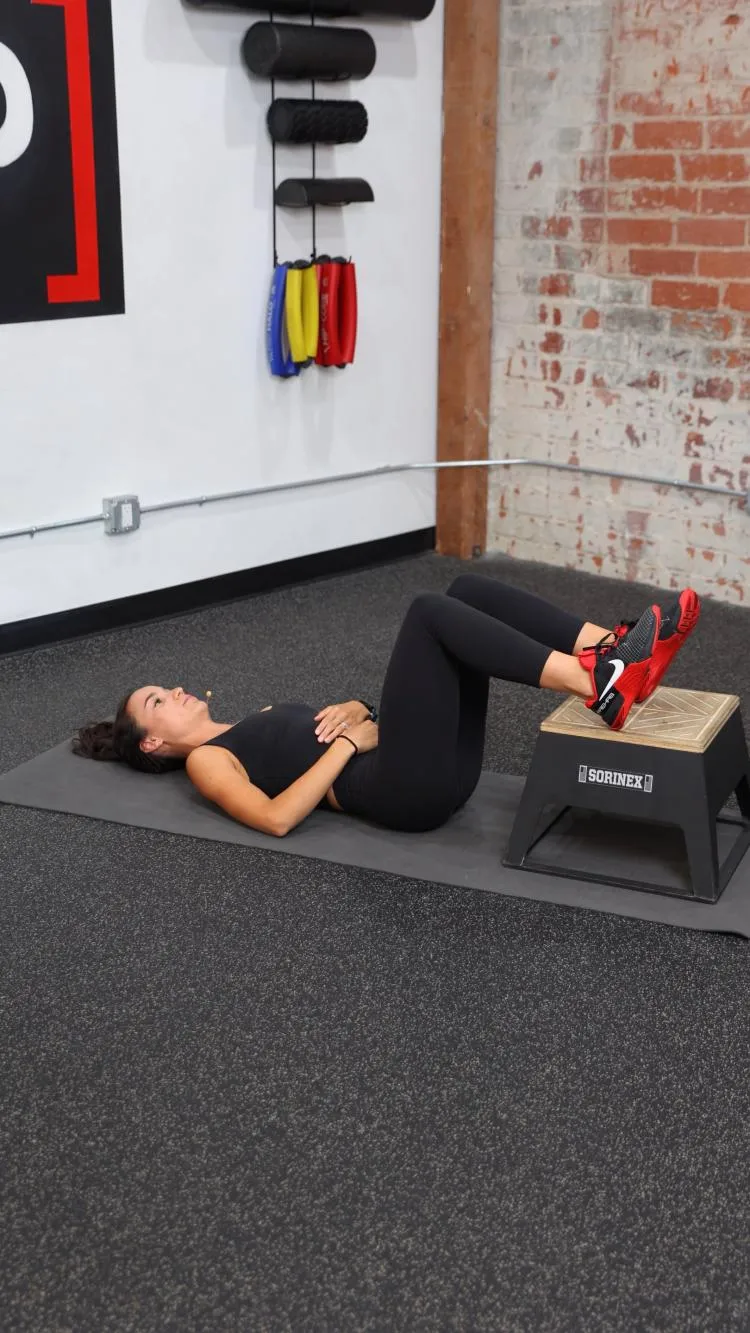
Supine 90-90 3D Breathing
View exercise instructions
- HOW: Begin by lying on your back. Find a bench, ottoman, chair, or couch to rest the feet on. The hips and knees are at a 90 degree angle. Take a big belly breath in to relax the pelvic floor. Breathe out to initiate a pelvic floor contraction, so squeezing and lifting the area between the sit bones. Dig the heels slightly down into the surface you are resting your feet on.
- FEEL: You will feel your hamstrings and core engaged.
- COMPENSATION: Keep the back flat to the ground.
Exercise 02 of 04
Exercise demonstration
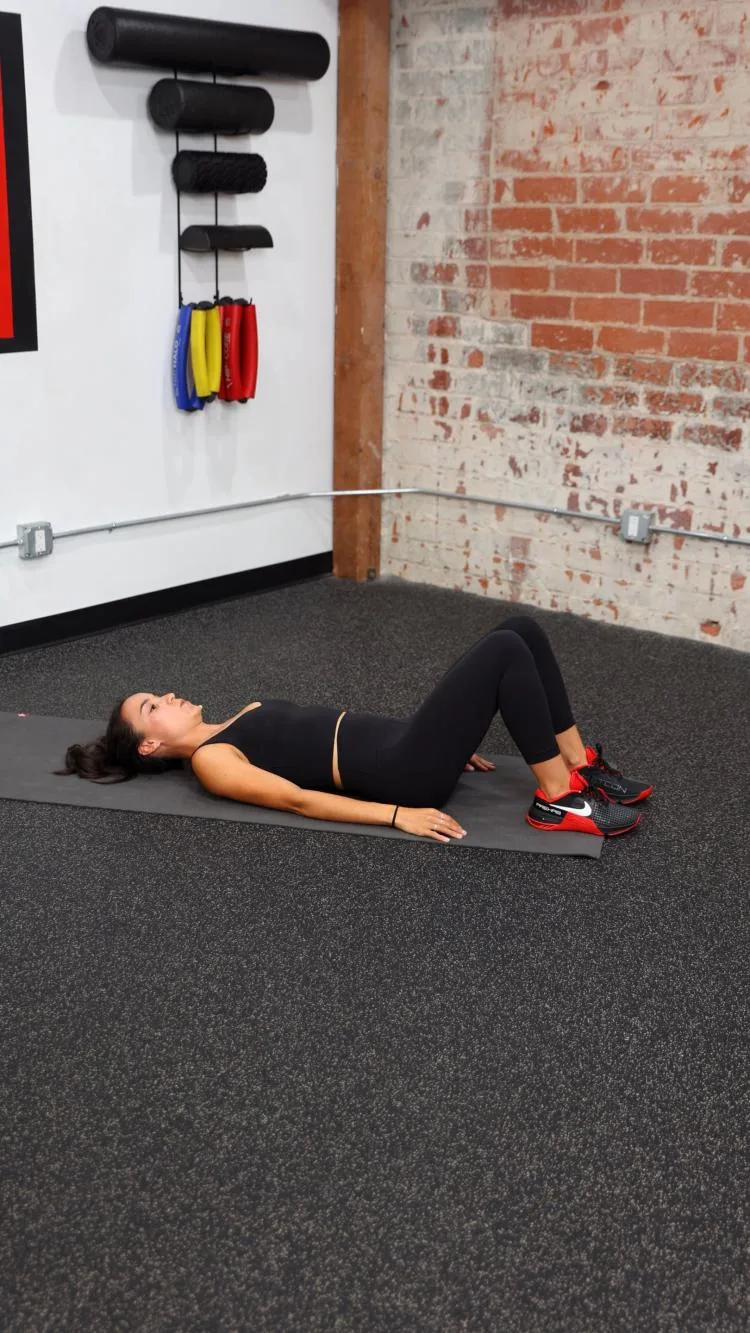
Bridge - Pelvic Floor Contraction
View exercise instructions
- HOW: Begin by lying on your back. As you breathe in, breathe into the belly and the area between the sits bones, letting the pelvic floor relax. Breathe out bringing the ribs down, contracting the pelvic floor as you lift the hips to the ceiling. Return to the starting position.
- FEEL: You will feel your glutes and hamstrings working. You will feel your core working.
- COMPENSATION: Avoid arching the back or flaring the ribs. Avoid shifting the hips side to side.
Exercise 03 of 04
Exercise demonstration
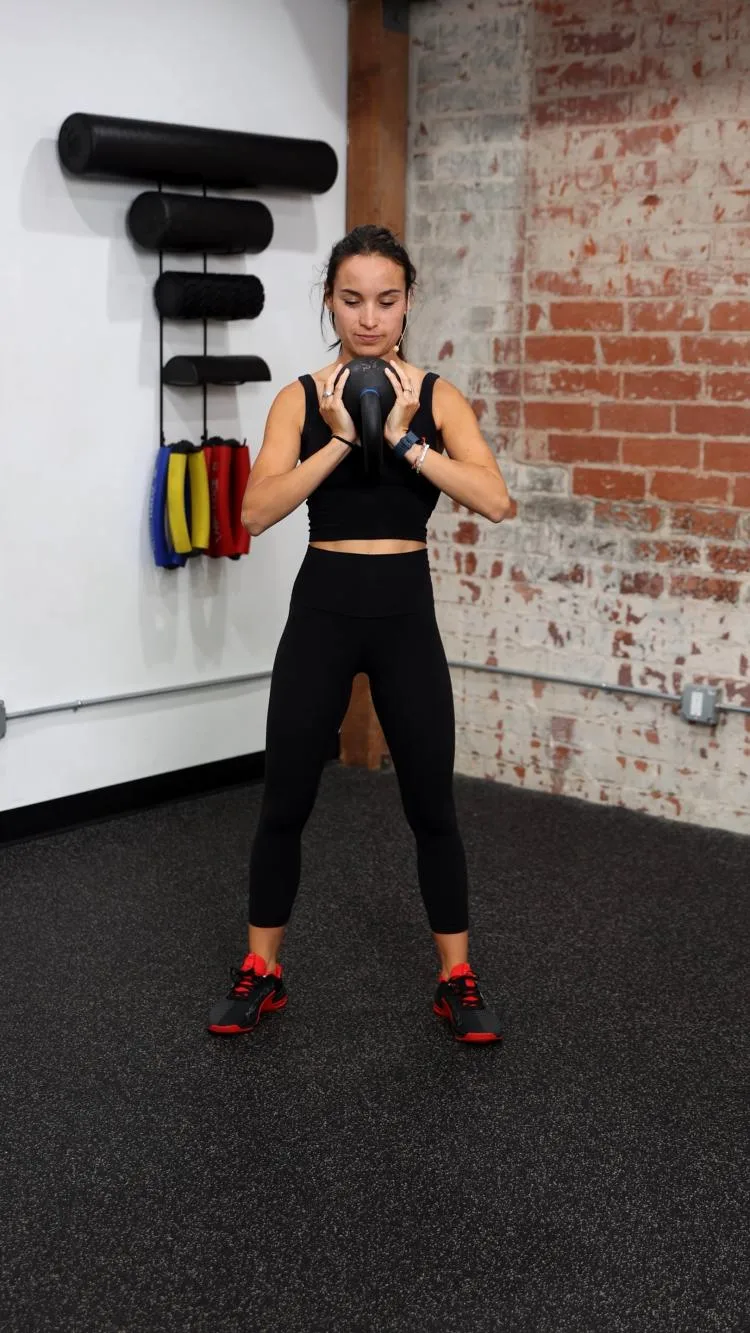
Goblet Squat - Pelvic Floor Contract & Relax
View exercise instructions
- HOW: Begin in a standing position holding a weight comfortably at your chest. As you breathe in, breathe into the belly and the area between the sits bones, letting the pelvic floor relax. Lower your body towards the ground. Drive your knees out during the descent. Breathe out bringing the ribs down, contracting the pelvic floor as you stand back up. Use your glutes to come back up.
- FEEL: You will feel the core, glutes, and quadriceps working.
- COMPENSATION: Avoid arching your back.
Exercise 04 of 04
Exercise demonstration
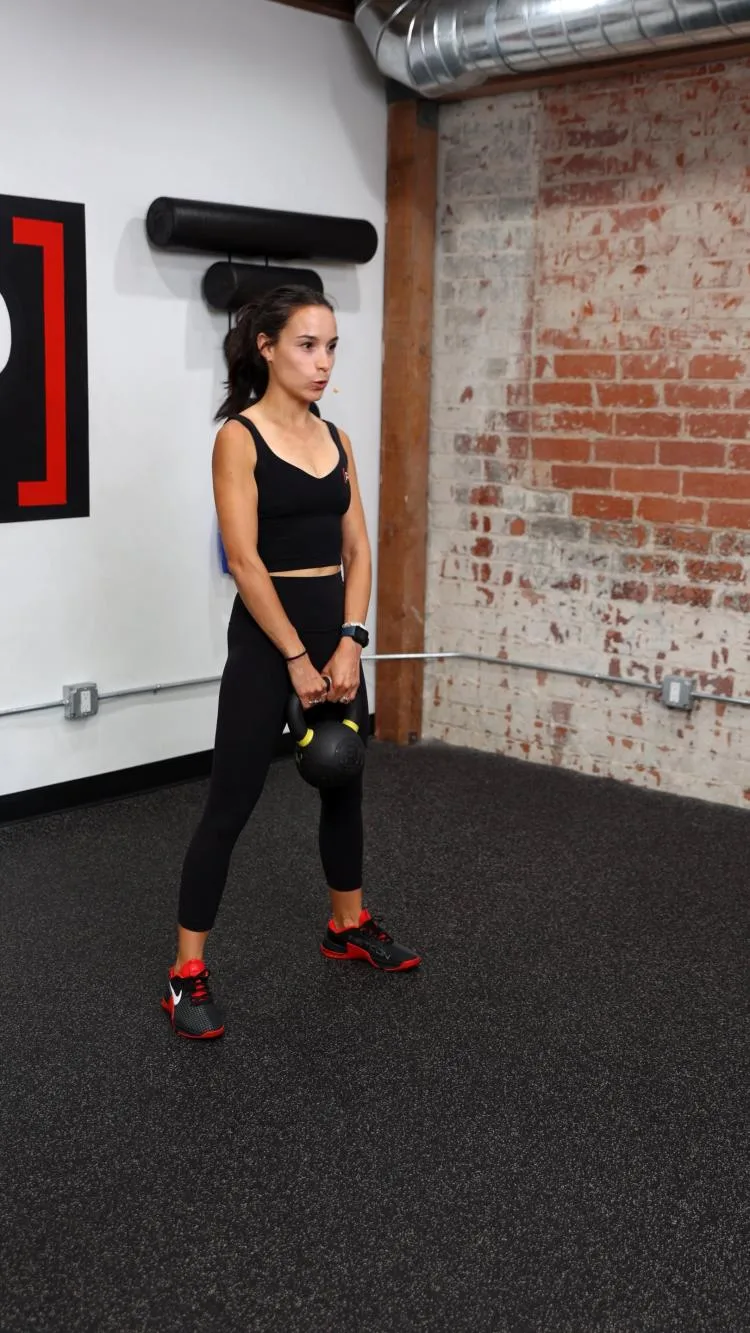
Deadlift - Kettlebell, Pelvic Floor Contraction
View exercise instructions
- HOW: Begin in a standing position with a kettlebell in front of you. Keep the shoulder blades squeezed to hold the weight. As you breathe in, breathe into the belly and the area between the sits bones, letting the pelvic floor relax. Let the weight pull your hips back, with the gaze following the direction of the body. Breathe out bringing the ribs down, contracting the pelvic floor. Squeeze through the hips to return to starting tall position. Focus on screwing the feet out into the ground.
- FEEL: You will feel your core and glutes working.
- COMPENSATION: Avoid arching the back.
Don’t forget that the pelvic floor and diaphragm work with one another! As the diaphragm rises to release air the pelvic floor also naturally contracts. When lifting your toddler at home, performing squats at the gym, or rising from bed in the morning, exhale as you initiate the standing motion to better support the pelvic floor.
A similar strategy can be applied to increases in intraabdominal pressure, such as coughing or sneezing. A pelvic floor contraction can be initiated before the increase in intraabdominal pressure to support the prolapse with the downward force from the increase in intraabdominal pressure.
LISTEN: IS IT SAFE TO EXERCISE DURING PREGNANCY?

If you are experiencing symptoms of POP and are wanting to return to activities of impact but are concerned about if the pelvic floor can provide the proper support, give this assessment a try.
In standing, with one foot propped up on a stair or stool, or slightly in front of the other:
- 8-12 reps of a 6-8 second maximum pelvic floor contraction
- 10 reps of a quick contraction and relaxation
- 60-second hold at 30-50% of a maximum pelvic floor contraction
If any of the above pelvic floor strength and endurance assessments feel challenging or unachievable we invite you to find a pelvic floor program to assist with this!
If POP symptoms are unchanging, or you begin to experience new or worsening symptoms, your primary care provider, OB-GYN, or a physical therapist with specialty training in the pelvic floor can best assist you in your next steps.
Closing Thoughts
Pelvic organ prolapse refers to the descent of the organs of urination, defecation, and sexual function and can cause symptoms of pelvic heaviness, dragging, bulging, pain with intercourse, and difficulty with urination and defecation. Many naturally occurring events such as childbearing and menopause increase the risk of experiencing symptomatic POP. And while this may come across as alarming, it allows for an opportunity to recognize the commonality and prevalence of POP amongst those with female anatomy.
For those with symptomatic POP, it was once thought that exercise may cause or worsen signs and symptoms. However, we must recognize that exercise does not cause pelvic organ prolapse, and with the correct tools, exercising can be accomplished successfully and can even assist in the management of POP.
Let’s revisit the game at the beginning…
- Pelvic organ prolapse (POP) is a common sign that is often experienced after multiple births.
- If you have pelvic organ prolapse, you can squat. And squat heavy.
- Strength training over time, as well as a proper pelvic floor contraction with increased intraabdominal pressure, have the potential to prevent and treat pelvic organ prolapse for those performing strenuous exercise.
Did you catch the change? All truths, no lies when it comes to POP.
References
- Kurz J, Borello-France D. Movement System Impairment-Guided Approach to the Physical Therapist Treatment of a Patient With Postpartum Pelvic OrganProlapse and Mixed Urinary Incontinence: Case Report. Phys Ther. 2017 Apr 1;97(4):464-477. doi: 10.2522/ptj.20160035. PMID: 27587802.
- Weintraub AY, Glinter H, Marcus-Braun N. Narrative review of the epidemiology, diagnosis and pathophysiology of pelvic organ prolapse. Int Braz J Urol. 2020 Jan-Feb;46(1):5-14. doi: 10.1590/S1677-5538.IBJU.2018.0581. PMID: 31851453; PMCID: PMC6968909.
- Dakic JG, Cook J, Hay-Smith J, Lin KY, Frawley H. Pelvic floor disorders stop women exercising: A survey of 4556 symptomatic women. J Sci Med Sport. 2021 Dec;24(12):1211-1217. doi: 10.1016/j.jsams.2021.06.003. Epub 2021 Jun 17. PMID: 34244084.
- Skaug KL, Engh ME, Frawley H, Bø K. Prevalence of Pelvic Floor Dysfunction, Bother, and Risk Factors and Knowledge of the Pelvic Floor Muscles in Norwegian Male and Female Powerlifters and Olympic Weightlifters. J Strength Cond Res. 2022 Oct 1;36(10):2800-2807. doi: 10.1519/JSC.0000000000003919. Epub 2020 Dec 3. PMID: 33278274.
- Forner LB, Beckman EM, Smith MD. Do women runners report more pelvic floor symptoms than women in CrossFit®? A cross-sectional survey. Int Urogynecol J. 2021 Feb;32(2):295-302. doi: 10.1007/s00192-020-04531-x. Epub 2020 Sep 21. PMID: 32955598.
- Yi J, Tenfelde S, Tell D, Brincat C, Fitzgerald C. Triathlete Risk of Pelvic Floor Disorders, Pelvic Girdle Pain, and Female Athlete Triad. Female Pelvic Med Reconstr Surg. 2016 Sep-Oct;22(5):373-6. doi: 10.1097/SPV.0000000000000296. PMID: 27403753.
- Bø K, Anglès-Acedo S, Batra A, Brækken IH, Chan YL, Jorge CH, Kruger J, Yadav M, Dumoulin C. Strenuous physical activity, exercise, and pelvic organ prolapse: a narrative scoping review. Int Urogynecol J. 2023 Jun;34(6):1153-1164. doi: 10.1007/s00192-023-05450-3. Epub 2023 Jan 24. PMID: 36692525; PMCID: PMC10238337.
About The Author
Lyndsay Provencio, PT, DPT
Prehab Writer & Content Creator

Dr. Lyndsay Provencio graduated from Colorado State University with a BS in Health and Exercise Science and a concentration in Sports Medicine. After multiple personal sports-related injuries and discovering a passion for healing through movement, Lyndsay attended Creighton University to receive her Doctorate of Physical Therapy. An avid runner herself, she has a particular interest in working with high school, recreational, and elite endurance athletes and has undergone specialty training in pelvic floor rehabilitation, postpartum care, and management of the female athlete to better serve her clientele. Through this specialty training, she has acquired a Certificate of Achievement in Pelvic Health Physical Therapy through the American Physical Therapy Association. Lyndsay now owns her own practice StrongHER in Park City, UT where she specializes in female athletics and care of pregnant and postpartum individuals. Additionally, Lyndsay is BSPTS C2 certified in scoliosis specific exercises and has found a niche working with adolescents with scoliosis to improve overall spinal health. No, you’re not seeing double! Lyndsay is an identical twin to Lauren Lynass, one of our Prehab rockstars. A native of Colorado, Lyndsay is an adventure seeker who loves to hike, camp, and race her twin sister on the mountain trails. When she isn't exploring Park City's outdoor playground, you can find her curled up with a cup of tea and a good book. Follow along @strongher_dpt on Instagram!