


On this page 14 sections
Your guide
What you'll learn
Americans consume a large majority of the world’s opioids. Approximately 80% of the global opioid supply is consumed in the United States, a country that represents a mere 5% of the global population. There were approximately 300 million pain prescriptions written in the US in 2015 equating to a $24 billion market. While we seem to know a fair amount about pain from the financial side, the actual science behind pain is still somewhat of an enigma. Let's take a closer look at pain science.
Numbers on Chronic Pain
The Center for Disease Control and Prevention (CDC) estimates 50 million U.S. adults experience chronic pain with direct annual medical costs of $560-600 billion! Chronic pain has really become a silent epidemic. One strategy attempting to treat chronic pain is the use of opioids, which in recent years has quadrupled in sales. According to Manchikanti et al 2010, approximately 80% of the global opioid supply is consumed in the United States including 99% of the global hydrocodone supply! There were approximately 300 million pain prescriptions written in the US in 2015 equating to a $24 billion market even though there has been limited to no effect on changing the prevalence of chronic pain. Due to the potentially harmful effects and addictive properties of opioids, we have to look at different, new, and better treatment approaches to treat rather than "mask" pain.
Below we are going to cover the science of pain treatment concepts and outline strategies that we use with our patients and clients to reduce chronic pain!
So How Do We Treat Chronic Pain?
Notice the heading states, "treating" chronic pain. Is this really possible? Is treating chronic pain with short term solutions designed to simply mask symptoms the best we can do? If you are suffering from chronic pain, maybe it has even become your identity, we are here to tell you another identity can exist for you without the daily frustration of pain controlling your life. The state of chronic pain can make you feel frustrated, lost, and angered as you attempt to keep finding answers or solutions to combat this complex phenomenon. It's as if you are in a pond trying to stay afloat and instead of someone guiding you out of the pond, more flotation devices are thrown to you, simply keeping you just above the water. Well, it's time, let's get out of that water!
Opioids Are Out
The opioid epidemic took off in the 1990s as a pain management strategy in the United States. Interestingly, the United States uses an estimated 27,400,000 grams of hydrocodone annually compared with 3,237 grams for Great Britain, France, Germany, and Italy combined! One would think since prescriptions have quadrupled this must be an effective strategy to reduce chronic pain. Wrong! The prevalence of patient-reported pain has not changed in the United States in the past decade (Daubresse et al 2013). What has changed is a threefold increase in opioid abuse along with an increase in overdose deaths by 124 percent between 1999 and 2007 (Bohnert 2011). Opioids may have their time and place for some cases such as cancer treatment, end of life care, and if dosed correctly in acute situations, however, the CDC states, "experts agreed that opioids should not be considered first-line or routine therapy for chronic pain."
Maximize Your Movement and Control Your Pain With Fundamentals of Exercise

Construct the foundation to build the house upon. That is what fitness fundamentals is all about. We often try to rush the process instead of slowing down and making sure you have a good understanding of movement standards before loading a bunch of weight on top of it. What's the difference between a squat and a hip hinge? Should you be bench pressing if you can't do a push-up? Should you be running if you are unable to do a single leg stance? Let's take out the guesswork and take 4 weeks to answer these questions and to make sure you are set up for long term results in a fitness program!
Science of Pain Treatment Concepts: Natural Painkillers
The reason medications work is because your body already has the chemical compounds or receptors, it may just be too low or too high of a supply! Your body has natural painkillers (including endorphins, enkephalins, and serotonin) that some argue are stronger than over the counter NSAIDs. The opposite of these endogenous body compounds is exogenous painkillers like the ones that you need a prescription for such as morphine/codeine. The amount of endogenous painkillers that your brain releases is correlated to your emotional state. In fact, a strategy to help control your emotional state via meditation has been shown to significantly reduce pain states (Lumley et al 2012). If you are in a positive emotional state, your brain will release an increased number of natural painkillers. An example of this is if LeBron James tweaks his neck during the 4th quarter of an important game. He’s in a positive emotional state trying to get the win, so his brain will release a large number of endogenous painkillers, making him not feel the pain. Conversely, if Joe Schmoe tweaks his neck while doing menial tasks in his cubicle at a job that he doesn’t like, putting him in a negative emotional state, his brain will not release as many endogenous painkillers and he will experience more pain, despite incurring the same injury as LeBron.
Combating Chronic Pain Without Medication
Not only is this a realistic option, but it is also the recommended option! In order to create long-term treatment approaches we first need to start with the difference between top-down and bottom-up processing. Top-down processing involves using our consciousness and previous knowledge to influence our perception, whereas bottom-up processing is data-driven and occurs at the unconscious level. The output of pain relies on both bottom-up and top-down mechanisms. Learn more about how we experience pain below!
Is Cracking My Joints Bad?
Top-Down Approaches
Our previous knowledge affects our current processing and therefore decision making. The goal of pain science education is to change perspectives on pain to gain new knowledge, potentially changing processing and the output of pain! As stated by philosopher Epictetus, "People are not disturbed by things, but by the view, they take of them." Let's see if we can change your perspective on pain below!
Perspective: Is Pain A Bad Thing?
The all too classic answer to this is, it depends! Pain is a great thing when we consider what it does for us initially when suffering from an injury. The pain response signals us to protect the injured area from further damage and plays a role in the healing process. It allows us to learn how much is too much during the recovery process. Furthermore, from a developmental aspect, it gives us constraints and plays a role in nurturing. In fact, when people are incapable of feeling pain, a condition called Congenital insensitivity, they often have a shortened life expectancy, and/or numerous health issues that go undetected. If pain is meant to signal a threat and causes us to avoid potential danger then we could argue it may be one of the best sensations we are equipped with!!! Furthermore, the developing child that experiences pain can learn nurturing from their caregivers even if it was a random band-aid slapped on that seemed to get rid of the pain!
But when is pain a bad thing?
Initially, the pain response is desirable, if the pain is felt chronically then our perspective changes to view it as an undesirable sensation. Furthermore, we submit to you that maybe comfort is a bad thing! For example, sitting on the couch eating chips and binge-watching Netflix is fairly comfortable, running a half marathon; not so much. Sleeping in late vs waking up early to get a workout in, choosing to eat veggies vs chicken wings, taking the bus vs riding a bike to work, riding the escalator vs taking the stairs. Typically, the choice that is somewhat uncomfortable leads to robust health benefits. Another factor that can help to shift our perspective is understanding the various types of pain.
Understanding The Different Types Of Pain
Pain can come from multiple sources. Let's go into detail about some of those sources below.

Peripheral nociceptive pain, aka “issues in the tissues,” stems from inflammation, ischemia, or free nerve endings. Clinicians are better able to identify the anatomical pain source. Pain here is predictable relative to the tissue damage that is present. Both the tissue itself and the pain will heal following typical inflammatory responses.
READ: WHAT YOU NEED TO KNOW ABOUT TISSUE HEALING

Peripheral neurogenic pain arises from irritation of neural tissue outside the dorsal horn or what people refer to as a “pinched nerve.” Examples of this include peripheral nerve entrapments, neuromas, and nerve root irritations. Peripheral neurogenic pain is typically described as sharp, electrical, burning, or aching. It may present with hyperalgesia (abnormally heightened sensitivity to pain) and or allodynia (pain produced by a non-painful stimulus).
Centralized pain, aka chronic pain, occurs when the central nervous system (brain and spinal cord) amplifies or increases the volume of the peripheral nervous system. Centralized pain leads to poor coordination between the motor (M1) and sensory (S1) areas in the brain, resulting in increased adrenalin and cortisol production. These lead to increased fear, anxiety, depression, and anger, all of which we now understand lead to an even more heightened state of pain, causing a downward spiral! Centralized pain also leads to the sprouting of new pain receptors in the spinal cord, which sensitizes pain even more. When pain is central it is disproportionate, non-mechanical, unpredictable, and will take a bit longer to heal.
For some people with centralized pain, just imagining movement can cause pain, and research shows the greater anxiety or attentional demands given the worst the pain response (Arntz et al 1994). This is known as a “thought virus.” Centralized pain is a terrible cycle, but there is an opportunity to climb out of the cycle with proper education. With proper pain education, you can begin to understand pain and chose to not react to “thought viruses.”
READ: Is No Pain No Gain True?

Education, knowledge, and the ability to act on that knowledge provide the foundation for therapeutic activity. Learning WHY instead of just WHAT will allow pain to be understood. Pain science education is a crucial step, however, it cannot be the only step! In order for this strategy to be effective, a high degree of reconceptualization has to exist, whereas research shows varying degrees truly occur. Furthermore, we first experience the world without being able to describe it or without being able to fully process language. In the state of chronic pain, we experience many sensations that are difficult to describe, meaning "talk" therapy will only get us so far. Luckily, we have other strategies to couple with this to improve effectiveness.
Mindfulness Strategies
The first step here is taking a deep dive inside and learning what makes you tick. What are your triggers? What sensations do you feel in certain situations? What are your current perspectives on your chronic pain? See the video below for a quick example!
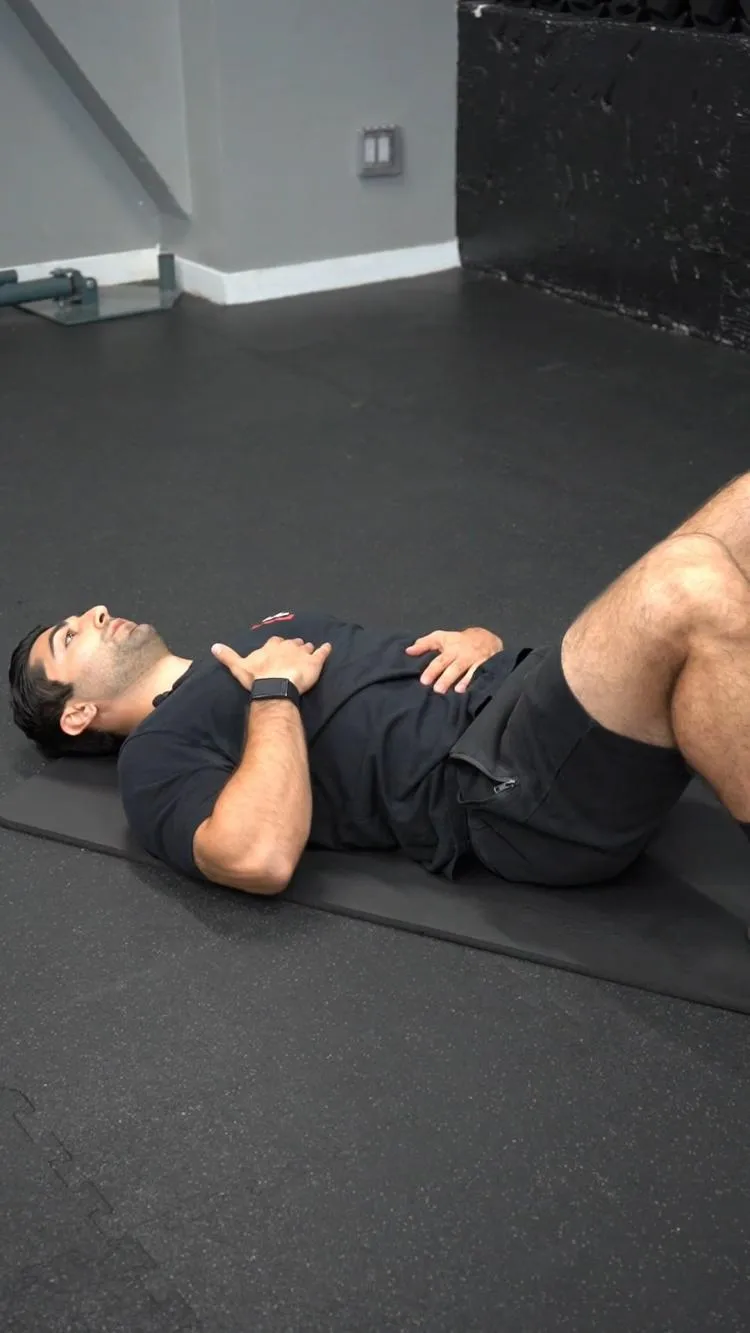
Mindfulness can be broken down into guided meditation, stress reduction techniques, coloring, movement, body scans, deep breathing (as shown below), and any other activity that involves intentionally staying in the present moment without judgment.
Exercise 01 of 02
Exercise demonstration
Hook Lying Diaphragmatic Breathing
View exercise instructions
- HOW: Start by lying on your back in the hook lying position with your knees bent and your feet flat on the ground. Place on hand over your chest and the other hand over your stomach. Focus on breathing in your lower abdomen area. Take slow and controlled breaths through your diaphragm. Your hand on your stomach should rise feeling your lower rib cage expanding as well.
- FEEL: You should feel your core muscles working.
- COMPENSATION: Don’t breathe in and out with your chest. You should not feel the hand over your chest moving much.
The Science of Pain: Bottom-Up Approaches
Our brain is a data processing masterpiece built from the bottom-up! It is constantly taking in bits of data, deciding what to act on, what to store, and what to ignore. A very small percentage of this data actually makes it to conscious awareness. For example, our hearts contract about 100,000x/day and pumps 2,ooo gallons of blood as heart rhythm and diameters of vessels change without our consciousness being aware. Let's also use more of an emotional example. Have you ever been driving down the road and then suddenly you see a road marker with a cross and flowers on it? All of a sudden that one road marker out of the million that you have seen along the trip makes it to your conscious awareness and causes an emotional reaction.
We have to ask the question, "throughout the day what type of data is my system taking in both consciously and unconsciously?" This is our first step to begin treating chronic pain by combining top-down and bottom-up approaches! If most of the data in your current and/or past environment is threatening the arousal and pain system will continue to rule. Some quick examples include news feeds utilizing fear tactics, previous education on your particular condition, the color red (signals danger), lack of a positive support group to lift you up, and depriving yourself of a rich sensory and movement environment!
The solution sounds simple right? Eliminate data in my environment that may trigger the fight-flight system and replace it will data that will support the "relaxed" or rest-digest system.
The Power Of Touch
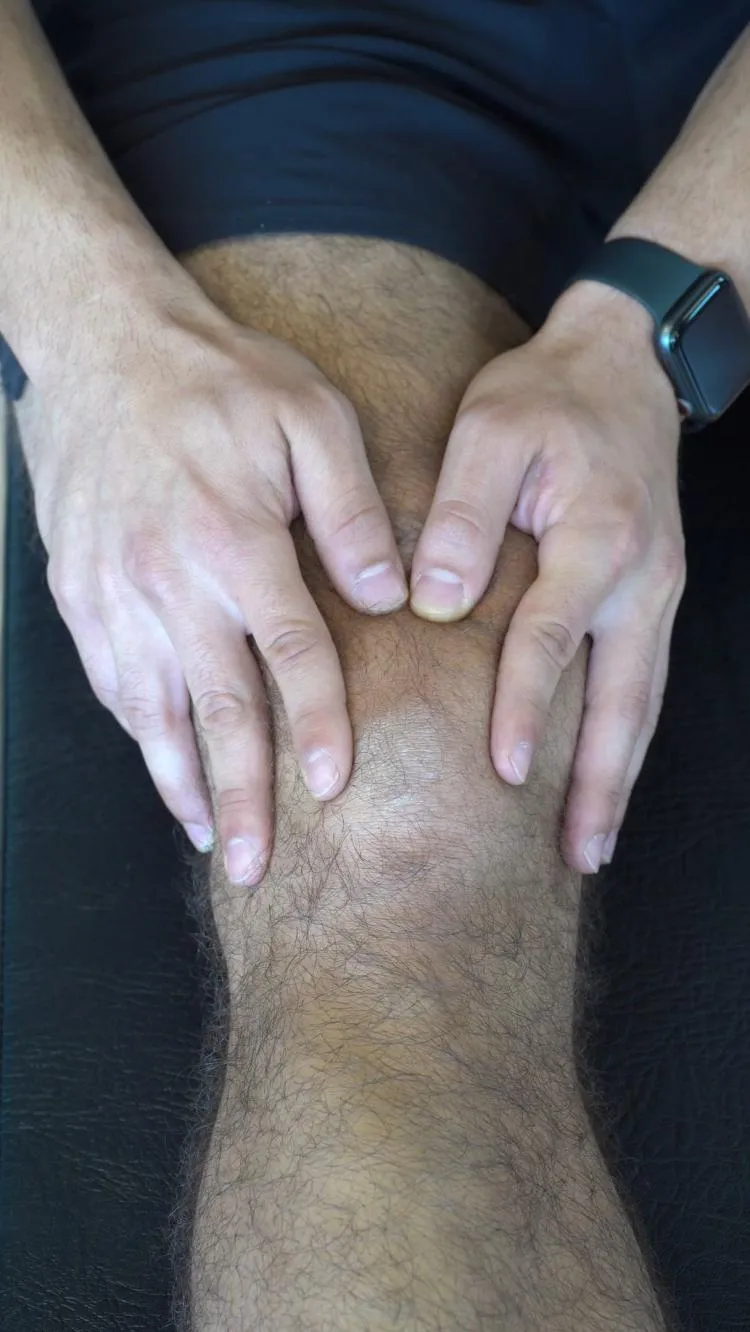
In order to take in all the data, the human body is jam-packed with all different types of sensory receptors! When our sensory environment becomes deprived, the system is impacted significantly. For example, Terkelsen et al 2008 utilized 30 people with no injuries and placed them in a cast for 4 weeks. At cast removal, the findings were similar to the symptoms of complex regional pain syndrome in the sense of changes in skin temperature and pain thresholds which are attributed to deprived sensory environments. Our brain creates maps and has a dedicated set of neurons for each body part. The more input, such as in the case of musicians (Alan Watson 2006), the larger the area of the map. On the other side, if input decreases or the body part is neglected the map becomes a bit fuzzier and the output is changed, likely to a pain sensation. Whether you are experiencing an acute injury, coming out of surgery, or experiencing chronic pain touch can help to reorganize that fuzzy map and lead to less pain output! See the example below of a patellar mobilization that can be used after knee surgery.
Exercise 02 of 02
Exercise demonstration
Patella Mobilization
View exercise instructions
- HOW: In a seated position straighten out the leg in which you plan on mobilizing the kneecap. With your pointer fingers move your knee cap from side to side holding the knee cap at the end for a couple of seconds each. You also have the option of pushing your knee cap up and down.
- FEEL: You will feel the knee cap moving, there shouldn't be much of a stretch sensation here.
- COMPENSATION: Avoid putting pressure down into your knee cap as this may feel uncomfortable
Don't Forget Movement!
It is a myth that our mind controls our movement. Instead, we control our movement. To demonstrate this point we want you to say in your mind, "Do not move your arm" while simultaneously lifting your arm. It may seem counterintuitive as everything in our brain may say avoid everything that may cause further pain. You are in control and self-efficacy at baseline has been shown to predict successful outcomes in treatment for chronic pain (Miles et al 2011). It may be time to lean into that uncomfortable area a bit! Think of it this way, all people with chronic pain would be fully sedentary if they allowed the pain to be their limiting factor in doing exercise. You can’t allow pain to be the master of your movements when it comes to chronic or centralized pain, it's time for you to be in the driver's seat!
Movement plays a huge role in giving the brain rich sensory input to create a better map. It also can help to decrease fear and the memory of a painful event!
For example, oftentimes people may have experienced a lower back injury after flexing or bending the spine. As time goes by they begin to associate bending with pain and avoid this motion. The amygdala senses, "Danger! If the spine bends send the pain signal". This works as a feedforward mechanism and the reaction happens before the movement even begins. How do we combat that? Some studies are showing an area of the brain the medial prefrontal cortex plays a big role! First, we have to understand that although this hurt us in a particular incident there were thousands of times that it happened beforehand without harm. We establish psychological safety through assessment, encouragement, and environmental setup. We then need to get that spine moving again! This gives the brain a new memory of the spine allowing the emergency brakes to come off.
Maybe you're not feeling ready to lean into uncomfortable areas just yet. That is okay! Research has shown that going for a walk consistently can provide a decrease in the severity of pain. Furthermore, our immune system function plays a role in chronic pain states (DeLeo et al 2004). Regular exercises have been shown to improve the function of the immune system. The same can be said for consistent sleep patterns!
LISTEN: HOW TO IMPROVE SLEEP DURING A PANDEMIC WITH THE SLEEP DOCTOR

Lastly, even starting off by just thinking of the movement can be helpful! A technique called graded motor imagery has shown success in treating chronic pain conditions (Bowering et al 2013). Remember earlier we were talking about the map in our brain becoming fuzzy in chronic pain states? We can also think of graded motor imagery as a technique to create a clearer map. It progresses from left/right discrimination to explicit motor imagery; thinking of moving without actually moving, to mirror therapy. This strategy can be helpful in the early phases to set you up for success in the later phases of movement!
Closing Thoughts
Chronic pain conditions can lead to a lot of uncertainty and a feeling of hopelessness. The general trend for the successful treatment of chronic pain is finding activities that put you back in control! The combination of top-down and bottom-up approaches is crucial for long term outcomes while the opioids can take a back seat or get out of the car! Speaking of seats in the car, fill it with a positive support group that is going to give you clarification and cheer you on along the way. Find new challenges, and activities that make you happy, quiet the brain through whatever mindfulness activity works for you, and enjoy that new identity not ruled by chronic pain!!!
Don't Let Fear Stop You From Movement!
Let's take out the guesswork and take 4 weeks to answer these questions and to make sure you are set up for long term results in a fitness program!
ABOUT THE AUTHOR
Dillon Caswell, PT, DPT, SCS
Prehab Audio Experience Host and Head of Programs
 Dillon is a Sports Physical Therapist, performance coach, and adjunct professor residing in Syracuse, NY whose passion is providing holistic solutions to improve all aspects of human performance. Along with working with clinical athletes across the lifespan, he provides on field coverage for youth and semi-professional teams.
After his undergraduate studies at Syracuse University, he earned his Doctorate in Physical Therapy from SUNY Upstate Medical University, where he now serves as an Adjunct Professor. He is the founder and owner of AP3T: Action Potential Performance Physical Therapy practicing wellness, prevention, and solution-based health care. In his free time, he enjoys family dinners, playing with his dog, and competing as a CrossFit athlete.
Dillon honors the opportunity to join the Prehab guys to influence and educate in a people first system!
DISCLAIMER – THE CONTENT HERE IS DESIGNED FOR INFORMATION & EDUCATION PURPOSES ONLY AND IS NOT INTENDED FOR MEDICAL ADVICE.