

On this page 6 sections
Your guide
What you'll learn
For anyone looking to build strength, power, and longevity in the gym, mastering overhead lifting is a must. Whether you're pressing a barbell, carrying a child overhead, or just reaching for a suitcase in the overhead bin, this movement shows up in more places than most people realize. But here's the catch: lifting overhead safely and effectively is a skill, and one that requires mobility, strength, and control throughout the entire shoulder and core complex.
If overhead movements feel awkward, painful, or just plain impossible, you're not alone. Many people avoid training overhead due to discomfort or mobility limitations. This article will guide you through the must-do exercises to master overhead lifting that will help you move better, lift stronger, and reduce the risk of injury.
Why Overhead Lifting Matters
The overhead press isn’t just a staple in strength programs; it’s a key test of upper body function. When you press something overhead, you’re asking your body to coordinate mobility from your shoulders and upper back with core stability and arm strength. If any of those pieces are missing, compensations and limitations quickly show up. That’s often when people feel tightness, impingement, or a ceiling they just can’t seem to break through.
On the flip side, improving your overhead mechanics can unlock a lot more than just a better shoulder press. It can lead to healthier joints, improved posture, stronger lifts across the board, and better functional movement in daily life. Whether you're training to lift heavier, move better, or just keep your shoulders pain-free, improving your overhead capacity is a worthy goal.
Shoulder Impingement Outdated? Try These Exercises for Subacromial Pain Syndrome!
In some cases, individuals may even shy away from overhead lifting in fear that it may damage their rotator cuff or cause shoulder impingement. But the truth is, we perform overhead tasks everyday and this is a movement that needs to be strong to support our activities of daily living. Dive into the YouTube video below to learn more about what we DO know about shoulder impingement.
Muscles Involved in Overhead Lifting
Let’s get clear on what’s working when you lift overhead. It’s not just your shoulders!
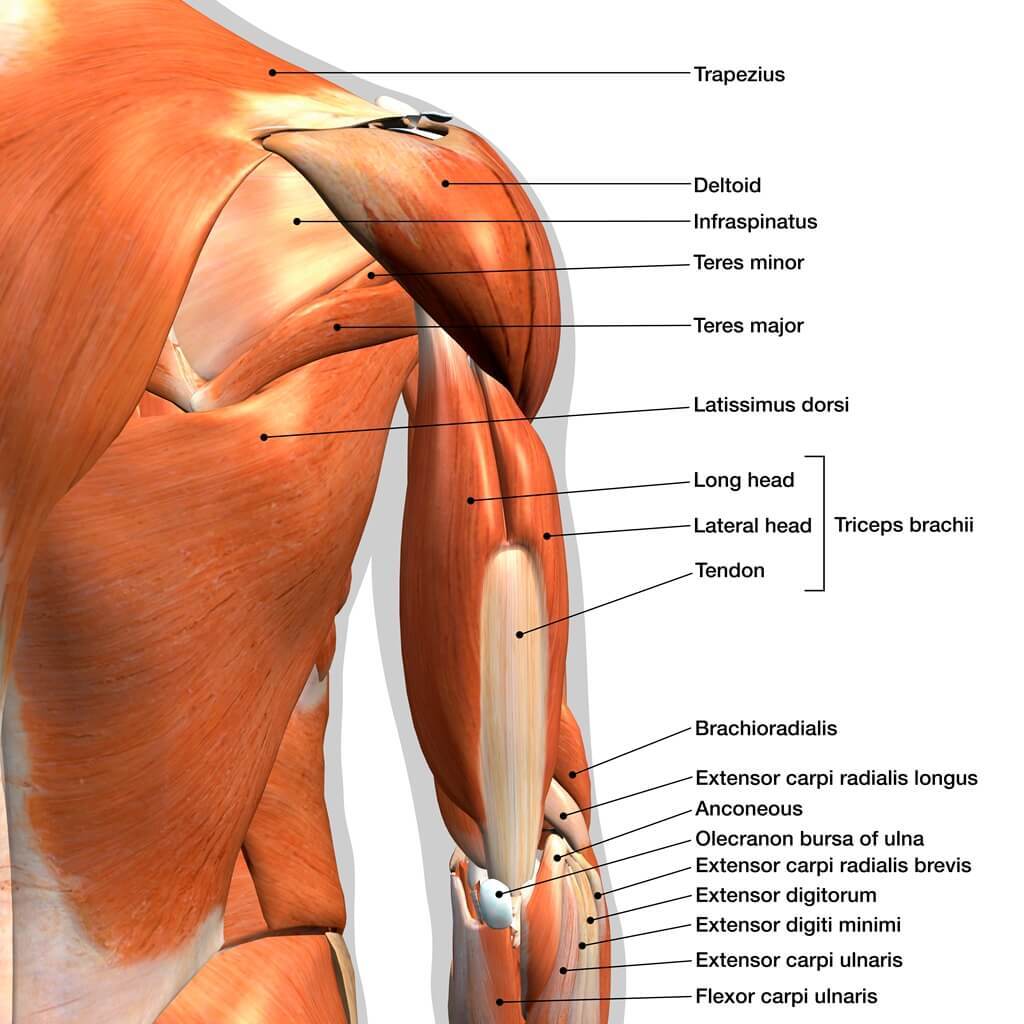
-
Deltoids (particularly the anterior and medial heads) – These are the prime movers when pressing weight overhead.
-
Trapezius and Serratus Anterior – These help upwardly rotate and stabilize the scapula. Without them, the shoulder blade doesn’t move well, which can lead to impingement.
-
Rotator Cuff Muscles – Provide dynamic stability to the shoulder joint.
-
Triceps – Assist in elbow extension to finish the press.
-
Core and Lumbo-Pelvic Stabilizers – A strong and active core prevents excessive lumbar extension during the press.
-
Thoracic Spine Extensors – Allow for optimal rib cage position and overhead reach.
If one link in this chain is off, it can compromise the whole movement.
Commit To Our Program Dedicated To Overhead Athletes!

Start With Mobility First to Master Overhead Lifting
Before we load an overhead press, we need to make sure the body has enough mobility to get there safely. The two most common culprits limiting overhead movement are poor thoracic extension and limited shoulder flexion.
Exercise 01 of 05
Exercise demonstration
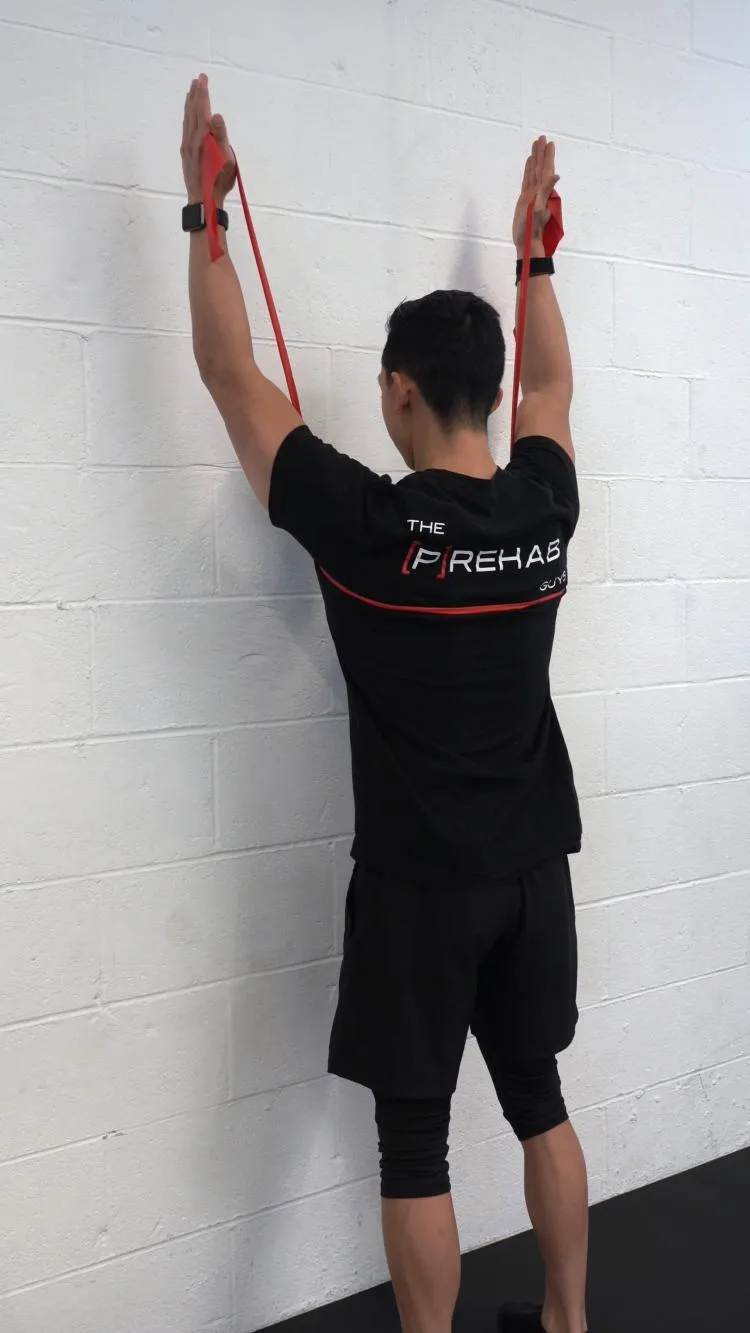
Wall Slide - Lift Off, Band
View exercise instructions
- HOW: Grab a band and place it behind your shoulder. Grip each bend of the band in your firsts. Next, go to a wall and start with your entire forearms against the wall. Push into the wall with the pink side of your hands as well as your elbows the entire time. Slowly work your way up the wall. At the top, lift your hands away from the wall for a few seconds. With the lift off, you should feel the muscles in your back. Think of putting your shoulder blades in your opposite back pocket. Then slide your hands back down. Repeat.
- FEEL: You should really feel the muscles under your armpit working as your push into the wall. Additionally, you should feel your back muscles during the lift off.
- COMPENSATION: Do not let your back arch. Keep your core engaged the entire time
This drill helps reinforce shoulder flexion while encouraging upward rotation of the scapula and thoracic extension.
How to:
-
Sit or stand with your back against a wall and your arms in a goalpost position.
-
Slide your arms up the wall, keeping contact with your elbows and wrists.
-
At the top, gently lift the hands off the wall to activate your traps and serratus anterior.
Perform for 3 sets of 8-10 reps.

Exercise 02 of 05
Exercise demonstration
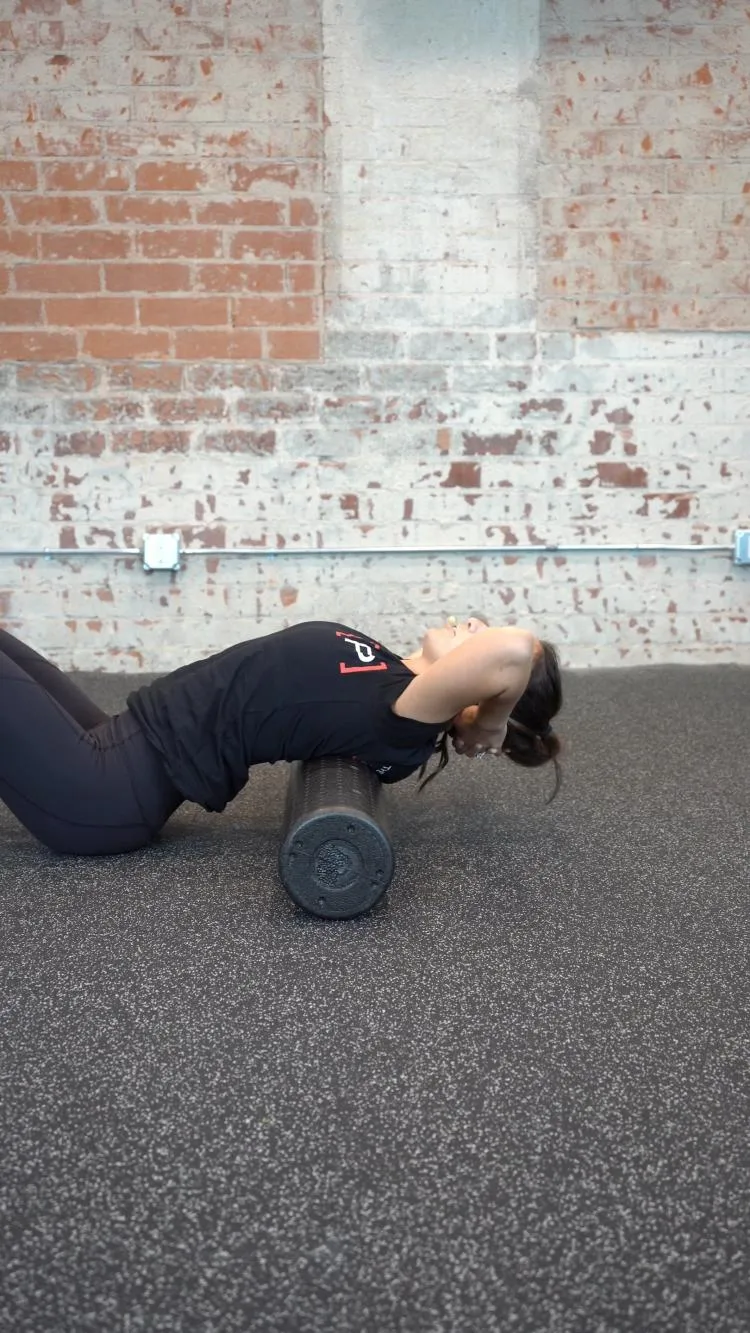
Thoracic Spine Extension Mobilization - Foam Roller
View exercise instructions
- HOW: Start in a sitting position with your knees bent, feet flat on the ground and a foam roller lying on the ground behind you at about shoulder level. You can either interlock your hands behind your neck or cross your arms across your chest. Keep your hips on the ground as you lean gently back into the roller bringing your shoulders, head, and neck down over the roller. Carefully work up and down the length of your mid back by lifting your hips up, rolling back, and extending over the foam roll.
- FEEL: You should feel some pressure and stretch in the middle portion of your spine.
- COMPENSATION: Don’t go too fast, go slow and controlled over the foam roller.
Improving thoracic spine extension can make or break your overhead position. If you're stuck in a slouched posture, your shoulders will struggle to find a pain-free press.
How to:
-
Lie with a foam roller across your upper back.
-
Breathe into the stretch and avoid flaring your ribs.
Hold for 30-60 seconds and repeat 2-3 rounds.
Exercise 03 of 05
Exercise demonstration
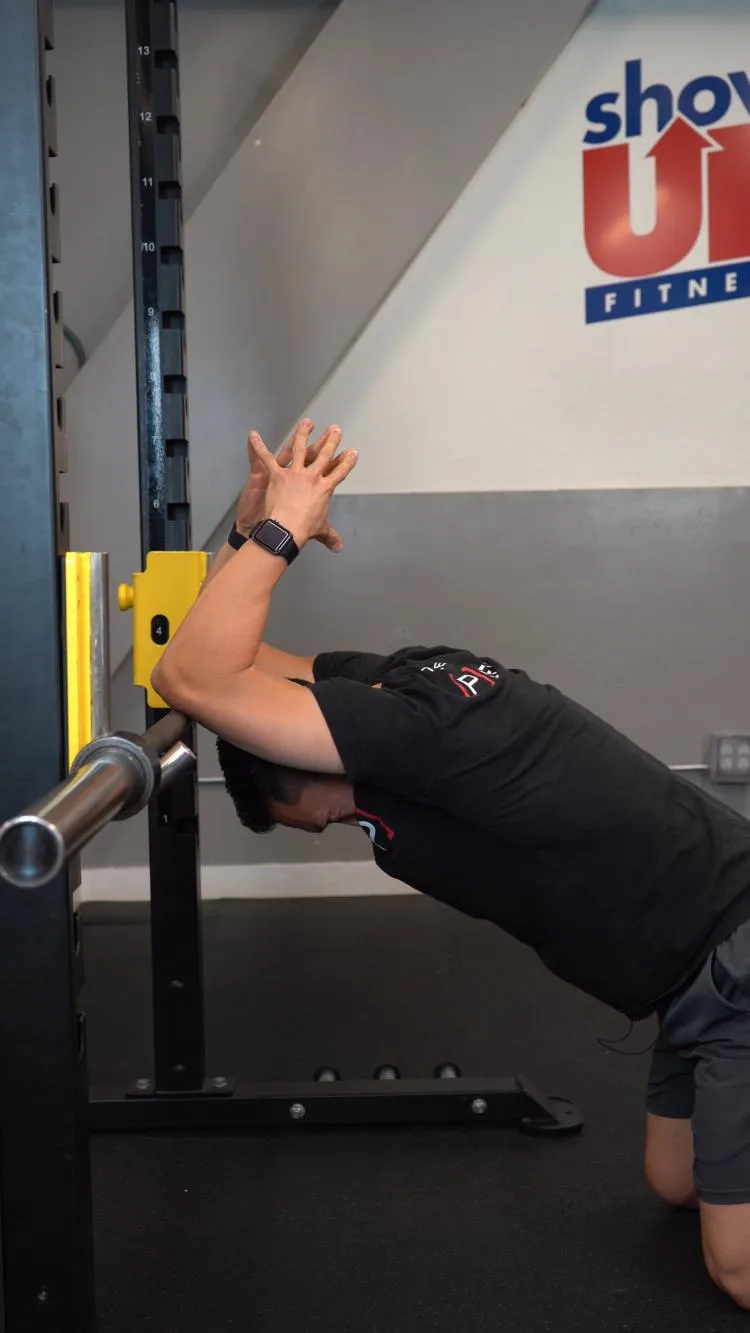
Kneeling Lat Mobilization
View exercise instructions
- HOW: Get set up first by placing a barbell around thigh height on a rack. You can also perform this exercise on a box, bench, or any other object around that height. Then get down on both knees and place the end of your triceps, just before your elbows, onto the barbell or box. Scoot your knees back so you are comfortable. Arch your upper back and drive your elbows hard into the barbell to feel the stretch. When you arch your back, think of tucking a tail between your legs.
- FEEL: You should feel a huge stretch under your arm pits and even into your shoulders and sometimes your triceps region.
- COMPENSATION: The key is to arch your back with this stretch. Do not just simply drive your chest to the floor.
Tight lats can limit how far overhead your arms can go. This stretch targets that restriction.
How to:
-
Kneel in front of a bench, wall, or barbell
-
Place your arms/elbows on the surface and sink your chest down while keeping your core braced.
-
You should feel a stretch through your lats and triceps.
Hold for 30 seconds and repeat 2-3 times per side.
Must-Do Exercises to Master Overhead Lifting
Once mobility is in place, it’s time to train the movement, but we’re not jumping into barbell presses just yet. The goal is to build strength and coordination from the ground up.
Exercise 04 of 05
Exercise demonstration
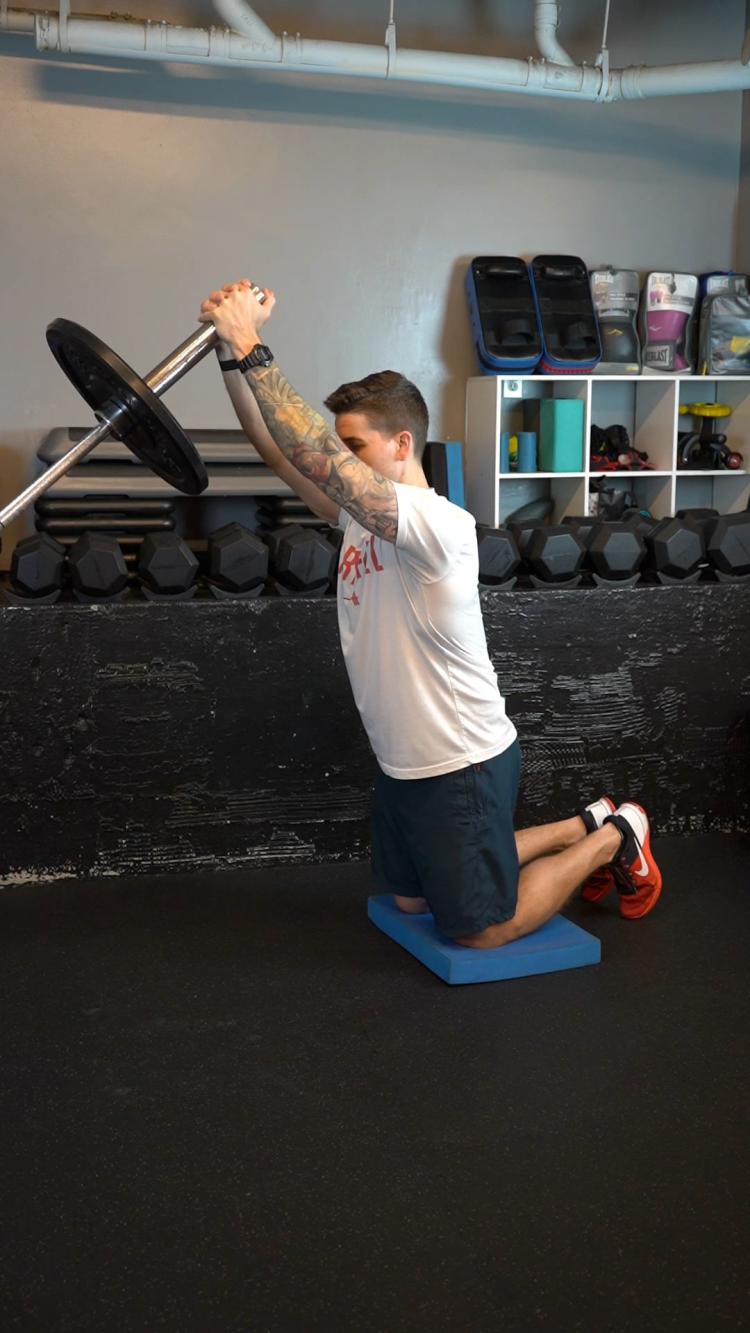
Tall Kneeling Shoulder Press - Landmine
View exercise instructions
- HOW: Holding a barbell in a landmine rig with both hands in front of your chest while tall kneeling, perform a strict overhead shoulder press.
- FEEL: You should feel your triceps, deltoids, and shoulder blade muscles working. You will also feel your core and lower body working to maintain position.
- COMPENSATION: Do not arch your back, do not shrug your shoulders.
This is one of the best ways to groove pressing mechanics while reducing stress on the shoulder joint. The landmine angle is more forgiving and reinforces proper core engagement.
How to:
-
Set up in a tall kneeling position with the landmine in one hand.
-
Brace your core and press the weight upward in a slight arc.
-
Focus on a controlled tempo and full range of motion.
Exercise 05 of 05
Exercise demonstration
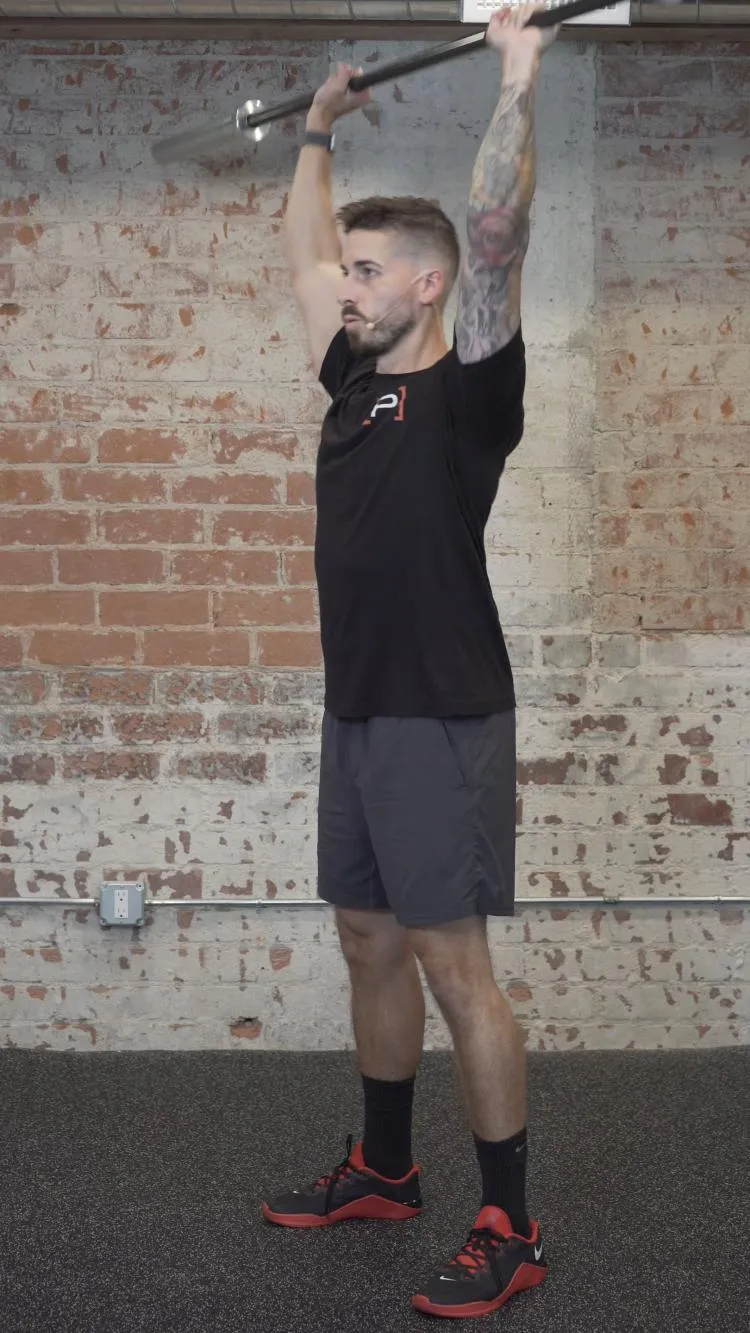
Overhead Press - Barbell
View exercise instructions
| HOW: Start in a standing position while holding onto a barbell. Whether it's a wider or more narrow grip, it is up to you. Bend your elbows while keeping them close to your body, and bring the bar up to rest on your collar bone. While keeping the rest of your body still, press the bar up overhead and back down. Your elbows continue to be under your wrist. Perform for the prescribed amount of reps. FEEL: You should feel your shoulder muscles working as well as your core engaged to keep the rest of your body still. COMPENSATION: Keep your palms facing forward and your elbows underneath your wrists as you press the bar up. Don’t engage your upper trap muscles, keep those relaxed. |
The gold standard. This is where all the mobility and strength work pays off.
How to:
-
Set your grip just outside shoulder-width.
-
Squeeze your glutes and brace your core before initiating the lift.
-
Press the bar straight overhead, finishing with your biceps next to your ears.
Start light, focus on form, and build over time!
How Often Should You Train Overhead Lifting?
This depends on your goals and overall program, but here are some general rules of thumb:
-
Mobility work (thoracic extension, wall slides, lat stretches): 3-4x/week, especially in your warm-up.
READ: HOW TO ASSESS AND IMPROVE SHOULDER MOBILITY

-
Overhead strength work (landmine press, dumbbell press, barbell press): 1-2x/week.
-
Don’t neglect horizontal pushing (push-ups, bench press). These build strength in the anterior chain, which also supports shoulder stability.
Recovery matters too. If you’re feeling stiff or sore, scale back the intensity or volume, but keep the mobility work in.
Commit To Our Program Dedicated To Overhead Athletes!
Closing Thoughts
Overhead pressing is a skill and a privilege. It requires mobility, strength, and coordination across multiple joints. If you're skipping steps or forcing yourself into positions you're not ready for, you're not just limiting performance, but you’re increasing your risk for pain and injury.
The good news? You can unlock strong, stable, and pain-free overhead lifting with a clear plan and consistent practice. Start with mobility. Progress through stability. Build into strength. Just because you can’t press overhead today doesn’t mean you never will. Start where you are. Focus on what you can do. Take pride in the process of building overhead strength the right way, using the must-do exercises to master overhead lifting.
About The Author
Ryan Nosak, MS, CSCS
Prehab Writer & Content Creator
 Ryan was born and raised in Throop, Pennsylvania and he has worked in the world of fitness since he was 15 years old. Ryan realized he had a deep affinity for strength training and how it can alter the human mind, body, and spirit. He began his coaching career in high school by coaching his friends through strength training sessions, which inspired him to pursue a career in strength and conditioning.
Ryan spent 10 years as a Division 1 strength and conditioning coach with stops along the way at Penn State, Tennessee State, Vanderbilt, Robert Morris, Charlotte, and DePaul. He is a Certified Strength and Conditioning Specialist and operates RyNo Strength in Chicago, IL working as a personal trainer and online fitness coach. He specializes in fat loss, body composition, strength, and sports performance training programs.
Ryan received his Bachelor’s Degree in Kinesiology from Penn State and a Master’s in Sport Management from Western Carolina University. In his free time, Ryan enjoys training for bodybuilding, eating at amazing restaurants in Chicago, and spending time with his wife, daughter, and dog.