


On this page 10 sections
Your guide
What you'll learn
Medial collateral ligament (MCL) injuries are not super common in isolation; however, they do still occur mostly in sports and can be one of the structures involved in more serious knee injuries. In most cases, the prognosis is good for these injuries with proper treatment. In this article, we will cover MCL injury rehabilitation considerations, by providing you with a framework regarding the anatomy of this structure, common mechanisms of injury, the healing process, and the best way to optimize recovery with exercises!
The Basics of Ligaments
Ligaments are connective tissues that connect bones to other bones. Their primary function is to prevent excessive movement of one bone relative to another. In this way, ligaments provide support and strength to a joint, preventing injuries such as dislocations or instances of instability. As such, ligaments are present at almost every joint in our body. Some joints, like our hip joint, have what is called a good bony fit. This means that the actual shape and anatomy of the two bones that make up the hip joint (ie the femur and pelvis) fit together much like a lock and key and are inherently very stable. On the other hand, the knee (tibiofemoral) joint has what is called a poor bony fit. Thus, the knee joint relies on a plethora of ligaments for support and stability, similar to our shoulder!
MCL Anatomy

Medial Collateral Ligament Injuries
One of the more commonly injured knee ligaments is the Medial Collateral Ligament (MCL). The MCL is on the inside part of the knee and runs from the medial epicondyle of the femur to the medial aspect of the proximal tibia.
Improve Your Knee Stability with this FREE Workout!
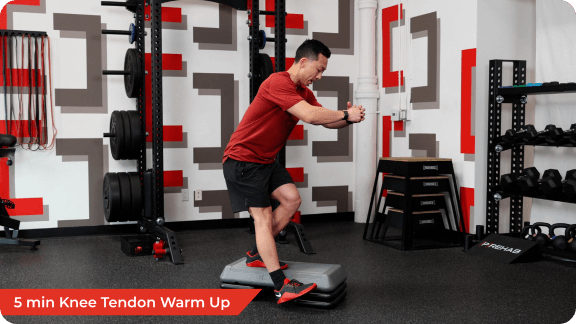
Knee tendons and ligaments can benefit from a little TLC and warm up every once in a while! Improve your knee stability with this 5-min Knee Tendon Warm up . Get started for free today!
The MCL provides stability and support to the knee during lateral or cutting movements. In particular, it resists valgus stress and prevents your shin, or tibia, from bending inward.
However, like with all ligaments, if an extremely large force is applied to the ligament, it can be sprained or even completely ruptured. One of the most common ways this can occur on the football field is being hit and tackled on the outside of the knee, while the foot is planted in the ground. This particular mechanism of injury can result in either an isolated MCL injury or a multi-ligamentous injury, in which other knee ligaments and/or soft tissue structures are additionally injured.
Have You Injured Your MCL? Get Yourself Back to 100% With Our Program!

The MCL has great outcomes when treated conservatively with specific exercises focusing on knee strength, mobility, stability, and functional movements. This Knee Prehab Program is a physical therapist-developed, step-by-step program that teaches you how to optimize your knee health. This 3-phase program will expose you to various knee and lower body strengthening and stabilization exercises supported by science. This program will bulletproof your knees for anything life throws at you! Learn more HERE!
Fixing Your Knock Knees With Two Exercises
MCL Injury Rehabilitation Considerations
The majority of MCL tears are isolated injuries and many times are treated non-operatively. With a proper MCL injury rehabilitation protocol, even a complete MCL tear should completely heal. That's because the MCL, unlike other ligaments like the Anterior Cruciate Ligament (ACL), has a great blood supply. Increased blood flow means more nutrients, proteins, and oxygen and therefore the capacity to heal without surgical reconstruction. A typical rehabilitation program will initially focus on controlling knee edema and slowly progress to improving knee range of motion and quadriceps function. Depending on what section of the MCL is injured can determine how early knee flexion range of motion exercises can start, but this is case-dependent. On average, most athletes can return to full competition within 5 to 7 weeks.
Approximate Tissue Healing Times Based on Tissue Type

This chart above provides an excellent breakdown of how tissue healing differs not only based on the type of tissue that is injured, but also the severity of the injury. For instance, a grade I ligament sprain may take up to 4 weeks to heal; however, a grade II can take up to 4 months! It is important to know that these are averages of tissue healing times, and there are many more prognostic indicators that play a role in establishing healing times, which vary from person to person. Moreover, these timelines are based solely on the biological properties of the tissue. Understanding the basics of differences in healing times will help you gain perspective when recovering from an injury. You can read more on this topic below in our tissue healing article!

What If More Ligaments Are Involved Besides The MCL?
Multi-ligamentous injuries, in which other soft tissue structures are also injured, are usually treated with an operative approach. When valgus stresses are applied to the knee, many times a group of three soft-tissue structures is injured: the MCL, anterior cruciate ligament (ACL), and the medial meniscus. In the medical world, this combined group of injuries is known as the terrible triad.
Surgery involves artificially reconstructing the MCL and other injured ligaments from autografts (from yourself) or allografts (from cadavers). The return to sports timetable following surgical reconstruction of the MCL depends on how severely the MCL was torn in addition to what other soft tissue structures are damaged. However, most athletes return within 6 to 8 months' time.
As with any injury, MCL rehabilitation must consider a multitude of factors like the mechanism of injury, severity, age, tissue quality, and expected level of function must be considered to make the proper decision on whether to pursue an operative or non-operative approach following MCL injury. I hate seeing a player go down with an injury that can potentially alter their respective career and livelihood; however, I feel confident in knowing that they are in the best of hands with their sports medicine team and physical therapists.
In most situations, if someone has multiple injuries at the knee in conjunction with an ACL tear, rehabilitation guidelines will be dictated the other tissue(s) that were involved. For example, if the medial meniscus is repaired along with a reconstructed ACL, there will be more strict weight-bearing precautions to respect the medial meniscus initially, whereas if someone sustains an isolated ACL tear, immediate weight-bearing as tolerated is encouraged after surgery. You can learn more about ACL injuries by listening to our Prehab Audio Experience Podcast Episode with Dr. Nima Mehran, an exceptional Orthopedic Surgeon!

MCL Injury Rehab Considerations
As previously discussed, the severity of injury to the MCL will dictate the course of rehabilitation. Nonoperative care has been the preferred treatment for most MCL injuries again due to the high quality of tissue healing. If upon an initial evaluation from a physical therapist or orthopedist, the specific clinician observes there is significant instability in conjunction with a severe mechanism of injury, additional treatment such as surgery may be warranted. In the next part of this article, we will break down three phases of conservative rehab: early, middle, and late phases.
Early Phase MCL Injury Rehabilitation
The goal during the initial phase of rehab after an MCL injury is to calm down the area where the insult occurred at the knee. This includes reducing swelling, modulating pain, and avoiding activities that will stress the MCL. In some instances, if there is a grade II or III injury, a brace may be worn for a period of time to help control the stability of the knee. Usually, you will be able to begin weight-bearing immediately after this injury when treated conservatively, which actually helps further facilitate the healing process! As we harp on with much of our content in regards to rehab, early mobility with an active recovery approach has continued to be the trend corroborated by recent evidence in contrast to bed rest and other passive approaches! Read more on the truth about icing injuries.
Exercise 01 of 06
Exercise demonstration
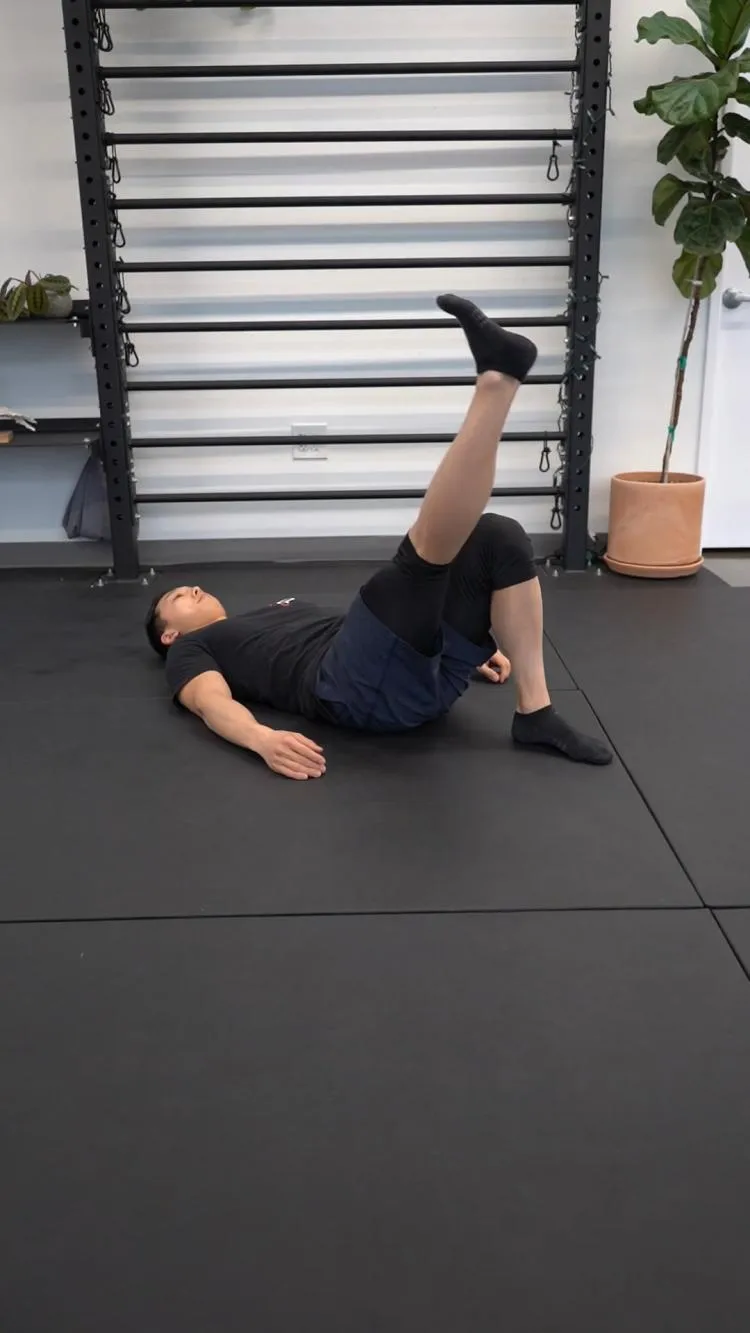
Straight Leg Raise
View exercise instructions
- HOW: Start by lying on your back. Bend your opposite knee. The first step is to perform a very strong quadricep set by squeezing your thigh as hard as you can. Keeping this constant squeeze, tighten your core muscles and then lift your leg up into the air. Think of making your leg as long and as straight as you can while lifting it. Then slowly lower back down to starting position and repeat.
- FEEL: You should feel an entire contraction of the front thigh muscles and your leg working hard.
- COMPENSATION: You should not be feeling these exercise exclusively in the front of your hip. If you only feel the muscles in the front of your hip working, it means you are not squeezing your thigh hard enough or you're are not squeezing the quads when you are lifting your leg. Maintaining the thigh squeeze is the most important part of this exercise!
This is a progression after you have mastered the quad set to incorporate a dynamic movement.
Exercise 02 of 06
Exercise demonstration
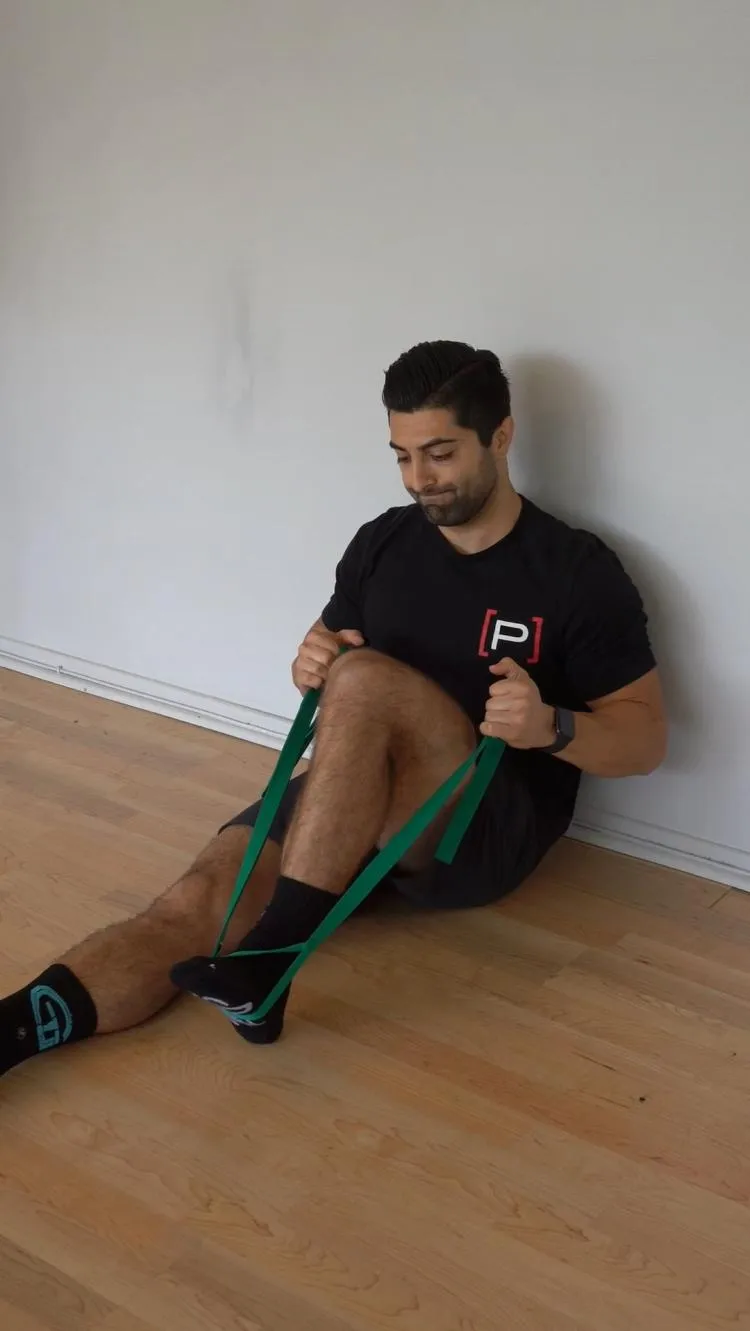
Seated Knee Flexion - AAROM, Strap
View exercise instructions
- HOW: Begin in a seated position with a strap or a towel wrapped around the middle of your foot. Pull your foot in towards your butt. You may need to choke up on the strap to get leverage with your arms. When you get to the end of your motion, you have the option of holding or moving back and forth. You also have the option of laying on your back when performing this exercise.
- FEEL: The closer your heel gets towards your butt the more stretch you will feel in your knee.
- COMPENSATION: Avoid pulling in with your leg, keep the leg relaxed. The motion should be coming from your arms pulling your leg in.
This is a great way to work on restoring your knee range of motion early on after injury! To read more about how to regain knee flexion after surgery, read this article!
Middle Phase MCL Injury Rehabilitation
In the middle phase of MCL rehab, you will begin to re-expose the MCL to loads it will need to handle with everyday activities or sports you participate in. This includes progressive stability exercises focusing on joint proprioception, which is your body's ability to understand where it is in space. The knee craves stability and joint proprioception, especially with single limb activity, so it is crucial to integrate interventions that target this as part of your recovery process! In addition, focusing on progressive strengthening is also an important part of this phase as well as when transitioning into the late phase of rehab.
Exercise 03 of 06
Exercise demonstration
Terminal Knee Extension - Strap
View exercise instructions
- HOW: Get set-up standing with a band around and above the knee with the band anchored in front of you. To perform the exercise, put tension on the band so that it wants to pull your knee forward, let your knee bend and your foot go onto the toes followed by squeezing your quad, pushing your heel into the ground, and pushing your knee back until it is fully straight.
- FEEL: You will feel your quads working with this exercise and maybe even your glutes. You may also feel a stretch behind your knee in the calf and hamstring region when your knee is straight.
- COMPENSATION: Keep your hip extended (pushed forward) and stand tall as you perform this exercise, don't let your butt go back and your hip bend when you straighten your knee.
Sample Knee Rehab Exercise Program Video
This exercise is designed to activate your quadriceps muscle and help you regain full active knee extension.
- Secure a light resistance band around a sturdy object like a pole or table.
- Place your affected leg through the band and rest the resistance band above your knee against the back of your thigh. Do not rest the resistance band below your knee against the back of your calf.
- Find an appropriate distance away from the anchor where the band will only have when you straighten your knee.
- Slowly straighten your knee and activate your quadriceps muscle in this straightened position, then return to the starting position.
Exercise 04 of 06
Exercise demonstration
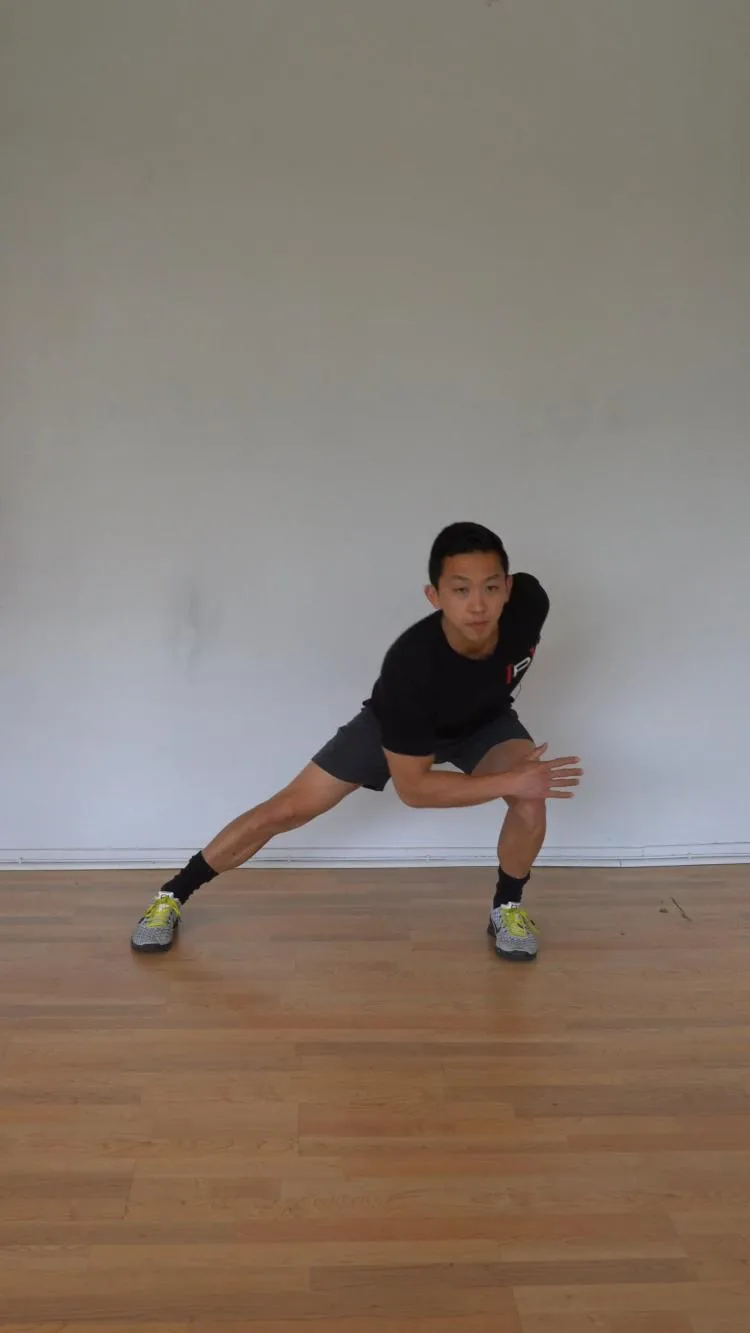
Lateral Lunge to Single Leg Balance
View exercise instructions
- HOW: Take a quick step outwards into a lateral lunge position. Get deep into the lunge position by bending your outside hip and knee. Then explosively push yourself back to the starting position, balancing on your opposite leg. The goal of this exercise is to work on explosively pushing off the ground and getting off the ground as quick as you can. Pretend the ground is hot lava.
- FEEL: You should feel all the muscles in your outside leg, especially your quadriceps and glutes working. When balancing, keep your core and glutes tight to help maintain your balance.
- COMPENSATION: The movement should be quick and explosive! Do not move slowly, but also perform with good form and hip/knee alignment
The lateral lunge will re-expose the MCL to loads in the frontal plane! This is a great exercise to work on building not only strength but also stability by incorporating single limb balance as well within the same movement pattern.
Late Phase MCL Injury Rehabilitation
The last phase of rehab is adding on the final touches! Focusing on return to sport-type interventions, and addressing any other deficits that are still present! Moreover, we need to kick the myth to the curb that knee valgus is always a bad thing. Inevitably, performing hobbies and activities of daily living as well as playing sports, the knee is going to be in positions of knee valgus from time to time. Moreover, in order to ensure our knee is able to stay strong and stable, we need to train our knee in positions of knee valgus!
The MCL is one of the biggest restraints to knee valgus as it is located on the medial aspect of the knee joint. Therefore, we need to build tissue strength, stiffness, and tensile loading properties of this ligament to ensure it is able to handle the load it is going to take.
Exercise 05 of 06
Exercise demonstration
Knee Valgus is Not Always Bad

View exercise instructions
Here are some more exercises to mix into the latter phase of MCL rehab!
Exercise 06 of 06
Exercise demonstration
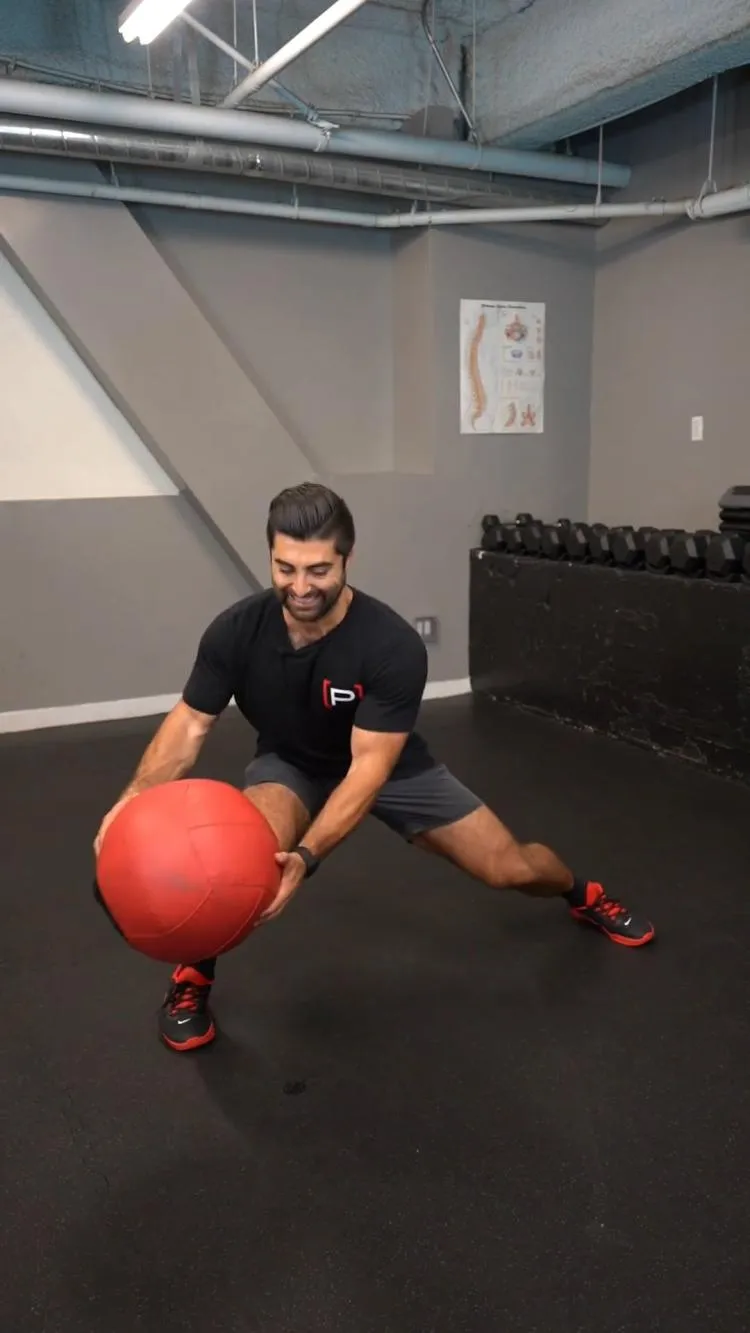
Lateral Lunge Decleration - Medball
View exercise instructions
- HOW: Begin by standing holding onto a medball. Step to the side with one leg landing quickly as you push the medball from your chest out to that side.. After the ball is pressed, push back into the starting position with the leg that lunged to the side.
- FEEL: You should feel your leg muscles working.
- COMPENSATION: Push the medball out to the side, not straight in front.
Closing Thoughts
The big takeaways from this article are:
- In most cases, MCL injuries are treated non-operatively due to the quality of tissue healing, and these injuries have a good prognosis
- In more severe injuries, such as the terrible triad injury (ACL, MCL, and medial meniscus), surgery is usually warranted to optimize recovery and outcomes
- Rehabilitation following MCL injuries focuses on restoring knee strength, mobility, and a high emphasis on joint stability (proprioception)
- Encourage controlled knee valgus exercises in the latter phases of rehab to re-expose the MCL to loads it will need to tolerate
If you happen to sustain a knee injury, be sure to seek medical consultation from a trained physical therapist or orthopedist who specializes in the treatment of knee-related injuries to receive a proper diagnosis and treatment plan!
Optimize Knee Health After Your MCL Injury With Prehab!
Don't let nagging aches or pains from an MCL injury limit you from obtaining your goals! The quicker you start rehab after an injury, the quicker the recovery process. Learn more about our bulletproofing your knee and get started HERE!
References
- Laprade, Robert F., and Coen A. Wijdicks. "The Management of Injuries to the Medial Side of the Knee." J Orthop Sports Phys Ther Journal of Orthopaedic & Sports Physical Therapy 42.3 (2012): 221-33.
About The Author
Michael Lau, PT, DPT, CSCS
Prehab Co-Founder & Chief Product Officer
 Michael was born and raised in Northern California but now currently resides in Sunny SoCal ever since attending the University of California, Los Angeles as an undergraduate majoring in physiology. After his undergraduate studies, he received his Doctorate in Physical Therapy from cross-town rival the University of Southern California. As a licensed physical therapist with a strong background in strength and conditioning, Michael likes to blend the realms of strength training and rehabilitation to provide prehab, or preventative rehabilitation, to his patients. A common human behavior is to address problems after they become an issue and far often too late, which is a reactionary approach. He believes the key to improved health care is education and awareness. This proactive approach-prehab-can reduce the risk of injuries and pain in the first place. He is a huge proponent of movement education and pain science. Clinically, he has a special interest in ACLR rehab and return to sport for the lower extremity athlete.