


On this page 7 sections
Your guide
What you'll learn
We’ve all been there - a long day at the office sitting in meeting after meeting, a seemingly endless drive in the car for hours on end, sitting in a beach chair all day long soaking up the sun. What do these things have in common? They can all make our low back feel extremely stiff and tight after doing them! Whether the activity is enjoyable or not, prolonged periods of sitting can lead to increases in low back pain, muscular tightness, feelings of stiffness, and sometimes radiation of pain into our legs and feet - none of which are desirable to have!
In this article, we will discuss the effects of prolonged sitting on our low back, and of course, tools to help us combat low back tightness from sitting so we can enjoy your daily activities pain free!
How Did We Get Here?
With advances in technology and living in an ever increasing digital age, more people than ever are working remotely, on a computer or tablet, or are performing highly repetitive and/or seated jobs for hours a day. In fact, it has been seen in particularly developed nations that people can sit an average of 8.3 hours a day to perform work or leisure tasks, including sitting in the car during the commute to and from work (1). It is also well established in the research that sedentary lifestyle has a significant adverse effect on general health, including sitting as an independent predictor of musculoskeletal pain, including low back pain in particular (1).
Additionally, due to the increase of workers utilizing portable devices for work or leisure without a desk, there is a great lack of body and muscular support from not using a backrest or other supportive features. This often leads to an increase in pain from adopting poor seated postures that lead to musculoskeletal pain and stiffness (2).
Generally speaking, prolonged periods of sitting and seated postures can create lots of pain and tightness in our low back! Day after day, this can really add up, landing you at your doctor’s or PT’s office looking for some relief.

What Low Back Muscles and Structures are Actually “Tight”?
Muscular tightness can be a literal and figurative sensitive subject. You’ve probably felt feelings of general tightness in the area of your low back, but if someone asked you to put your pointer finger directly on the “pain spot”, you probably couldn’t identify just one area, or pinpoint where the pain is coming from. This is likely due to lack of blood flow (from lack of movement) to several structures of the low back, including the thoracolumbar fascia, spinal erectors, quadratus lumborum, or connective tissue of the low back.
 The Quadratus Lumborum is one of the many muscles that help to support our lumbar spine.
Oftentimes, the perception of “tightness” is our body’s indication that we just need to move and strengthen! More on that below.
How Long is Considered Prolonged Sitting, and Does Posture Matter?
There are varying reports and research on how long it takes in a seated position for muscular stiffness in the low back to start setting in. There are reports that it takes up to 4.5 hours of prolonged sitting for the low back to start to experience discomfort (1), other reports show that even 1 hour in a seated position can start to cause low back tightness for some people (3). This is highly dependent on the individual, their medical history, body anatomy, fitness level, and tolerance to a seated position.
Different people may have various desk setups, such as a standing workstation, cushions, or other supports that may help them achieve more time pain free while they are seated. It has also been shown that those with a history of chronic back pain specifically are at greater risk for further exacerbations of low back tightness with prolonged sitting (4), likely due to weakness of supporting structures of the back.
Pain also seems to be affected by what posture you are sitting in. Some people perform their daily work tasks with a slumped posture, while others tend to sit more upright. Regardless of health status, it has been shown that those who tend to sit more upright will adopt a slumped posture after about an average of 20 minutes of sitting, putting them at risk for low back fatigue and pain. (2) This appears to happen due to muscular fatigue in the erectors and supporting musculature of the low back, asymmetrical pressure on the glutes in a seated position, and inadequate eyesight to be able to view a screen, causing a person to need to get closer to the screen to see their work leading to even more poor posture patterns.
On the topic of posture, it is important to note that SITTING is not the same as SEDENTARY. It is not the actual sitting that is harmful and pain-promoting, but rather, the LACK OF MOVEMENT in ANY posture that causes the most harm. Sitting (or standing, for that matter) in any ONE position for a prolonged period of time will eventually lead to muscular fatigue and soreness. If you believe you have achieved the “perfect” posture but it is causing pain, it’s time to change it!
LISTEN: A NEW SPIN ON OFFICE ERGONOMICS - SITTING IS NOT THE NEW SMOKING

How do we start changing it then? How do we start to reduce the low back tightness that comes from prolonged sitting? The answer is MOVEMENT!
How do I Decrease my Low Back Tightness from Sitting?
The answer is simple, and the answer is - MOVE! Movement to decrease low back tightness from prolonged sitting can look different for each person based on preference, however, we are going to make some general suggestions that can really move the needle toward decreasing low back tightness.
READ: DESK JOB EXERCISES TO KEEP YOU MOVING

Generally speaking, we should be moving and exercising between 60-75 minutes a day. A study by Ekeland et al concluded that between 60-75 minutes of exercise equivalent to moderate intensity on a daily basis was enough to counteract the effects of 8 hours of daily sitting, which is the average for most humans. The study also found that individuals who did not participate in any form of physical activity, regardless of their daily sitting time, had the highest risk of early death. That risk, the study concluded, was equivalent to the risk associated with obesity and smoking. (5)
LEARN MORE ABOUT OUR POSTURE PREHAB PROGRAM
Therefore, no physical activity at all poses a greater risk to one’s health than extended periods of sedentary behavior, such as sitting. Some movement is ALWAYS better than no movement!
There are many workplaces these days that build in “stretch breaks” or “movement breaks” into their daily culture. For example, a bell will ring at 10am and 2pm, indicating that it’s time to get up and move! Workplace wellness teams will often create lists of stretches and exercises that workers can do to prevent injuries to the low back and break up prolonged seated postures. Workplaces will often also provide exercise and fitness programs, weight management programs, and incentives for completing movement tasks to prevent low back injuries and tightness.
Think you and your coworkers could be interested in a group membership to our Prehab app to help get you out of pain and keep you moving? Reach out! Group memberships are available at a discounted rate!
What Exercises can I do to Help my Low Back Tightness from Sitting?
Whether you are an office worker or just someone who tends to sit a lot, the risk for low back tightness is high! Below are some postural and low back exercises that may help to relieve and/or prevent low back tightness.
The first few are some worthy stretches that you can try in the office or after a long car drive. The next few are exercises to get you moving! Don't shy away from trying something that will get your heart rate up! Remember, our bodies are meant to move!
Exercise 01 of 05
Exercise demonstration
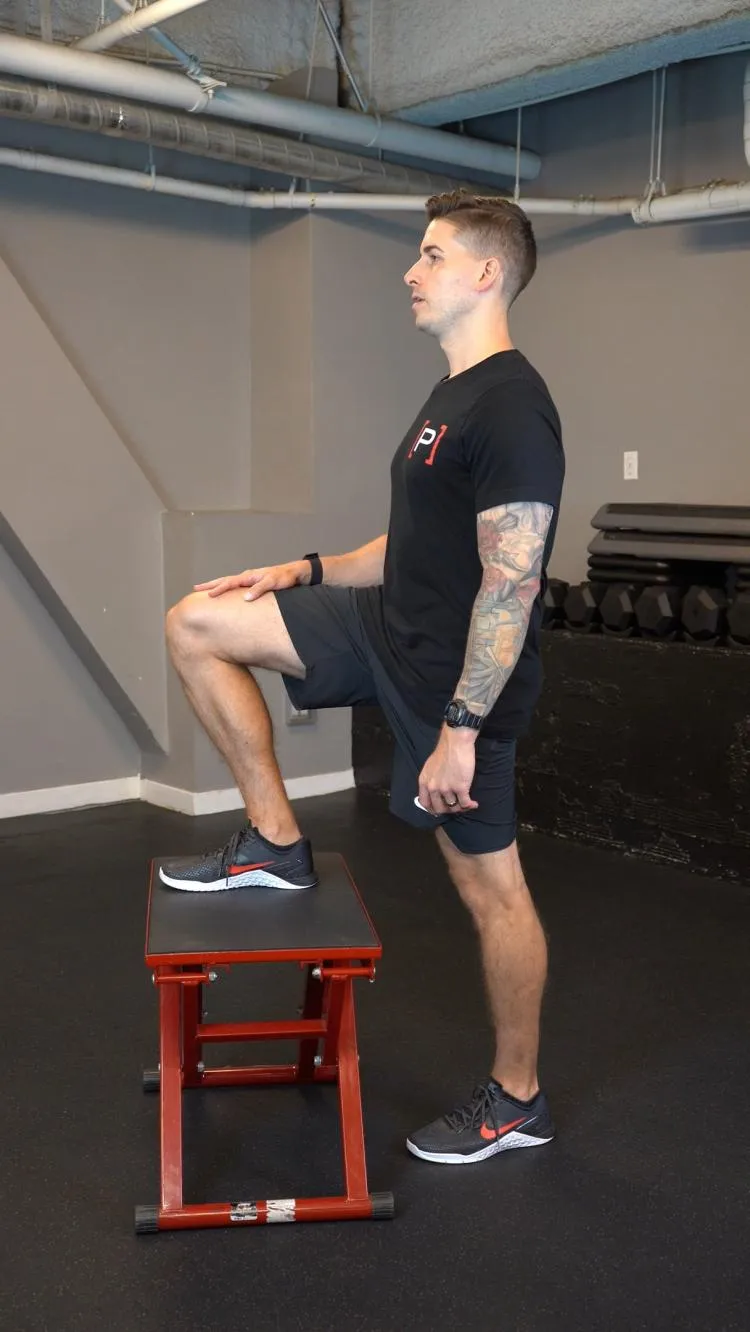
Standing Hip Flexor Stretch
View exercise instructions
- HOW: Begin this exercise in a staggered stance position with one foot on an elevated surface, the foot on the ground is the side you will stretch. With both feet facing forward, tuck your tailbone and shift your weight forward.
- FEEL: You should feel this stretch on the front of the hip on the back leg.
- COMPENSATION: Avoid rotating the back leg out and arching the back
Exercise 02 of 05
Exercise demonstration
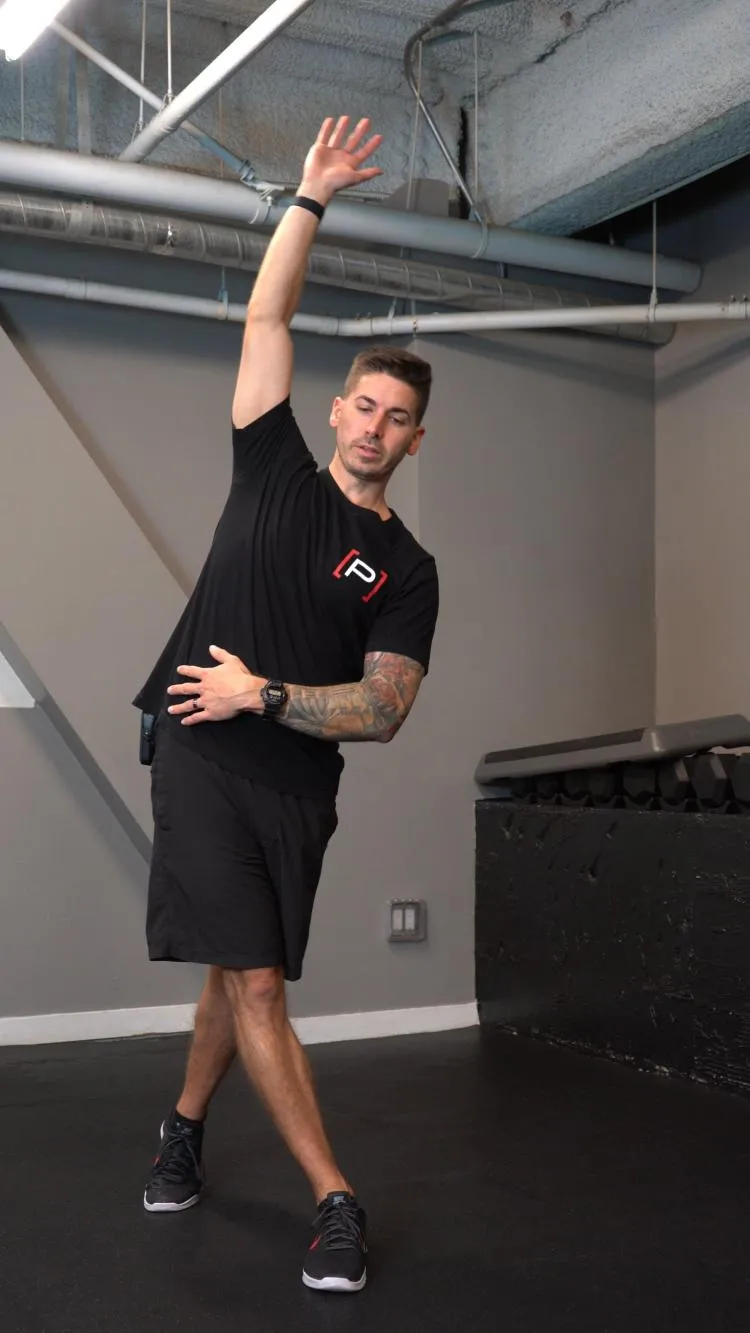
Standing QL Stretch
View exercise instructions
- HOW: Example - right TFL. Get set-up standing followed by taking a step backwards and to the opposite side. For example, if you step with your right foot, it should be behind and to the left of your left foot. Now reach up into the air with your right hand over your head towards your left side. At the same time, let your pelvis shift to the right until you feel a stretch in the TFL area (the front of and side your hip).
- FEEL: You should feel a stretch in the front and on the side of your hip. You also may feel a stretch on the side of your stomach, that is ok. Follow the video for other cues and tips.
- COMPENSATION: Keep your back upright as you lean either way, don’t slouch forward.
Exercise 03 of 05
Exercise demonstration
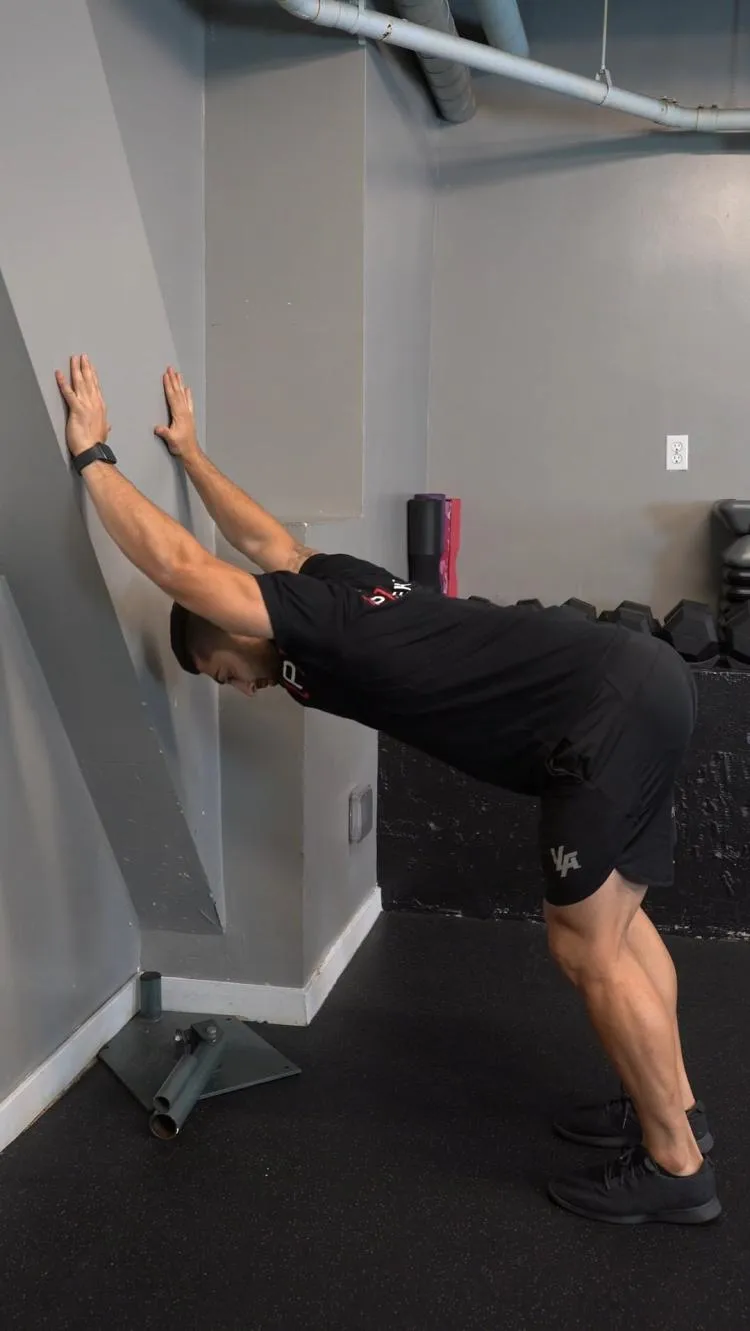
Low Back Flexion and Extension - AROM, Wall Supported
View exercise instructions
- HOW: While placing both hands up against the wall for support, begin by sagging your hips to arch the back. Then push back into a child's pose against the wall, the goal is to stretch the back into a rounding position. Repeat this movement back and forth with control.
- FEEL: When you drop your hips you will feel the abs and the low back stretching into the arched position. When you bring your body down towards the floor you will feel the low back muscles being stretched.
- COMPENSATION: Try to keep your knees and elbows straight as you go forwards and backwards.
Exercise 04 of 05
Exercise demonstration
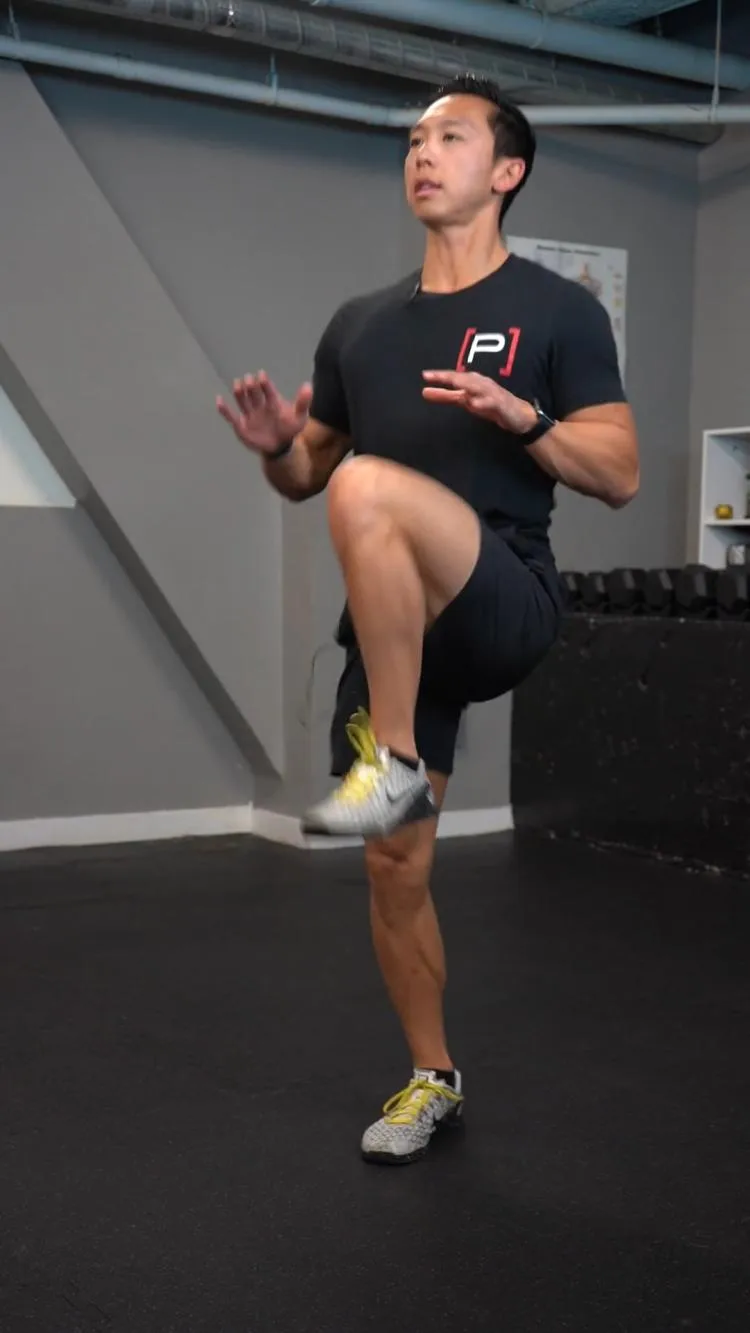
High Knees - In Place
View exercise instructions
- HOW: In a standing position, start by bringing one knee up as high as you can tolerate(hip level is as high as you need to go). Push off with your toes on the opposite leg to drive the other knee up. Alternate pushing off with each foot and bringing each knee up as quick and controlled as your can.
- FEEL: You should feel the muscles in your hips, thigh, and calves working.
- COMPENSATION: Stay straight up. Engage your core to keep your back straight, don’t slouch forward or lean back. Stay in the same place while alternating to each leg, don’t move forward.
Exercise 05 of 05
Exercise demonstration
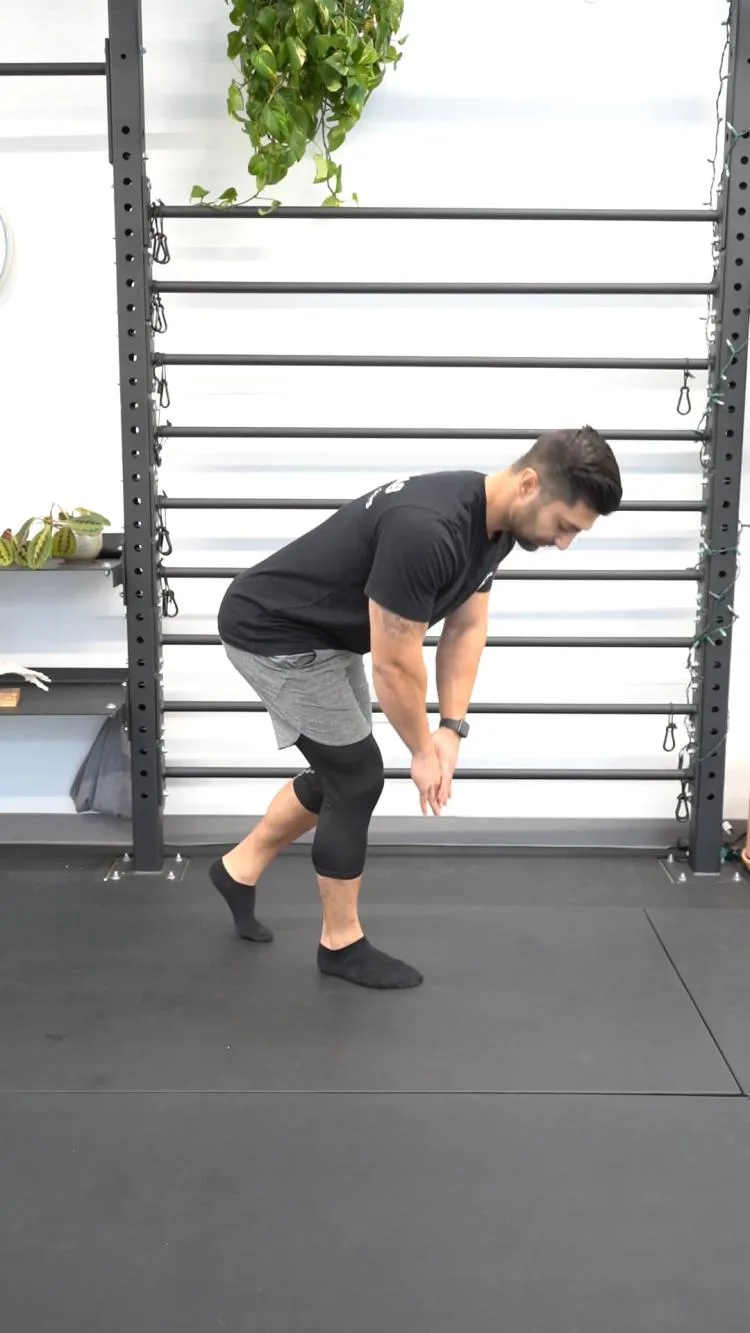
Kickstand RDL
View exercise instructions
- HOW: Begin in a staggered stance position with a majority of your weight on the front leg. Next focus on hinging primarily at the hips. This is achieved by bringing your torso forward and pushing your butt back. Lower yourself as far as you feel comfortable, then pull yourself upright by using the muscles in the back of the leg. Squeeze your butt once you are upright to ensure that you stand fully erect. The leg in the back is there to give you some stability, make sure the front leg is doing most of the work here.
- FEEL: You will the muscles in the back of the leg work with this exercise. As you hinge over you will feel a pull in the hamstrings.
- COMPENSATION: Avoiding rounding the back as you lean your torso forward. Movement should primarily be at the hips. Don’t allow the knee to go forward past your toes with this exercise.
Closing Thoughts:
Armed with knowledge and movement ideas, we can help to make a difference in our feelings of general low back tightness from prolonged seated postures. This will allow us to enjoy our workday and leisure activities with less worries about low back pain! Regular and consistent movement incorporated into our day will arm us with prevention against these symptoms and prevent stiffness!
References
- Kett AR, Sichting F, Milani TL. The Effect of Sitting Posture and Postural Activity on Low Back Muscle Stiffness. Biomechanics. 2021; 1(2):214-224. https://doi.org/10.3390/biomechanics1020018
- Jung KS, Jung JH, In TS, Cho HY. Effects of Prolonged Sitting with Slumped Posture on Trunk Muscular Fatigue in Adolescents with and without Chronic Lower Back Pain. Medicina (Kaunas). 2020 Dec 23;57(1):3. doi: 10.3390/medicina57010003. PMID: 33374520; PMCID: PMC7822118.
- Kallings, L.V., Blom, V., Ekblom, B. et al. Workplace sitting is associated with self-reported general health and back/neck pain: a cross-sectional analysis in 44,978 employees. BMC Public Health 21, 875 (2021). https://doi.org/10.1186/s12889-021-10893-8
- Carolin Bontrup, William R. Taylor, Michael Fliesser, Rosa Visscher, Tamara Green, Pia-Maria Wippert, Roland Zemp, Low back pain and its relationship with sitting behaviour among sedentary office workers. Applied Ergonomics, Volume 81, 2019, 102894, ISSN 0003-6870, https://doi.org/10.1016/j.apergo.2019.102894. (https://www.sciencedirect.com/science/article/pii/S0003687019301279)
- Ulf Ekelund, Jostein Steene-Johannessen, Wendy J Brown, Morten Wang Fagerland, Neville Owen, Kenneth E Powell, Adrian Bauman, I-Min Lee. Does physical activity attenuate, or even eliminate, the detrimental association of sitting time with mortality? A harmonised meta-analysis of data from more than 1 million men and women. The Lancet, 2016; DOI: 10.1016/S0140-6736(16)30370-1
About The Author
Taryn Beaumont, PT, DPT, CLT, CF-L1, CNC
Prehab Writer & Content Creator
 Taryn was born and raised in Maine and still resides there with her fiancé and son. Taryn received her Doctorate in Physical Therapy from Husson University in 2010, and also carries a Bachelor's in Kinesiology and Human Movement Science. She is a Certified Lymphedema Therapist, a Certified Crossfit Level 2 Trainer, and a NASM Certified Nutrition Coach. Taryn has 12+ years of experience in many different realms of PT, from the young athlete to the geriatric patient. Most recently she is employed with a home health PT company and is working toward her Advanced Competency in Home Health. Taryn considers herself a ‘lifelong learner’. She has special interests in oncology care and breast health, dry needling, and Crossfit training. In her free time, Taryn enjoys fitness, spending time with her family, continuing education, writing, and reading, and is very excited to be a part of The Prehab team to educate and empower others to take control of their health and wellness.