


On this page 3 sections
Your guide
What you'll learn
The scapula is one of the least congruent joints in the body. There is no bony articulation between the scapula and the thorax. This is why the scapula can move so easily, essentially it is a free-floating bone that can move into protraction/retraction, elevation/depression, anterior tilt/posterior tilt, internal/external rotation, and upward/downward rotation. We can not change the structure of this scapulothoracic joint, however, we can improve scapular control! Scapula position is almost fully determined by the pulling of muscle groups that attach to the scapula. The scapula is the core of the upper body, this is where the force comes in through and gets distributed out. This article will demonstrate exercises that you can do on your own to improve your scapula control.
Understanding Scapulohumeral Motion

The shoulder is used during virtually all upper extremity motion. The scapula aka the shoulder blade is considered the base of the shoulder complex. A lack of scapula stability has been blamed as the cause of shoulder pain. Is dyskinesia an indicator of instability? Is instability a good predictor of future pain? many authors have looked into this. A review shows little to no correlation between movements described to be dysfunctional and shoulder pathology. It seems to be there is no "normal" movement of the shoulder, deviations are simply part of human variation. Check out this article we wrote for more on this topic!

How To Improve Scapula Control
The goal of this article is not to give you exercises that are designed to be the meat of your workout. This article will demonstrate exercises that you can use on a daily basis to activate the intended muscles you are targeting to improve scapular control. The following exercises can be used as a warmup prior to your lifting session or as shoulder training support.
Improve Your Scapula Mobility With Shoulder Prehab!

Do you feel that you don't have control of your shoulder blades? Is your shoulder pain limiting you from reaching your goals or completing day to day activities? The Shoulder Prehab Program is a physical therapist developed, step-by-step program that teaches you how to optimize your shoulder health. This program will bulletproof your shoulders for anything life throws at you! Learn more HERE!
Exercise 01 of 04
Exercise demonstration
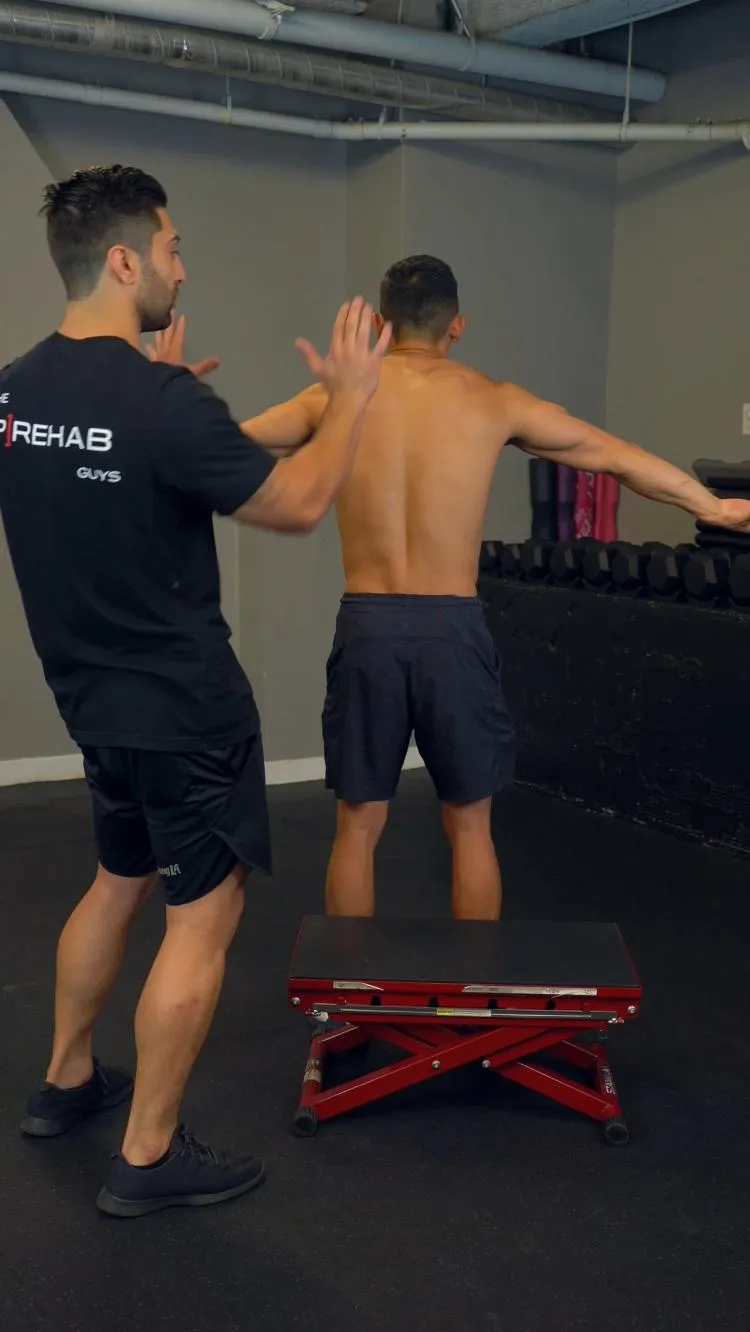
Shoulder Rotation - AROM
View exercise instructions
- HOW: Rotate your shoulder from internal to external rotation and repeat. When in external rotation, think about scooping back your shoulder blades while attempting to point your thumbs towards the floor. When internally rotation allow your shoulder blades to come up and forward while thinking about bringing your pinky up towards the ceiling.
- FEEL: You will feel the shoulder and shoulder blade muscles working with this exercise.
- COMPENSATION: Avoid arching your low back as you rotate your arms externally or backward.
When And Why Scapula AKA Shoulder Blade Position Matters With Exercise | Episode 16
Scapular Control
Your scapula aka your shoulder blade is often very difficult for people to find. If you don’t initiate movements like rows or pull-ups from the scapula = you will “arm” the movement. Meaning you will rely heavily on shoulder and arm muscles. Your scapula is able to handle more load than your arm muscles. With any movement you want to move proximally to distally, the scapula should initiate the motion when performing a movement like the Row, Lat Pull-Down, or when performing pull-ups. Shown here are a couple of movements that will help improve scapula control. Realize that at First implementing this strategy may decrease your performance, but the potential to improve your performance increases.
1️⃣start in the open chain with your arms moving in space
2️⃣add a resistance band which will help give a resistance cue to target the scapular retractors (muscles that pull your shoulder blade back) -keep minimal elbow flexion here
3️⃣perform scapula pull-ups also with minimal elbow flexion

Exercise 02 of 04
Exercise demonstration
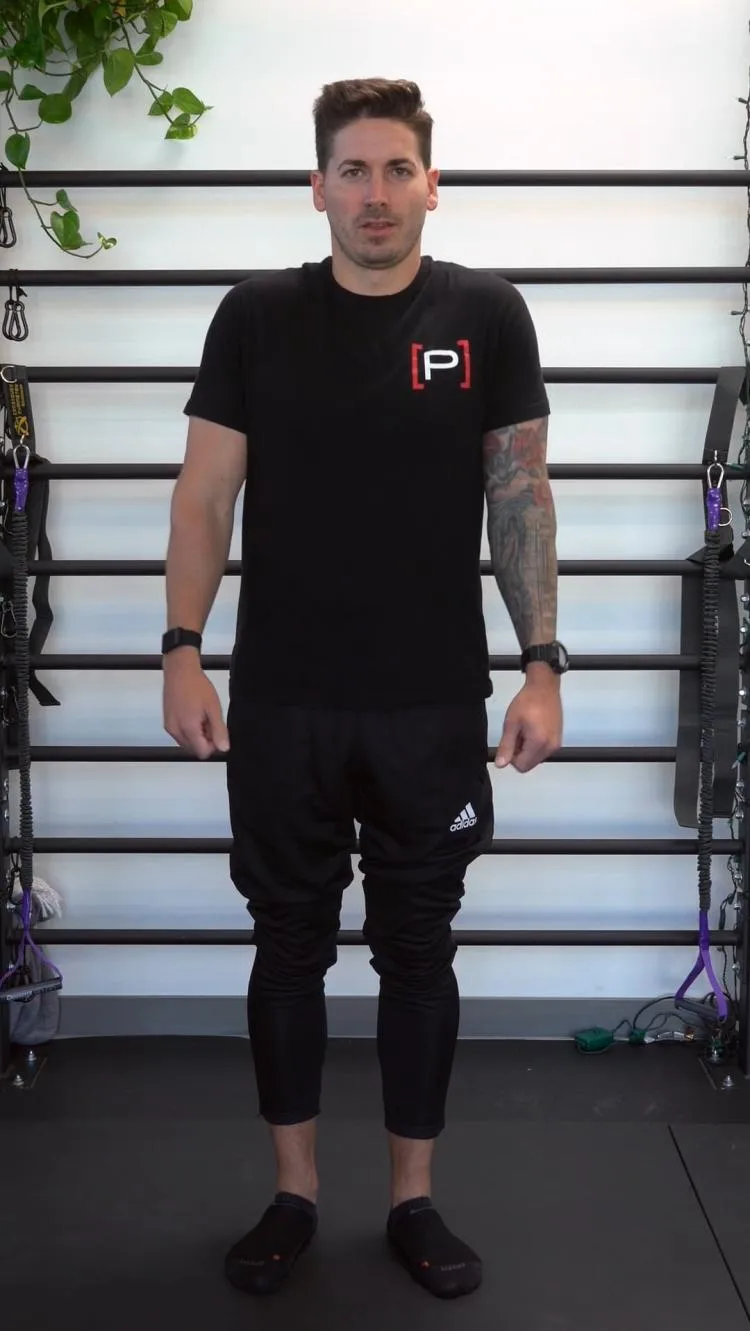
Scapula Clock
View exercise instructions
- HOW: Get set-up in a standing position with your hands by your side and arms straight. While maintaining arm position, slowly make big backward followed by forward circles with your shoulders and shoulder blades.
- FEEL: This should feel like nice shoulder and shoulder blade movement. Think about making smooth, big circles in both directions. You should feel your shoulder blade muscles controlling the movement.
- COMPENSATION: Keep the rest of your body including your head and neck still as you perform this exercise.
Sample Shoulder Prehab Exercise Video
Learning how to move and control your shoulder blades in every plane of motion is essential to shoulder health!
Exercise 03 of 04
Exercise demonstration
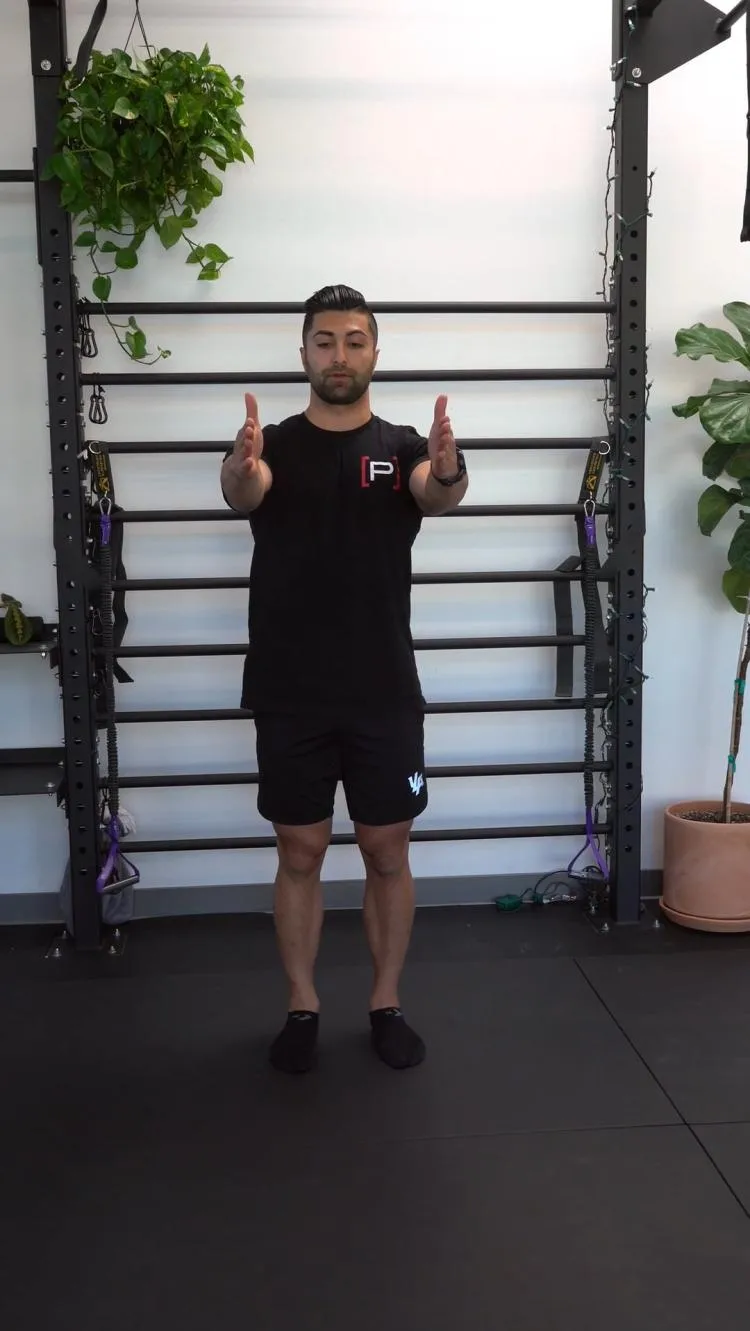
Scapula Clock - Arms Up
View exercise instructions
- HOW: Begin with your arms in a 90 degree position, where your hands are directly in front of your shoulders. Move your shoulder blades up, back, down, and forward. Then repeat. Once going backward is performed, move in the opposite direction, initiating the motion moving forward. This is often more difficult than moving backwards.
- FEEL: The muscles around your scapula or shoulder blade should be working here.
- COMPENSATIONS: Don’t let your entire body move as you perform this. You want to isolate the motion here at the scapula.
Now make big circles forwards and backward.
Exercise 04 of 04
Exercise demonstration
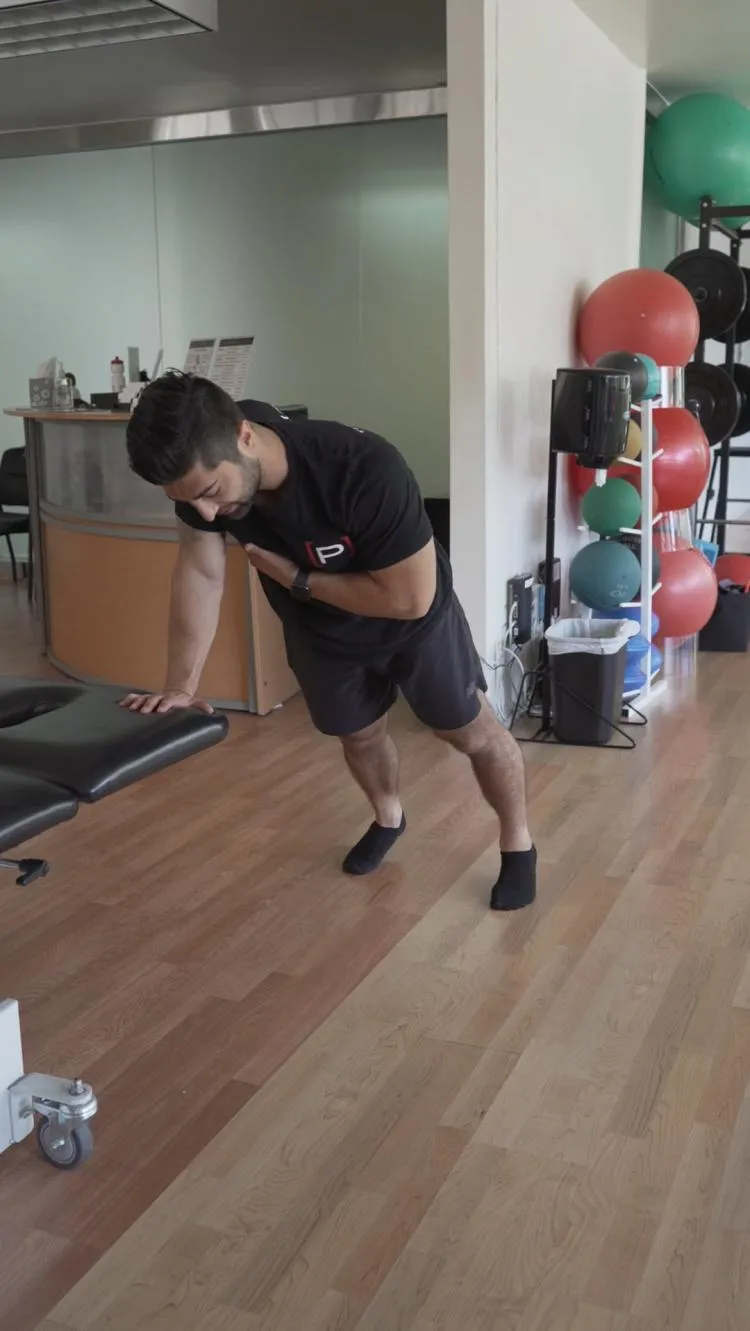
Single Arm Push Up Plus - Elevated
View exercise instructions
- HOW: Find an elevated surface to one arm on. In a high plank position keeping your body in line (feet up to shoulders). Allow the scapula to sag then push the scapula away from you pushing your chest away from the floor. Return back to starting position and repeat.
- FEEL: The Shoulder muscles working.
- COMPENSATION: Avoid moving at the elbows as you perform this exercise. Make sure the motion is coming from your shoulder blade.
For this exercise find an elevated surface to one arm on. In a high plank position keep your body in line (feet up to shoulders). Allow the scapula to sag then push the scapula away from you pushing your chest away from the floor. Return back to the starting position and repeat. Avoid moving at the elbows as you perform this exercise. Make sure the motion is coming from your shoulder blade. Looking for more Serratus Anterior strengthening exercises? Check this article out.
Closing Thoughts
There are a lot of variables when it comes to improving scapular control. It first starts with body awareness and understanding what muscles contribute to scapula control and scapular position. With this knowledge, you can begin to work on your scapular control by challenging yourself to explore different movements and different exercises while intentionally being mindful of your scapula position!
Take Control Of Your Shoulder Health!
About The Author
Arash Maghsoodi, PT, DPT, CSCS
Prehab Co-Founder & Chief Marketing Officer
 Arash Maghsoodi received his Doctorate in Physical Therapy from the University of Southern California. For his undergraduate studies, he attended San Diego State University and studied Kinesiology. After sustaining a career-ending ankle sprain while playing collegiate soccer, he realized how disabling and life-altering injuries can be. Arash currently resides in beautiful Santa Monica, California. His clinical experience is primarily in the orthopedic and sports setting. He has treated a wide variety of conditions ranging from the post-operative individual to the professional athlete. Arash is keeping the family legacy of becoming a physical therapist, as his mother is a practicing clinician of 30 years in the Orange County area.