

On this page 7 sections
Your guide
What you'll learn
Think about that last ankle sprain or wrist sprain you suffered, what did you do immediately following the injury? Probably ice, add a little compression and elevate that body part. Great idea, you did the right thing, but it’s time for the therapy world to shift away from the acronym RICE and shift towards the POLICE Principle for injury recovery and tissue healing. Haven’t heard this acronym yet? Want to learn how to speed up the recovery process? Want to learn why ice and rest don't work for injuries? Well, you’ve come to the right place.
RICE Principle VS. POLICE Principle
Let’s take a second to review what the RICE Principle stands for. We have all probably heard it, and we have all probably followed its guidelines at some point in our lives. The RICE Principle instructs us to…
- Rice
- Ice
- Compress
- Elevate
That doesn’t sound too bad right? Nah, and it’s not. However, research is currently finding that it’s out with the old and in with the new. To best heal from an acute injury, we need to change our mindset regarding a few of these steps. The RICE Principle is a bit outdated for where we are at in regards to recovery, and it’s time to rely on the POLICE Principle.
- Protect
- Optimal load
- Ice
- Compress
- Elevate
Ice, compression, and elevation are the constants between these two principles as there is certainly still an appropriate time to do all three. Studies have shown that the use of ice, anti-inflammatories, and elevation during the acute phase of healing can help to reduce recovery time and return to activity quicker (1). It’s the “P” and the “O-L” of the POLICE Principle that we need to get up to speed with. But before we dive into this, let’s discuss what type of injuries the POLICE Principle can best be applied to. What exactly is an acute injury? What makes an injury an acute injury? And when is it no longer acute? Let’s dig into that a little further.
Have You Recently Suffered A Foot or Ankle Injury?

Don't resort to ice and rest after a foot or ankle injury! Our body craves movement and is our best healer. The Foot & Ankle Rehab Program is a physical therapist developed, step-by-step program that teaches you how to optimize your foot & ankle health. Learn more HERE!
Don't Just Ice After Injury
The POLICE Principle for Acute Injuries
There are three stages that our body goes through in regards to healing. The first is the inflammatory stage, and many people refer to this stage as the acute phase. The POLICE Principle best applies to this period of healing, which typically lasts for 0-6 days however this can drastically depend on the severity of the injury, tissue type, and also the person who has the injury (1)! We are all different, which means we all heal a little differently and it’s important to recognize those differences and treat them accordingly. What we do know is the acute phase, it’s important to manage inflammation and pain. That means you may need to use ice and anti-inflammatories to control localized inflammation and your body's pain response in the first couple of days after an injury as it can be beneficial! A little inflammation is good, however, a lot of localized inflammation can be damaging to tissue and slow tissue healing time. It's important to follow the "I-C-E" in the POLICE principle for the first few days of healing to ensure that you get back on the field.
Curious as to what happens after the acute phase of healing? Read more about how our body does the amazing things it does in regards to tissue healing by checking out the blog below!
READ: What You Need to Know About Tissue Healing

Recent studies have found that 10-19% of all acute-related injuries are sport-related and involve either the ankle or the knee (2). It’s no question that if you are active, you will most likely deal with an acute injury of one of these body parts. Wanna stay out of that 20%? Check out this program to bulletproof your ankles!
The POLICE Principle
Time to test you with a pop quiz, what does the POLICE Principle stand for again? Spoiler alert…it stands for protect, optimal load, ice, compression and elevate. We talked through the importance of ice, compression, and elevation during the acute phase of healing (first 0-6 days), so let’s talk about what the heck “protect” and "optimal load” mean.
Protect: The POLICE Principle
We know there is an appropriate time to rest and protect the injured area to allow for healing following an injury, but this does not mean we have to completely immobilize the area. Read here on how to stay strong after surgery/immobilization! Recent studies now show that rest and immobilization should be very minimal after an injury. A study by Bring et al demonstrated that following an Achilles tendon rupture, rats who were immediately immobilized had significantly less formation of new blood vessels, new collagen levels, and fibroblasts aka all the “good stuff” we want to speed up the healing process. This immobilization also led to longer recovery times, and less strength through the Achilles tendon following recovery (3). We also now know from research that introducing movement early on in rehabilitation leads to less injury down the road (4). With all this being said motion is lotion! And it is key to introduce movement as tolerated early on in the rehab process, plus, I mean really…who doesn’t love to move? Again, remember to provide a certain level of protection to not further damage injured tissue and move in a range that is comfortable and pain-free.
Optimal Load: The POLICE Principle
On top of mobilizing in a range that is appropriate following injury, it’s also important to begin optimally loading that injured tissue. Now, this doesn’t mean that after an ankle sprain I am asking you to go run 10 miles, what it does mean is that I am asking you to start to strengthen that tissue to allow it to heal in a way that is optimal to functional recovery. So how do we look at what loading tissue does to that tissue's health recovery? We head to space! An awesome study done in 2007 looked at ligament recovery in space with no load due to no gravity as compared to recovery on earth with gravity acting as a loading force. No shocker here, the tissue that healed in space had much less strength, did not repair as quickly, and the repair process as a whole was impaired (5).
LISTEN: SHOULD YOU ICE AFTER AN INJURY?

Here’s a good way to think about it. When we injure soft tissue (muscle, ligament, tendon) those connective tissue fibers look like spaghetti noodles when they are boiling in a pot. They are jumbled, mixed around, and not aligned. When we start to appropriately load soft tissue, we cause that damaged tissue to go through a physiological response to help to realign those fibers and get that pretty “spaghetti in a box” look. We need tissue fibers to be aligned to develop appropriate strength and limit the chance of injury down the road. With loading, remember that injuries vary so there is no “one size fits all” loading program. It’s important to design a program that is functional and stresses the tissues in a manner of how they would be stressed on a daily basis. This program also needs to be appropriate for where you are at in the recovery progress. Questions? Talk to a physical therapist in regards to your best course of action to return from injury… your key to success is relying on the POLICE Principle!
Accelerate You Injury Recovery with Blood Flow Restriction (BFR)
In this video, we’re going to teach you how you can use Blood Flow Restriction (BFR) to accelerate your rehab and recovery from common lower-body injuries including Achilles tendon pain, Patellar tendon pain, and Hamstring strains.
Remember how we said ankle injuries are some of the most common acute injuries? While that may be true, these injuries respond extremely well to optimal loading during the acute phase rather than ice and rest. Check out the videos below!
Exercise 01 of 03
Exercise demonstration
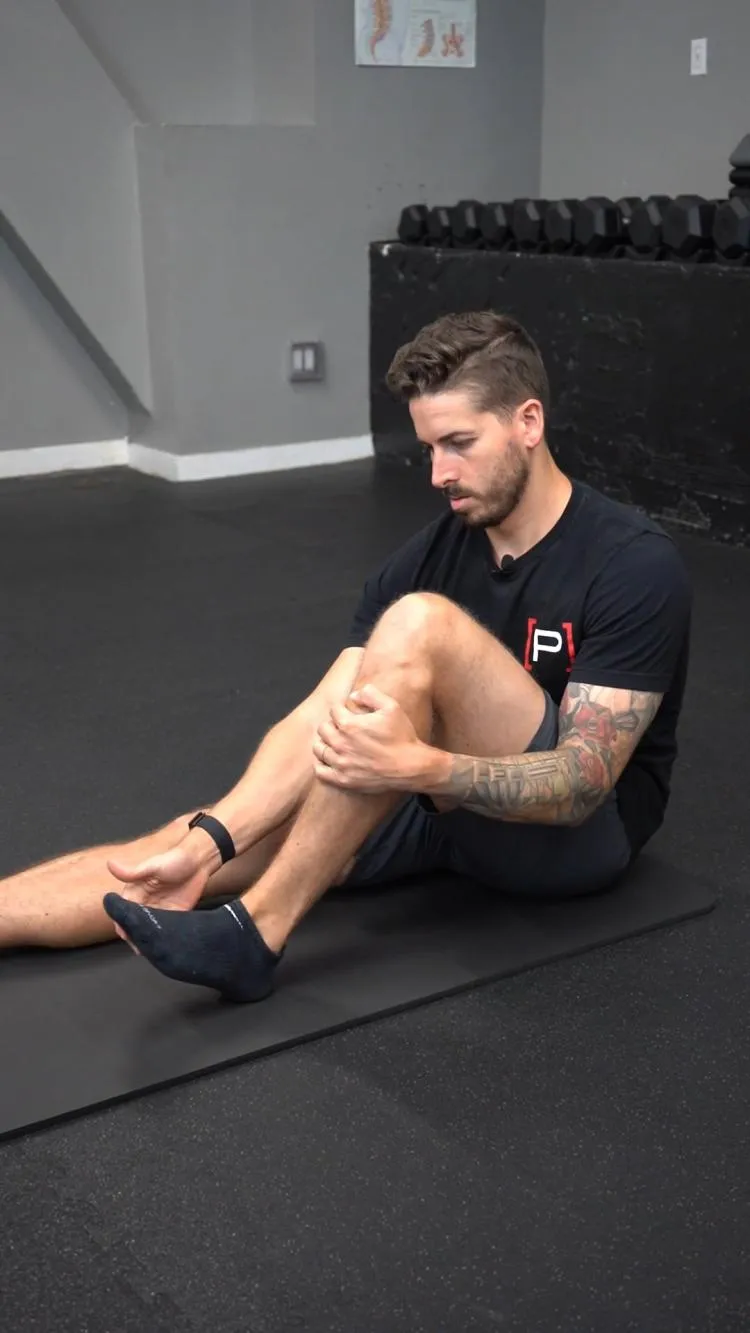
4 Way Ankle Isometrics
View exercise instructions
- HOW: In a seated position, bend one knee up and place your heel on the ground with your toes up. While keeping your foot and ankle still, use your hand to apply pressure to your foot as you try to move it up, down, in and out, but you match the resistance with the muscles in your lower leg so that your foot doesn’t move. Hold for a few seconds for each rep and repeat.
- FEEL: You should feel the muscles in your lower leg and ankle working.
- COMPENSATION: Make sure to actually not let your ankle move, only contract the muscles to meet the resistance.
Exercise 02 of 03
Exercise demonstration
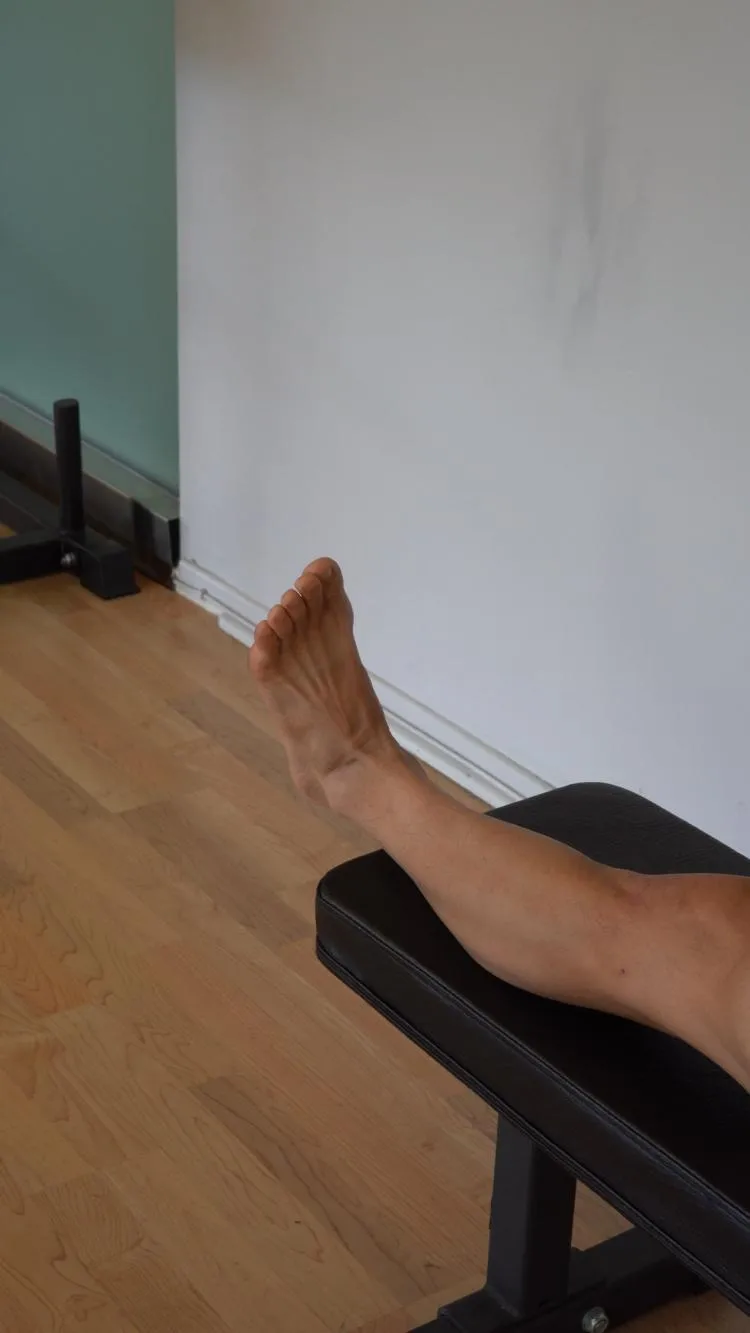
Ankle Plantarflexion and Dorsiflexion - AROM
View exercise instructions
- HOW: Move your ankle forward and backward in a pumping motion. The goal is to get comfortable with this forward and backward ankle range of motion.
- FEEL: You should feel all different parts of your ankle stretching and activating.
- COMPENSATION: Move just from the ankle, not the toes.
Exercise 03 of 03
Exercise demonstration
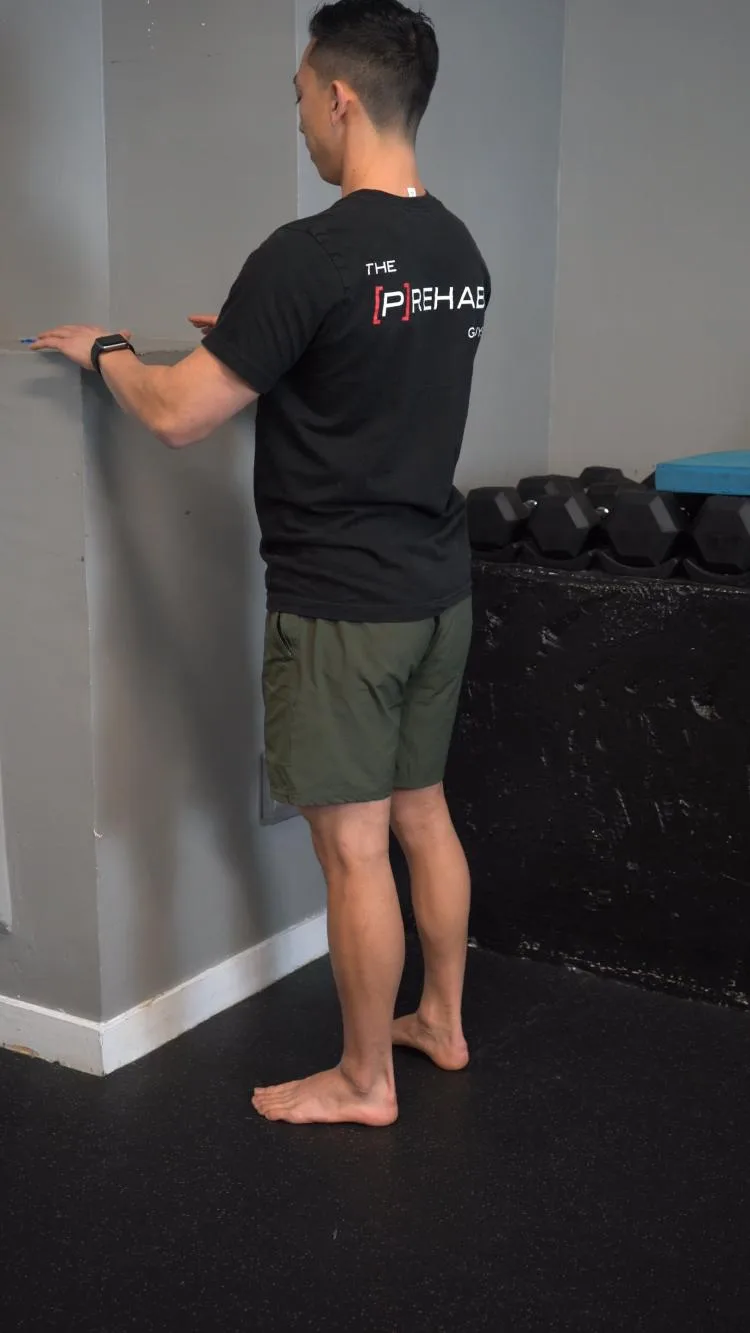
Standing Weight Shifts
View exercise instructions
- HOW: Get set up near a wall or an object such as a chair to ensure safety if you were to lose your balance. Slowly shift your weight laterally all the way to one side trying to put 100% of your weight onto one leg, then shift your weight towards the opposite side, repeat.
- FEEL: This should feel like you're transferring your weight from one leg to the other. If anything, you should feel your calf, quad, and the outside of your hip muscles working with this exercise.
- COMPENSATION: Be sure not to compensate at your hips or trunk and lean over side-to-side. Try to keep your body nice and tall in a straight line
Closing Thoughts
We hope that you now understand why ice and rest don't work for injuries. POLICE should make us reconsider what needs to be done following an acute injury. We need to further address functional movement patterns, loading tissue in a way that is safe and beneficial, and stressing tissue in a way that will get you back to doing whatever sport it is you want to do! The POLICE principle allows us to do all that to ultimately lead to a faster and healthier recovery. Remember, no two injuries are alike, and it’s important to consult with a physical therapist to make sure you are on the right track to success following an acute injury. Here’s to forward movement in research, and faster and healthier recoveries.
Take Control of Your Foot and Ankle Health!
The foot & ankle is a truly unique design with 26 bones, 30 joints, over 100 muscles, tendons, ligaments, and over 7,000 different nerve endings! It's complex but in complexity, we go simple because simple works! In the Foot & Ankle Rehab program, you will spend time developing the habit of consistency each week. Along with consistency, the goal is to increase confidence and decrease uncertainty by mastering safe, effective movements. As you work through the program make sure to take advantage of the education, training support, and assessments videos.
REFERENCES
- Vavken P. Evidence-based Treatment of Muscle Injuries. Swiss Sports & Exercise Medicine. 2018;66(1):16-21. doi:10.34045/ssem/2018/
- Bahr, R., & Krosshaug, T. (2005). Understanding injury mechanisms: a key component of preventing injuries in sport. British journal of sports medicine, 39(6), 324-329.
- Bring, D. K. I., Reno, C., Renstrom, P., Salo, P., Hart, D. A., & Ackermann, P. W. (2009). Joint immobilization reduces the expression of sensory neuropeptide receptors and impairs healing after tendon rupture in a rat model. Journal of Orthopaedic Research, 27(2), 274-280.
- Jones, M. H., & Amendola, A. S. (2007). Acute treatment of inversion ankle sprains: immobilization versus functional treatment. Clinical Orthopaedics and Related Research®, 455, 169-172.
- Martinez, D. A., Vailas, A. C., Vanderby Jr, R., & Grindeland, R. E. (2007). Temporal extracellular matrix adaptations in ligament during wound healing and hindlimb unloading. American Journal of Physiology-Regulatory, Integrative and Comparative Physiology, 293(4), R1552-R1560.
About the Author
Lauren Lynass PT, DPT, CSCS
Certified Running Gait Analyst, DN Certified
Prehab Head of Videos & Content Creator

Dr. Lauren Lynass is a Colorado girl at heart. While she grew up skiing, snowshoeing, and building snowman, she has traded in her snowy mountains for the South Carolina beach life and currently lives with her husband and dog in their travel trailer "The Burrito." As a physical therapist, Lauren has experience working with pediatrics, runners, geriatrics, athletes, and itty bitty newborns. She is a Certified Strength and Conditioning Specialist, Level 1 Certified Running Gait Analyst, Dry Needling Certified, and uses her expertise to host sport specific strength and conditioning classes for local high school athletes. When Lauren isn't treating patients, you can find her running along the coast, hiking with the pup and husband, or simply swinging in a hammock lost in a good book. She considers herself a life long learner and loves that being a physical therapist provides her with the opportunity to do so! She enjoys being a part of the Prehab Team as it allows her to collaborate with some of the very best in the field and empower others to take charge and ownership of their wellbeing.