

On this page 5 sections
Your guide
What you'll learn
Medial knee collapse, also known as knee valgus, is when the knee collapses or falls inward during any sort of weight-bearing activity, like a squat, during gait, or during sport-specific movements like cutting. Knee valgus is characterized by hip adduction and hip internal rotation in a flexed hip position. This position of the knee is most commonly associated with a non-contact mechanism of injury of the Anterior Cruciate Ligament (ACL), and occurs in the running or jumping athlete during the deceleration phase of a cutting movement. The gluteus maximus plays an interesting role in medial knee collapse and can help with preventing knee valgus. In this article, we will show you how to prevent knee valgus with gluteus maximus targeted exercises!
Common Knee Injuries Surrounding Knee Valgus
An ACL injury is the most common form of knee injury today in the United States, with estimates ranging from 100,000 to 200,000 per year. In addition to ACL loading, medial knee collapse also predisposes to lower extremity to a host of other orthopedic issues such as lateral hip pain, ITB stress, patellofemoral stress, MCL strain, and tibialis posterior stress (1). Any time our body develops a compensatory movement, it can lead to potential issues of pain and/or injury. Repetitive knee valgus can lead to overuse injuries at the knee. Below is a visualization of what knee valgus looks like.
Knee Valgus
 From Dr. Chris Powers
Knee Programming At The Tip of Your Fingers!

Learn how to control your knee valgus and overall knee control! The Knee Prehab Program is a physical therapist-developed, step-by-step program that teaches you how to optimize your knee health. This program will bulletproof your knees for anything life throws at you! Learn more HERE!
Understand The Role of The Gluteus Maximus
So you want to know how to prevent knee valgus? As mentioned above, medial knee collapse is characterized by excessive hip adduction and internal rotation. While the gluteus medius is the primary frontal plane hip abductor, and weakness of this muscle is clinically associated with knee valgus, one must not forget the important functional role of the gluteus maximus when considering impairments related to knee valgus. (We will devote our attention in this article to the gluteus maximus only, assuming the gluteus medius is functionally strong).
Gluteus Maximus Anatomy
 Via Dr. Chris Powers
The gluteus maximus is the biggest of the gluteal muscles that form the large majority of your butt. The gluteus maximus is also known as a “tri-planar muscle”, meaning that it has the ability to move the hip joint in all three cardinal planes. The gluteus maximus can extend the hip in the sagittal plane, abduct the hip in the frontal plane, and externally rotate the hip in the transverse plane. All three of these muscle actions counteract the motions associated with medial knee collapse: hip adduction, internal rotation, and flexion.
As the gluteus maximus is the main hip extensor, the body will naturally recruit and use other hip extensors, namely the hamstrings and adductor magnus, to compensate for its weakness. While hamstring and adductor magnus compensation will help hip extension, the additional recruitment of these other hip extensors actually further exacerbates medial knee collapse due to secondary actions of the hamstrings and adductor magnus. The hamstrings, while being a hip extensor, are also a hip adductor. The adductor magnus, while being a hip extensor, is also a hip adductor
Gluteal and Hamstring Anatomy

The combination of hamstring and adductor magnus overuse to compensate for gluteus maximus weakness drives the hip into more adduction, which will further exacerbate medial knee collapse! Of our body’s three primary hip extensors, two of the three actually adduct the hip instead of abducting the hip; thus, further emphasizing the importance of adequate gluteus maximus strength.
Interestingly enough, many individuals actually have more than adequate gluteus maximus strength, as evidenced by physical therapist-assisted manual muscle testing, or the ability to squat/leg press a lot of weight. Yet they still demonstrate medial knee collapse in functional activities. Why you might ask? These individuals lack proper neuromuscular control and the ability to adequately recruit their gluteus maximus.
LISTEN: WHY DO YOUR KNEES CAVE IN? SHOULD WE STOP BLAMING THE GLUTE MED?

The ability to properly recruit the correct muscles, in sequential order, is something that we not only take for granted but also seldom have to think about. When we walk, kick a soccer ball, or throw a football, we don’t think – we just do. Training your brain to turn on the right muscles can be a challenging process, but a quick fix might simply be adjusting your trunk angle! Leaning the trunk forward during squats, running, or sport-specific movements effectively increases the hip flexion moment while decreasing the knee flexion moment. This results in a greater propensity to activate the hip extensors with a forward trunk lean. A 2010 study by Pollard et al. found that greater utilization of the hip extensors was associated with decreased valgus moments and angles. The findings of this study are in line with the emphasis we place on the importance of the gluteus maximus and its role in preventing medial knee collapse (1).
Fixing Your Knock Knees With Two Exercises
Strengthen The Glutes!
There are a plethora of excellent exercises that you can work on to strengthen your glutes, specifically the gluteus maximus. We will show you some of them below! What is great about these exercises is that they can be modified to either be progressed or regressed based on your current fitness level! Always start with what feels best for your body and focus on the correct execution of the exercises to gain maximal benefit. In addition, if first starting out with these exercises, work on longer hold times, as this will prime the mind-body connection of activating the correct muscle groups!

Exercise 01 of 06
Exercise demonstration
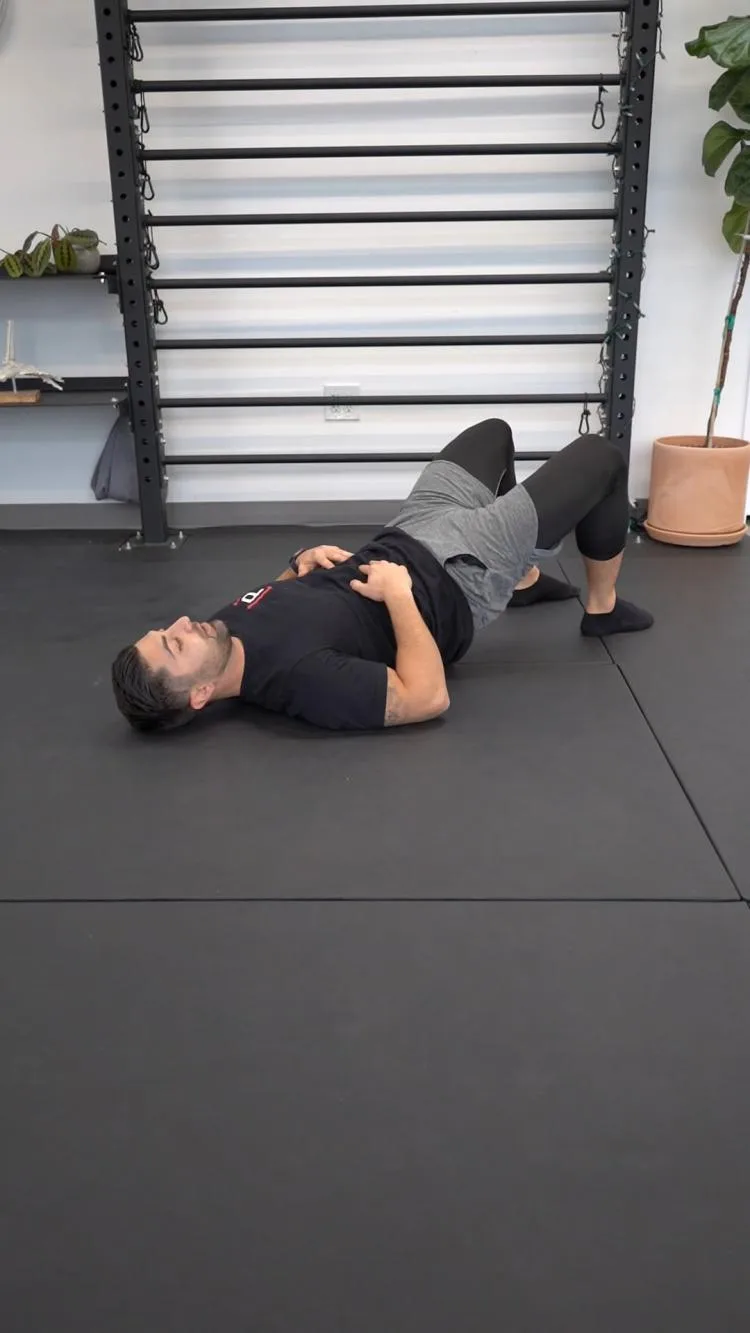
Supine Bridge
View exercise instructions
- HOW: Start on your back with your knees bend and slightly spread apart. Tighten up your stomach first, then your glutes. Next, drive your heels into the ground and lift your hips up towards the ceiling. At the end position your knee, hip, and shoulder should be in one straight line. Hold the end position and squeeze the glutes, then slowly return to starting position.
- FEEL: You should feel your glutes work to control this motion. At no point should you feel your low back muscles doing the lifting motion. If you feel it only in your hamstrings, try bending your knees a bit more and repeat.
- COMPENSATION: Avoid arching at the low back as you perform this.
Exercise 02 of 06
Exercise demonstration
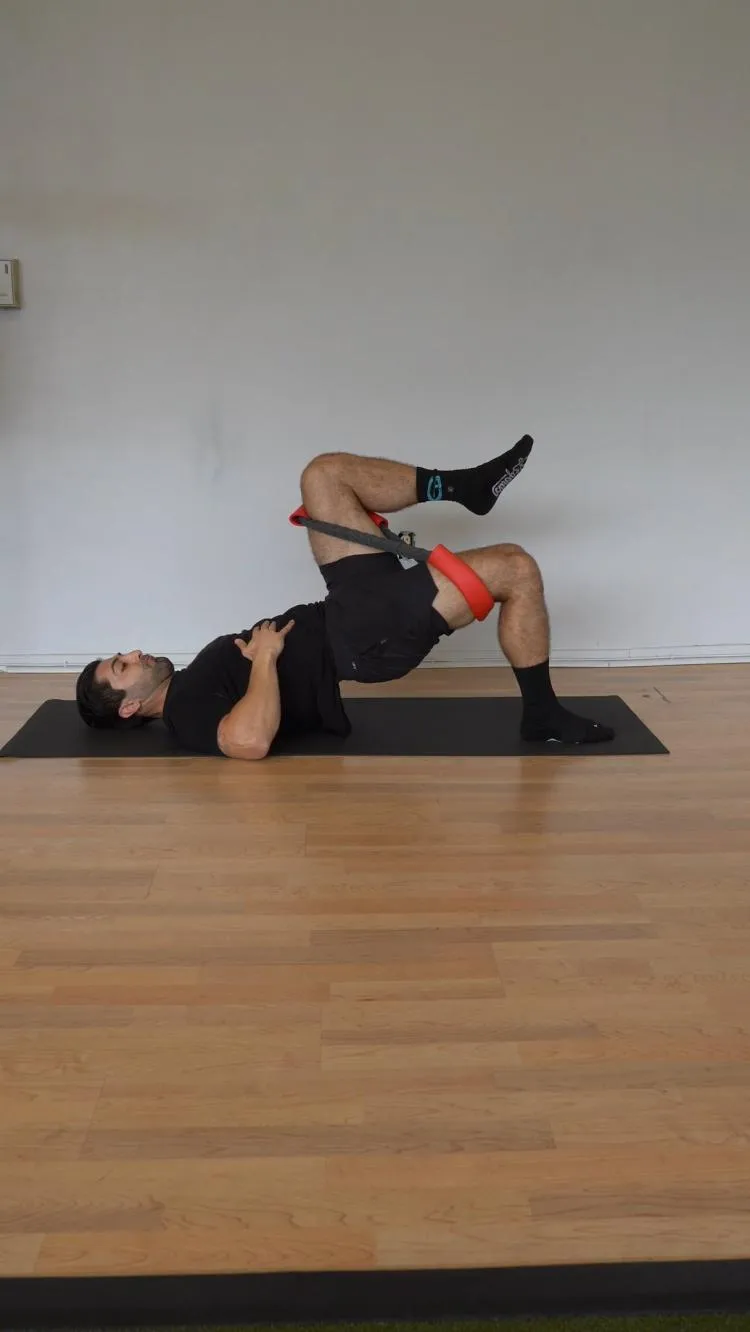
Single Leg Bridge - Band
View exercise instructions
- HOW: Start on your back with a resistance band placed slightly above your knees. Bring one leg in towards your chest, with the leg on the floor drive in with your heels to lift your hips up towards the ceiling. At the end position your knee, hip, and shoulder should be in one straight line. Hold the end position and squeeze the glutes, then slowly return to starting position.
- FEEL: You should feel your glutes work to control this motion. At no point should you feel your low back muscles doing the lifting motion. If you feel it only in your hamstrings, try bending your knees a bit more and repeat. With the leg that is elevated will feel the muscles in the front of the hip working.
- COMPENSATION: Avoid arching at the low back as you perform this. Don't let the knee bend with the leg that is elevated.
Exercise 03 of 06
Exercise demonstration
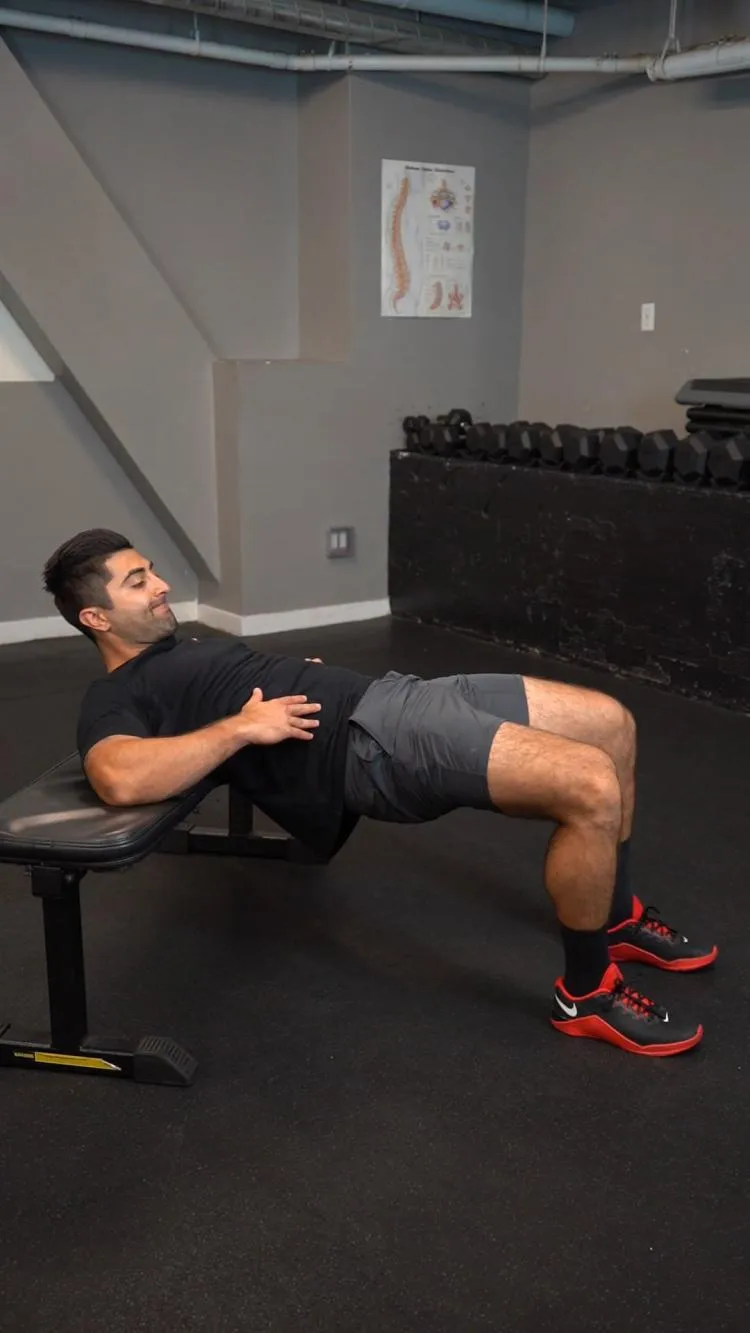
Hip Thrust
View exercise instructions
- HOW: Begin by placing your upper back on an elevated bench surface. Your shoulder blades should be just above the edge. Have your feet shoulder width apart and flat on the ground. Your knees bent with your feet slightly behind your knees. Push into the ground lifting your hips straight up. Stop when your hips are in line with your knees. Hold that position for a few seconds and then slowly return to the starting position.
- FEEL: You should feel your glutes, hamstrings, and core working.
- COMPENSATION: Don’t use your upper body, only use your lower body and core. Keep your shoulders on the elevated surface.
Exercise 04 of 06
Exercise demonstration
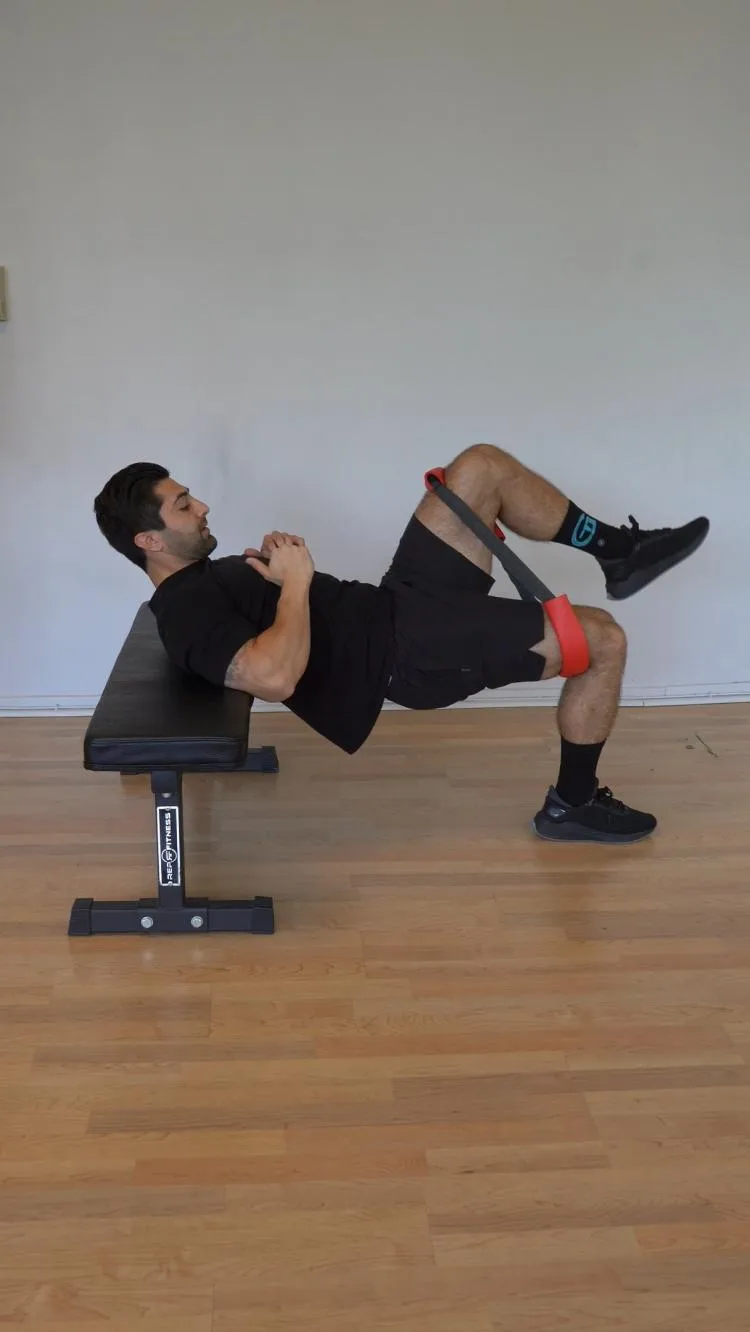
Single Leg Hip Thrust - Band Around Knees
View exercise instructions
- HOW: Begin with your mid-back against a bench or elevated surface with your feet hip-width apart. Place a resistance band just above your knees. Bring one knee up towards your chest to tension the resistance band. The elevated leg should be not only driving up but also slightly out towards your shoulder. While keeping your chin tucked, thrust your hips towards the ceiling. Focus on driving into the floor with your heel and tuck your tailbone (AKA posteriorly tilt your pelvis). Slowly return back to the starting position and repeat.
- FEEL: You will feel the gluteal and hamstring muscles working with this exercise.
- COMPENSATION: Avoid arching with the lower back, allow a majority of this movement to come from the hips and pelvis. Avoid rolling on the outside of the foot as you spread the band, make sure the big toe is driving into the floor for the entirety of this exercise
Exercise 05 of 06
Exercise demonstration
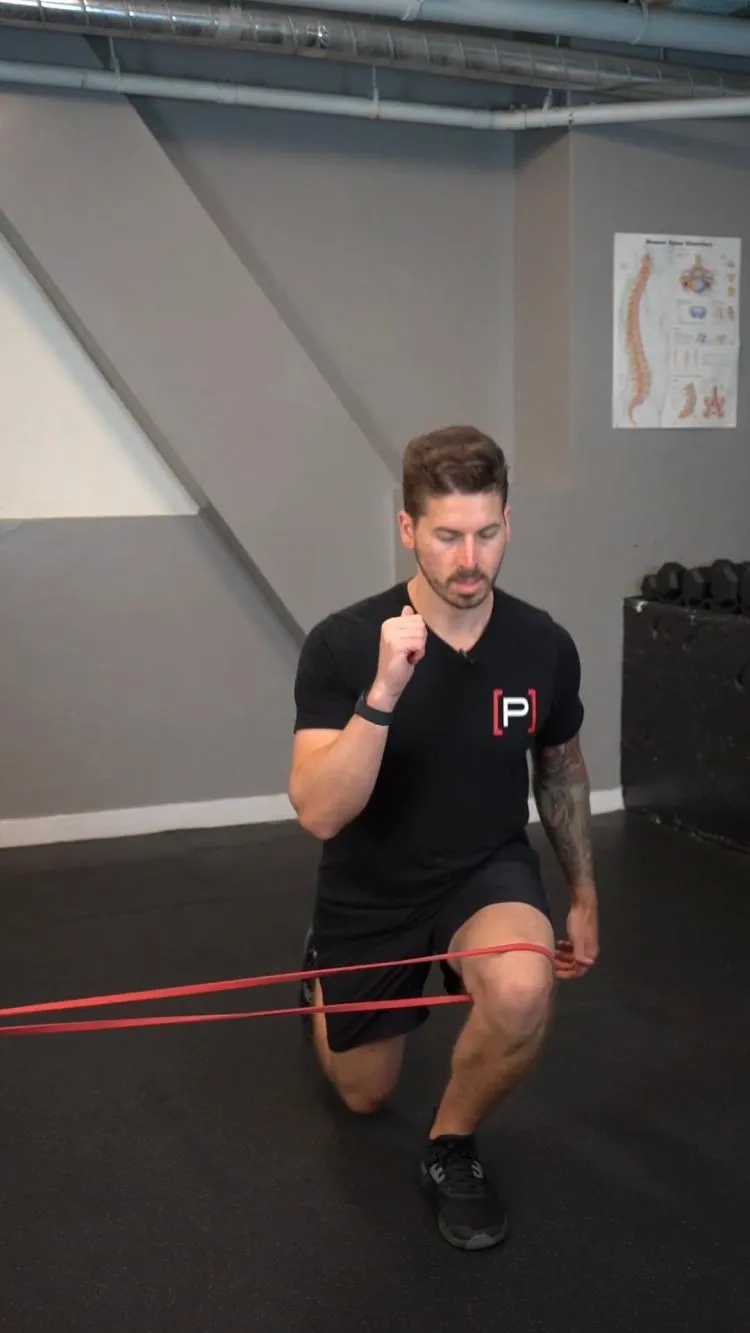
Split Stance Lunge - RNT
View exercise instructions
- HOW: Anchor a band about knee height. Loop it around the outside knee just about the knee cap. The band should feel like it’s trying to pull your leg inwards. Your goal is to resist the band and push out against the band at all times. Bring the other leg back into a lunge position. From here, bend your knee with the band around it while keeping your back straight up.
- FEEL: You should feel the muscles in your thigh and glute working.
- COMPENSATION: Don't let the band pull your knee in as you lower down. Keep your back straight.
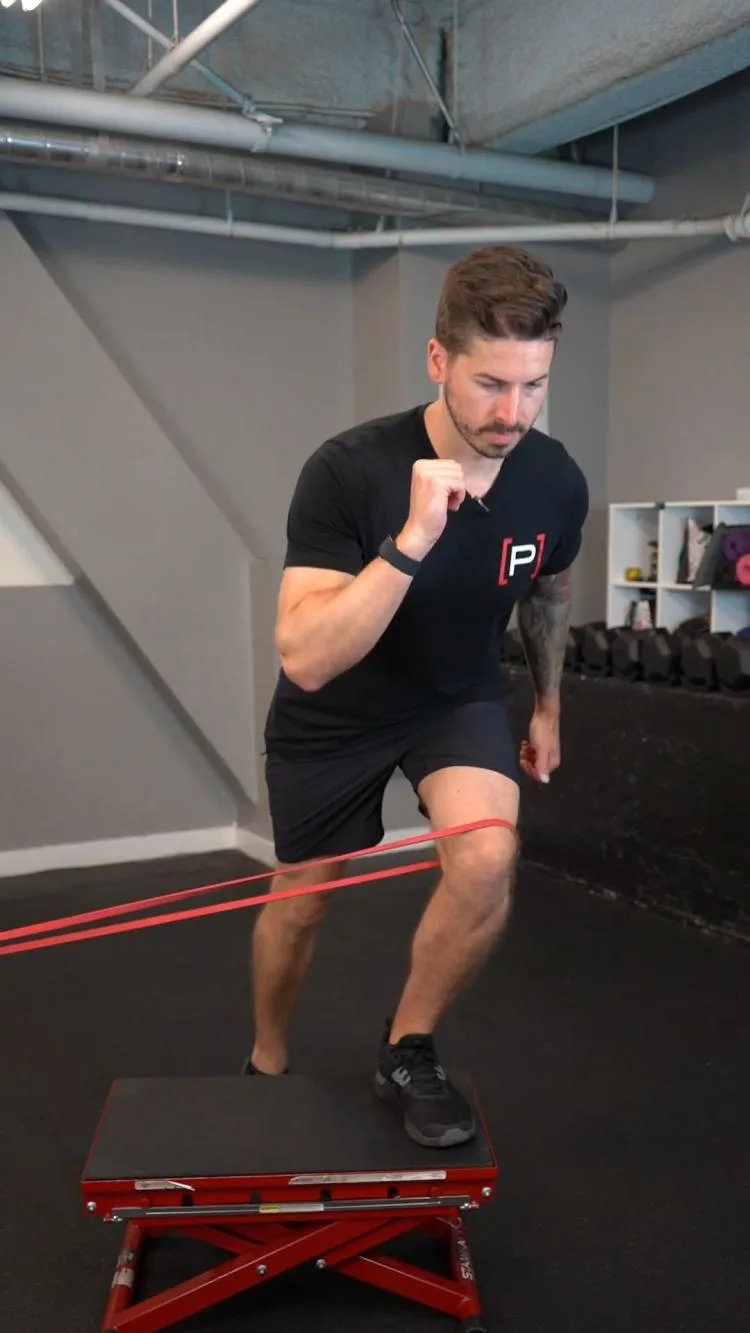
Reactive Neuromuscular Training (RNT) exercises are excellent to facilitate glute activation and prevent dynamic knee valgus! The video above and below are a couple of examples!
Exercise 06 of 06
Exercise demonstration
Posterior Step Down - RNT
View exercise instructions
- HOW: Place an elevated surface in front of you. Anchor a band above the height of the surface and loop it around the outside knee above the knee cap. With the other leg, step backwards and hinge your upper body forwards. Bend the knee with the band around it but keep it stable as the band wants to pull it inward. Your goal is to prevent the band from pulling your knee inwards. Tap the foot to the ground and return to the starting position.
- FEEL: You should feel your thigh and hip muscles working.
- COMPENSATION: Don’t let the band pull your knee in, keep it straight.
Closing Thoughts
The gluteus maximus is one of the most important muscles that prevent knee valgus. It is not always the case that this muscle may be weak, but it just may not be used as much as it should! It is important to include adequate gluteus maximus strengthening exercises when designing a specific program for each individual to ensure it is not being neglected. In summary, you must not forget to consider weakness or improper neuromuscular facilitation of the “tri-planar muscle”, the gluteus maximus, when addressing impairments potentially causing medial knee collapse!
Take Control of Your Knee Health
Knee discomfort is one of the reasons why people end up sitting out but that's about to change through the tag team champs of the world: education and movement. The knee must be strong enough to create its own muscular forces and be the traffic director for force passing through. Therefore, to have a successful outcome your program must include not just the knee but the core, hip, and ankle. Teamwork makes the dream work, ready to be part of the team?
References
- Pollard, Christine D., Susan M. Sigward, and Christopher M. Powers. "Limited Hip and Knee Flexion during Landing Is Associated with Increased Frontal Plane Knee Motion and Moments." Clinical Biomechanics 25.2 (2010): 142-46.
- Powers, Chris M. "Abnormal Movement Mechanics and Injuries of the Lower Quarter: Proximal and Distal Influences." University of Southern California, Los Angeles. 18 May 2015. Lecture.
- Powers, Christopher M. "The Influence of Abnormal Hip Mechanics on Knee Injury: A Biomechanical Perspective." J Orthop Sports Phys Ther Journal of Orthopaedic & Sports Physical Therapy 40.2 (2010): 42-51.
About The Author
Michael Lau, PT, DPT, CSCS
Prehab Co-Founder & Chief Product Officer
 Michael was born and raised in Northern California but now currently resides in Sunny SoCal ever since attending the University of California, Los Angeles as an undergraduate majoring in physiology. After his undergraduate studies, he received his Doctorate in Physical Therapy from cross-town rival the University of Southern California. As a licensed physical therapist with a strong background in strength and conditioning, Michael likes to blend the realms of strength training and rehabilitation to provide prehab, or preventative rehabilitation, to his patients. A common human behavior is to address problems after they become an issue and far often too late, which is a reactionary approach. He believes the key to improved health care is education and awareness. This proactive approach-prehab-can reduce the risk of injuries and pain in the first place. He is a huge proponent of movement education and pain science. Clinically, he has a special interest in ACLR rehab and return to sport for the lower extremity athlete.