


On this page 7 sections
Your guide
What you'll learn
Are YOU aging gracefully, like a fine wine? Or do you feel that every day you wake up there is a new ache, pain, soreness or noise somewhere in your body? I would venture to guess that the latter is far more common, and that it becomes increasingly frustrating to have to manage new issues that crop up in our bodies as we age. As humans become older it is common to feel like it is more difficult or takes longer to complete everyday tasks, falling and injury is more common, and our need for medical care and physical therapy increases. While we do not have control over the common age-related changes that happen metabolically inside our body, do we have control over the way we can take care of ourselves as we age and mitigate some of the adverse effects. In this article, we will discuss how age related changes happen, and some easy ways that we can regain control over our health to help us age gracefully!
What are some Age-Related Changes that We Should be Aware of?
There are several normal, expected age related changes that occur naturally in our body over time. Here are some of the most common changes, as it relates to our overall functional abilities:
Cognitive changes: There are several structural and chemical changes that can occur in our brains as we age. These include slow loss of brain tissue, chemical and hormonal imbalances, disregulation of nerves and nerve pathways, and loss of blood supply. (1) These changes may sometimes lead to difficulty remembering things, or at worst, diseases such as Alzheimers or dementia. Cognitive difficulty can prove to be a safety risk, and put an individual at increased risk for falls and injuries as they age.
Skin texture changes: As we age, changes in both the look and feel of our skin can occur. Skin can change in texture, become thinner and easier to break. We can also bruise more easily and have changes in pigmentation. (2) Changes in skin aren’t just merely a cosmetic problem however. Skin changes over time can lead to melanomas or other skin conditions which require treatment as we age.
Loss of bone and muscle strength: Loss of bone and muscle strength is one of the most common and noticeable changes that happen as we age. It is most noticeable in individuals as we start to lose the ability to do things that we once enjoyed. This can be really frustrating for people, and understandably so! We start to experience aches and pains, it is more difficult to stand up from a chair, or have the stamina to go for a walk. Here are some stats:
- As much as 42% of those over 60 years of age have difficulties in performing activities of daily living (e.g. walking speed or standing up from a chair)
- 15–30% report being unable to lift or carry 10 pounds (4.5 kg), and >30% are confronted with physical disabilities(2).
These physical limitations increase the risk of falls, institutionalization, co-morbidity, and premature death (3).
What Can I do to Help?!
While we can’t prevent age related changes from happening in our bodies, nor can we fight our genetics, there are a lot of things we CAN do to age beautifully! Great news! Here are a few general steps we can take to care for ourselves:
- Drink plenty of water! Recommendations on water intake vary, however drinking several glasses of water a day will help keep our skin and tissues hydrated and working optimally. Keep a water bottle close by! Some people prefer water additives and flavors to help increase their water intake as well.
- Focus on a healthy diet! Again, dietary recommendations vary by individual person, but focusing on a healthy intake of protein, carbs, and fats will help keep our engine running smoothly. If you need help with specific dietary recommendations, please consult your doctor or a dietician/nutrition coach.
- Get a healthy amount of sleep. Typically for average adults, 6-9 hours of sleep a night is recommended. Sleep is when our body performs all of its restorative processes, similar to powering down your computer at night, and is very important to maintaining our healthy body processes.
LISTEN: THE IMPORTANCE OF SLEEP

- Manage stress. Who doesn’t have stress in their life, right?! Stress will always play a factor in our lives, however, managing this in a healthy way is vital to our health and well-being. Seeing a therapist, spending time with a friend, doing something you enjoy, incorporating nature or peace and quiet into your day, and developing healthy coping strategies will go a long way in terms of staving off illness and disease and maintaining a healthy immune system, especially as we age.
READ: WHAT IS INTERNAL LOAD AND LOAD MANAGEMENT?

- EXERCISE! Of course, this is the big important one! Exercise comes in all forms, but is one of the most powerful and accessible things we can do to help our bodies age gracefully. We will discuss some different types of exercise that are helpful in the sections below. Regular physical activity offers numerous health benefits including, but not limited to, the regulation of blood pressure, management of anxiety and depression and the prevention of weight gain.
Aerobic Exercise
According to the American College of Sports Medicine (ASCM) physical activity guidelines, all healthy adults ages 18-65 years should participate in moderate intensity aerobic physical activity for a minimum of 30 minutes on five days per week, or vigorous intensity aerobic activity for a minimum of 20 minutes on three days per week.
How do we determine what is moderate or vigorous intensity? A simple test to use is the “talk test” - if you can hold a steady conversation while exercising, you are likely in the ‘moderate intensity’ zone. If you can’t speak more than a couple of words at a time, you are likely exercising vigorously.
Aerobic exercise can include steady-state activities like walking, biking, rowing, swimming, running, sports and recreation, hiking, or outdoor activities. This is not an all inclusive list of course, but aerobic exercise can incorporate anything that makes your heart rate increase and is often known as “cardio”. Many people enjoy group fitness classes and activities - sometimes exercise is more fun with a friend!
Here are a few cardio-based exercises that you can incorporate into your routine:
Exercise 01 of 06
Exercise demonstration
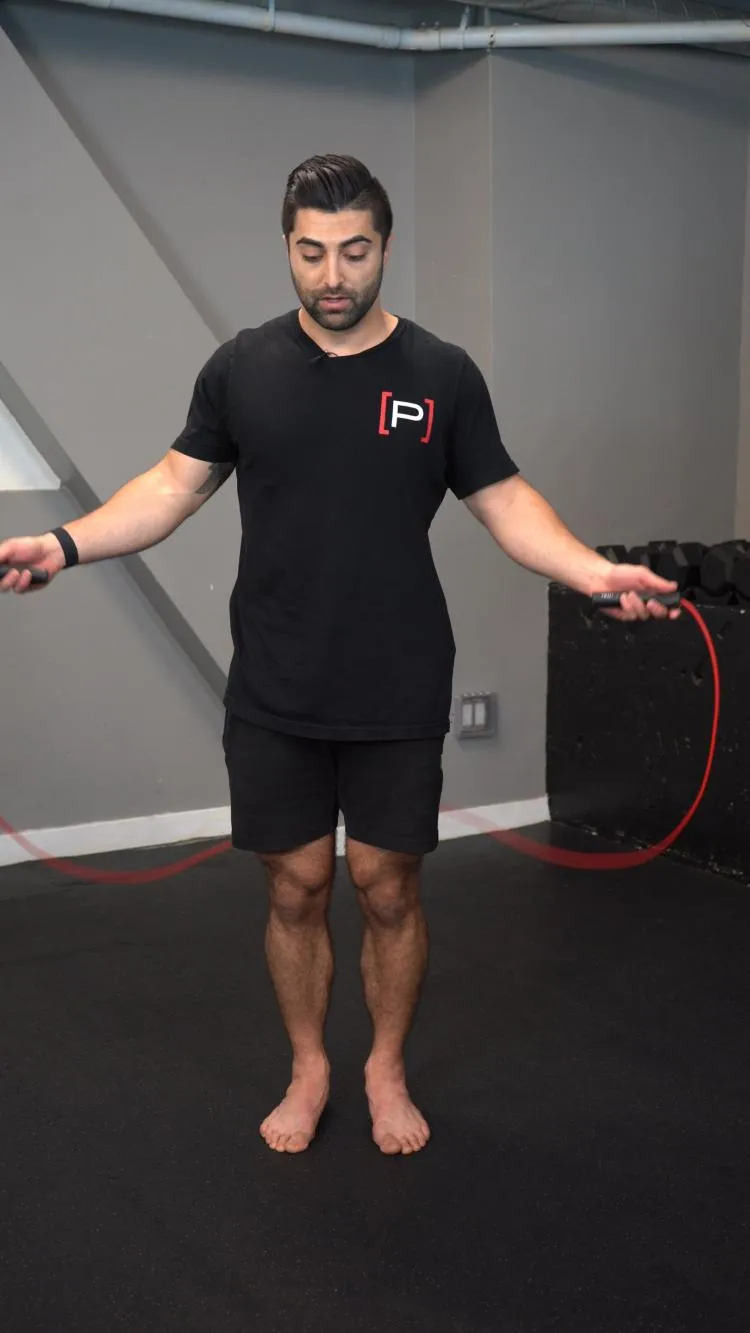
Jump Rope
View exercise instructions
- HOW: Start by holding a jump rope with each hand. While stay stiff and rigid throughout your entire body with a soft bend in your knees, begin jump roping by moving your hands forward while jumping over the rope as you go.
- FEEL: This should feel like a cardio workout - getting your heart rate up along with a lower body workout, especially your calves and quads.
- COMPENSATION: Focus on quality landing each time, do not excessively bounce or loss stiffness in your lower body. Do not let your knees buckle in or your upper body lean side to side.
Exercise 02 of 06
Exercise demonstration
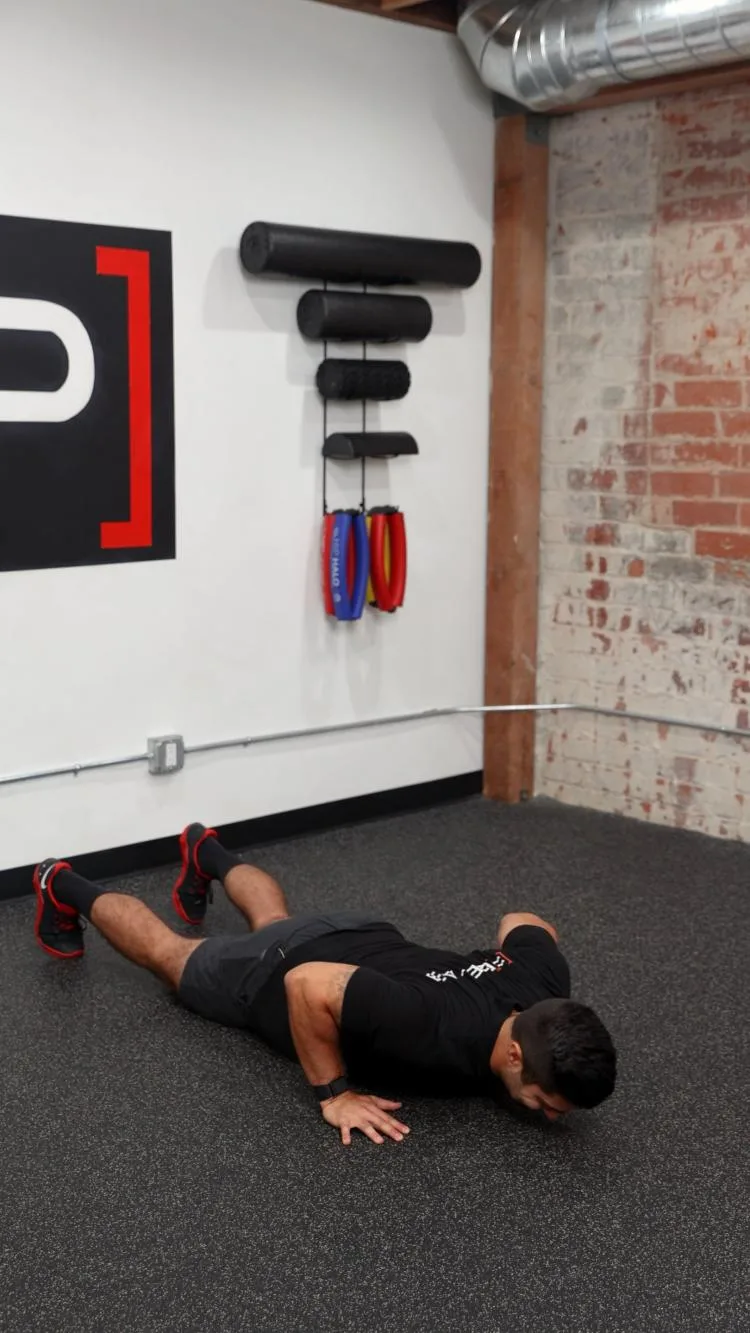
Burpee - No Jump
View exercise instructions
- HOW:For this exercise begin laying flat on your belly with your legs straight and hands positioned under your shoulders.From here, push up quickly through your arms bringing your feet under your hips into a squat position. From this squatting position, standing up quickly and then return back to the starting position.
- FEEL:You should feel the muscles of your upper extremity working as you push yourself to the squat position and the muscles of your lower extremity working as you push yourself from the squat to standing position.
- COMPENSATION:Avoid performing a jumping motion with this exercise by allowing your body to assume the squat position then simply rise upinto a standing position from here.
Strengthening Exercise
According to ASCM, every adult should perform activities that maintain or increase muscular strength and endurance for a minimum of two days per week. (5) They further state that strengthening exercise should include 8-12 reps of 8-10 different exercises that strengthen all body groups is sufficient and recommended for maintenance of health.
Strengthening exercise can be done in a wide variety of ways and often includes resistance bands, weights, machines, or other equipment. The goal of strengthening exercise is to improve the size and stamina of our muscles so that we can perform functional activities and complete everyday tasks with less risk for injury. A stronger muscle is a safer muscle!
Here are a few strength based exercises to incorporate into your routine:
Exercise 03 of 06
Exercise demonstration
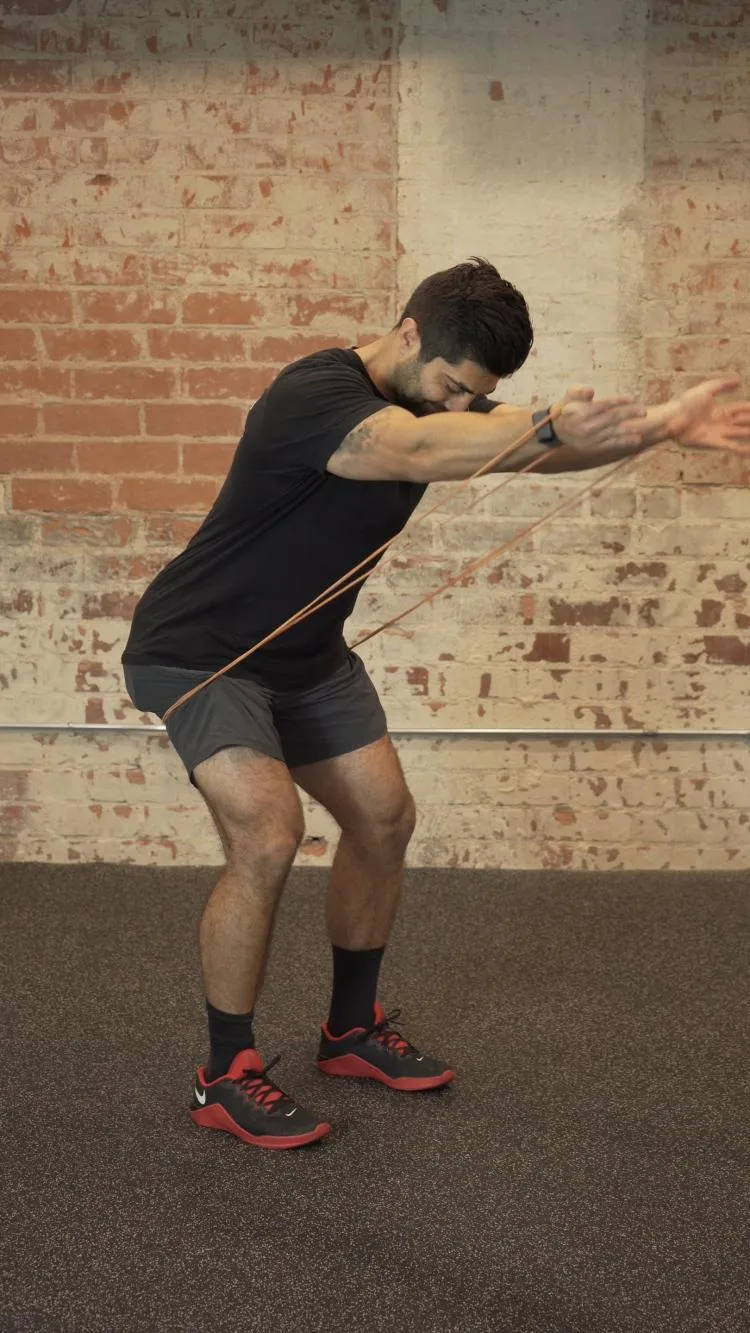
Shoulder Flexion - Band
View exercise instructions
- HOW: In a standing position, loop a band around the back of your thighs. Hold onto the band with both hands. Extend your elbows out and have your arms down at your side. With your palms facing up, extend both arms straight up in front of you as much as you can pull the band. The higher you bring it up the more challenging it will be.
- FEEL: You should feel your shoulder, shoulder blade, and chest muscles working.
- COMPENSATION: Don’t shrug your shoulders, only allow motion in the shoulder blades and shoulder.
Exercise 04 of 06
Exercise demonstration
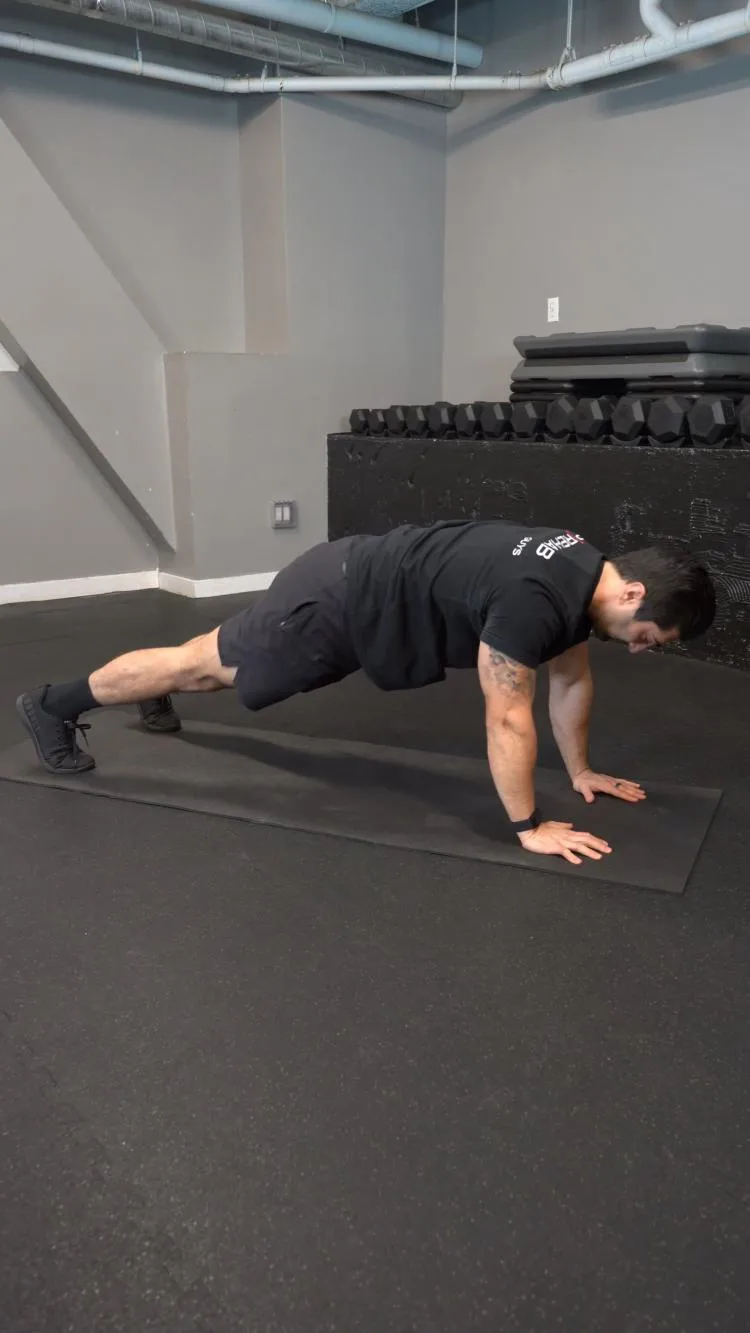
Tall Plank To Low Plank
View exercise instructions
- HOW: Assume the tall plank position on your hands and knees. Starting with either your right or left hand, lower yourself to your elbow. Then do the same with your opposite side. Next, come back up to the tall plank position on your hands.
- FEEL: You should feel all the muscles in your stomach working to stabilize you. You may also feel your shoulders, chest, and triceps working.
- COMPENSATION: Avoid rotating your torso as you perform this. Keep your trunk neutral by keeping your core engaged.
There are also lots of solid squat variations that can be performed as well! Depending on the variations, squats can either target more specifically our quads or our posterior chain, dive into the blog below to learn about the different variations you can do!

Balance Exercise
Let’s not forget the importance of balance exercises! Balance exercises should be incorporated into your routine to help prevent falls and losses of balance that can lead to fracture and injuries as we age. As we mentioned previously, loss of bone density can be a factor as we age and lead to osteoporosis and greater risk for bony injury.
ACSM recommends that adults should perform balance exercises at least 2–3 days a week. Older adults who are at risk of falling may want to do balance training 3 days or more per week, and may also want to consider a fall prevention program. The ACSM recommends neuromotor exercises that involve balance, agility, coordination, and gait. While the optimal duration and number of repetitions is unknown, the ACSM suggests 20–30 minutes of neuromotor exercise per day.
Here are a few balance exercises you can incorporate into your routine:
Exercise 05 of 06
Exercise demonstration
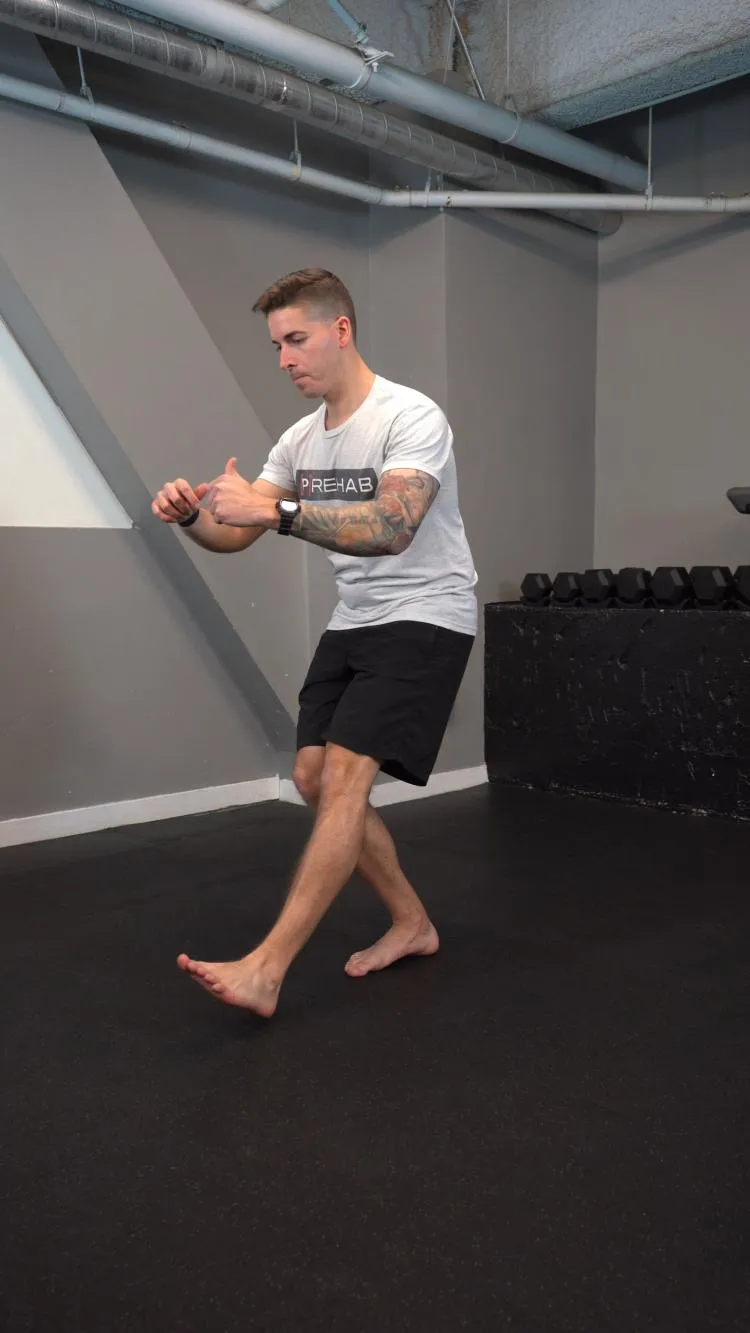
Y Balance Exercise
View exercise instructions
- HOW: Get set up in a standing position balancing on one foot on a firm surface. While maintaining balance, reach with your opposite foot in a Y-orientation - see video for demonstration and tips.
- FEEL: This should feel like you're promoting and controlling motion at your foot/ankle that you do not step with. This will challenge your balance, Your foot, arch, calf, and hip muscles will be working with this exercise.
- COMPENSATION: Maintain good balance. Do not let your heel or the knuckle of your big toe lift off the ground. Maintain good arch position.
Exercise 06 of 06
Exercise demonstration
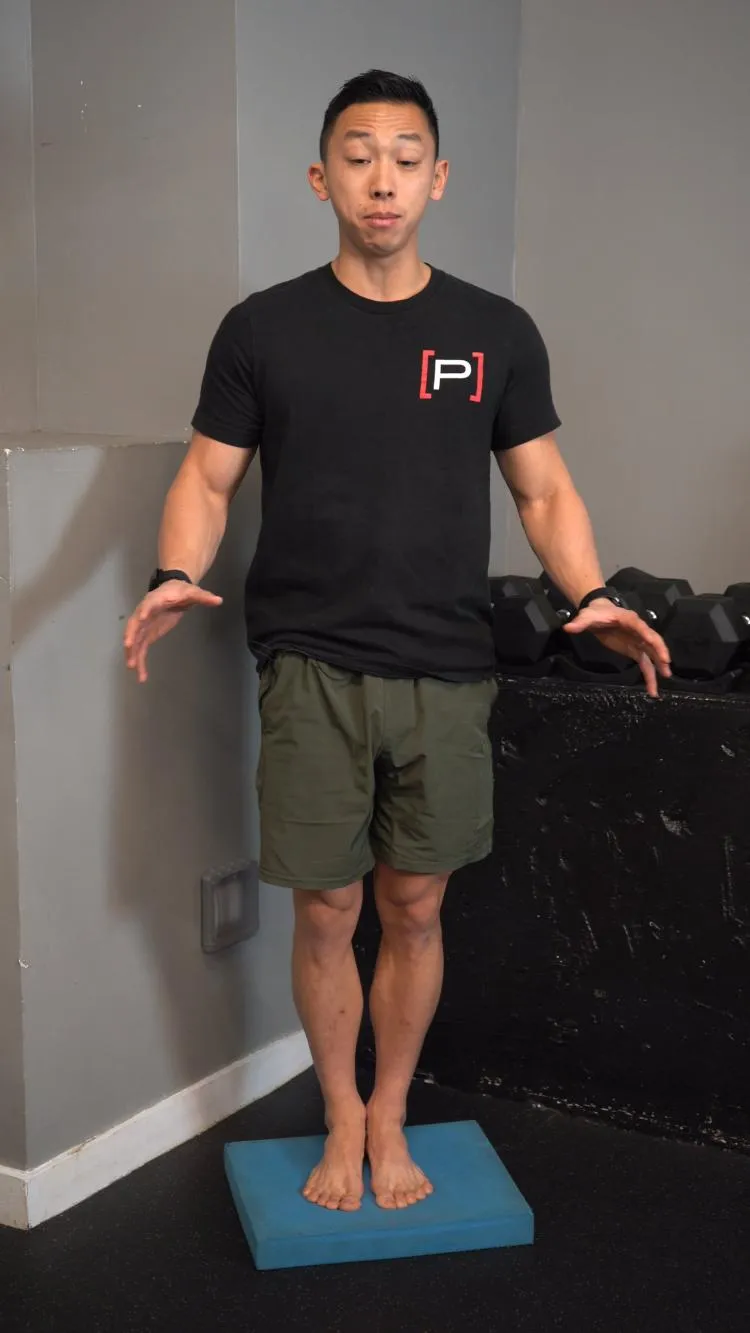
Feet Together Balance - Foam Pad
View exercise instructions
- HOW: Position yourself standing in a corner with your back to it, or with a wall, chair, or sturdy object near you. Place your feet directly together and balance on a foam pad or unstable surface like a pillow. Focus on standing upright and not letting yourself lean side-to-side or forward or backward.
- FEEL: You should feel like your balance is being challenged. If you’re having difficulty maintaining your balance, use fingertips on the surface near you as needed or try to focus on an object in the distance or near you with your eyes
- COMPENSATION: Try not leaning too much side to side or forward/backward. Grab the wall or sturdy object to avoid a fall if you lose your balance
Closing Thoughts
Growing older means having a wide range of experiences and going through changes – both mentally and physically. Throughout life, our body and mind adapt to external factors and events, including aging itself. This can happen subtly and subconsciously over a long period of time, for instance in the course of your working life or family life. Or it might happen more obviously and on purpose, for instance when training for a sporting goal or during rehabilitation after a serious illness.

People continue to change for as long as they live. Growing very old can be accompanied by loss and limitations, and the challenge of having to adapt to new circumstances again and again. But the aging process usually happens so slowly that this adaptation is constant and gradual. Because your family and friends grow older with you, you experience many of the changes together. When things start becoming more difficult, remaining physically active and drawing on your life experience and wisdom can help you to deal with a lot of the challenges you face.
Contentment and happiness are just as valuable in older age as they are in the earlier years of life. A lot of elderly people enjoy their retirement, free of many previous expectations and constraints. Some look for new tasks, while others are happy to have more time for themselves, their loved ones and friends. The important thing is to stay active for as long as possible – both mentally and physically.
References
- Front. Aging Neurosci., 29 June 2022 Sec. Cellular and Molecular Mechanisms of Brain-aging Volume 14 - 2022 | https://doi.org/10.3389/fnagi.2022.931536
- Farage, M. A., Miller, K. W., Elsner, P., & Maibach, H. I. (2013). Characteristics of the aging skin. Advances in Wound Care, 2(1), 5–10. https://doi.org/10.1089/wound.2011.0356
- https://doi.org/10.1002, , and (2018) Skeletal muscle performance and ageing. Journal of Cachexia, Sarcopenia and Muscle, 9: 3–19. doi: 10.1002/jcsm.12238.jcsm.12238
- ACSM Guidelines for Physical Activity. https://www.acsm.org/education-resources/trending-topics-resources/physical-activity-guidelines
- https://www.acsm.org/docs/default-source/files-for-resource-library/resistance-training-for-health.pdf?sfvrsn=d2441c0_2
Taryn Beaumont, PT, DPT, CLT, CF-L1, CNC
Prehab Writer & Content Creator
 Taryn was born and raised in Maine and still resides there with her fiancé and son. Taryn received her Doctorate in Physical Therapy from Husson University in 2010, and also carries a Bachelor's in Kinesiology and Human Movement Science. She is a Certified Lymphedema Therapist, a Certified Crossfit Level 2 Trainer, and a NASM Certified Nutrition Coach. Taryn has 12+ years of experience in many different realms of PT, from the young athlete to the geriatric patient. Most recently she is employed with a home health PT company and is working toward her Advanced Competency in Home Health. Taryn considers herself a ‘lifelong learner’. She has special interests in oncology care and breast health, dry needling, and CrossFit training. In her free time, Taryn enjoys fitness, spending time with her family, continuing education, writing, and reading, and is very excited to be a part of The Prehab team to educate and empower others to take control of their health and wellness.