

On this page 3 sections
Your guide
What you'll learn
The anterior deltoid is an unsung hero when it comes to shoulder health, stability, and function. Whether you're an athlete looking to boost your performance, a fitness enthusiast aiming for balanced muscle development, or someone invested in prehab for long-term joint health, strengthening the anterior deltoid is essential. Are you giving enough attention to your anterior deltoids in your workouts? Read this article to learn exercises to strengthen your anterior deltoid and start building a shoulder that’s not only strong but resilient.
Why Strengthening the Anterior Deltoid is Important
The anterior deltoid, located at the front of your shoulder, plays an important role in shoulder flexion and assists in movements like pressing, lifting, and any action where your arm moves forward.
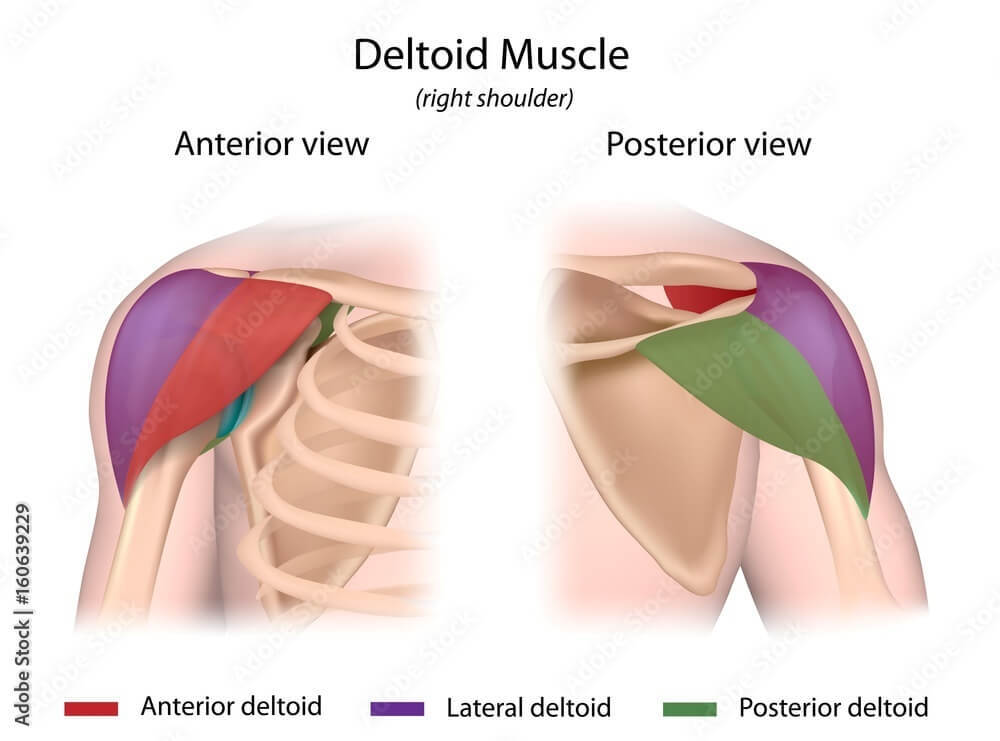
Activities as simple as reaching for items on a high shelf, pushing a shopping cart, or holding objects in front of you heavily rely on the anterior deltoid. For athletes, the anterior deltoid is vital for throwing, serving, or any explosive forward motion in sports like basketball, tennis, volleyball, or swimming.
The Most Common Mistakes with Shoulder Rehab

Weak anterior deltoids can contribute to shoulder pain and dysfunction, especially when other muscle groups, such as the upper traps or pectorals, start to overcompensate. Strengthening this muscle supports overall shoulder stability, which is helpful for reducing the risk of injury during workouts or sports.

Anyone who participates in sports that involve overhead movements, bodybuilders focused on creating well-rounded shoulder aesthetics, and individuals recovering from shoulder injuries will benefit from exercises to target the anterior deltoid. If currently dealing with shoulder pain and want to be sure you are taking the necessary steps to recovery, check out the video below!
Exercises to Target the Anterior Deltoid
Exercise 01 of 04
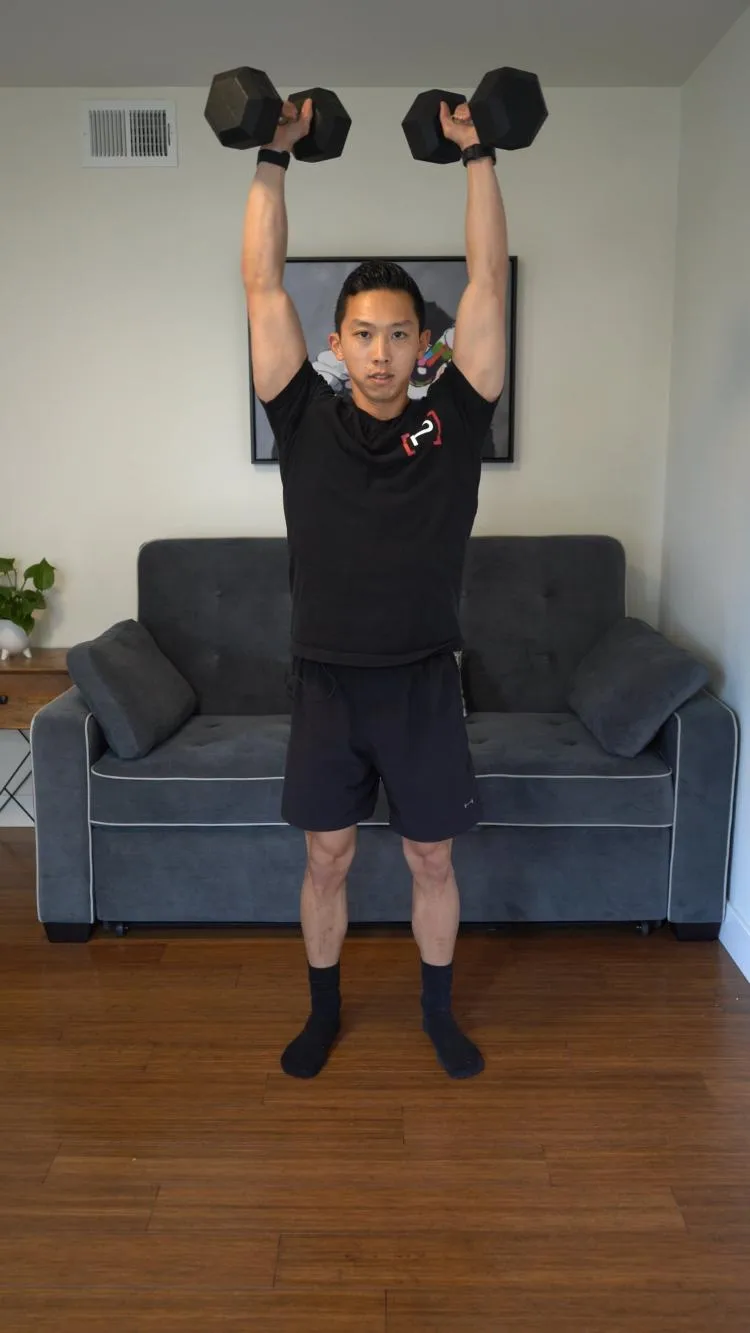
This traditional movement targets the anterior deltoid while engaging stabilizing muscles like the triceps and the upper portion of the chest. Start by sitting or standing with a dumbbell in each hand at shoulder height, palms facing forward. Press the weights overhead until your arms are fully extended, then lower them back to the starting position. Keeping a controlled tempo helps maintain tension and maximize muscle activation on the anterior deltoid. This exercise is not only great for building strength but also improves functional movements like lifting overhead.
Exercise demonstration
Overhead Press - Dumbbell
View exercise instructions
- HOW: Start in a standing position holding weights or objects in each hand positioned in front of your shoulders. While keeping the rest of your body still, begin the exercise by pressing the weights/objects overhead. Pause for a moment, then slowly lower the weights down and repeat.
- FEEL: This should feel like an upper body workout, specifically your shoulders and triceps. When the weights are overhead, they should relatively be in line with your ears.
- COMPENSATION: Do not excessively arch or bend your low back. Do not use momentum to help with lifting the weights up overhead. Try to keep your chest up and the rest of your body still, avoid your elbows excessively flaring out.
To further improve your confidence with overhead tasks, be sure to check out our Upper Body Level 1 and Upper Body Level 2 programs through the Prehab App:
Exercise 02 of 04
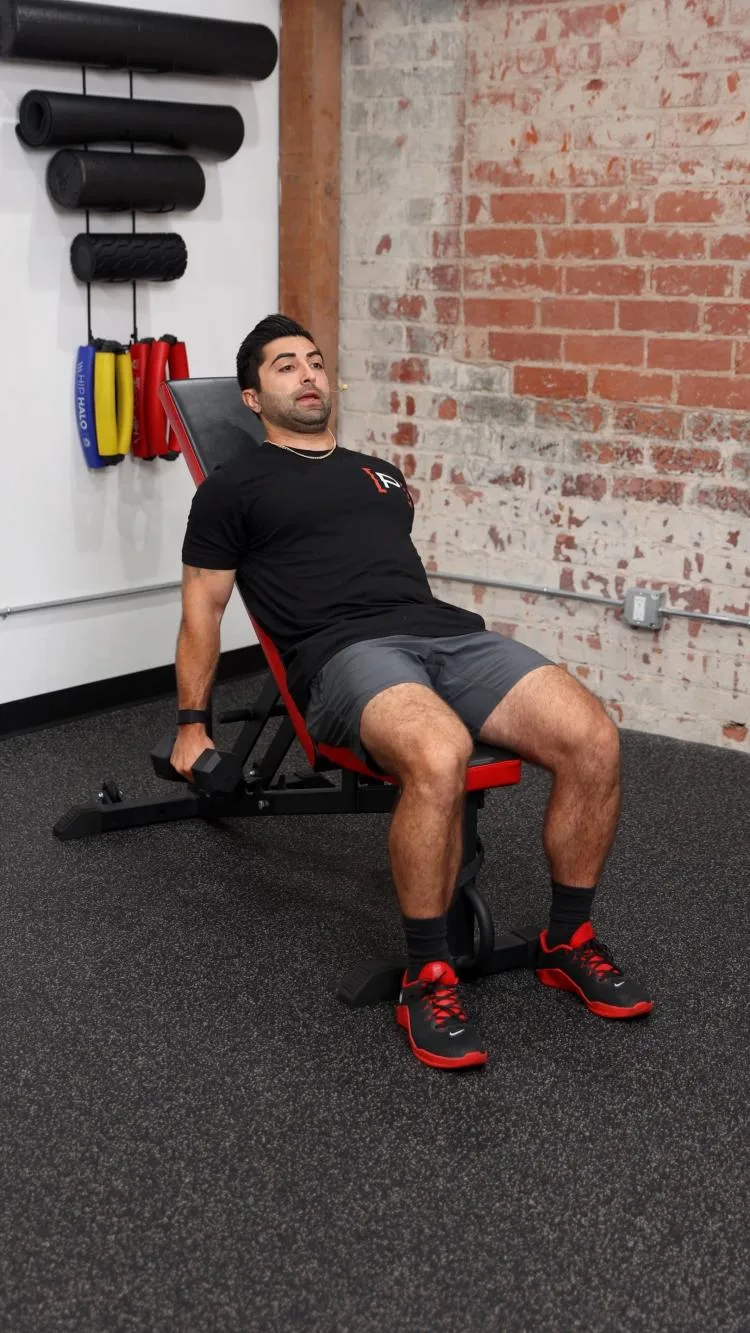
A staple in anterior deltoid training, this exercise isolates the muscle, allowing you to focus solely on strengthening it. Stand with a dumbbell in each hand, palms facing your thighs. Keeping your arms straight, lift the weights to shoulder height, then slowly lower them. The key here is to avoid using momentum. Move with control to ensure the anterior deltoid is doing the work. Front raises mimic many real-life movements, like lifting grocery bags or holding a child, making them highly functional. Check out this variation performed on an incline bench!
Exercise demonstration
Incline Bench Front Raise - Dumbbell
View exercise instructions
- FEEL: You will feel your shoulder muscles working as you perform this exercise.
- COMPENSATION: Maintain a strong core as you perform this and do not let your back arch off the bench or let your feet come off the ground.
Exercise 03 of 04
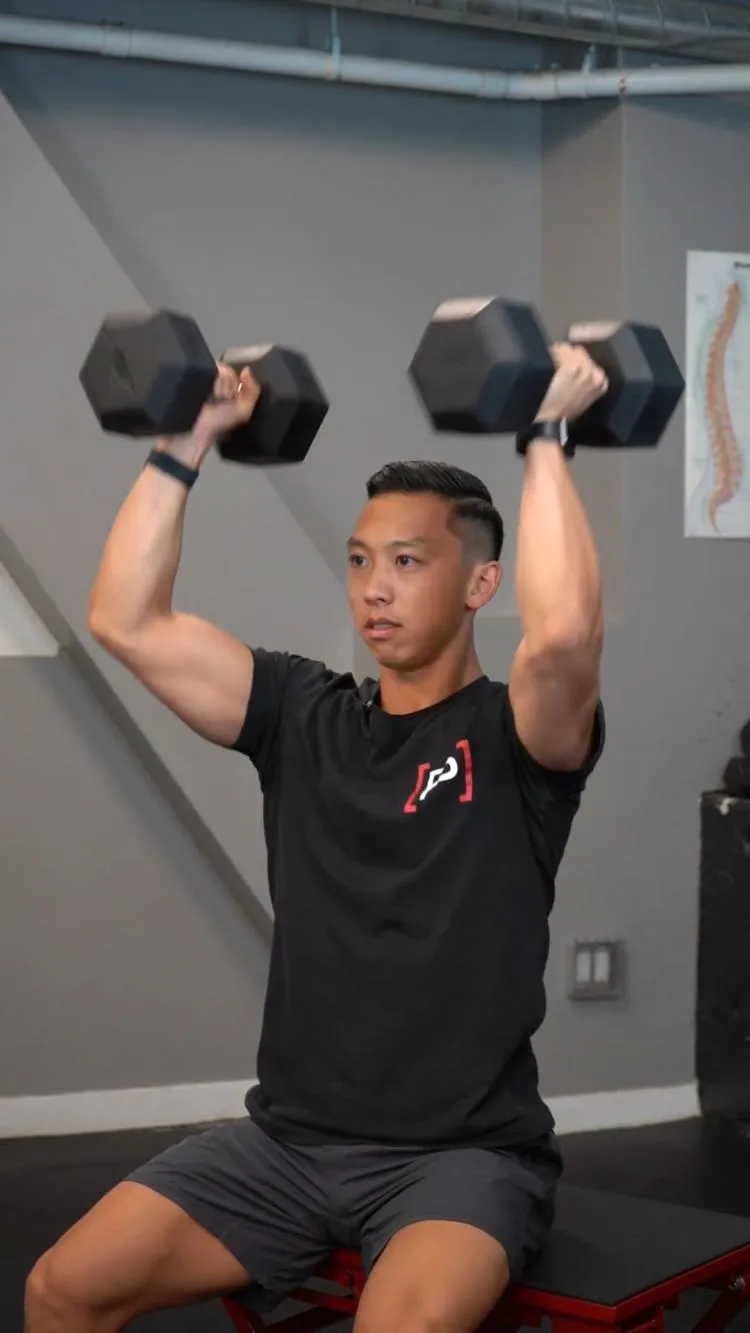
Named after Arnold Schwarzenegger, this variation of the overhead press incorporates a rotational movement that engages the anterior deltoid. Start with the weights in front of you, palms facing your body. As you press the dumbbells overhead, rotate your palms to face forward. This rotation helps activate not only the anterior deltoid but also parts of the medial and posterior deltoids, ensuring balanced shoulder development. The Arnold Press enhances both strength and stability, which are essential for sports and overhead movements.
Exercise demonstration
Arnold Press - Dumbbell
View exercise instructions
- HOW: Begin in a seated position while holding two dumbbells overhead with your palms facing out. From here, lower the dumbbells and rotate your palms to face you while you bring your elbows together in front of you. Press the weight back up and repeat for the prescribed amount of reps.
- FEEL: You should feel your shoulder muscles working.
- COMPENSATION: Keep your elbows in tight when you rotate them down. Don’t keep them out like a regular shoulder press.
Exercise 04 of 04
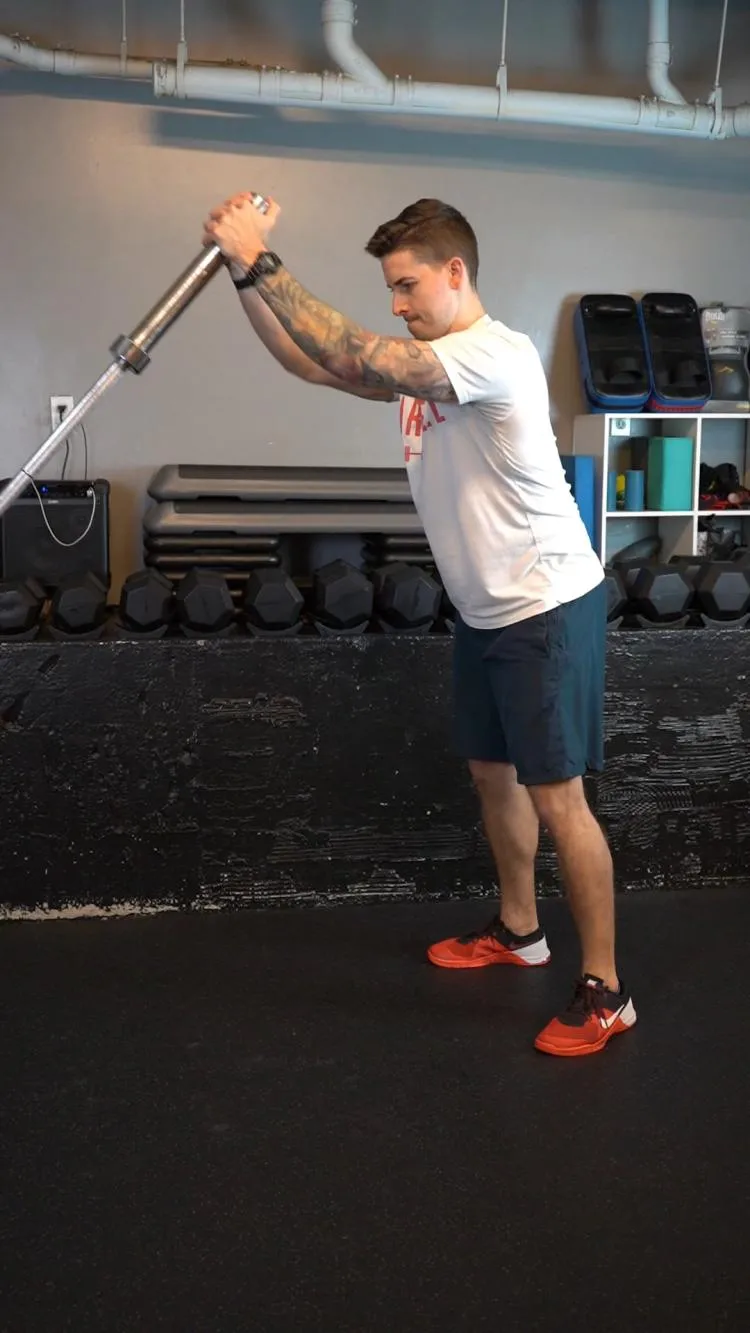
This exercise is performed by placing one end of a barbell into a landmine attachment or securely in a corner. The landmine press is performed by holding the free end of the barbell and pressing it upward and slightly forward. This movement is particularly joint-friendly and engages the anterior deltoid while incorporating core stability. The slight incline provided by the barbell angle makes this exercise ideal for those looking to strengthen their anterior deltoid without overloading the shoulder joint. The landmine press is excellent for shoulder prehab and ensures controlled, functional strength development.
Exercise demonstration
Standing Shoulder Press - Landmine
View exercise instructions
- HOW: Holding a barbell in a landmine rig with both hands in front of your chest while standing, perform a strict overhead shoulder press.
- FEEL: You should feel your triceps, deltoids, and shoulder blade muscles working. You will also feel your core and lower body working to maintain position.
- COMPENSATION: Do not arch your back, do not shrug your shoulders.
LEARN MORE ABOUT OUR UPPER EXTREMITY PERFORMANCE PROGRAMS

Closing Thoughts
Incorporating these exercises into your routine can lead to balanced shoulder development, improved strength, and decrease the likelihood of the risk of injury. Remember, a strong anterior deltoid not only improves your performance but also plays a key role in overall shoulder health and function. By strengthening this muscle, you can improve everyday activities and boost your sports performance while taking a proactive approach to shoulder health.
About The Author
Ryan Nosak, MS, CSCS
Prehab Writer & Content Creator
 Ryan was born and raised in Throop, Pennsylvania and he has worked in the world of fitness since he was 15 years old. Ryan realized he had a deep affinity for strength training and how it can alter the human mind, body, and spirit. He began his coaching career in high school by coaching his friends through strength training sessions, which inspired him to pursue a career in strength and conditioning.
Ryan spent 10 years as a Division 1 strength and conditioning coach with stops along the way at Penn State, Tennessee State, Vanderbilt, Robert Morris, Charlotte, and DePaul. He is a Certified Strength and Conditioning Specialist and operates his own training practice, RyNo Strength, out of Studio DelCorpo in Chicago, IL. He specializes in fat loss, body composition, strength, and sports performance training programs.
Ryan received his Bachelor’s Degree in Kinesiology from Penn State and a Master’s in Sport Management from Western Carolina University. In his free time, Ryan enjoys training for bodybuilding, eating at amazing restaurants in Chicago, and spending time with his wife, daughter, and dog.