


On this page 6 sections
Your guide
What you'll learn
What is Snapping Hip Syndrome?
Snapping Hip Syndrome can be divided into 3 categories:
- External Snapping Hip Syndrome
- Internal Snapping Hip Syndrome
- Intra-Articular Snapping Hip Syndrome
External snapping hip is by far the most common and creates a snapping sensation along the outside or lateral portion of the hip. This is caused by the snapping of the iliotibial (IT) band or the gluteus maximus over the greater trochanter during hip flexion and extension.
Interested in learning more about that hip discomfort you may be dealing with? Check out this YouTube video here to dive into some other hip diagnoses!
Internal SHS creates a snapping sensation in the groin area. It is the result of the snapping of the iliopsoas (hip flexor) tendon over one of the bony prominences in that area – either the iliopectinal eminence or the femoral head

Intra-articular SHS also creates a snapping sensation in the groin area but is often described as deeper. This is the rarest of the 3 categories and is the result of a disturbance inside the joint such as an intra-articular labral tear. This type of snapping hip is not the focus of this article as it is the least common and if diagnosed is often further subdivided based on the pathology inside the joint.
How Do We Get Snapping Hip Syndrome?
Both external and internal SHS are rarely the result of a traumatic injury. Most often they result from overuse of the hip in a repetitive manner, repeatedly going into hip flexion and extension. This is commonly seen in activities such a running, dancing, kickboxing, and soccer.
READ: THE BEST SOCCER PREHAB EXERCISES FOR INJURY PREVENTION

While these activities can contribute to the development of SHS, it can often develop without any reason or change in activity. In fact, a majority of people who have SHS do not experience any pain or limitation. If you experience a snapping sensation in your hip, but do not have pain associated with it, there is no reason to worry or feel that you need to address it.
However, if you are dealing with a painful snapping hip, there are a number of ways that you can address it.
How to Manage Painful Snapping Hip Syndrome?
A painful snapping hip is often an overuse injury. An overuse injury simply means that you put your hip through a load that you weren’t prepared for. This means that you either did the activity: for too many repetitions, with too much load, too quickly to control, or some combination of the above.
In any case, the key to addressing the pain is reducing this load. Now this doesn’t mean you need to stop the aggravating activity altogether, it just means that you may need to manipulate one of the above variables to limit the pain you experience.
LISTEN: PROGRESSIVE OVERLOAD AND THE ACUTE:CHRONIC WORKLOAD RATIOS

Unfortunately, there is no exact research-backed pain scale for snapping hip syndrome. However, a good general guiding rule of thumb is that exercises should not leave you in pain greater than 5/10 or to a level of pain that limits your function the next day.
As you reduce the current load on your hip, you will want to start rebuilding your capacity to handle load through exercise.

Learn more about our hip programs through the app! With hip programs to get you out of pain, get you feeling resilient, challenging your performance, glute specific workouts, we can guarantee there's something you'll love!
Exercises for Snapping Hip Syndrome:
For external snapping hip the irritating structures are involved in hip extension and hip abduction as well as maintaining pelvic control during single leg stance. Thus, these will be the primary areas that exercises should focus on. The below includes a few exercises from easiest being the Hip Hike to something more challenging such as the Stork Turns, that will allow you to start building your capacity in these motions while following the pain guidelines given above.
For single leg stability try:
Exercise 01 of 06
Exercise demonstration
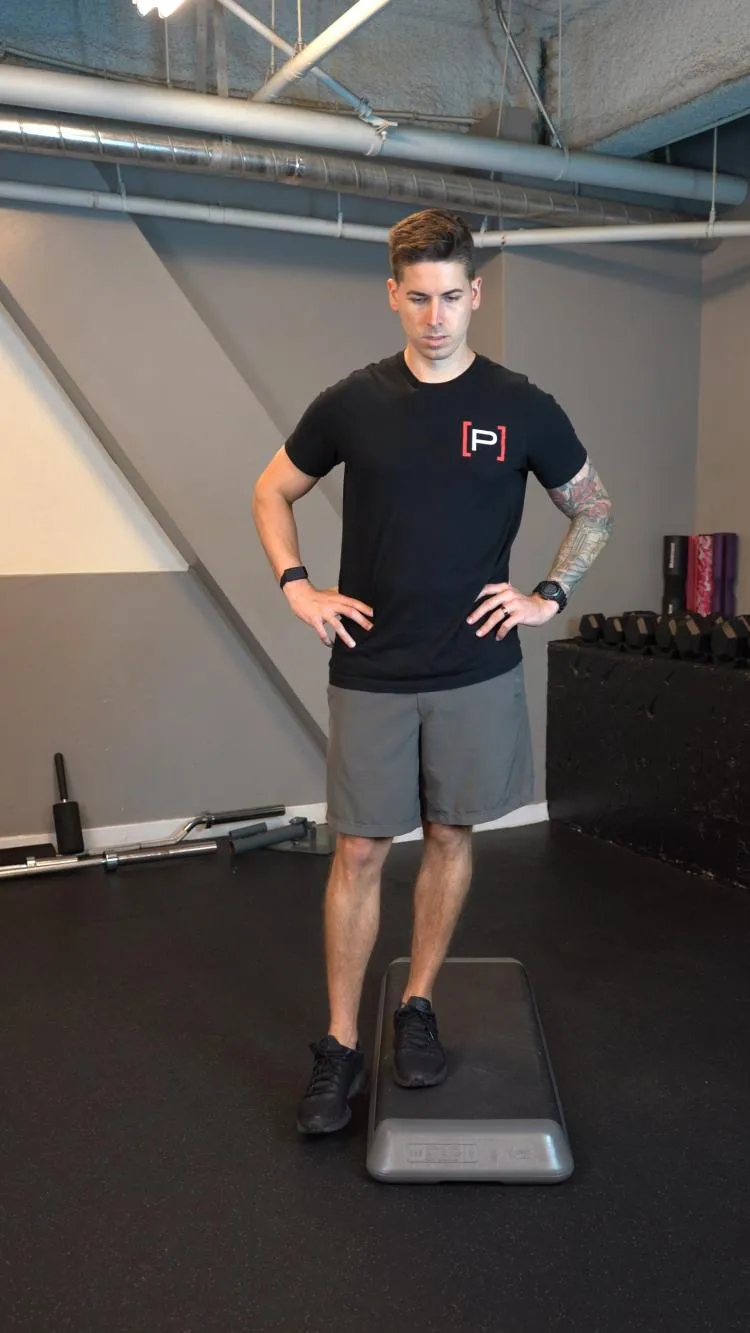
Hip Hike
View exercise instructions
- HOW: Start by standing on one leg on a box or small elevated surface with your hips even and parallel to the ground. Let the foot that is in the air fall towards the ground by performing a hip drop followed by a hip hike. Repeat
- FEEL: You will feel the muscles on the outside of the hip working that is still grounded.
- COMPENSATION: Try to limit motion to hip hiking and dropping, nothing else.
Exercise 02 of 06
Exercise demonstration
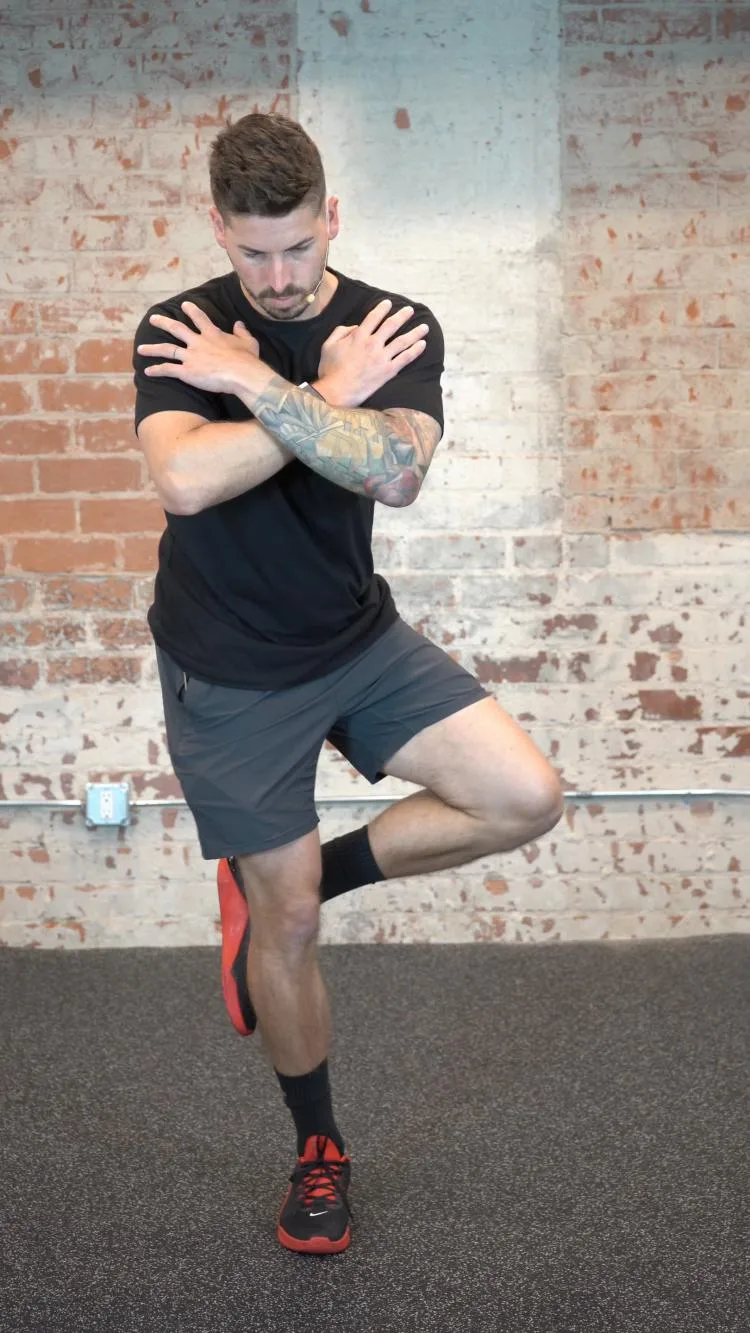
Stork Turns
View exercise instructions
- HOW: Begin in a standing position. Shift your weight to one leg. Take the other foot and hook it around the back of the standing leg. Cross your arms across your chest, or grab onto a stick if needed. From here, drive the bent knee out and in a circular motion as much as your hip allows. Do this all while keeping your upper body still for the prescribed amount of reps.
- FEEL: You should feel your hip muscles working and stretching as you rotate to each side.
- COMPENSATION: Only allow movement at the hips, keep your upper body still.
For hip abductors and extensors:
Exercise 03 of 06
Exercise demonstration
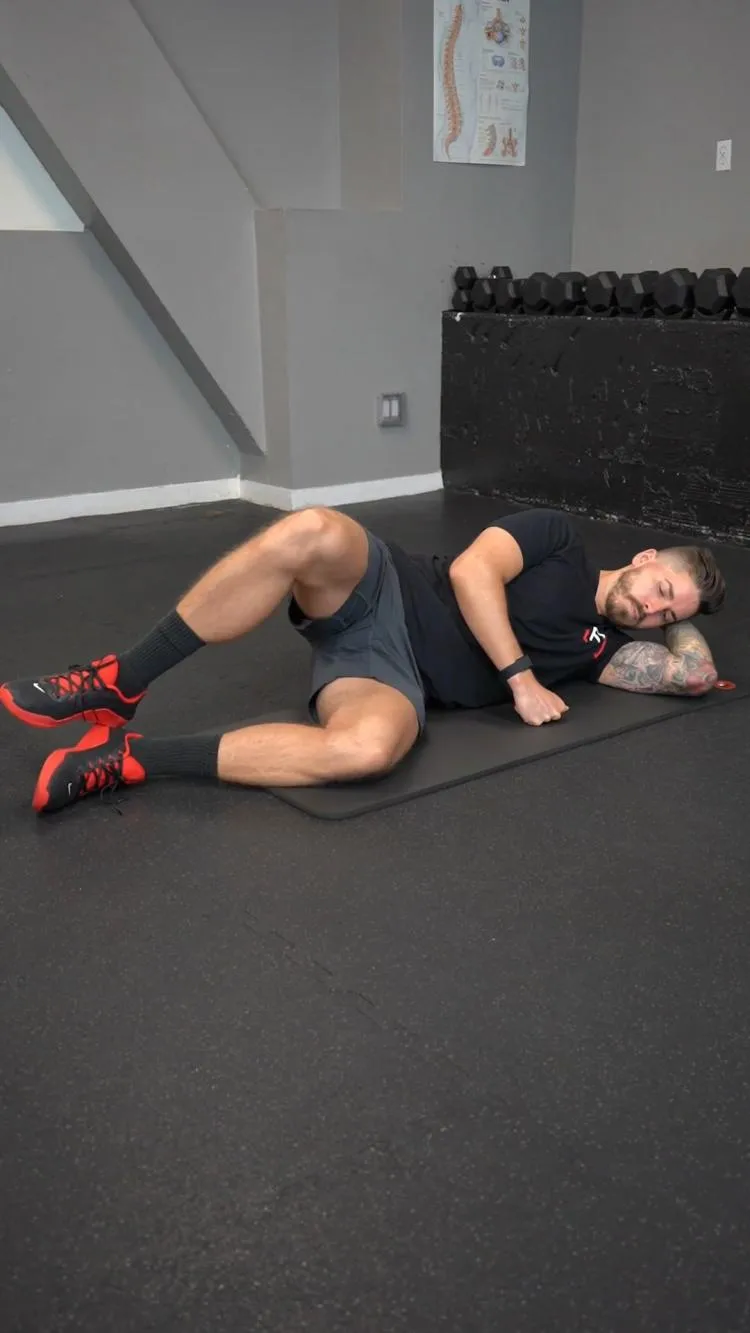
Isometric Sidelying Clam
View exercise instructions
- HOW: Begin by lying on your side with your leg together. Slightly bring your knees up towards your chest. From here, rotate your top knee up while your feet stay together. Bring that knee up as far as you can until you start to open up your hips and hold that position for the prescribed amount of time.
- FEEL: You should feel your hip muscles working.
- COMPENSATION: Don’t lean back and open up your hips as you push against the band.
Exercise 04 of 06
Exercise demonstration
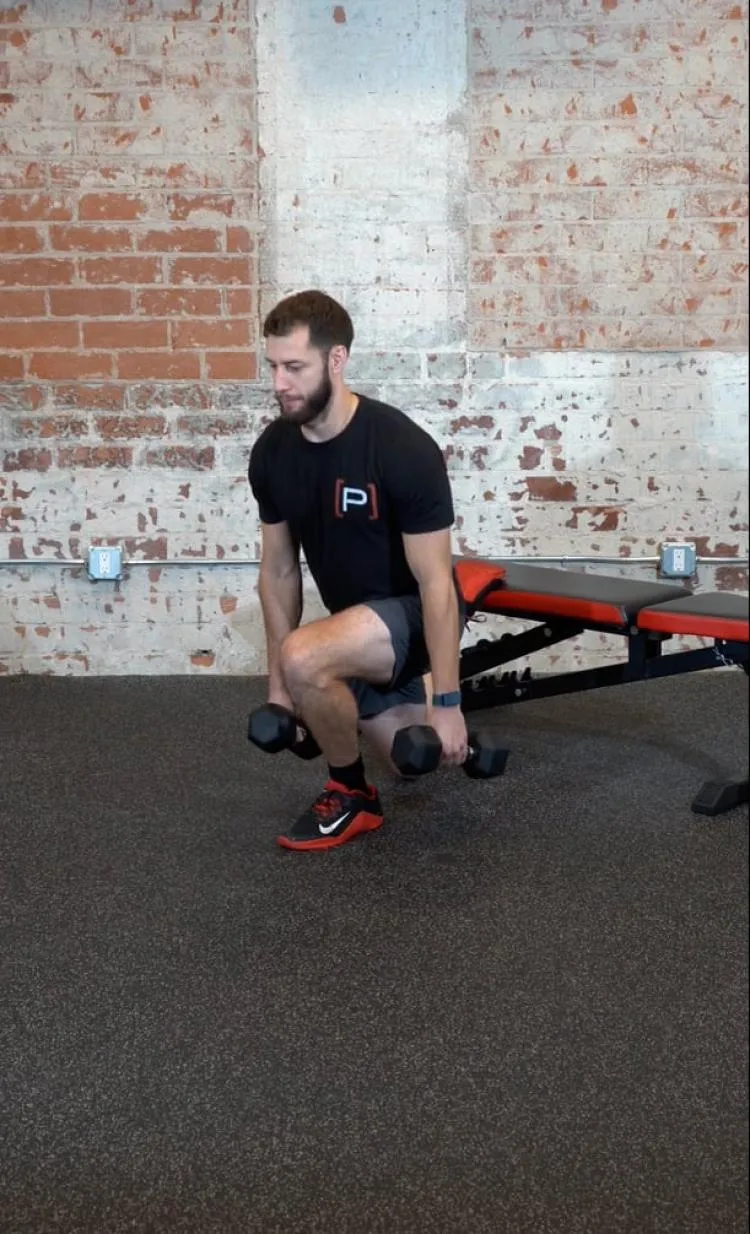
Bulgarian Split Squat- Dumbbell
View exercise instructions
For internal snapping hip the irritating structures are involved in hip flexion. Thus, this will be the primary areas that exercises should focus on. As pelvic control during single leg stance can still play a role in this pathology, you will also want to work on strengthening the hip abductors and extensors with some of the exercises shown above. The below includes a few exercises to strengthen your hip flexors:
Exercise 05 of 06
Exercise demonstration
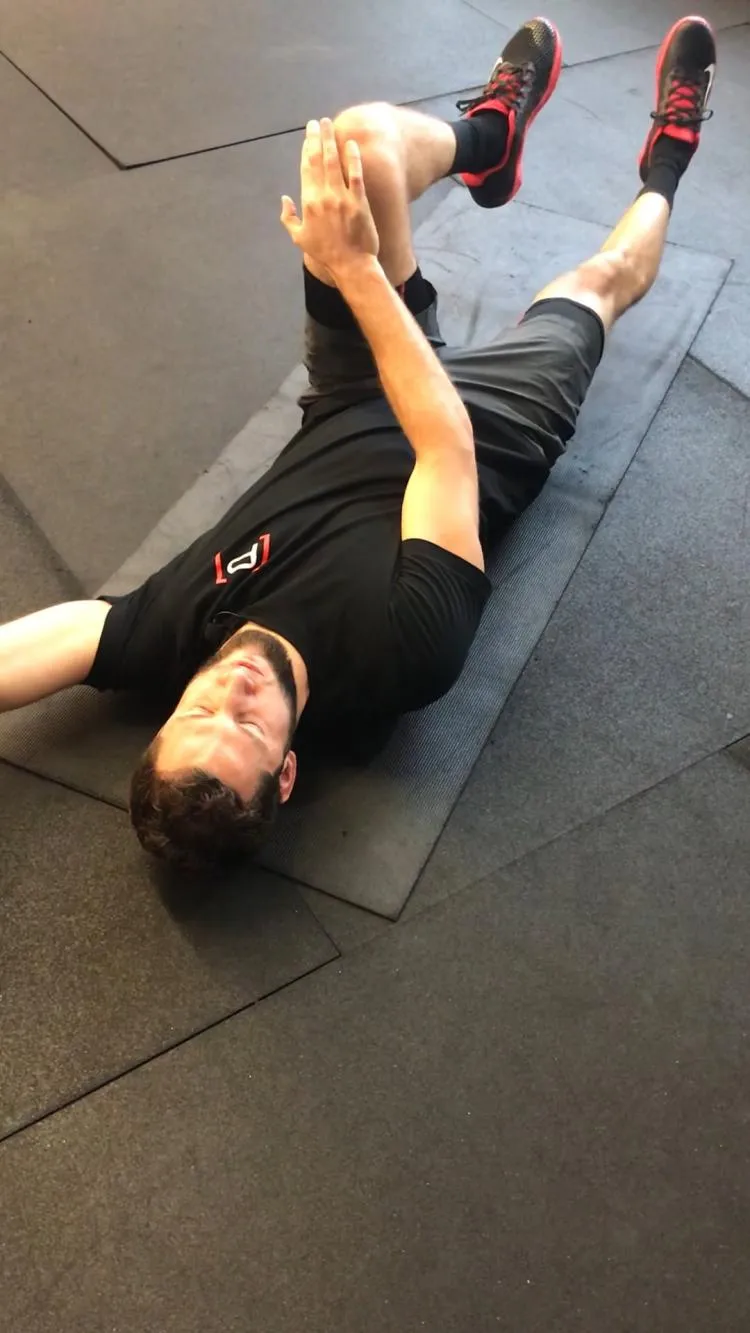
Dead Bug - Unilateral Isometric Hold
View exercise instructions
- HOW: Start by lying on the floor with your knees bent up and feet flat. Flatten your back by contracting your core and performing a pelvic tilt. From here, lift your legs up with your knees bent and arms straight up pointing both to the sky. Then, place one hand on top of the opposite knee. Push into the hand as the hand pushes into the leg. At the same time, straighten the other leg down and the opposite arm up overhead and return them to the starting position before they touch the ground.
- FEEL: You should feel your core and oblique muscles working. You will also feel your hip muscles working bring your legs up and down.
- COMPENSATION: Keep your back flat while performing the dead bug. Don’t move the arm and leg that are pushing against each other while performing the dead bug.
Exercise 06 of 06
Exercise demonstration
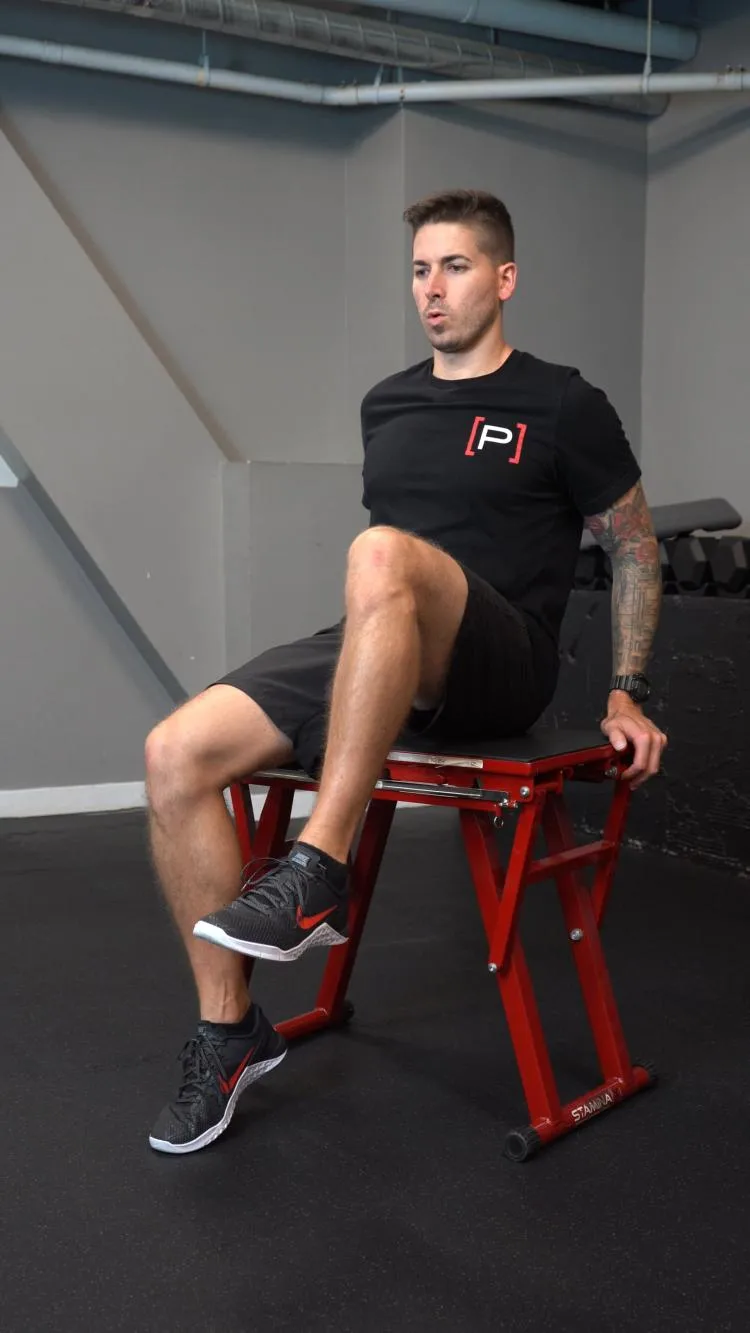
Seated March
View exercise instructions
- HOW: Get set-up seated with your feet supported on the ground. While keeping your trunk upright and tall and low back relatively neutral, lift one knee up towards the ceiling while keeping your knee bent. Hold for a moment, then lower down and perform on the other side. Repeat, 1 rep counts as 1 knee lift on each side.
- FEEL: You should feel the muscles in front of your hip working to lift your leg up into the air.
- COMPENSATION: Do not excessively move the rest of your body or lean back to try and lift your leg up. Try to keep your back flat when you lift your leg up
Both of the above serve as great starting points to start strengthening your hip flexors and then can be progressed to more challenging exercises such as the ones found in our Hip Rehab Program below!
LEARN MORE ABOUT OUR HIP REHAB PROGRAM

Closing Thoughts:
SHS most often refers to the snapping of a soft tissue structure over a bony prominence in the hip area. In the case of external snapping hip syndrome this is the IT band or gluteus maximus snapping over the greater trochanter. Internal snapping hip, on the other hand, results from the snapping of the iliopsoas (hip flexor) tendon over the one of the bony prominences in the groin. While SHS is often asymptomatic, when painful it is often the result of mismanaging the loads placed on your hip. The key to treating this diagnosis is altering the degree of the irritating activity, while building up the strength to handle that activity once again. In the case of external snapping hip, exercises should focus on single leg stability and glute strength whereas treatment for internal snapping hip should focus on strength and tolerance of hip flexion.
References:
About The Author
Tommy Mandala, PT, DPT, SCS, OCS, CSCS
Prehab Writer & Content Creator
 Tommy Mandala is a Doctor of Physical Therapy, Board Certified Clinical Specialist in Sports & Orthopedics, and Certified Strength and Conditioning Specialist in New York City. He is the founder of ALL IN ACL, a digital coaching platform dedicated exclusively to helping ACLers return to the life they had before their injury with full confidence in their knee. Prior to that, he worked in the sports clinic at Hospital for Special Surgery, the #1 Orthopedic Hospital in the country. While there, he had the opportunity to hone his skills as an ACL specialist working closely with world renowned surgeons and evaluating patients from all over the world. He completed his sports residency training at the University of Delaware where he had opportunities to work with many of their Division I sports teams as well as the Philadelphia 76’ers NBA G-league affiliate, the Delaware Blue Coats. He also trained at Champion Sports Medicine in Birmingham, Alabama where he had the opportunity to learn from researchers in the American Sports Medicine Institute. Currently, Tommy works exclusively with ACLers through his digital coaching model. While many of these clients are athletes, Tommy works with ACLers of all different abilities helping them to build the strength they need to overcome this unique injury. One of his favorite aspects of his job is taking active clients who have never been a “gym person” before and showing them the amazing things that happen when they learn to strength train.