


On this page 6 sections
Your guide
What you'll learn
You’ve been training for months, and now you’re ready! Ready to hit that huge bench press PR (personal record) that you know is coming. Your buddies are cheering you on, you are feeling amped, you know you’ll complete the lift, and….pop! A sudden searing pain goes through the front part of your shoulder. Oh no!
What you’ve likely experienced is a pectoralis (pec) strain. In this article, we discuss pectoral anatomy and function, treatment options, and rehab exercises for pec strains. We want you to get back to hitting those PRs in no time!
Pec Anatomy & Function
The pectoralis (pec) muscle is comprised of two muscles, the pec major and the pec minor. The pec major is a fan-shaped muscle that is located superficially (closer to the surface), and has two heads of muscle - the sternal head and the clavicular head. The main actions of the pec major are adduction (pulling the arm toward the body), internal rotation (rotation toward the body), and flexion (elevating) of the arm. Some of the movements that the pec major is responsible for are push up, bench press, and pushing or sliding an object forward.
 Appreciate the insertion and attachment points for the pectoralis major muscle and how that plays a role in the actions of this muscle.
The other pec muscle is called the pectoralis minor. The pec minor is located under the pec major (deeper toward the chest), and is mainly responsible for movements of the scapula (shoulder blade). Some of the movements that pec minor assists with are scapular stabilization when needed as well as muscular assistance with deep breathing. Tightening of the pec minor can cause significantly rounded shoulders and bent/slumped posture.
 The Pec Minor with it's own insertion and attachment points.
When & How Do Pec Strains Occur?
The majority of pec strains occur when the pec is placed under maximal tension or pressure, or put into a position that compromises the muscle’s ability to produce enough protective force to prevent injury.
Exercise for Pec Strains

Most commonly, injury occurs in the pectoralis major due to too much extension or external rotation for the tissue to handle, and most of these injuries occur at the musculotendinous junction (where the muscle meets the tendon) as this is a vulnerable area when placed under tension and stress (1). Most often, pec strains occur in situations such as a bench press or a sports-related trauma injury. (2)
When the pec is strained, it can feel like:
- Acute pain
- Swelling in the front of the shoulder
- Bruising
- Tissue deformity
- Weakness, particularly in adduction and internal rotation of the arm
- Possible numbness and tingling in the affected arm
READ: WHAT TO KNOW ABOUT TISSUE HEALING TIMELINES

The pec major can be injured at any portion of the muscle, including the thorax, sternal and clavicular attachments. Treatment will largely depend on the extent of the injury.
Should I Get Surgery for a Pec Strain or Tear?
After an injury, it can be difficult to decide on the best course of treatment action. For pec strains, it will largely depend on the symptoms, extent of damage, and activity level of the person injured to determine the treatment plan. If the damage to the pec was extensive and the tendon or muscle belly was fully ruptured, a surgical approach will likely be recommended.

For a partial tear or strain, conservative treatment such as medications, manual therapies, and physical therapy will be the most effective treatment. In an article by Bayer et al in 2017, conservative treatment such as PT that happens early and often is BEST for optimal outcomes! (3) It has been shown that waiting to start rehab will ultimately result in less than optimal recovery and pain control after a pec strain.
This notion appears to remain consistent for the athlete population according to research, the group in which pec strains occur most frequently. In an article by Sahota et al in 2020, a cohort of football players with pec strains were shown to have increased recovery times when a delayed surgical approach was taken, versus a non-operative, conservative approach with rehab and PT (4). Similarly for baseball players and most specifically, pitchers, a study done in 2022 looked at 138 people with pec strains. The vast majority of these players were treated conservatively and experienced similar, if not better, outcomes than those who underwent surgical treatment (5).
The moral of the story - treatment that occurs EARLY and OFTEN is BEST! Don’t wait!!
Exercises for Pec Strains
Since optimal treatment protocols typically start early when the injury is acute, rehab can be broken up into phases. These are most often classified as early, middle, and late stages of treatment. Below we will go through some exercises for pec strains.
Early Rehab Exercises for Pec Strains:
The goal for the early phase of rehabilitation is light activation of the injured area, as well as building up the scapular stabilizers that surround the pec itself. We want to be relatively gentle with our rehab in this phase and take our time with progressing.
Exercise 01 of 06
Exercise demonstration
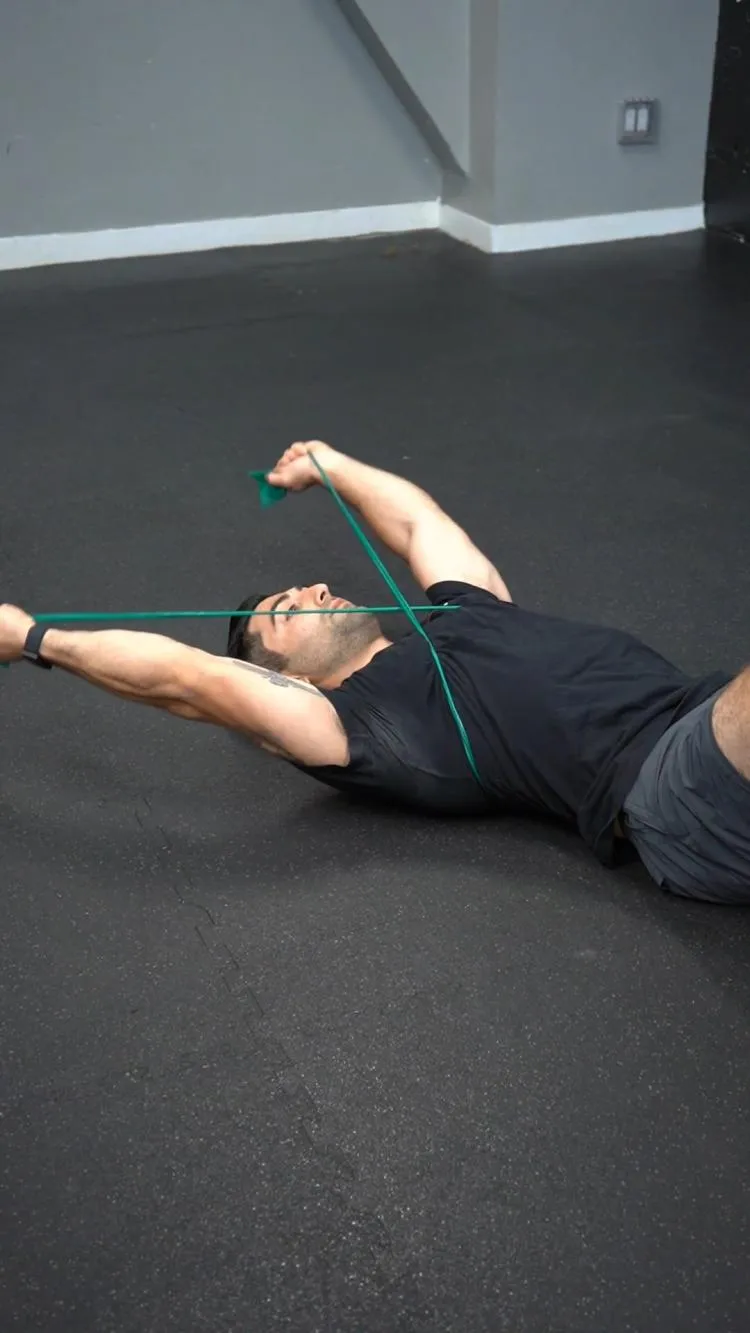
Supine Serratus Scoop - Band
View exercise instructions
- HOW: Begin by lying on your back with a band wrapped around your back. Cross the band over your chest. With a band in each hand, bring your arms up and overhead as much as you can against the resistance of the band and return to the starting position.
- FEEL: You should feel your shoulder muscles working.
- COMPENSATION: Don’t arch your back.
Exercise 02 of 06
Exercise demonstration
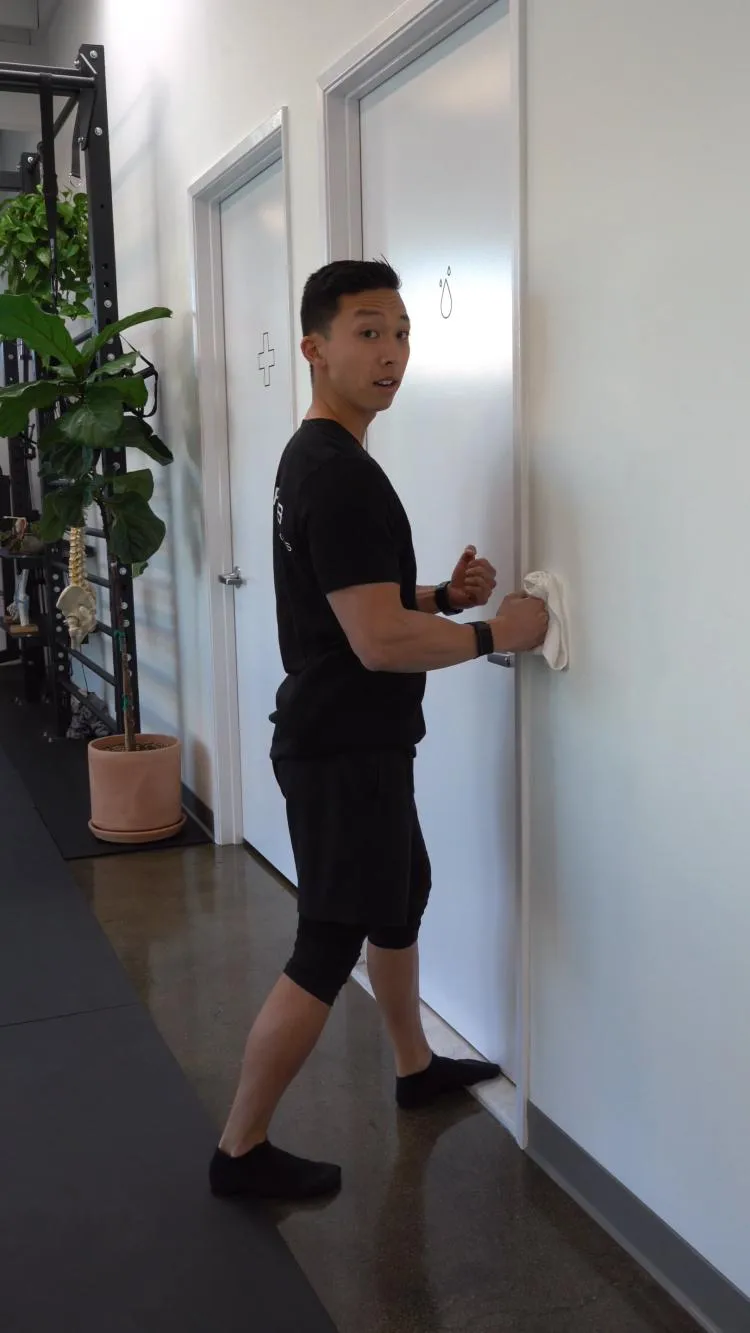
Isometric Shoulder Flexion - Wall Support
View exercise instructions
- HOW: Start facing a door frame or wall. With your elbow bent at your side to 90 deg, push forward into the wall. Slowly ramp up the amount of “pushing” that you do, staying just under the point of pain/discomfort and hold that level of contraction.
- FEEL: You should feel the muscles in your shoulder working, especially the front part of the shoulder.
- COMPENSATION: Do not shrug your shoulders and use your neck muscles.
Middle Phase Rehab Exercises for Pec Strains:
During the middle phase of rehab, we can challenge the pectoralis muscle a little more, with attention to stimulus for growth and repair.
Exercise 03 of 06
Exercise demonstration
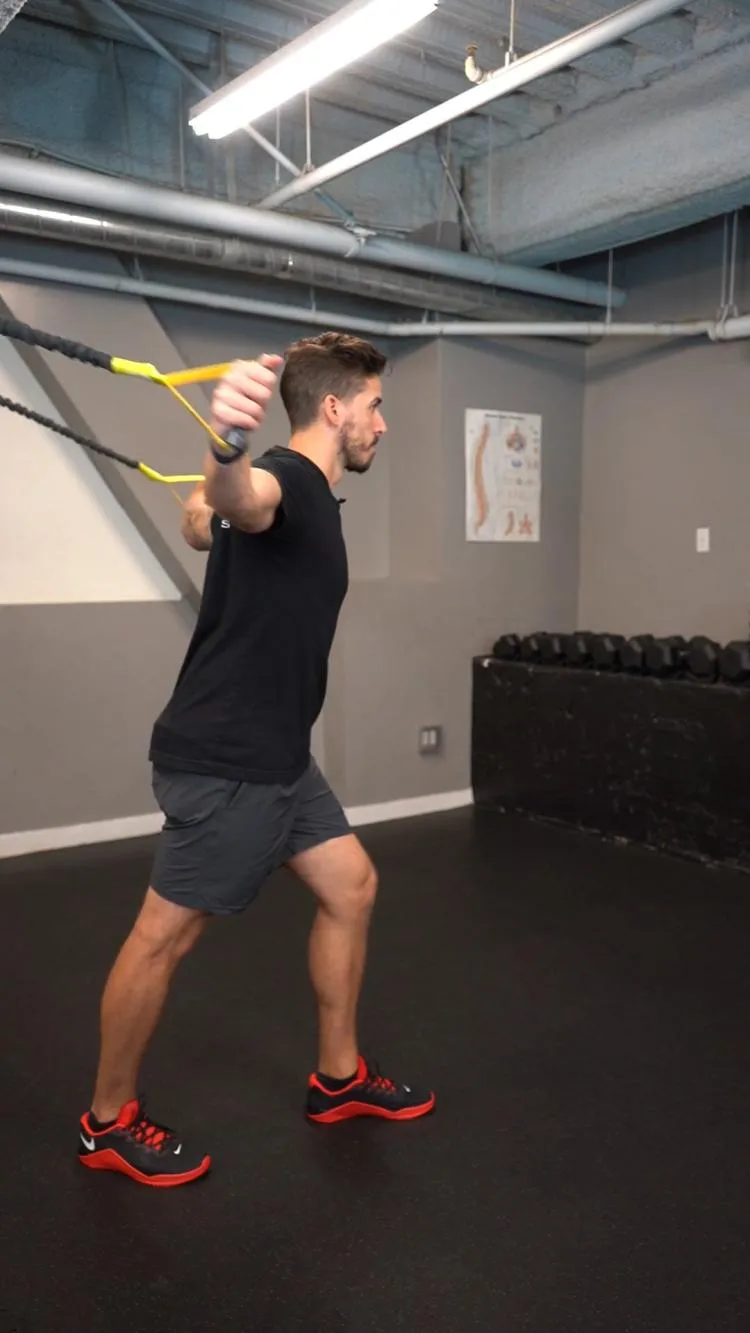
Pec Fly - Band
View exercise instructions
- HOW: Anchor bands at shoulder height or above. Face away from the anchor and have a band in each hand. Stagger your feet for a strong base. Bring the bands up at your side just below shoulder height. With your palms facing forward, arms straight with a slight bend in your elbow, bring both hands together in front of you, flexing your chest muscles at the end. Slowly return to starting position and repeat
- FEEL: You should feel your chest muscles working.
- COMPENSATION: Keep your upper traps relaxed. Keep your arms mostly straight.
Exercise 04 of 06
Exercise demonstration
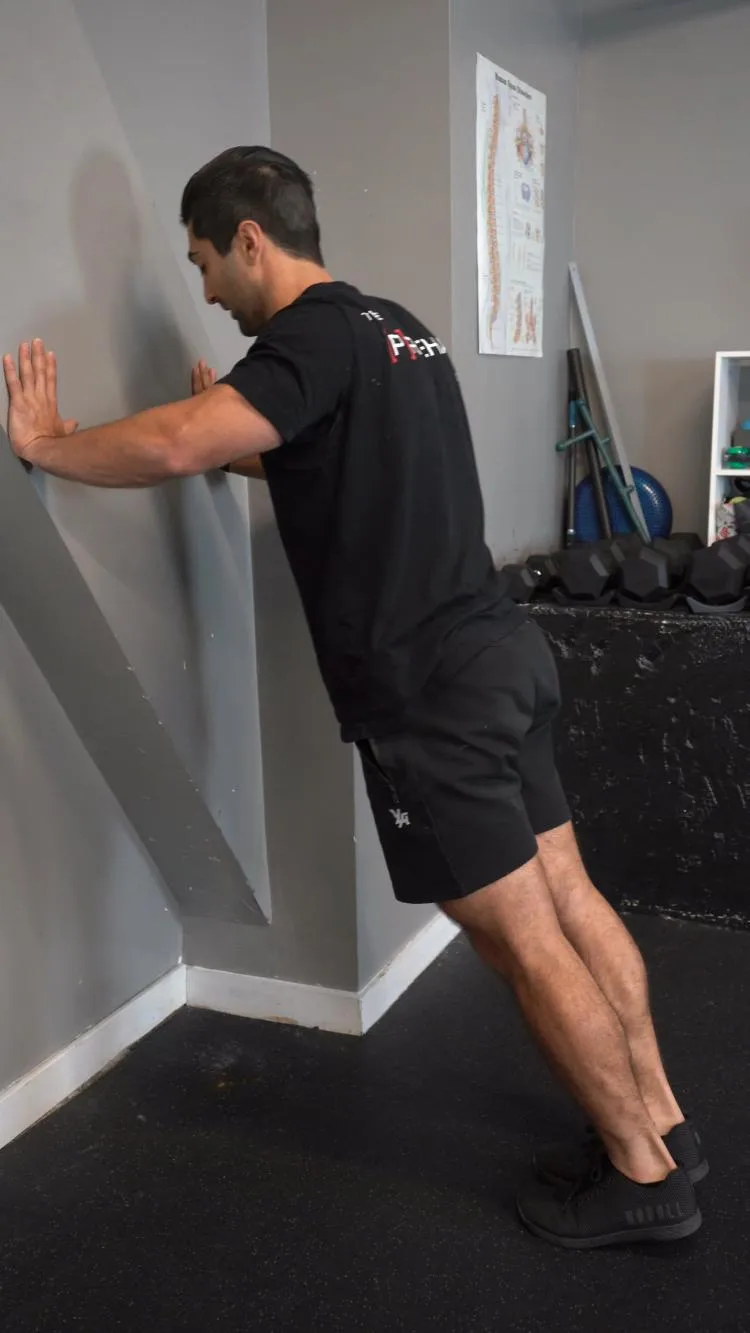
Wall Push Up
View exercise instructions
- HOW: Start with hands up against a wall. Maintain a straight line from your heels to your shoulders. Perform a push up by slowly lowering your chest towards the wall and then press your body away from the wall back to starting position and repeat. The further your feet are from the wall the more challenging this exercise will be, the closer you bring your feet, the easier this will be.
- FEEL: You should feel your shoulders, chest, and triceps work with this exercise.
- COMPENSATION: Keep your body in a straight line, don't hinge at the hips. Stay evenly balanced through both arms as you lower down and push up
The push-up is a great exercise to introduce in this phase. Beginning with a wall push-up can serve as a reintroduction into this movement and can be progressed to an eccentric push-up, focusing on the lowering phase to further challenge the pectoral muscle fibers.
Late Phase Rehab Exercises for Pec Strains:
In late-phase rehab, we are focused on really building and strengthening that pec, and getting back to safely increasing weight and load on the muscle.
Exercise 05 of 06
Exercise demonstration
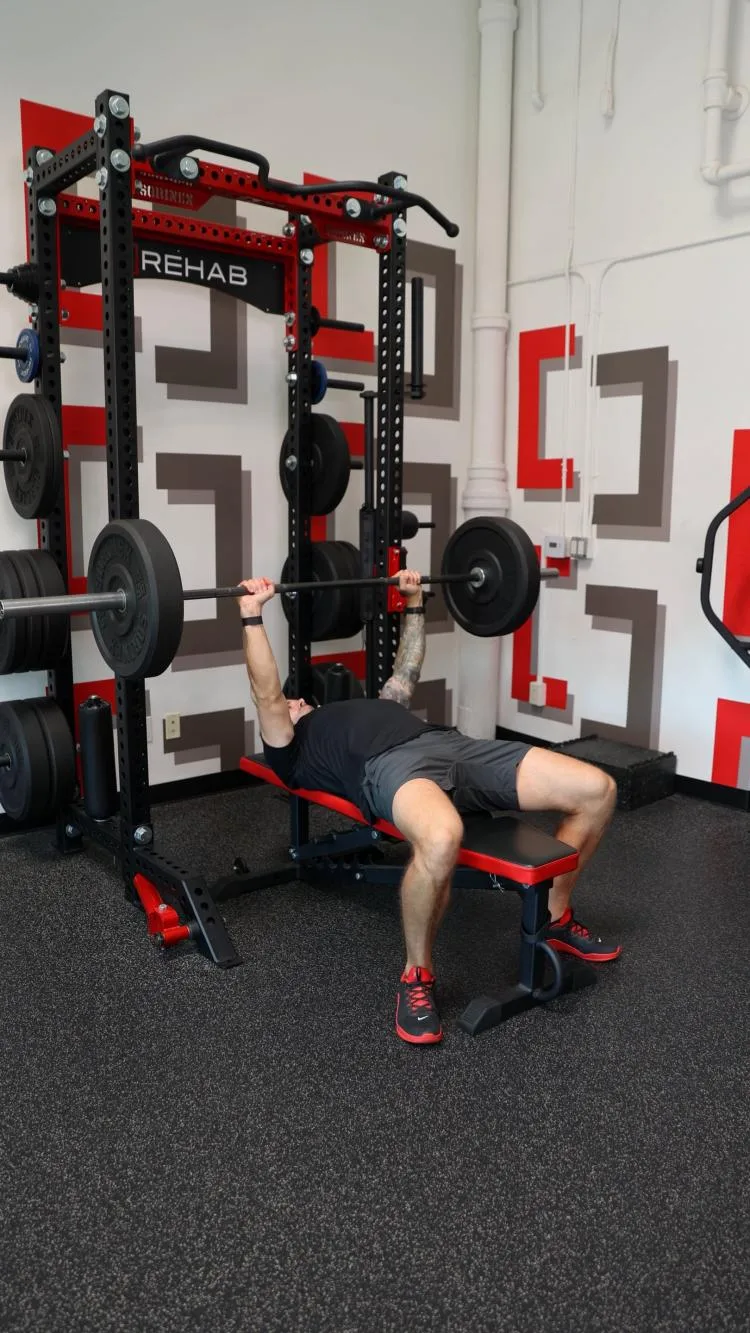
Bench Press - Barbell
View exercise instructions
- FEEL: You should feel your chest and core muscles working as you perform this exercise.
- COMPENSATION: Keep your core engaged and feet pressed into the ground. A slight arch in the back is okay but do not overextend with a focus on keeping your core muscles engaged.
Exercise 06 of 06
Exercise demonstration
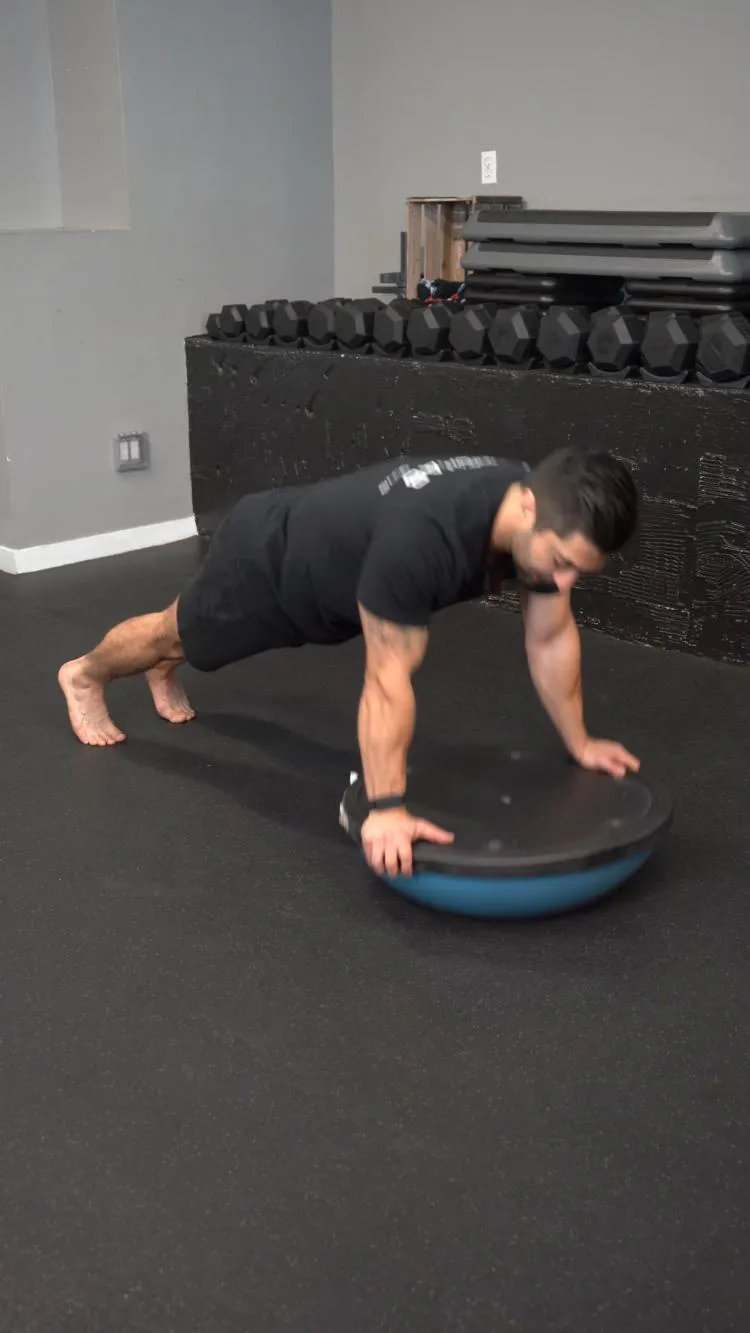
Plyometric Push Up - Bosu
View exercise instructions
- HOW: Start on your hands and feet, have your hands positioned under your shoulders hold onto the edge of a bosu ball. To begin the exercise, assume a high plank position while keeping your body straight lower your chest down towards the ground as far as you can, push up in a powerful manner and repeat. When you push up the goal is to create air between the bosu ball and the floor. Land softly and repeat.
- FEEL: You should feel your shoulders, chest, and triceps work with this exercise.
- COMPENSATION: Keep your body in a straight line, don't hike your hips high in the air or let your butt sag to the ground. Stay evenly balanced through both arms as you lower down and push up. Don't land stiff, absorb your weight as you land.
Closing Thoughts:
Takeaways and learning points from this article are the following:
- Rehab should occur early and often! Full ruptures will likely require a surgical approach, but the vast majority of pec strains can be managed with a conservative approach such as PT with a multiphase treatment plan with specific exercises for pec strains.
- Listen to your body! Pain should not exceed 4/10 at any time you are exercising and rehabbing.
- Rehab does not stop when your pain is gone! Continue to build capacity safely and slowly over time with a monitored rehab program.
- With a pec strain there is a higher risk of restrain, so again, we should continue to rehab progressively over time.
GET STARTED WITH OUR SHOULDER REHAB PROGRAM
Pec strains do not have to stop your performance goals in their tracks. Get early rehab, progress and build back strength, and then get back out there and crush that PR you’ve always wanted!
References:
- Solari F, Burns B. Anatomy, Thorax, Pectoralis Major Major. [Updated 2022 Jul 25]. In: StatPearls [Internet]. Treasure Island (FL): StatPearls Publishing; 2023 Jan-. Available from: https://www.ncbi.nlm.nih.gov/books/NBK525991/
- Haley CA, Zacchilli MA. Pectoralis major injuries: evaluation and treatment. Clin Sports Med. 2014 Oct;33(4):739-56. doi: 10.1016/j.csm.2014.06.005. PMID: 25280620.
- Bayer et al. Early versus Delayed Rehabilitation after Acute Muscle Injury September 2017 New England Journal of Medicine 377(13):1300-1301 DOI:10.1056/NEJMc1708134
- Sahota S, Gibbs DB, Lawton CD, et al. Pectoralis Major Injuries in the National Football League. Sports Health. 2020;12(2):116-123. doi:10.1177/1941738119885867
- Heather S. Haeberle, Prem N. Ramkumar, Travis L. Frantz, Grant L. Jones, Frank C. Curriero, Anne Corrigan, Lonnie Soloff, Mark S. Schickendantz, Salvatore J. Frangiamore, Pectoralis muscle injuries in Major and Minor League Baseball, Journal of Shoulder and Elbow Surgery, Volume 31, Issue 8, 2022, Pages e363-e368, ISSN 1058-2746, https://doi.org/10.1016/j.jse.2022.01.134. (https://www.sciencedirect.com/science/article/pii/S1058274622002300)
About The Author
Taryn Beaumont, PT, DPT, CLT, CF-L1, CNC
Prehab Writer & Content Creator
 Taryn was born and raised in Maine and still resides there with her fiancé and son. Taryn received her Doctorate in Physical Therapy from Husson University in 2010, and also carries a Bachelor's in Kinesiology and Human Movement Science. She is a Certified Lymphedema Therapist, a Certified Crossfit Level 2 Trainer, and a NASM Certified Nutrition Coach. Taryn has 12+ years of experience in many different realms of PT, from the young athlete to the geriatric patient. Most recently she is employed with a home health PT company and is working toward her Advanced Competency in Home Health. Taryn considers herself a ‘lifelong learner’. She has special interests in oncology care and breast health, dry needling, and Crossfit training. In her free time, Taryn enjoys fitness, spending time with her family, continuing education, writing, and reading, and is very excited to be a part of The Prehab team to educate and empower others to take control of their health and wellness.