
On this page 8 sections
Your guide
What you'll learn
Are you experiencing popping, clicking, or pain in your hips that either started suddenly or has developed over time? If so, you’ve likely wondered what in the world could be causing this sensation and how you can address it.
In terms of anatomy, most of us are aware that we have large muscles surrounding our hips, known as our glutes, and a few very sturdy bones in place connecting our pelvis to our lower extremities. What we may not be as familiar with is the connective tissue surrounding the hip joint and just how important of a role it plays.
So let's explore the hip labrum, a subtle, yet crucial component of the hip joint that often flies under the radar. We'll dive deeper into basic anatomy, how injuries occur, and finally, discuss exercises for hip labrum injuries to address any pain or limitations you may be facing!
What is the Hip Labrum?
When thinking about the hip joint, it is important to note that it is categorized and functions as a “ball and socket joint.” This means that the joint can move in just about any direction or plane of motion. For reference, another common ball in the socket joint is your glenohumeral, or shoulder, joint. Now you may be thinking to yourself, ‘That sounds like an awful lot of mobility, how does it stay in place?!'
Enter the labrum.

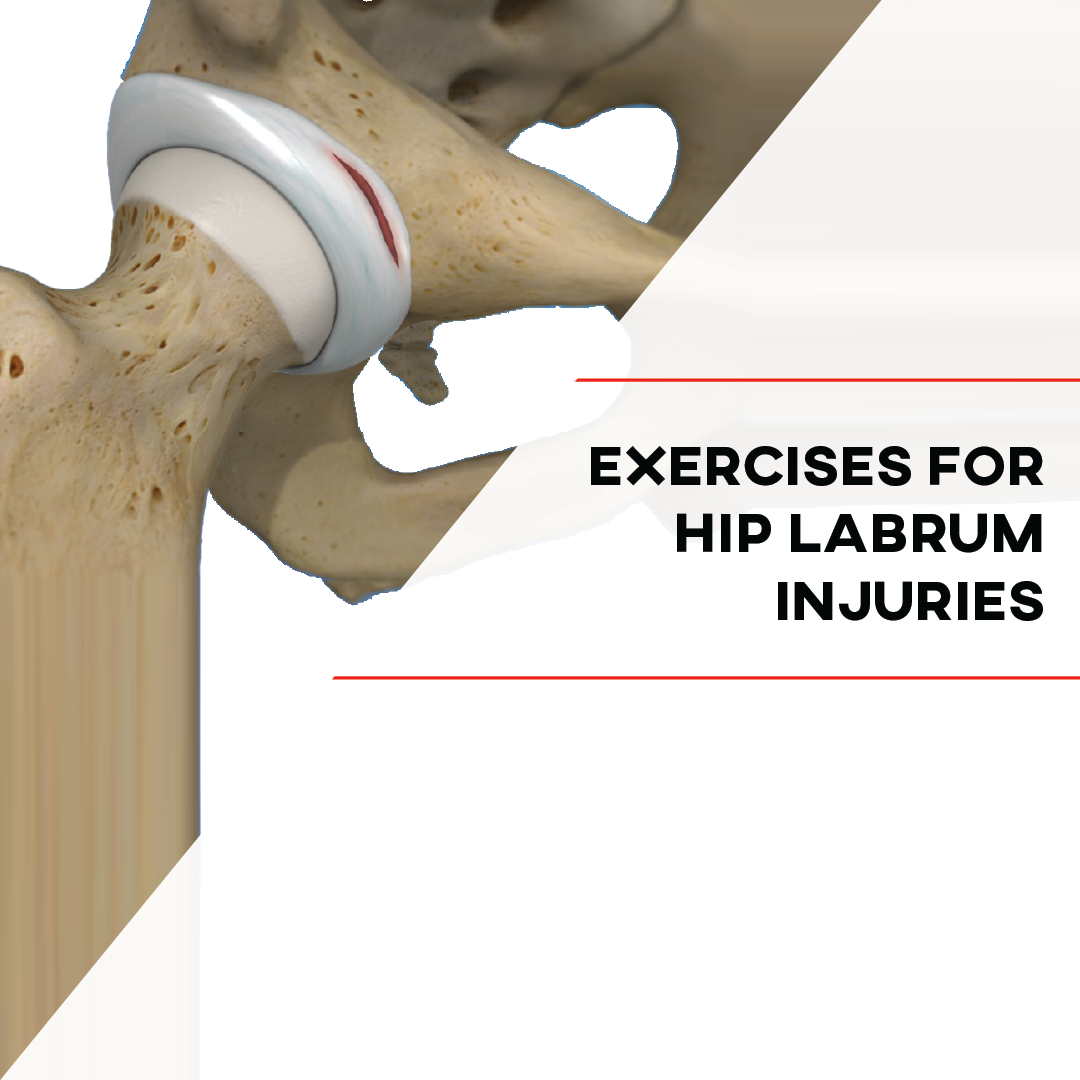
The hip labrum is the connective tissue surrounding the inside of your hip (known as the acetabulum of the pelvis) that allows the ball of your hip joint to suction into the socket, maintaining tight congruence. It can accomplish this function by extending the hip socket, deepening it, and covering up to 80% of the femoral head (1).
Outside of maintaining suction, the labrum also provides shock absorption (decreasing forces throughout the hip by up to 92%) and joint lubrication, leading to a unique combination of mobility and stability. With all these functions in mind, it should start to become clear why this tissue is so important and the various problems that may arise when irritation or injury occurs.
How do Hip Labrum Injuries Occur?
The most common mechanism in which the hip labrum is injured is with repetitive deep hip flexion or internal rotation. This position is especially common for cyclists, martial artists, hockey players, and golfers, as well as those participating in sports requiring repetitive rotation. Although the source of injury is repetitive, the discomfort from an injury will often appear suddenly.
Some common signs to look out for when considering an injury to the hip labrum include:
- Pain in a “C” shaped pattern surrounding the hip joint
- Clicking and popping, especially near the joint line of the hip with flexion and/or internal rotation
- Pain or discomfort near the front of your thigh
- In progressive cases, pain that extends down towards the front of your knee (3)
What are Common Injuries to the Hip Labrum?
The hip labrum is most commonly injured in one of two ways, through either a CAM or PINCER impingement. There are instances of mixed impingement as well, where a combination of CAM and PINCER impingements exist, but we will exclude those cases today. Regardless, if you’re dealing with a hip labrum injury, you’ll hear these terms used frequently, so let’s take a minute to explain how each type occurs anatomically, and if it really makes a difference.
A CAM impingement occurs when the ball-shaped end of the thigh bone (femoral head) has bony growths, impacting its otherwise spherical shape. These abnormalities can lead to excess friction in the hip joint with routine movements, resulting in shearing forces on the labrum and damage to the tissue.
A PINCER impingement, on the other hand, occurs when there is extra bone built up inside the hip socket (acetabulum). Again, this can lead to increased friction within the hip joint, shearing the labrum of the hip and resulting in tissue irritation or injury.
The majority of hip labrum injuries are caused by these forms of impingement, but labrum injuries can occur without impingement as well. Regardless of the specific cause, there are ways to improve symptoms and even reduce the need for surgical intervention (3).
If you want to learn more about these specific pathologies, check out our podcast on hip impingement below!

Hip Labrum Rehab
Now that we have a better understanding of what the hip labrum is and common paths to injury, let’s get into the fun stuff – the rehab. When progressing through hip labrum rehab, there are three key components to address: hip mobility, hip strength, and core stability. Focusing on each of these elements progressively will help ensure you can make a full recovery.
Let’s take a look at each.
Hip Mobility for Hip Labrum Injuries
The first key to rehab in many cases is to address motion impairments if they exist. In the case of a labrum injury at the hip, the motions of flexion and internal rotation are often the most limited. This means that lifting your leg in a marching position or turning your knee inward is likely going to be challenging and the cause of discomfort.
When these limitations are present, over time it often leads to the shortening of muscles that attach near the hip complex, leading to further discomfort (4).
To address these mobility impairments, one of the most effective positions to utilize is quadruped, having contact with both hands and knees on the floor, assuming the “all fours position.” This posture allows the individual to control the amount of motion they are moving into quite easily.
Once in this position, there are a variety of exercises and movements that can be of benefit. From rocking backward and bringing your hips to your heels to adding a band along the groin and joint line to provide a distraction force, these motions all work to increase space at the joint, as well as improve tolerance to hip flexion. Learn a few more of our favorite exercises for improving hip mobility below!
READ: EXERCISES TO IMPROVE HIP MOBILITY

The key with all these mobility exercises is to move slowly through comfortable ranges and gradually challenge your motion over time. Here’s another example of how to increase space at the hip joint to reduce pinching sensations and/or discomfort:
Exercise 01 of 05
Exercise demonstration
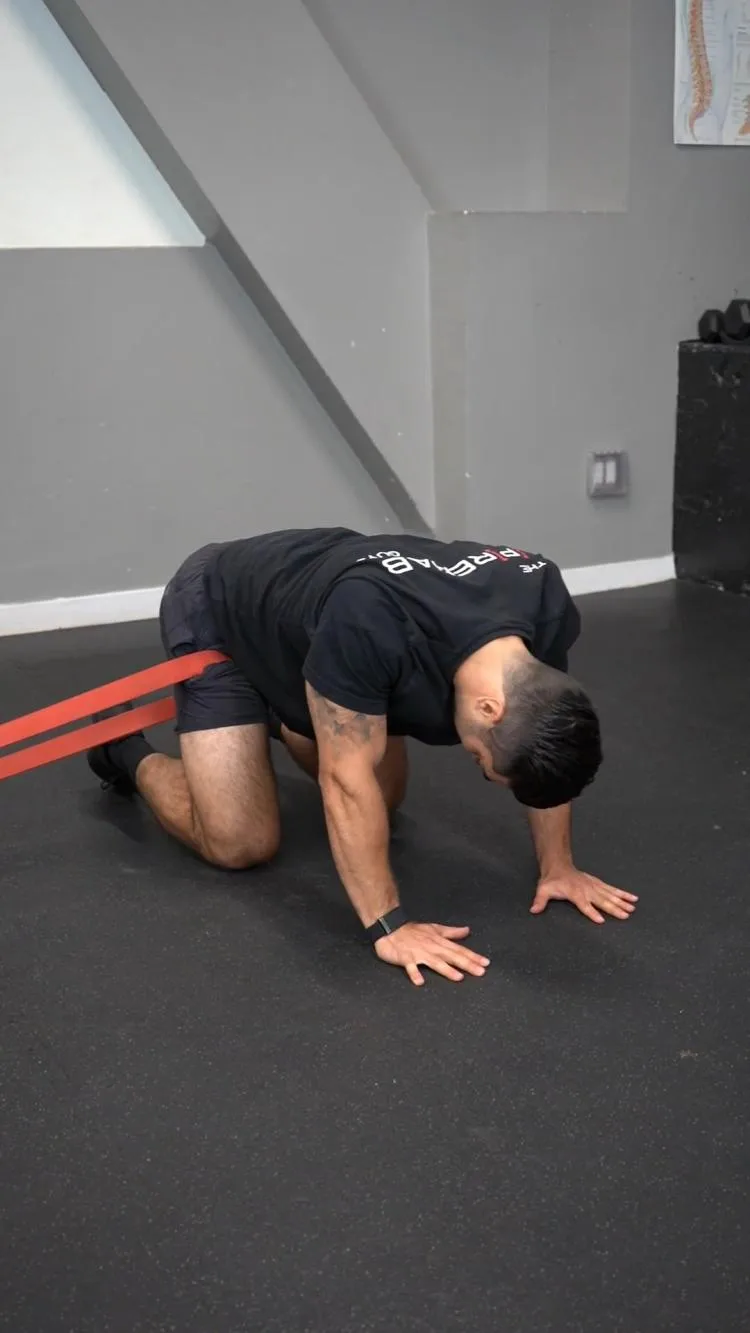
Quadruped Lateral Hip Mobilization - Band
View exercise instructions
- HOW: In the quadruped position, loop the anchored band high up on your thigh as close to your hip as you can comfortably place it. Once tension is created in the band pulling your hip outwards, rock back bringing your butt closer to your heels.
- FEEL: You should feel a hip stretch once you sit back into the stretch. You should also feel the hip joint stretching from the band mobilizing it.
- COMPENSATION: Don’t arch your back. Stay in the quadruped position.
Now that we’ve discussed ways to improve hip flexion range of motion, let's look at the impact of hip internal rotation mobility.
Regaining internal rotation at the hip is crucial during this initial phase of rehab, as it will help to reduce stress throughout the labrum during movement by preventing excess friction throughout the hip complex (1). This is because enhanced internal rotation contributes to better biomechanics at the joint with everyday activities and motions. To get started improving this motion, try out the hip 90-90 stretch shown below working into both external and internal rotation on both hips.
Exercise 02 of 05
Exercise demonstration
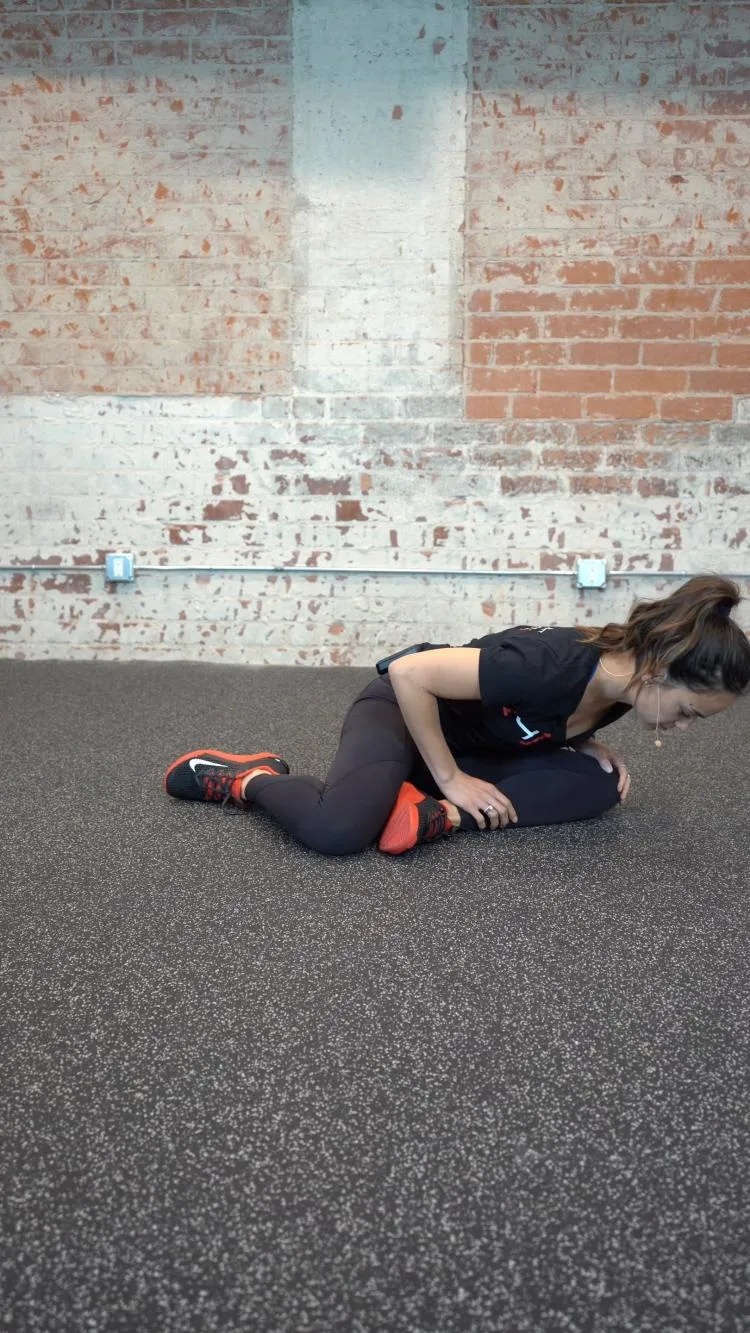
90/90 Hip Switch Stretch
View exercise instructions
- HOW: Begin in a seated position with both knees bent on the ground. One knee should be lying on its outside, and the other should be lying on its inside. Sit up tall, hinge forward at the hips and lean towards the knee lying on its outer edge and hold that stretch for about five seconds. Then, rotate to the other side while keeping your heels on the ground and rotate your legs in the other direction again hinging forward at the hip towards the knee laying on it’s outer edge.. Perform that stretch on each side for the prescribed amount of reps.
- FEEL: You should feel a stretch in each hip as you lean forward.
- COMPENSATION: Keep your back straight, don’t hunch forwards as you lean into each stretch.
Hip Strengthening for Hip Labrum Injuries
After you address your hip mobility deficits, it's time to progress to strengthening. Individuals with hip labrum injuries oftentimes demonstrate weakness in the hip abductors or the muscles that allow you to bring your leg out to the side. The primary muscles involved are your gluteus maximus, gluteus minimus, and gluteus medius. Strengthening these muscles both statically and dynamically will allow you to improve control throughout your pelvis and reduce the amount of stress placed throughout the hip joint and labrum (4).
The following exercises provide a variety of ways to activate these major muscles surrounding your hip.
An excellent way to get started strengthening the glutes is by utilizing a bridge progression. This exercise progression can be modified in many ways, including adding a band for resistance, emphasizing a single leg focus, or using the marching variation shown below!
Exercise 03 of 05
Exercise demonstration
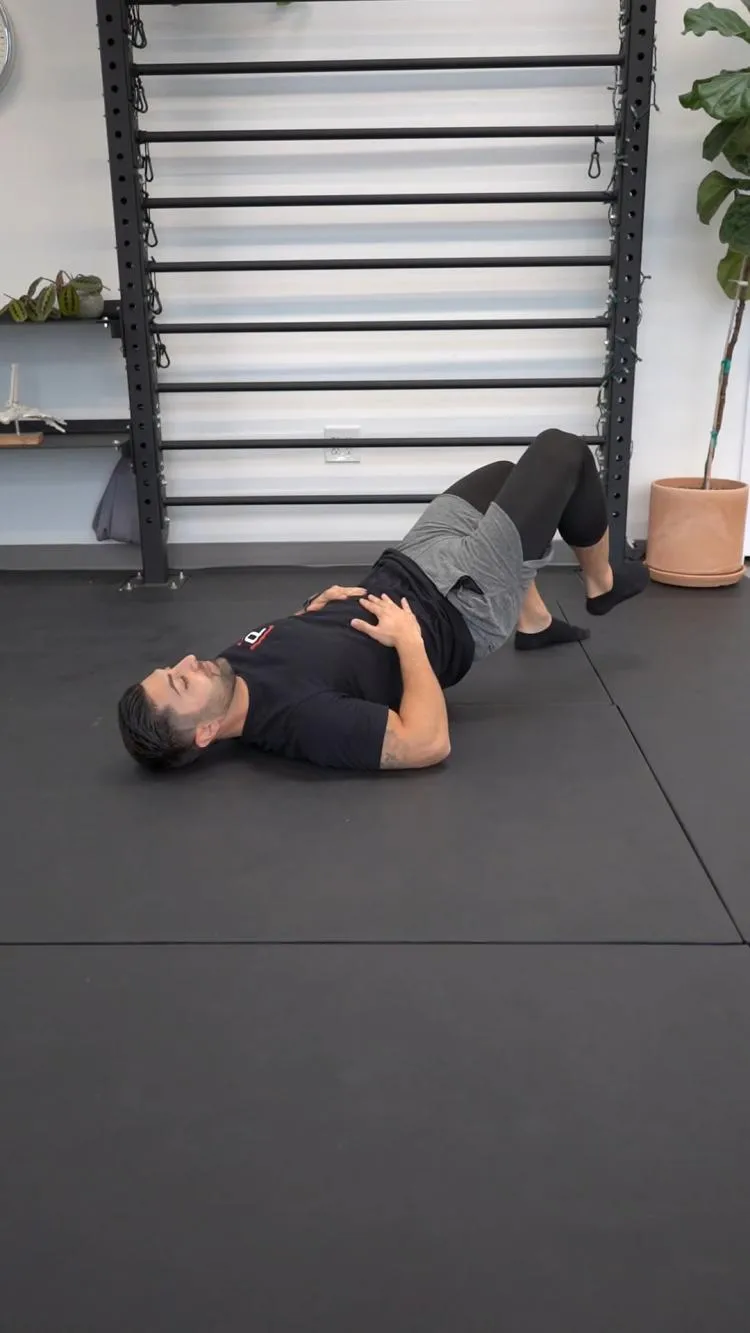
Bridge March
View exercise instructions
- HOW: Start on your back with your knees bent and slightly spread apart. Tighten up your stomach first, then your glutes. Next, drive your heels into the ground and lift your hips up towards the ceiling. At the end position your knees, hips, and shoulder should be in one straight line. Shift your weight onto one leg, then slowly march from side to side. Make sure you move with control here.
- FEEL: You should feel your glutes working to control this motion. At no point should you feel your low back muscles doing the lifting motion. If you feel it only in your hamstrings, try bending your knees a bit more and repeat.
- COMPENSATION: Avoid arching at the low back as you perform this.
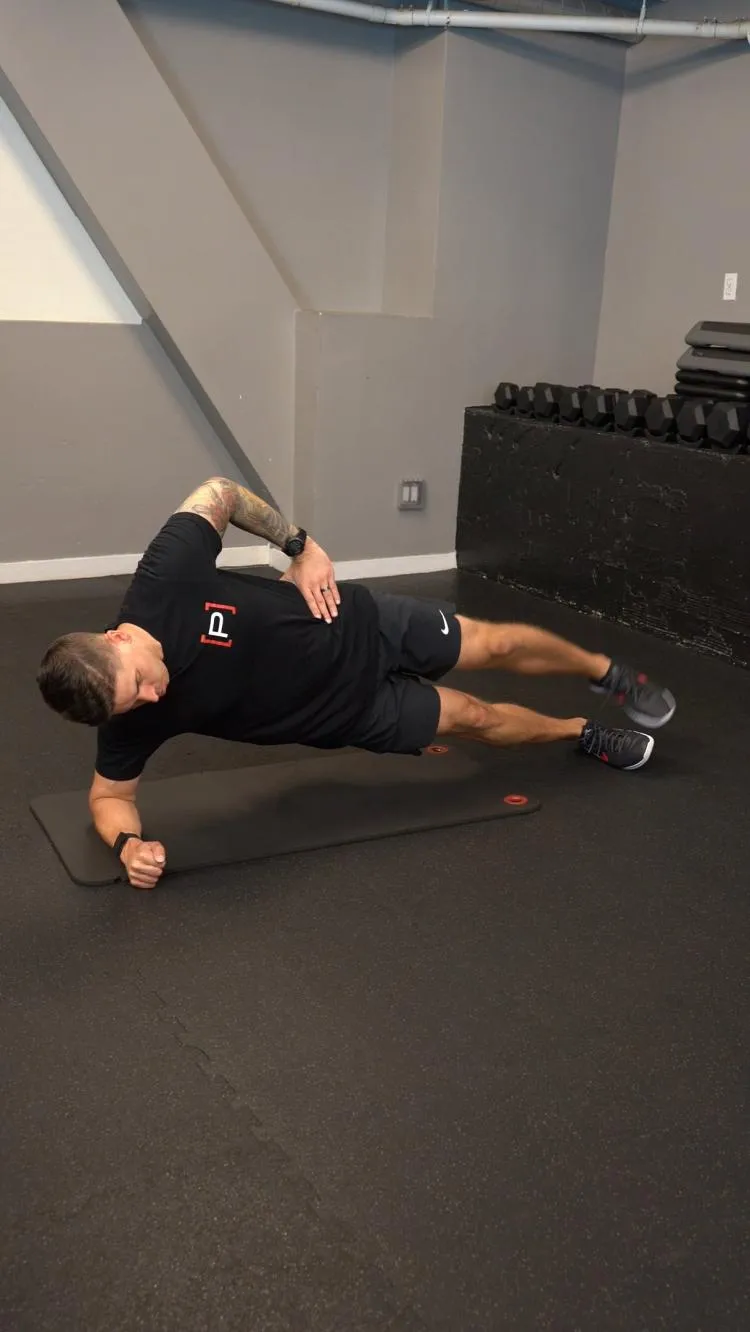
I mentioned previously how important core strengthening is in improving outcomes for hip pathologies. With that being said, some of the most effective exercises combine both glute strengthening, as well as core strengthening. An example of this type of multipurpose exercise is a kneeling side plank with leg abduction, which challenges core stability, while simultaneously building glute strength, especially of that gluteus medius muscle!
Exercise 04 of 05
Exercise demonstration
Side Plank - Hip Abduction
View exercise instructions
- HOW: Get set-up on your side with your elbow directly under your shoulder and your forearm supported on the ground. Have your feet stacked and supported on the ground with the knees straight. To begin the exercise, push your hips up and forward as high as you can and hold this position. Then lift your top leg up towards the ceiling while keeping it straight and in line with your body, lower and repeat.
- FEEL: This should feel like a full-body exercise. Your shoulder and shoulder blade muscles will be working as well as your hip, back, and stomach muscles. You will especially feel your right hip and core muscles working if you’re laying on your right side. Follow the video for other cues and tips.
- COMPENSATION: Do not let your hips or shoulder sag, do not let your body rotate.
Finally, let’s expand further on core stability and its impact on healthy hips.
Exercise 05 of 05
When you hear the term "core," you might immediately start thinking of your abdominal muscles. These muscles are often glamorized in popular culture, as evidenced by endless workout programs and/or proclaimed shortcuts aimed at developing a six-pack physique. With that being said, the rest of the core is oftentimes forgotten. Outside of these more famous muscles on the front of your trunk, it's important to note that the core is made up of three other components. These include your diaphragm (the top of the core), multifidus (the back of the core), and pelvic floor muscles (the bottom of the core). Together, these muscles form a "box," and when trained over time, do a great job of facilitating movement of your extremities (4).
In the case of labrum injury rehab, a strong core with great stability will improve control at the hip and throughout your lower extremity, reducing the strain placed directly on the hip. To focus on true core stability, keeping the tissue you are targeting in place while moving a nearby extremity is the most efficient way to do so.
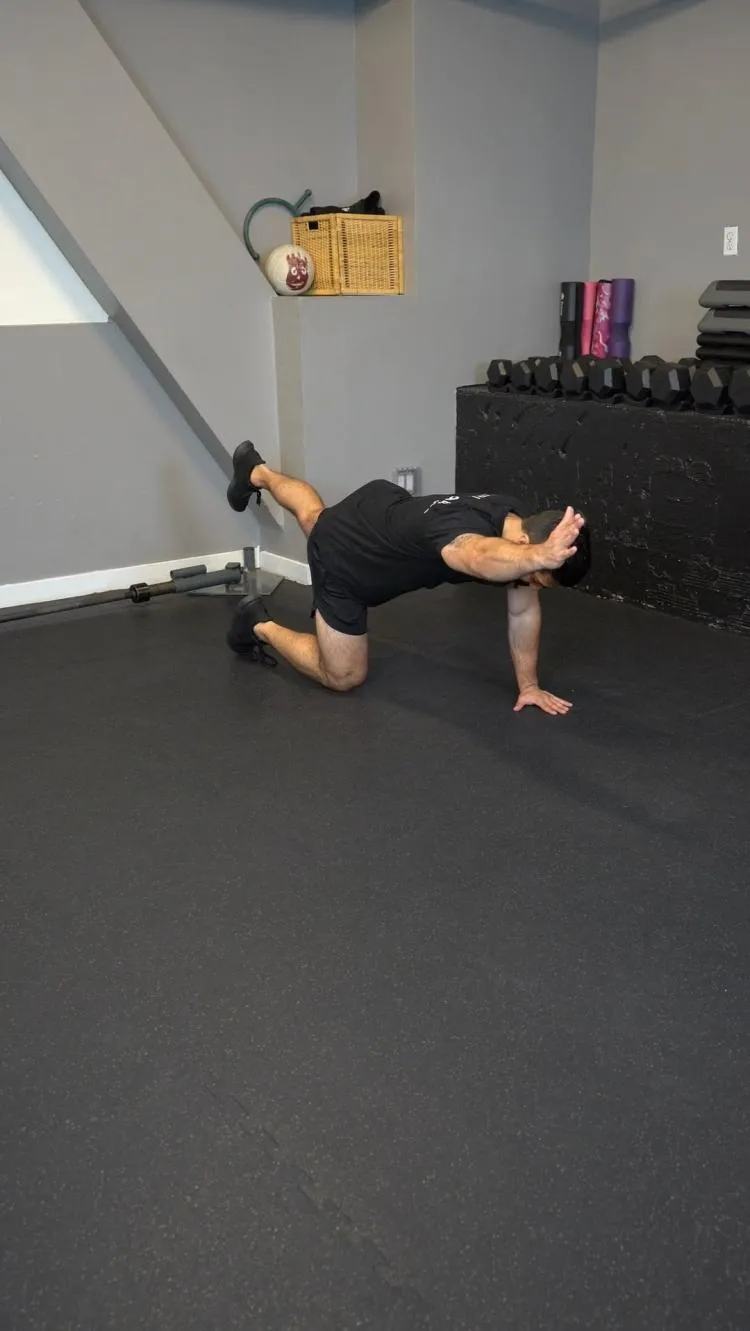
A great way to accomplish this goal is through a variety of quadruped positions and plank variations. To get started engaging your core, try this exercise below, known as the bird dog.
Exercise demonstration
Bird Dog
View exercise instructions
- HOW: Begin on your hands and knees. In this position, you will balance on the opposite arm and leg. The wider you are the easier to balance, the more narrow the more challenging this will be. Bring the arm and leg up as high as you can towards the ceiling, slowly return to the starting position and repeat on the other side.
- FEEL: With the leg kicking out you will feel the muscles on the back of the hip working, with the arm that is punching out you will feel the muscles on top of the shoulder and back of the shoulder blade working.
- COMPENSATION: Avoid rotating the trunk, arching the back as you raise your leg, or shrugging the shoulder as you raise the arm.
Closing Thoughts
When it comes to hip labrum injuries and rehab, it is common for pain and discomfort to be present with a variety of everyday tasks, leading to decreased activity levels. All this can certainly be frustrating and get in the way of your day-to-day life. The good news is, with specific guidance, and a home exercise program, you will likely begin to see relief and be able to return to improved function without the need for surgery. Focus on improving your hip mobility through the affected ranges of motion, as well as developing strength in your hips and your core, and you will be well on your way to rehabbing your hip labrum.
If you want an even more specific roadmap, check out our Hip Rehab and Prehab programs through our Prehab App!
LEARN MORE ABOUT OUR HIP REHAB PROGRAM
References:
- Ferguson SJ, Bryant JT, Ganz R, Ito K. An in vitro investigation of the acetabular labral seal in hip joint mechanics. J Biomech. 2003;36(2)171-178.
- Grant AD, Sala DA, Davidovitch RI. The labrum: structure, function, and injury with femoro-acetabular impingement. J Child Orthop. 2012 Oct;6(5):357-72. doi: 10.1007/s11832-012-0431-1. Epub 2012 Sep 6. PMID: 24082951; PMCID: PMC3468736.
- Su T, Chen GX, Yang L. Diagnosis and treatment of labral tear. Chin Med J (Engl). 2019 Jan 20;132(2):211-219. doi: 10.1097/CM9.0000000000000020. PMID: 30614856; PMCID: PMC6365273.
- Terrell SL, Olson GE, Lynch J. Therapeutic Exercise Approaches to Nonoperative and Postoperative Management of Femoroacetabular Impingement Syndrome. J Athl Train. 2021 Jan 1;56(1):31-45. doi: 10.4085/1062-6050-0488.19. PMID: 33112956; PMCID: PMC7863596.
About the Author
John Schaefer
PT, DPT, CSCS
Prehab Writer & Content Creator
 John is a native of Rochester, MN and a double graduate of Saint Louis University, where he studied marketing and exercise science before earning his DPT.
Always up for an adventure, John traveled to Boston following graduation to intern at Champion PT and Performance. There he was able to work with high-level high school, college, and professional athletes. Following this experience, he headed south to pursue orthopedic residency training in Houston, TX at Harris Health System, working with a largely underserved and non-English speaking population.
John’s treatment philosophy hinges on empowering movement through extensive education and easy-to-replicate exercises, as well as meeting patients where they are. This perspective is shaped by his personal experiences, including five broken bones and two surgeries, during a multi-sport childhood filled with lots of activity and adventure.
Outside of work, you can find John cycling, attending concerts/festivals, hiking, and traveling!