

On this page 6 sections
Your guide
What you'll learn
As I sit here at my computer beginning this blog, I can’t help but be mindful of my posture. If I slouch for a bit, can I then remind myself to pull my shoulder blades together and sit tall for a while? While I look down at my computer, is there a way for me to prop it up a bit more so I’m looking more direct? How can I set myself up for a movement break after 45 minutes or so?
Posture has seemingly become a part of the movement conversation as more and more individuals find themselves sitting in front of a computer or phone for both personal and professional obligations. But what if I told you that posture should also be a part of the conversation for those during pregnancy and postpartum?
Does that shift seem like a bit of a swerve? It shouldn’t. Like many other professions, both pregnancy and postpartum can be all-encompassing of energy, time and place extreme physical demands on the body. Changes to posture as the body changes throughout pregnancy and during the postpartum period can feel daunting, surprising, and let’s face it, painful to many!
Let’s chat about potential changes in posture during both pregnancy and postpartum and what exercises can be performed to keep the attention on ten little fingers and ten little toes and away from 10 little, new aches.
What is Posture?
Posture is a word that seemingly carries a lot of weight (literally your bodyweight…pun intended). By definition, posture is described as “the position or bearing of the body, whether characteristic or assumed for a special purpose.” (1) Essentially, how we carry ourselves anatomically allows us to achieve our day-to-day tasks. Terms like “good posture”, “taller posture”, and “better posture” have been gaining a lot of traction in the past 10 years as more and more professionals find themselves sitting in front of a computer with a forward head and rounded shoulders. That’s another blog for another time.
READ: THE BEST POSTURE EXERCISES

Less talked about, but equally as prevalent, are changes to body posture during both pregnancy and postpartum. While different individuals may experience these changes to varying degrees of intensity, it should be recognized that these changes can and should be addressed.
Posture During Pregnancy
Measuring changes to posture during pregnancy is not feasible with typical methodology due to avoidance of exposing this population to x-rays and MRI imaging. However, a small case study was able to use surface topography in an attempt to analyze the objective changes in thoracic kyphosis and lumbar lordosis during pregnancy. Changes to the upper back (thoracic) spine, and lower back (lumbar) spine from the 17th to 37th week of pregnancy were measured.
It was determined that thoracic kyphosis increased around 7 degrees, while lumbar lordosis increased by almost 8.5 degrees during pregnancy (2).
While these numbers may not seem drastic, it’s important to realize how quickly this shift takes place and then reverses, as well. This whole pregnancy thing is no joke!
READ: EXERCISES TO PERFORM DURING PREGNANCY

Metrics aside, it doesn’t take an x-ray or MRI reading to physically see the changes of load that occur to the body during pregnancy. As the baby grows, the body is put under a large demand to accommodate the added anterior weight, often contributing to increased lumbar lordosis and recruitment of associated musculature. A study that utilized EMG to read activity of the back muscles determined that during both the third trimester and into postpartum, the erector spinae muscles were recruited to a greater extent (3). What does this mean? The muscles in our back that are designed to keep us in an upright posture and working much harder to make this happen. Posture and pregnancy really do go hand in hand.

Posture and Postpartum
Postpartum, often referred to as the 4th trimester, is the period after a baby has been born. While the physical weight of the baby is no longer present within the body, the actuality of now carrying a baby, moving a car seat in and out of a car (why is this so difficult?!?), and picking up a baby in and out of a crib creates a lot of physical demand. Let’s not forget those who are breastfeeding or producing milk and the toll that takes on the body. Are there enough breastfeeding support pillows in the world to eliminate the back and neck pain that comes with contact naps and always looking down at your newest little?
In fact, a small study that assessed the changes of center of mass and posture shortly into the postpartum period determined that increased breast mass may be a contributing factor leading to increased lordotic posture and low back pain within this population (4). Let’s also consider the increased amount of sitting that occurs postpartum, often due to breastfeeding, pumping, contact naps, and just plain exhaustion! While pregnancy and posture changes may go hand in hand, postpartum and posture changes may go silently unnoticed.
Unfortunately, postpartum depression can be directly associated with an individual’s perception of back pain intensity. A study that analyzed 80 women from 2 to 30 weeks postpartum identified that upper back pain was most closely associated with those who were identifying with postpartum depression. Additionally, pain intensity was greater amongst depressed women who demonstrated increased lumbar lordosis and thoracic kyphosis aka exaggerated postural changes (5). We cannot state that postural changes lead to postpartum depression, but we do know that perceptions of pain can directly impact mental health. So, do I even need to say it? If you’re postpartum and experiencing upper back discomfort or low back discomfort, give these exercises a try.
Posture Exercises
Give yourself five minutes a day to get moving through these exercises. If you’ve got a little one in tow, get down on the ground with them!
Exercise 01 of 03
Exercise demonstration
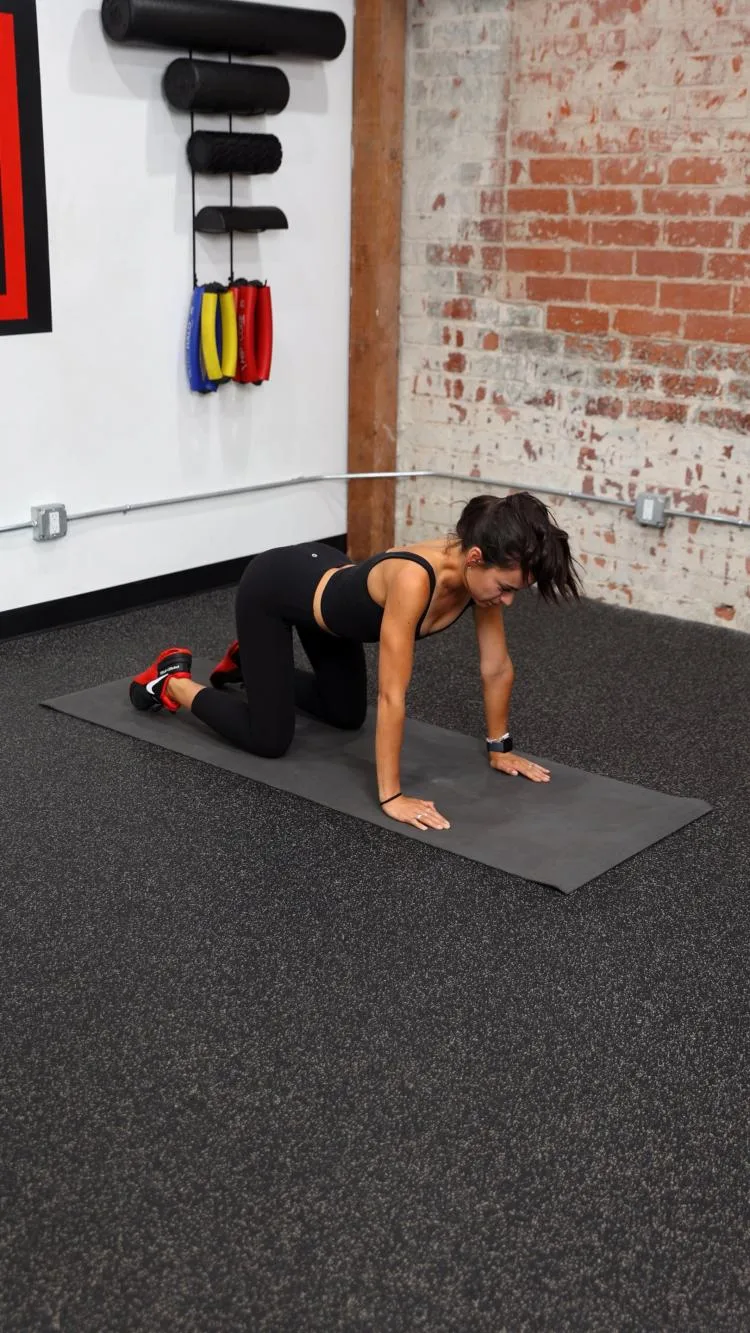
Cat Cow - Full Spine, Pelvic Floor Contract & Relax
View exercise instructions
- HOW: Begin in a hands and knees position. As you breathe in, breathe into the belly and the area between the sits bones, letting the pelvic floor relax. Let the belly sink towards the floor to arch the spine. Breathe out bringing the ribs down, contracting the pelvic floor as you get into the cat position. Bring the ribs towards the pelvis.
- FEEL: You will feel your core working.
- COMPENSATION: Avoid holding your breath.
Exercise 02 of 03
Exercise demonstration
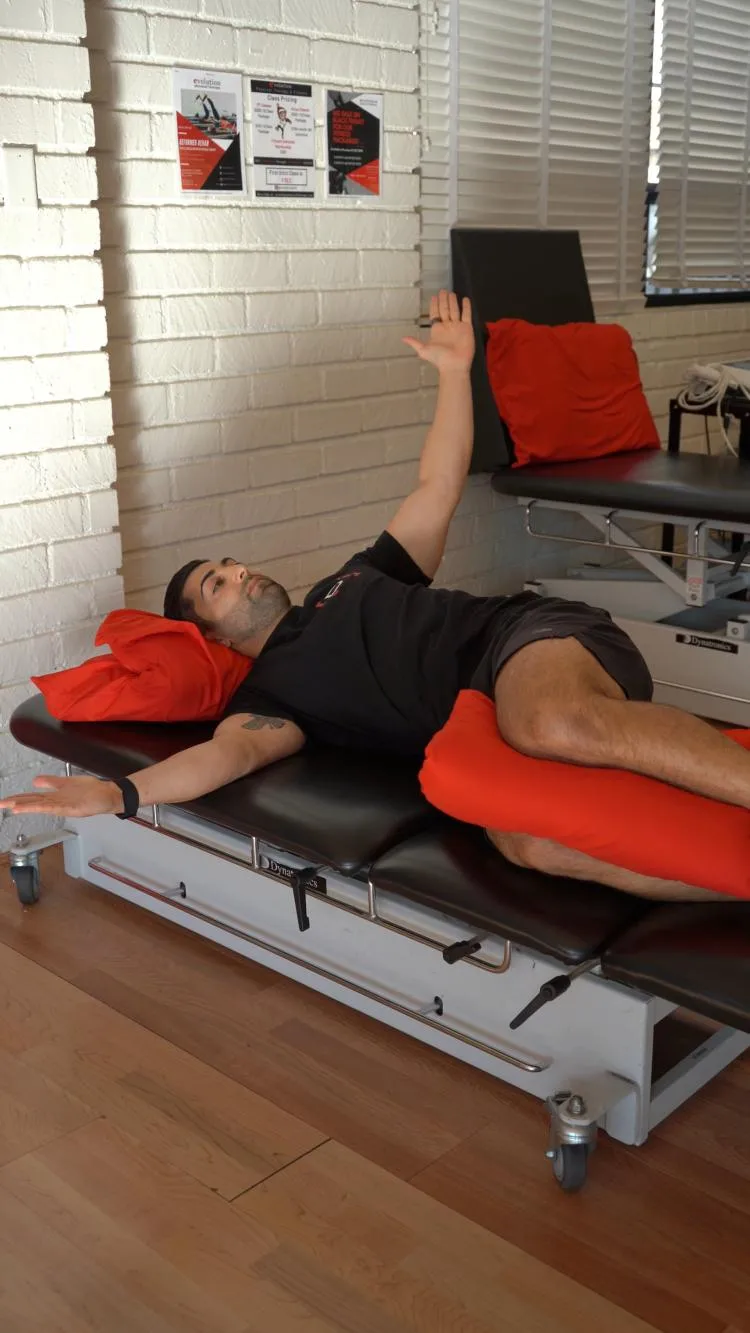
Open Book - Pillow Between Knees
View exercise instructions
- HOW: Begin by lying on your side with a pillow in between your knees and underneath your head. Clasp your hands on top of each other. Slowly reach your top hand as far forward as far as you can. Then, slowly pull your hands back, across your chest, and drop to the opposite side.
- FEEL: You should feel a nice gentle stretch through your mid-back region. You may also feel a little pec stretch in the front of your shoulder.
- COMPENSATION: Make sure to keep your knees high. If your knees are not high enough, you will move the lower back region more than the mid back.
Exercise 03 of 03
Exercise demonstration
Quadruped Pec Stretch - Swiss Ball

View exercise instructions
- HOW: Kneel down on the ground next to a swissball. Get into the quadruped position with your knees on the ground under the hips, and your hands on the ground under your shoulders. Place one arm up in a diagonal direction on top of the swissball. Roll forward a bit and feel a comfortable stretch in the front of your shoulder and pec muscles. Hold that for as long as prescribed.
- FEEL: You should feel a stretch in the front of your shoulder and chest area.
- COMPENSATION: Don’t shrug your shoulders. Find the best position to stretch the front of your shoulder and hold that.
Closing Thoughts
The impact of posture changes during both pregnancy and postpartum should not be overlooked. As mentioned above, not only do we experience greater demand of postural stabilizers during pregnancy, but the impact of pain due to postural changes during postpartum can be influential in one’s mental health. It’s important to remember that just because physical changes may be less visible to the eye during postpartum, the body is still not being directly impacted by both pregnancy and beyond.
However, like many physical ailments, a bit of intentional movement can go a long way! We can stabilize those low back extensors, stretch those pec muscles, and modify habits that could be contributing to any associated postural discomfort throughout the day. If you’re curious where to start, give the exercises above a try and let us know what you think!
Ultimately, whether you’re sitting at your desk reading this on your computer or scrolling your phone while you feed a little one in your arms, it’s never too late to be mindful of posture and dedicate 5 minutes each day to intentional movement. Let’s keep away the ten little aches so we can love on the ten little fingers and toes.
GET STARTED WITH OUR POSTPARTUM REHAB PROGRAM
References
About The Author
Lyndsay Centrowitz, PT, DPT
Prehab Writer & Content Creator

Dr. Lyndsay Centrowitz graduated from Colorado State University with a BS in Health and Exercise Science and a concentration in Sports Medicine. After multiple personal sports-related injuries and discovering a passion for healing through movement, Lyndsay attended Creighton University to receive her Doctorate of Physical Therapy. An avid runner herself, she has a particular interest in working with high school, recreational, and elite endurance athletes and has undergone specialty training in pelvic floor rehabilitation, postpartum care, and management of the female athlete to better serve her clientele. Through this specialty training, she has acquired a Certificate of Achievement in Pelvic Health Physical Therapy through the American Physical Therapy Association. Lyndsay now owns her own practice StrongHER in Park City, UT where she specializes in female athletics and care of pregnant and postpartum individuals. Additionally, Lyndsay is BSPTS C2 certified in scoliosis specific exercises and has found a niche working with adolescents with scoliosis to improve overall spinal health. No, you’re not seeing double! Lyndsay is an identical twin to Lauren Lynass, one of our Prehab rockstars. A native of Colorado, Lyndsay is an adventure seeker who loves to hike, camp, and race her twin sister on the mountain trails. When she isn't exploring Park City's outdoor playground, you can find her curled up with a cup of tea and a good book. Follow along @strongher_dpt on Instagram!