


On this page 6 sections
Your guide
What you'll learn
Whether you're stepping into the world of strength training for the first time or you're an experienced athlete, squats are a foundational movement that offers something for everyone. From building strong legs to improving core stability, squats work multiple muscle groups and offer multiple benefits depending on the type of squat performed. In this article, we'll explore five different types of squats: front squats, back squats, goblet squats, heels elevated squats, and box squat, and explain what muscles they target and the demands they place on the body. We'll also determine which ones are more suitable for beginners or advanced lifters. When in doubt, squat it out!
No need to waste time, you've come to this article to learn the difference between different types of squats and why you should be doing each and that is exactly what we are going to do! Below, you will find each type of squat, the muscle groups that that specific squat will target, and most importantly WHY you may want to add that squat into your routine. Let's get into it!
Front Squats:
Exercise 01 of 05
Exercise demonstration
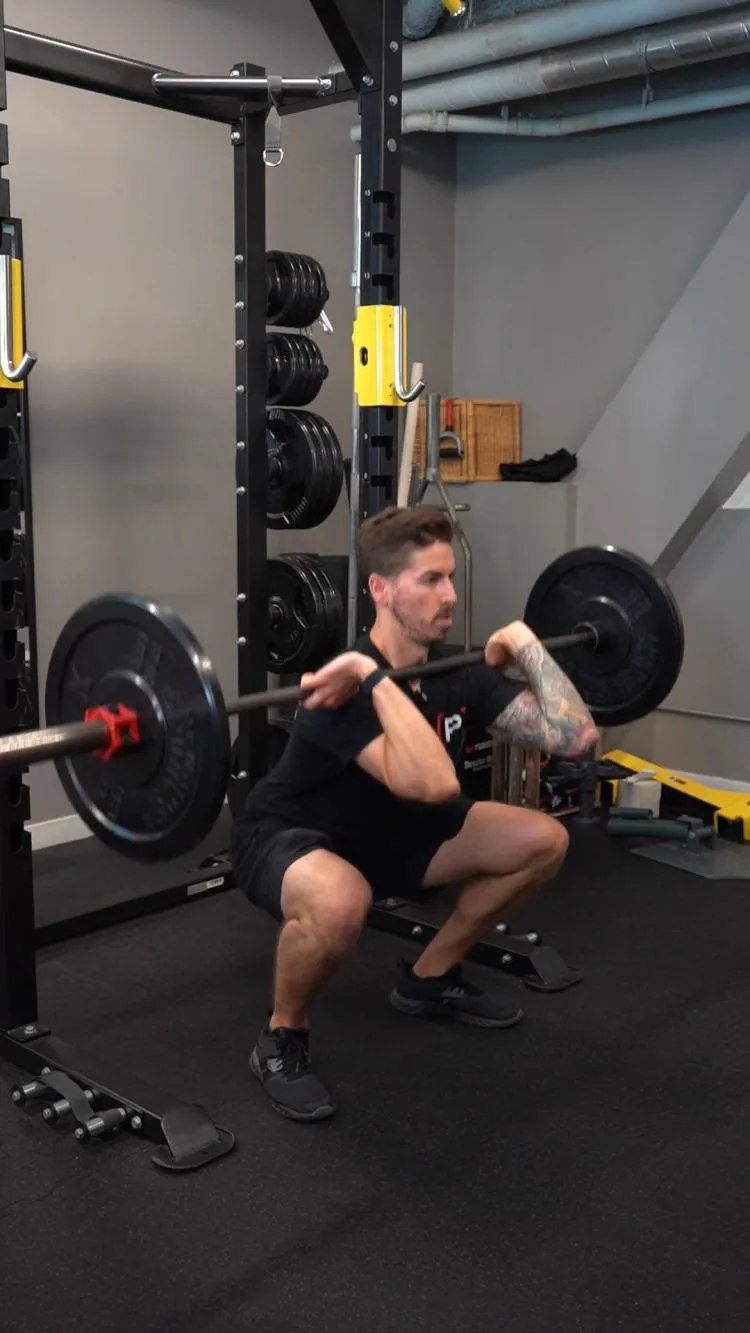
Front Squat - Barbell
View exercise instructions
- HOW: Begin by standing behind a barbell that is racked in a position that is straight out from your collarbone. As you come up to the bar, grab it with both hands about shoulder width apart. Bend at the elbows and make sure they are pointed straight out from your chest and hold them in tight with your palms facing up. The bar should be comfortably sitting on the front of your shoulder muscles. Your feet should be as wide as your hips or shoulders and your toes pointed forward. From this position, bend your knees and start to hinge forward at your waist while keeping your chest up. Go as low as you can comfortably go while keeping your chest up, feet flat on the ground, and hips back. From that point, push into the ground lifting your body straight up and returning to the starting position.
- FEEL: You should feel the muscles in your lower body working.
- COMPENSATION: Keep your chest up, don’t slouch forward. Keep the bar centered on the front of your shoulders, don’t let it move. Don’t have the bar too high above your collarbone. Keep your elbows in, don’t let them flare out. Make sure the knees don’t go too far over your toes, your glutes need to be back with your feet flat at your lowest point.
Main Muscles worked: Quads, glutes, upper back, and core.
Demands on the body: Front squats require a higher degree of mobility in the wrists and shoulders and put more emphasis on the quads. The barbell is placed across the front of the shoulders, requiring a strong upper back and core.
Speaking of squats that put increased demands on the quads, check out our YouTube video all about the mobility you need to conquer your first pistol squat!
Why you should front squat: The barbell positioning in the front squat requires you to maintain an upright torso, engaging the muscles of the upper back and core. This can lead to improvements in posture and overall core stability, which are vital for other strength movements and daily activities. The upright position during a front squat may lead to reduced shear force on the lower back compared to the back squat. For individuals with lower back concerns or those looking to minimize stress in this area, the front squat can be a more suitable option. Front squats can aid in improving other strength movements, specifically the clean in Olympic weightlifting. The front squat replicates the catch phase of the clean, and practicing it can transfer to improved performance in this technical movement.
Suitability: Better suited for intermediate to advanced lifters due to the mobility and stability required.

Back Squats:
Exercise 02 of 05
Exercise demonstration
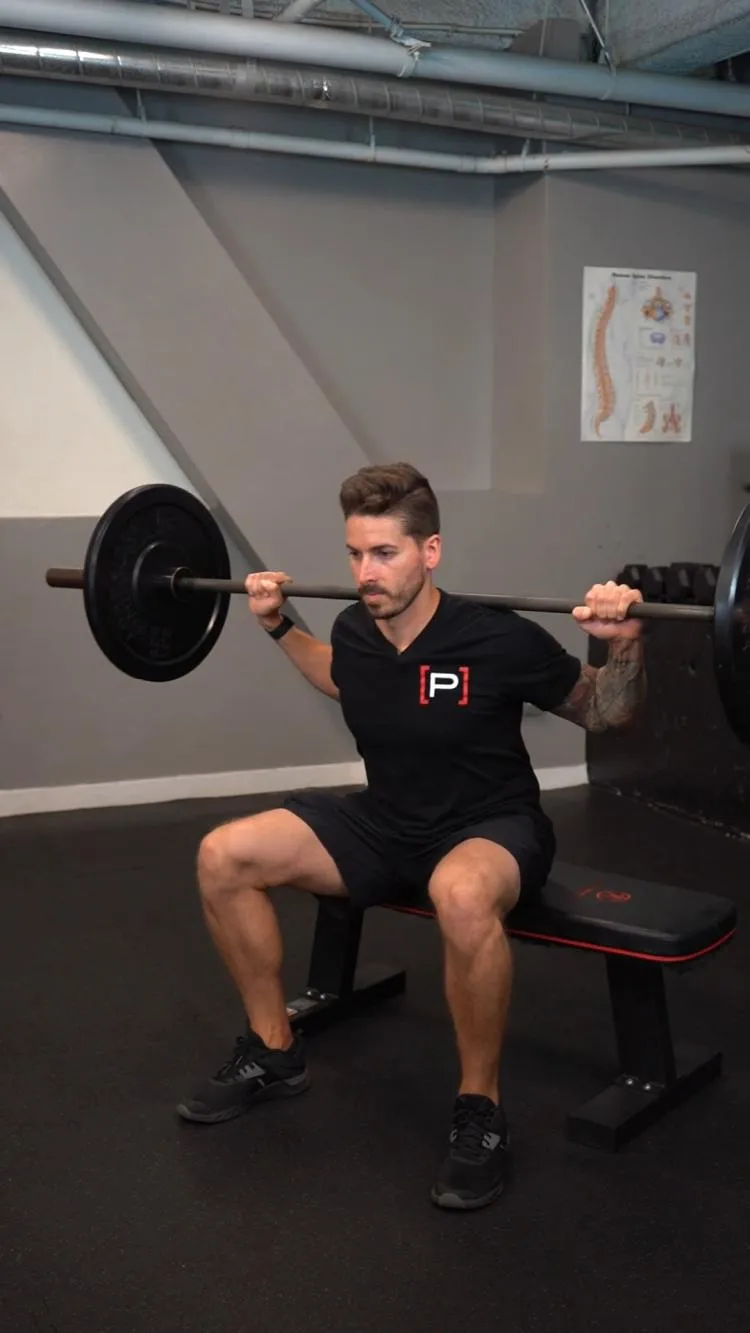
Box Back Squat - Barbell
View exercise instructions
- HOW: Position an elevated surface behind you as a length where you would be able to sit down without looking back. Position a barbell on your upper traps with both hands next to your shoulders holding onto the ball. Place your feet in a comfortable position about shoulder width apart. From this position, bend your knees and start to hinge forward at your waist while keeping your chest up. Touch your glutes to the elevated surface, and then push into the ground bringing your body back up and returning back to the starting position.
- FEEL: You should feel the muscles in your lower body working.
- COMPENSATION: Keep your chest up, don’t slouch forward. Keep the bar centered on your upper back/traps, don’t let it move. Don’t flop down onto the elevated surface, stay in control of the weight and your body at all times.
Main Muscles Worked: Quads, glutes, hamstrings, lower back, and core.
Demands on the Body: Back squats are the classic squat form with the barbell placed across the upper traps. They require adequate hip and ankle mobility and engage the entire lower body.

Why you should back squat: It provides a comprehensive and time saving workout for the entire lower body. Back squats have a significant carryover to other strength exercises like deadlifts, power cleans, and lunges. The strength and mobility gained from back squats can lead to improvements in these and other compound movements. Back squats not only work the muscles but also place a healthy stress on the bones and joints. This can lead to increased bone density and promote joint health, which is beneficial for overall long-term well-being.
Suitability: Versatile enough for beginners to advanced lifters, with variations in stance and depth to match the individual’s skill level.
Goblet Squats
Exercise 03 of 05
Exercise demonstration
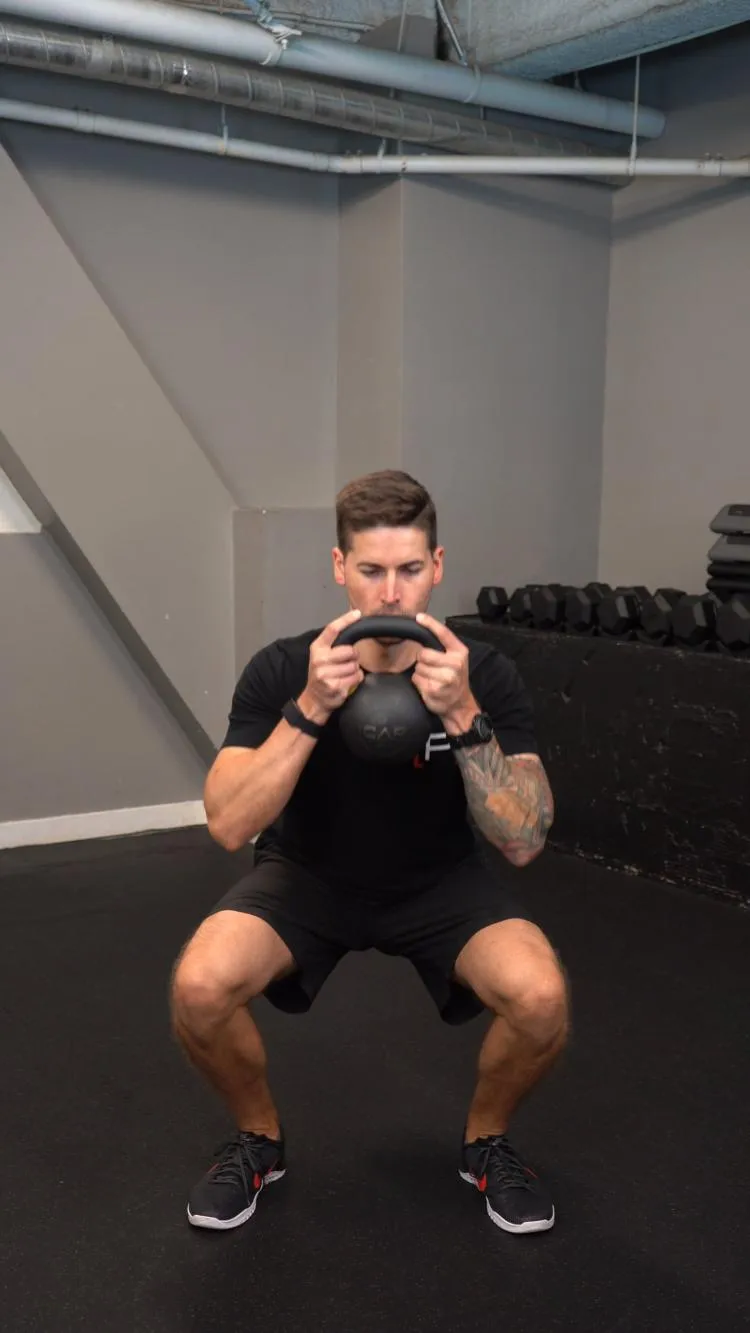
Goblet Squat - Kettlebell
View exercise instructions
- HOW: Hold a kettlebell by the bell or the handles and keep it close to your chest as best as you can. Keep your shoulders lined up over your knees and ankles. Perform a squat while maintaining good form throughout your upper and lower body.
- FEEL: This should primarily be a leg workout as well as an upper-body workout as the KB gets heavier.
- COMPENSATION: Do not bend or arch your back excessively, do not lose form.
Muscles Worked: Quads, glutes, hamstrings, upper back, and core.
Demands on the Body: Goblet squats involve holding a kettlebell or dumbbell close to the chest. This variation teaches proper squat form and helps in maintaining an upright torso. It's often used as a teaching tool for learning how to front squat.
Why you should goblet squat: The goblet squat is simple and accessible, which makes it ideal for home workouts or crowded gym environments since it doesn't require a barbell or squat rack. By holding the weight close to the chest, it helps maintain an upright torso, making it easier to learn the correct squatting technique. It's often used as a teaching tool for those new to squatting. The goblet squat can be a beneficial exercise for developing ankle, hip, and thoracic mobility. The weight held at chest level acts as a counterbalance, allowing many individuals to achieve greater squat depth, thus improving mobility. Similar to front squats, goblet squats place less compressive stress on the spine due to the weight being held at chest level. This can be a gentle option for those with back concerns or those looking to minimize the risk of back strain.
Suitability: Excellent for beginners and those working on squat form.
Heels Elevated Squats
Exercise 04 of 05
Exercise demonstration
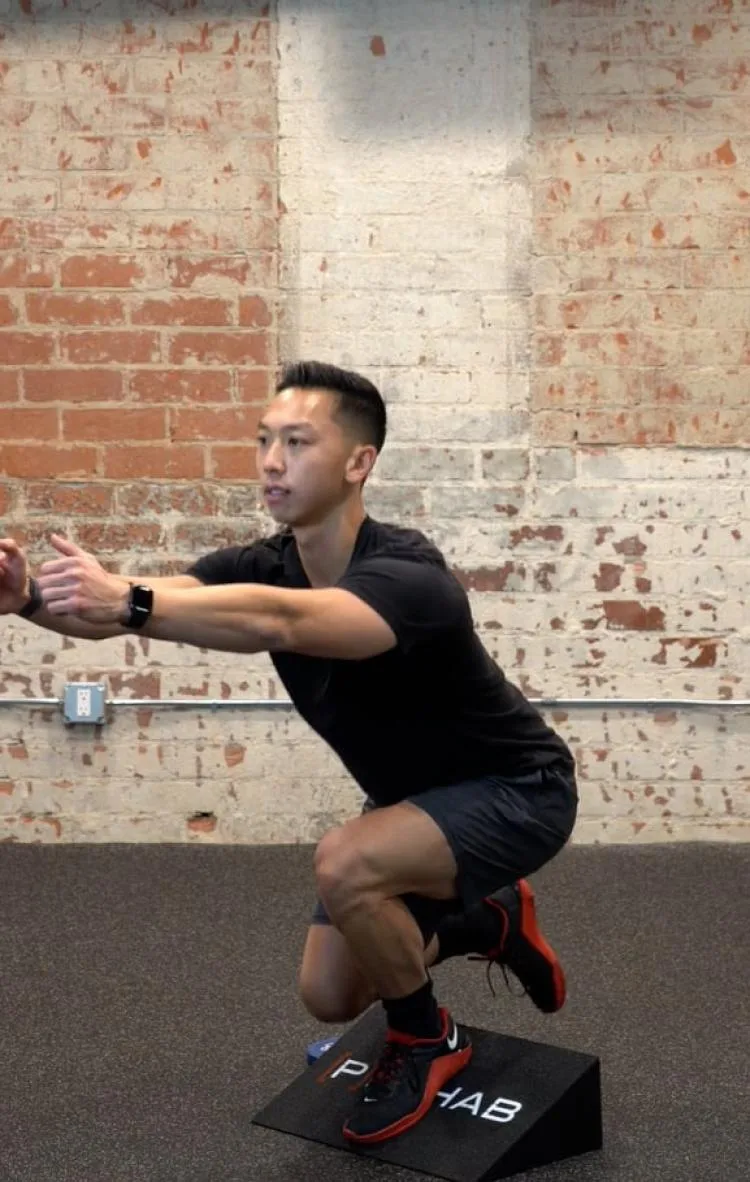
Single Leg Squat - Heel Elevated
View exercise instructions
Muscles Worked: Quads, glutes, upper back, and core.
Demands on the Body: Elevating the heels shifts the focus more onto the quads and allows for greater depth. It can also ease the mobility requirements of the ankles.
Learn how using a heel lift may be beneficial for you in the early stages of squatting if lacking the necessary ankle mobility in this YouTube video!
Why you should squat with heels elevated: By elevating the heels, the angle of the shin relative to the floor increases, shifting more emphasis onto the quadriceps. Heel elevation reduces the ankle mobility required to achieve deep squat positions. If you struggle with ankle flexibility or mobility restrictions, elevating the heels can allow you to reach greater squat depth, engaging the lower body muscles more effectively. Heel elevation can be done with a small wedge, weight plates, or specialized squat shoes. This makes it easy to integrate heel-raised squats into your strength training plan.
Suitability: Useful for those looking to target the quads specifically, from beginners to advanced lifters.
Box Squats
Exercise 05 of 05
Exercise demonstration
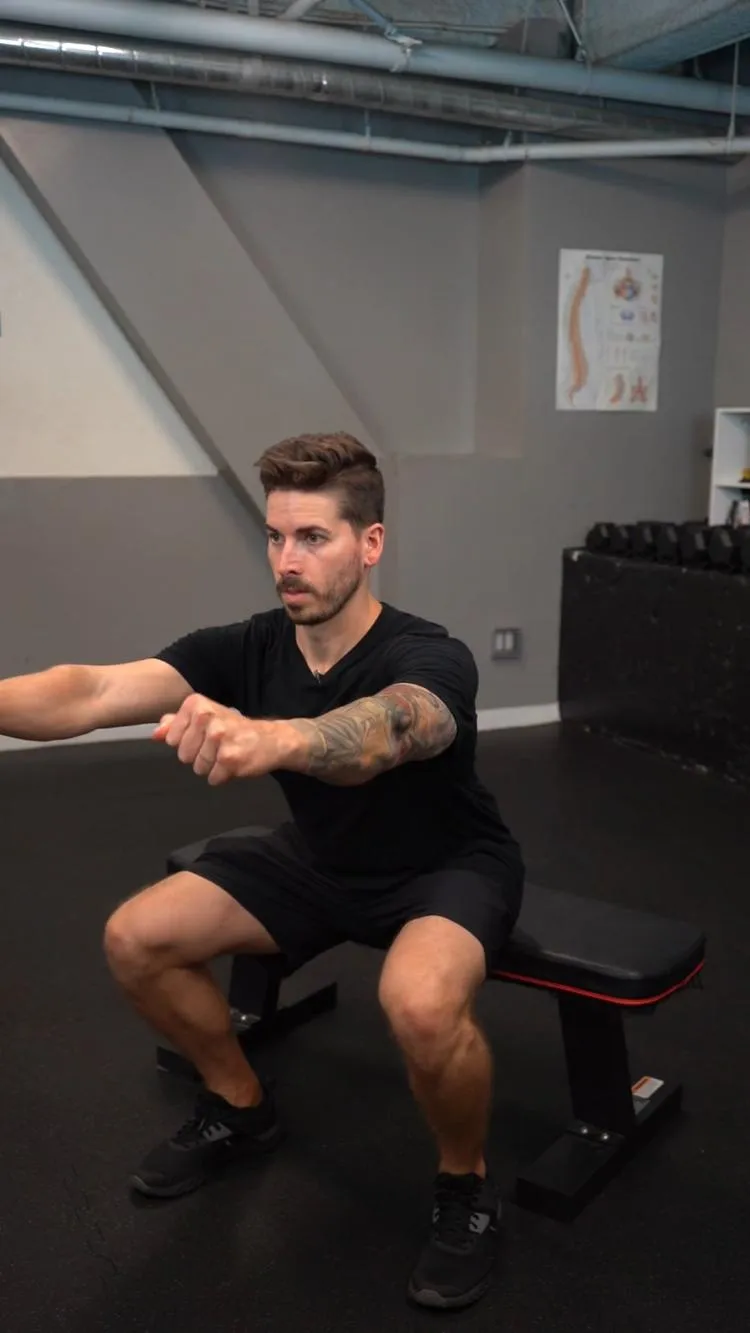
Box Squat
View exercise instructions
- HOW: Position an elevated surface behind you as a length where you would be able to sit down without looking back. Place your feet in a comfortable position about shoulder width apartFrom this position, bend your knees and start to hinge forward at your waist while keeping your chest up. Touch your glutes to the elevated surface, and then push into the ground bringing your body back up and returning back to the starting position.
- FEEL: You should feel the muscles in your lower body working.
- COMPENSATION: Keep your chest up, don’t slouch forward. Don’t flop down onto the elevated surface, stay in control of the weight and your body at all times.
Muscles Worked: Glutes, hamstrings, lower back, and core.
Demands on the Body: Box squats involve squatting down to a box or bench, pausing, and then rising. This variation builds explosive power and emphasizes the posterior chain.
LISTEN: HOW DEEP SHOULD YOU SQUAT TO PREVENT INJURY?

Why you should box squat: Box squats shift the emphasis towards the muscles of the posterior chain, including the glutes, hamstrings, and lower back. This occurs because you must sit back further than in a regular squat, engaging these muscles to a higher degree. If you want to strengthen and develop the posterior chain, box squats can be a key exercise. The box provides a physical cue helping you learn to control and improve your form at the bottom of the squat. By pausing on the box, you can focus on maintaining tightness and proper alignment, which can translate to better control and strength in the bottom phase of a traditional squat. Pausing on the box also eliminates the stretch reflex which requires you to generate power from a dead stop. This can enhance explosive strength and is particularly useful for athletes and powerlifters looking to improve performance in this area.
Suitability: Great for powerlifters and those looking to build strength in the glutes and hamstrings. Suitable for intermediate to advanced lifters.
LEARN MORE ABOUT OUR FITNESS FUNDAMENTALS PROGRAM
Different Types of Squats and Why to Do Each - Closing Thoughts
- The front squat is a great option for those who want to build strength for other exercises like the clean.
- The back squat provides a comprehensive and time saving workout for the entire lower body.
- The goblet squat teaches proper squat form and helps in maintaining an upright torso.
- Heels elevated squats shifts the focus more onto the quads and allows for greater mobility at the hips and ankles.
- Box squats build explosive power and emphasizes the muscles of the posterior chain.
About The Author
Ryan Nosak, MS, CSCS, SCCC
Prehab Writer & Content Creator
 Ryan was born and raised in Throop, Pennsylvania and he has worked in the world of fitness since he was 15 years old. Ryan realized he had a deep affinity for strength training and how it can alter the human mind, body, and spirit. He began his coaching career in high school by coaching his friends through strength training sessions, which inspired him to pursue a career in strength and conditioning.
Ryan spent 10 years as a Division 1 strength and conditioning coach with stops along the way at Penn State, Tennessee State, Vanderbilt, Robert Morris, Charlotte, and DePaul. He is a Certified Strength and Conditioning Specialist and operates his own training practice, RyNo Strength, out of Studio DelCorpo in Chicago, IL. He specializes in fat loss, body composition, strength, and sports performance training programs.
Ryan received his Bachelor’s Degree in Kinesiology from Penn State and a Master’s in Sport Management from Western Carolina University. In his free time, Ryan enjoys training for bodybuilding, eating at amazing restaurants in Chicago, and spending time with his wife and dog.