


On this page 11 sections
Your guide
What you'll learn
If you spend an afternoon at your local gym long enough, you will inevitably see someone deadlifting in a way that could make your own back hurt! Chances are, you may have even strained your low back trying to master this complex exercise. Yet, you’ve also heard the deadlift being praised as the best exercise for maintaining a strong and healthy back. So, which is it? Is the deadlift the problem or the solution to your back pain? In this article, you’ll learn how the deadlift exercise can help you to overcome back pain, how to perform proper deadlifting with back pain, as well as some key measures supported by research that you can use to evaluate when you are ready to deadlift after a back injury!
Why Is Deadlifting Important?
More than just a common gym exercise, the deadlift is an integral part of daily life. If you’ve ever squatted down to pick up your kids, you’ve deadlifted! If you’ve rearranged the furniture in your house, you’ve deadlifted! If you’ve brought in a heavy package from Amazon, you’ve deadlifted!
Thus, if you want to get back to a full life after a back injury, deadlifting with back pain is likely going to be a part of the road to get there. Deadlift training can be the solution to your back problem if you follow some basic principles discovered by scientific research. This article will highlight when you can start to deadlift with back pain, the best deadlift variations after a back injury, and some awesome complementary exercises to battle-ready you back to the gym and for life!
What Should I Do?
First and foremost, you are not alone, back pain is the leading cause of disability in the world today.1 Research estimate that up to 80% of people will experience an episode of low back pain at some point in their life.2
While back issues can have a wide variety of presentations, the majority of the time the primary symptom is pain. Whether this pain is just in your back or extends down into your leg, the sooner you can get moving, the better. Simply put, MOTION IS LOTION!
While you may not feel like getting out of bed, finding a comfortable range of motion and continuing to move in that range is crucial for limiting the negative effects of an acute back injury.
Learn The Principles of Deadlifts and Other Functional Movements

Are you looking for a solution to your low back pain? Tired of not being able to perform a deadlift movement, sit during long car rides, and sleep comfortably? No matter how long you have suffered from back issues, it is never too late to start feeling better.
Quick Note on Safety
One note on safety: in rare cases, a low back injury can be accompanied by bowel and bladder changes as well as significant changes in the strength, sensation, or reflexes of your lower extremities. If you have any or all of these symptoms you should seek a consultation with a healthcare professional.
In all of the above cases, the key is to focus on what you can do, and do it! Rather than focusing on your pain and limitations.
So When Can I Start Deadlifting With Back Pain?
Fortunately, a research study in Sweden sought to answer the exact question of which people with back pain would benefit from deadlift training.3 They identified two criteria for those who would benefit from deadlifting with back pain, which you can easily assess on your own:
- Patients with pain severity less than a score of 60 on a scale of 1-100.
- Patients with a score of greater than 60 seconds on the Biering-Sørensen test of hip and back extensor endurance.
Essentially, if your back pain allows you to, and your low back muscles are strong enough to support you during the movement, you not only CAN deadlift with back pain, but you SHOULD deadlift with back pain! The participants in this study who met the above criteria had significant improvements in pain, strength, and functional abilities from 1-2 deadlifting training sessions/week for 8 weeks.
How To Lift Weights Around Back Pain
How To Test Yourself If You're Ready To Deadlift With Back Pain: The Biering-Sørensen Test
A modification of the Biering-Sørensen test can easily be performed on a table with a partner or in the gym using a Glute Ham Developer (GHD) machine. The test is designed to assess the endurance of your posterior chain by using your glutes, hamstrings, and low back muscles to hold your unsupported upper body in a neutral position. In this context, the goal would be to hold the position for > 60 seconds to fit the criteria to benefit from barbell deadlifting with back pain. Watch the videos below for a more detailed explanation:
Exercise 01 of 06
Exercise demonstration
Sorenson Test

View exercise instructions
HOW: Begin this exercise by laying on your stomach with your shoulders and mid back hanging off the edge and your legs serving as an anchor to the elevated surface. With your arms crossed across your chest, use your back muscles to lift your mid back and shoulders up towards the ceiling ending with your hips and mid back in a straight line. Hold for the prescribed amount of time.
- FEEL: You will feel the muscles of your leg as well as your low and mid back working to keep your chest up and in line with your hips.
- COMPENSATION: Avoid lifting your torso too high up, the goal here is to have your torso in line with your hips staying parallel to the floor.
Exercise 02 of 06
Exercise demonstration
Modified Biering-Sørensen test on GHD
What If It Still Hurts While I Am deadlifting?
While this may come as a surprise, participants in this study were successful despite being instructed to continue deadlifting with back pain. As long as the pain did not exceed the level of 5/10, did not continue after a set was complete, and the proper form was maintained; they were given the green light! This is a major point! These subjects had massive improvements, despite being allowed to continue deadlifting with back pain.
Now, this is not an instruction to continue deadlifting through worsening back pain. Rather, it is an important illustration of the fact that, as you train your back for the stresses of a fully functional life, you may feel some discomfort and that is OKAY! As physical therapists, our goal is to decrease a patient’s pain and improve their function. Unfortunately, we can sometimes spend too much time focusing on decreasing pain that we fail to return a patient to their full functional capabilities due to fear of pain or discomfort. This is especially true when it comes to low back pain, where the effects can be so debilitating. However, this study is a good reminder that focusing on improving your strength, form, and functional abilities will more than likely address your pain along the way!
Proper Deadlift technique
To see the same benefits as the participants in the study when deadlifting with back pain, proper form is crucial! To achieve this, you must start with a weight that will allow you to maintain proper form. Participants in this study started with weights of 20-45lbs. The most critical form aspect is to maintain a neutral spine throughout the motion. This is accomplished by keeping a flat lower back and taking care to avoid excessively rounding or arching your low back. In addition to the proper technique, it is very important to perform a proper warmup to ensure your body is ready to meet the demands of the task you are about to perform. This is not only applicable to deadlifting, but any activity you may perform related to exercise, including running, squatting, jumping, and so forth. We have a previous blog article where Mike takes us through the deadlift warmup essentials that you can read below with included videos!

What if I don’t fit the criteria?
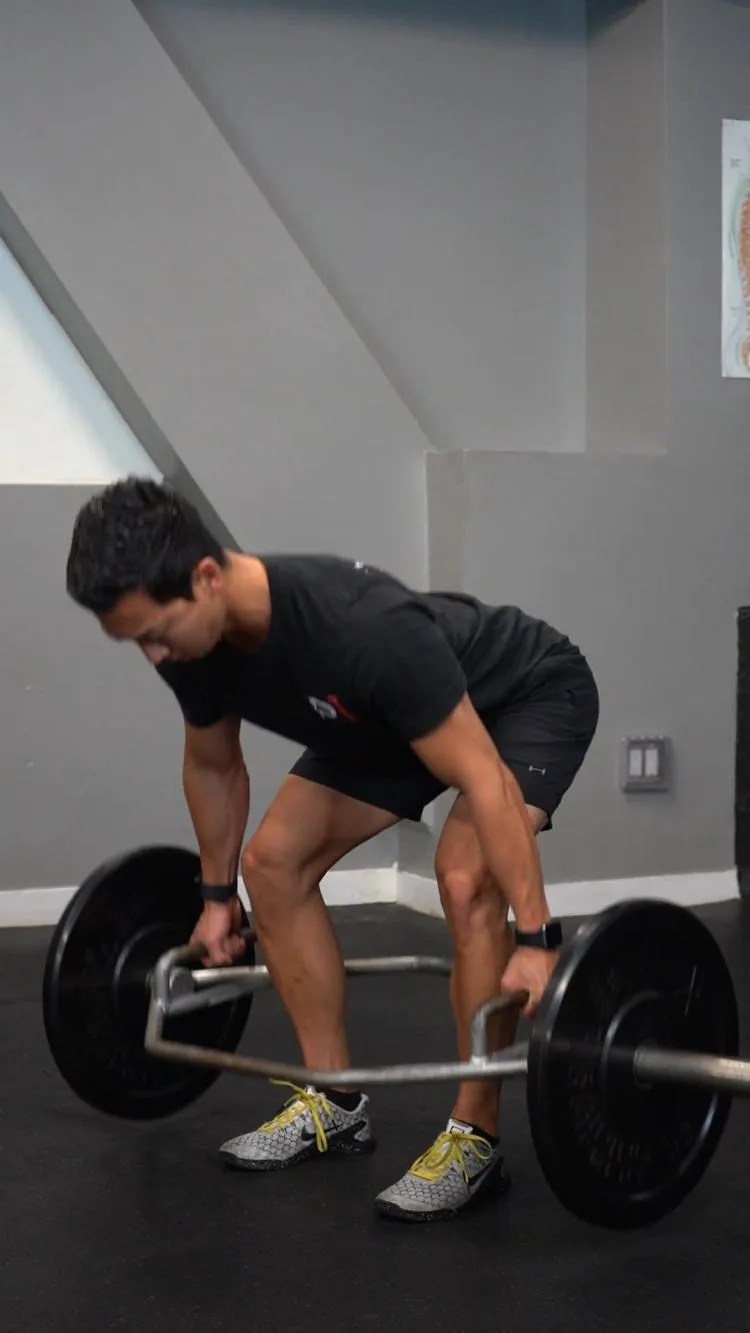
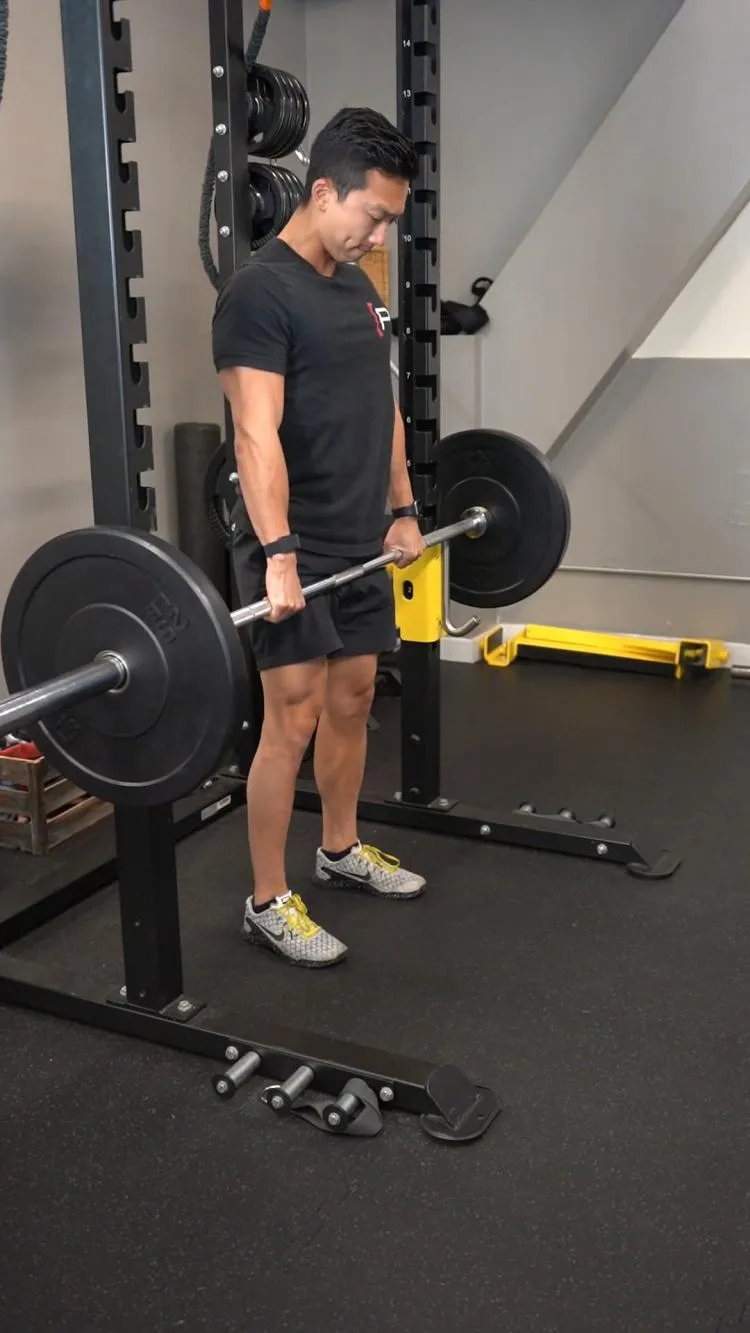
The criteria described above are for barbell deadlifting with back pain. However, if you do not yet meet these criteria, you may find success with other deadlifting techniques. One excellent option is the hex bar deadlift! An EMG study evaluating the difference in muscle activation between barbell and hex bar deadlifting found that using the hex bar required significantly less activation of the muscles of your low back.4 Thus if you haven’t developed the strength to reach 60 seconds on the Sorensen test, you might want to try the Hex bar in the meantime! Additionally, deadlifting from an elevated surface, such as blocks, shortens the range of motion required. Thus, this can make it easier to maintain a neutral spine at the bottom of the motion. The videos below describe the proper technique for the hex bar deadlift and barbell deadlift off of blocks:
Exercise 03 of 06
Exercise demonstration
Deadlift - Hex Bar
View exercise instructions
- HOW: Inside the hex bar, find your “power stance” with your feet shoulder width apart. Grab the bar in the middle of each handle. Slightly bend your knees, chest up, and pull the bar up by pushing into the ground and squeezing your hips at the top.
- FEEL: You should feel your glutes, hamstrings, and low back working.
- COMPENSATION: Keep your back flat, don’t arch it. Control the weight going up and down.
Exercise 04 of 06
Exercise demonstration
Rack Pull Deadlift
View exercise instructions
- HOW: Inside the rack machine, place the barbell just above knee height (or whatever height is prescribed). Find your “power stance”, or the stance you would set up in if you were told to jump as high as you can. This is your starting position. Drive your feet into the ground and “spread the ground”. Hinge at the hips and pull the slack out of the bar and then lift the barbell using your hips and back.
- FEEL: You should feel all the muscles in your legs working, especially the muscles in your hips and middle back.. Your back muscles will be working, but you shouldn’t feel like you are lifting with just your back. Squeeze your glutes at the top of the lift.
- COMPENSATION: Keep your back flat as you pull the weight up, don’t arch it. Make sure your feet stay flat on the ground.
What Else Can I Do To Strengthen My Low Back?
Whether you are using a hex bar or barbell to deadlift with back pain, or you want to work to meet the criteria to start deadlifting after a back injury, there are a number of other exercises that will strengthen and prepare your back for this complex movement.
LISTEN: DEADLIFTING AND SPINAL FLEXION - Is This Good or Bad?

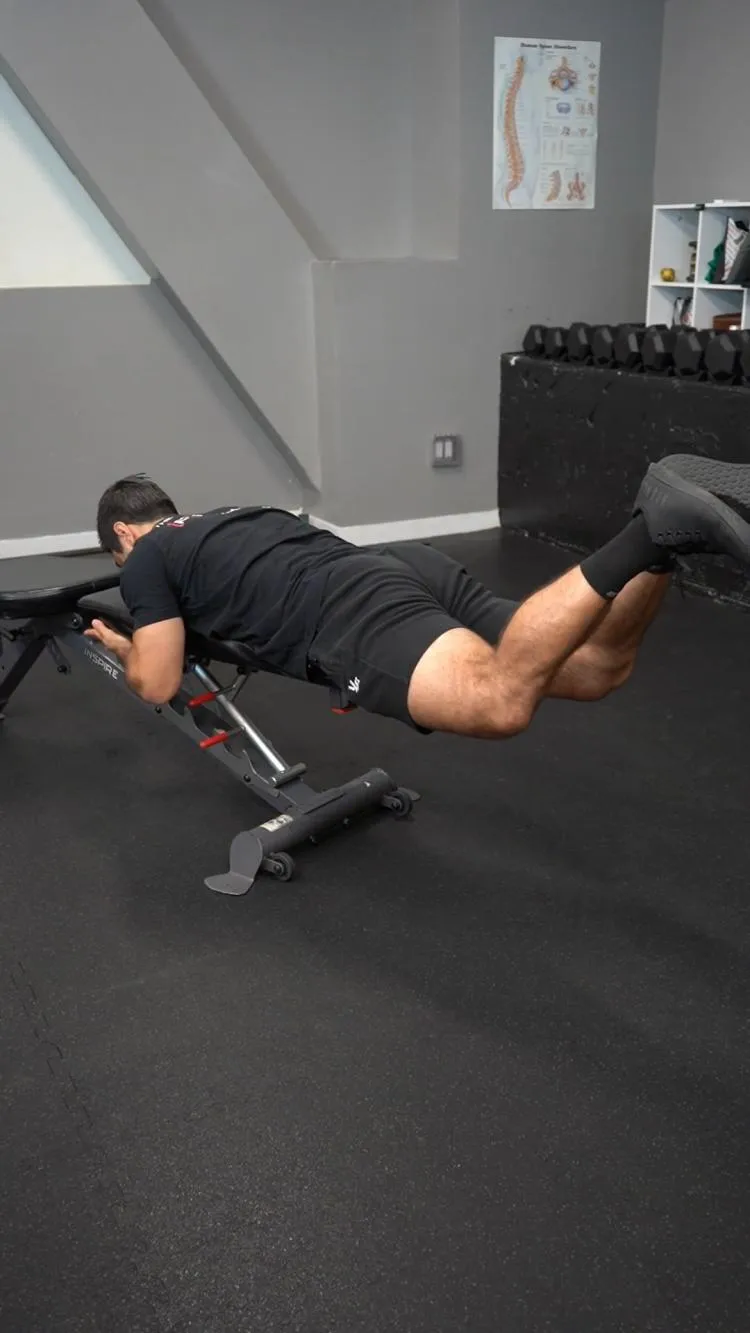
The research described above is pretty clear that a strong low back (as measured by the Sorensen test) can help you get out of pain and get moving again. Despite this, many people are still afraid to directly train their low back muscles. Just like any other muscle in your body, if you want to strengthen the muscles of your low back, known as the lumbar paraspinals, then you should train them directly! While the resulting soreness of these muscles may seem like cause for concern, just as you expect some soreness in your quads after a hard leg workout, you can expect your lumbar paraspinals to be sore after a hard workout! The exercises below are two of my favorites for directly training the lumbar paraspinals.
Exercise 05 of 06
Exercise demonstration
Reverse Hyperextension
View exercise instructions
- HOW: Start by lying face down on a stable surface. Slide your hips off of the table or bench. The front of your hips should be on the edge of the surface. Stabilize your upper body with your arms. Put your legs together and squeeze your glutes to bring your legs up and back down in a slow and controlled motion.
- FEEL: You should feel your glute muscles working.
- COMPENSATION: Don’t use your back too much, do not arch it as you bring your legs up.
Exercise 06 of 06
Exercise demonstration
Romanian Chair Back Extension

View exercise instructions
Furthermore, learning to control and isolate your pelvic motion can help both to improve your low back pain and to help you maintain proper form during a deadlift.5
Finally, building a strong core provides support for your low back during both weightlifting and activities of daily living:
Closing Thoughts
In summary, the deadlift is an awesome exercise that builds the muscles of your glutes, quads, core, and low back. Deadlift training can be an effective way to decrease back pain and prepare you for the rigors of everyday life. To begin traditional barbell deadlifting after a back injury, you should have pain of less than 60/100 and enough strength in your lumbar paraspinals to support you during the movement, measured by a score of >60 seconds on the Sorensen test. If your lumbar paraspinals are not ready to deadlift using a barbell; hex bar deadlifting or deadlifting off an elevated surface may provide effective alternatives that reduce the stress on your low back. Whether used as a progression toward deadlifting or as supplemental exercises, direct lumbar paraspinal strengthening, lumbopelvic disassociation training, and core stability exercises can help you to continue activities you love and decrease your risk for further injury. Focus on what you can do, rather than what your pain prevents you from doing, and keep moving!
Take Control of Your Low Back Health
The low back is the centerpiece of our movement foundation and is the most adaptable and resilient area of the movement system. Since it takes on so many responsibilities it can at times become overwhelmed and request a change be made. Those requests tend to say: "Can you use your hips more?" and "Can you build up more core strength for this activity?" After this program, your back will be happy to know that these requests have been attended to!
REFERENCES
- Hurwitz EL, Randhawa K, Yu H, Côté P, Haldeman S. The Global Spine Care Initiative: a summary of the global burden of low back and neck pain studies. Eur Spine J. 2018;27(Suppl 6):796-801.
- Rubin DI. Epidemiology and risk factors for spine pain. Neurol Clin. 2007;25(2):353-71.
- Berglund L, Aasa B, Hellqvist J, Michaelson P, Aasa U. Which Patients With Low Back Pain Benefit From Deadlift Training?. J Strength Cond Res. 2015;29(7):1803-11.
- Camara KD, Coburn JW, Dunnick DD, Brown LE, Galpin AJ, Costa PB. An Examination of Muscle Activation and Power Characteristics While Performing the Deadlift Exercise With Straight and Hexagonal Barbells. J Strength Cond Res. 2016;30(5):1183-8.
- Aasa B, Berglund L, Michaelson P, Aasa U. Individualized low-load motor control exercises and education versus a high-load lifting exercise and education to improve activity, pain intensity, and physical performance in patients with low back pain: a randomized controlled trial. J Orthop Sports Phys Ther. 2015;45(2):77-85, B1-4.