


On this page 6 sections
Your guide
What you'll learn
When you hear the word ‘spur’, does your mind go to that funny looking object on the heel portion of cowboy boots? Well with or without fancy cowboy (or cowgirl) boots, our body can develop ‘spurs’ of its own, especially in our heel area. These are called calcaneal (or heel) spurs, and they can be very painful and uncomfortable indeed. They can limit our ability to walk, run, or perform our favorite activities, or even wear our favorite shoes. In this article, we will discuss the ins and outs of heel spurs, plus what you can do to combat them!
What is a Heel Spur?
A heel spur is a calcified bony growth on the underside of the foot, where the heel bone meets the thick tissue running along the bottom of our foot, known as the plantar fascia. The plantar fascia assists us with natural arch support of the foot, and when this tissue experiences repetitive stress over time at a load it can't support, heel spurs can start to develop as our body’s natural protection. Unfortunately, these can become very painful, irritated, and inflamed and cause us to seek out medical attention for our heel pain.
Heel spurs and plantar fasciitis (a chronic inflammation of the plantar fascia) can look and feel very similar. People with plantar fasciitis often experience heel pain, which can make accurate diagnosis a bit confusing. Most heel spurs are diagnosed with a plain x-ray to confirm their presence, and it is not uncommon for the two diagnoses to exist together. Other foot conditions should be ruled out such as tarsal tunnel syndrome, stress fractures, and bursitis.
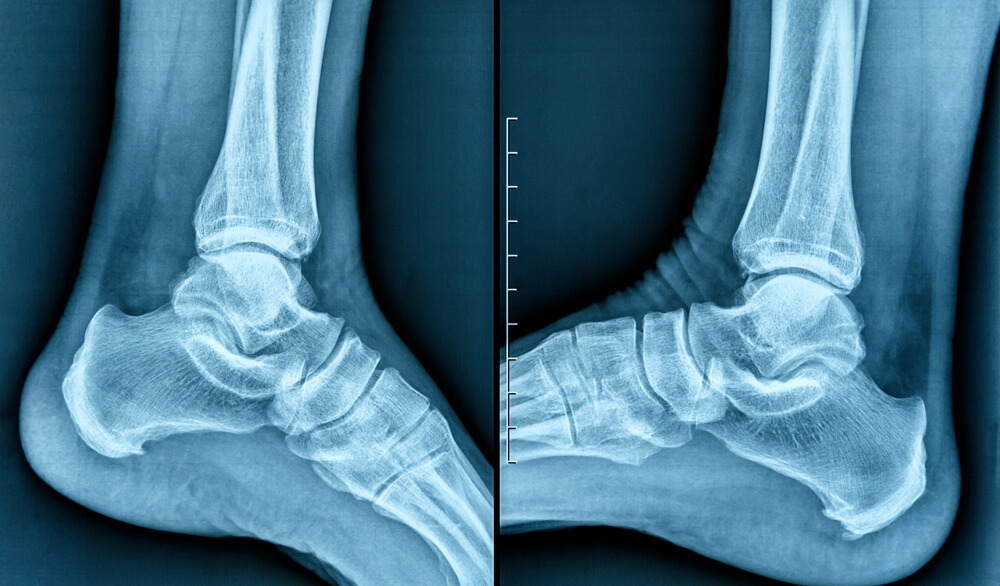
What Causes Heel Spurs?
There can be several risk factors for developing a heel spur. Most of these risk factors involve activities with repeated jumping, walking, standing, or chronic stress on the heel and/or plantar fascia. Some of these risk factors include:
- Jogging and running
- Jumping sports or activities
- Inadequate heel or arch supports
- Chronic improper or ill-fitting shoe use
- Obesity
- Repetitive activities or an injury
- Underlying medical conditions including rheumatoid arthritis and gout

In professions such as hairdressing and teaching, people stand for several hours a day. This can increase the risk for heel spurring, especially with poor choice of footwear. One study done in 2022 found that out of 141 teachers studied, 56% of them had painful presence of heel spurs. (1)
As we age, our plantar fascia becomes increasingly stiff, which can also put us at more risk for the incidence of heel spurs. We also naturally lose the protective fat pad in our foot which helps with balance and stability over uneven surfaces. We can’t avoid aging, however, we can help improve our tissue extensibility with a good stretching program and regular movement!

How do I improve my pain from heel spurs?
Most often, conservative treatment is recommended for heel spurs. This can look many different ways depending on the severity of the pain, but some conservative treatments that are most often recommended are:
- Ice/cryotherapy
- Custom or non-custom shoe orthotics
- Changing footwear to something more supportive
- Avoiding or lessening the provoking activity for some time
- Stretching and strengthening exercises (through PT of course!)
- Anti-inflammatory medication
- Pain management injections
LISTEN: HOW DO YOU PICK THE RIGHT RUNNING SHOES?

It is also very important to identify some of the root issues that could be causing your pain. For example, are you running many miles a week? Or have a sudden increase in mileage? Do you play a sport that involves jumping? Wear high heels or tight-fitting shoes to work every day? Stand for the vast majority of your day? All of these could be contributing to your pain, and it is important to find ways to modify these activities to try and reduce stress and strain on your heel or foot during the early stages of rehab.
A study by Wolgin and colleagues supported 12 conservative interventions to help improve foot and heel pain as it related to heel spurs (2). These treatments included all of the treatments listed above as well as: extracorporeal shock wave therapy, heel cups, night splints, and kinesiotaping. Additionally, a case study done in 2024 for a patient with bilateral heel pain strongly supported the use of physical therapy incorporating regular use of manual techniques to help improve pain caused by heel spurs (3).
GET STARTED WITH OUR FOOT AND ANKLE REHAB & PREHAB PROGRAMS
What are some exercises I can do to control my heel spur pain?
Exercise, including proper amounts of stretching and strengthening, is supported by the research to help improve pain caused by heel spurs. What exercises can you do, you ask? You’ve come to the right place to find out! This is by no means an all-inclusive list, but listed are a few simple exercises to help you get started to be able to walk without pain again!
Exercise 01 of 04
Exercise demonstration
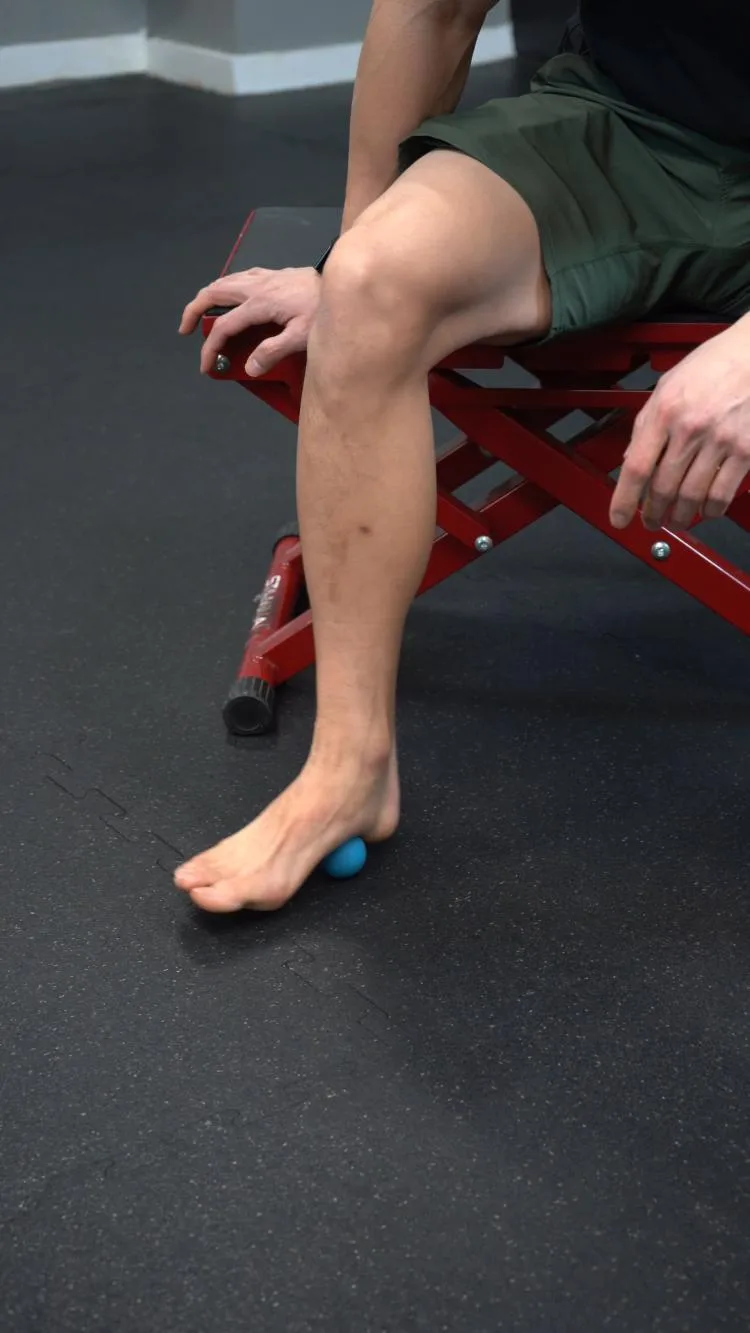
Foot Plantar Surface Self Massage - Lacrosse Ball
View exercise instructions
- HOW: Get set up seated with a firm object that can roll back and forth positioned under your foot. Roll the object back and forth along your arch from the base of your heel bone to the balls of your feet. Apply your desired level of pressure that you can tolerate, however don't cause intolerable pain. You can roll it back and forth, side-to-side, or change the angle as desired and work on any area that you want along the bottom surface of your foot.
- FEEL: This should feel like a massage and soft tissue work along the base of your foot.
- COMPENSATION: Follow along with the video for tips and other instructions.
Exercise 02 of 04
Exercise demonstration
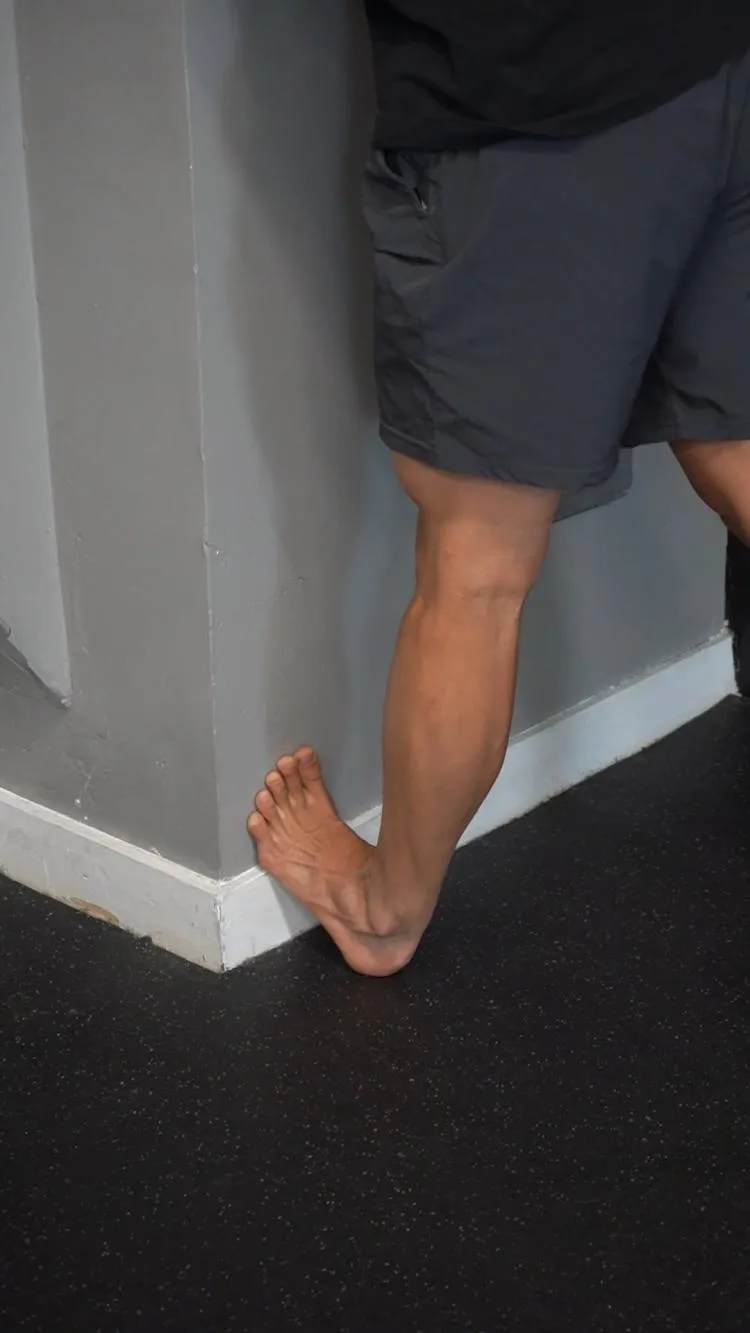
Foot On Wall Calf Stretch - Dynamic
View exercise instructions
- HOW: Standing with a wall in front of you, place the balls of your feet on the wall with one foot. Keep the knee straight as you lean forwards and backwards. Hold each stretch for a few seconds and repeat.
- FEEL: You should feel a stretch in your ankle. You should also feel your lower leg muscles working.
- COMPENSATION: Keep the knee straight, don’t bend it.
The two exercises above are solid starting points to address the mobility of the calf muscles as well as the muscles and tissue such as the plantar fascia on the bottom of the foot. It's important to keep this tissue moving to decrease joint stiffness which could lead to tissue tightness and increased discomfort.
Exercise 03 of 04
Exercise demonstration
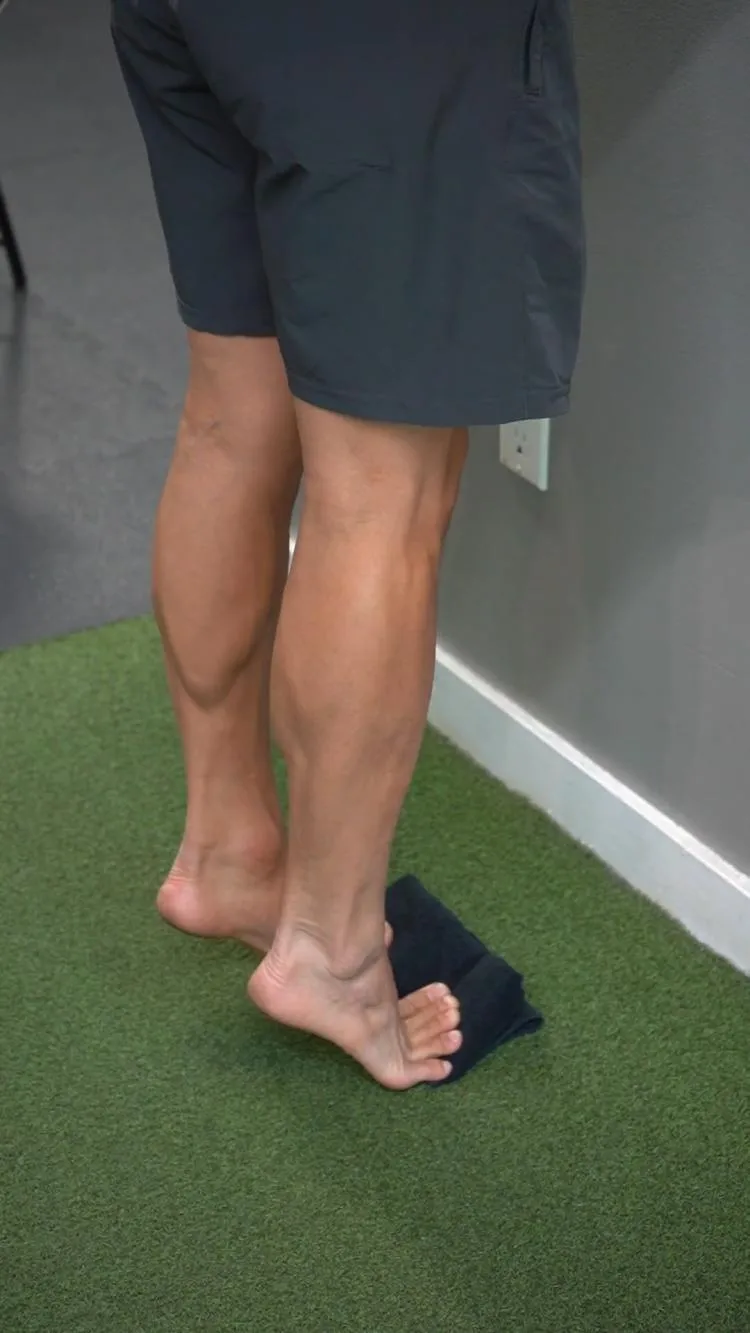
Heel Raise - Big Toe Extension
View exercise instructions
- HOW: Place a folded towel on the ground in front of you. Position both of your big toes on the towel with the balls of your feet still on the ground. Use a wall for balance support as you keep your knees straight and raise your heels off of the ground with your toes pushing into the towel.
- FEEL: You should feel a stretch in the bottom of your big toe and underneath your foot.
- COMPENSATION: Keep your big toe on the towel, not all of your foot. Keep your knee straight when raising your heel.
Exercise 04 of 04
Exercise demonstration
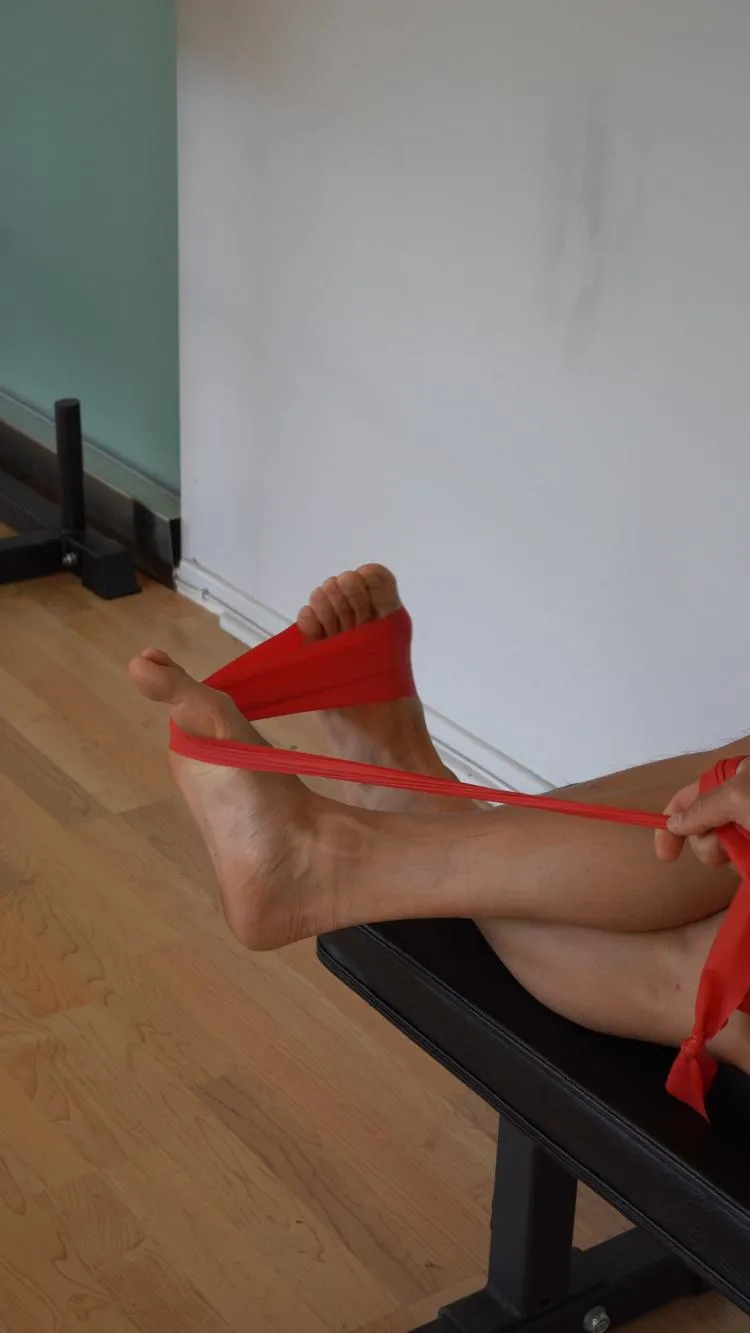
Ankle Inversion - Band
View exercise instructions
- HOW: Place a resistance band around your forefoot. Use your other foot to apply a line of resistance that is to the outside of your working ankle (shown in the video). You will have to cross you opposite leg on top of your working leg. Slowly push your ankle inwards. Imagine you are a car windshield wiper cleaning just the inside of the window. Slowly return back to the starting position.
- FEEL: You should feel the muscles on the inside part of your calf working as you move your foot away from you.
- COMPENSATION: Do not let the band pull your foot back into the starting position. Slowly bring your foot back in and fight the resistance of the band.
Now it's time to strengthen! We want to be sure that the muscles on the bottom of our feet as well as the supporting musculature of the lower extremity have the strength needed to tackle everyday tasks such as walking, standing, running, or jumping-related tasks!
Closing Thoughts
If you are experiencing heel pain caused by spurs, you are not alone. Heel spurs are very common and very painful. However, they can be improved significantly by being proactive with a good stretching and strengthening program as well as other conservative treatments as discussed. We hope some of these exercises get you started on your healing journey and back to the activities you love!
References
- Nawaz, A., Khan, U., Zaheer, A., & Shahzadi, A. (2022). PREVALENCE OF HEEL SPUR IN TEACHERS. Pakistan Journal of Physical Therapy (PJPT), 5(1). https://doi.org/10.52229/pjpt.v5i1.1667
- Landorf KB. Plantar heel pain and plantar fasciitis. BMJ Clin Evid. 2015 Nov 25;2015:1111. PMID: 26609884; PMCID: PMC4661045.
- 2024 Boob et al. Cureus 16(4): e57524. DOI 10.7759/cureus.57524
Taryn Beaumont, PT, DPT, CLT, CF-L1, CNC
Prehab Writer & Content Creator
 Taryn was born and raised in Maine and still resides there with her fiancé and son. Taryn received her Doctorate in Physical Therapy from Husson University in 2010, and also carries a Bachelor's in Kinesiology and Human Movement Science. She is a Certified Lymphedema Therapist, a Certified Crossfit Level 2 Trainer, and a NASM Certified Nutrition Coach. Taryn has 12+ years of experience in many different realms of PT, from the young athlete to the geriatric patient. Most recently she is employed with a home health PT company and is working toward her Advanced Competency in Home Health. Taryn considers herself a ‘lifelong learner’. She has special interests in oncology care and breast health, dry needling, and CrossFit training. In her free time, Taryn enjoys fitness, spending time with her family, continuing education, writing, and reading, and is very excited to be a part of The Prehab team to educate and empower others to take control of their health and wellness.