

On this page 5 sections
Your guide
What you'll learn
A typical pregnancy is 280 days. That’s 280 days a woman has to anticipate the birth of her child and the beginning of a new chapter. Months of birthing classes, prenatal yoga, strength-specific workouts for pregnancy, pink and blue cupcakes and balloons, and preparation books galore! But who is talking about what to expect after the delivery of your baby?
Postpartum recovery can be joyful, challenging, awakening, hard, and inspiring.
For those moms out there who would like a bit of direction when it comes to returning to running during the postpartum journey, this blog is for you! We will discuss the benefits of exercise during postpartum, current return to run guidelines, and 5 ways to get YOU back to running postpartum.
Ready…set…but don’t go anywhere just yet! Let's learn 5 ways to get back to running postpartum!
Exercise During the Postpartum Period
Postpartum is defined as the period “immediately following birth and is often without a definitive end point” (1). Typically, a follow-up appointment with an individual’s OBGYN occurs at six weeks postpartum. From a medical standpoint, often the patient is told that their body is healing well, which can be misinterpreted for clearance to return to their previous level of activity unguided.
For some, the reintroduction of activity feels both mentally and physically achievable. However, many women struggle with fatigue, body dysmorphia, discouragement, and even postpartum depression (2). These barriers can make navigating exercise during postpartum very challenging, and many prefer to quickly jump back into running simply because they want to feel more like themselves.
READ: POST PARTUM EXERCISES

The good news is that physical activity is absolutely encouraged during the postpartum period. It can improve mood, reduce postpartum depression and anxiety, and improve cardiorespiratory fitness (2). However, despite all of these positive outcomes, many women do not partake in exercise postpartum due to a lack of clarity on what can be done.
In a study of women 7 weeks postpartum, only half reported the desire to know more about postpartum exercise and in another study looking at women who planned to exercise after delivery, only 15% stated that their doctor discussed postpartum exercise guidelines with them (1).LEARN MORE ABOUT OUR POSTPARTUM REHAB PROGRAM
Check out our 8-week Postpartum Rehab program through the Prehab App to get back to running confidently!
This needs to change! Growing a baby is a lot of work, and delivering a baby is a lot of work. Let’s remember that our postpartum moms are strong and capable and we can introduce safe exercise into the early stages and throughout postpartum.
We see you grabbing your shoes and getting ready to lace up. You go, mom.

“So…Can I Run?”
Well, let’s dive into the guidelines for returning to running first before saying “Ready, set, go for it!”.
The American College of Obstetrics and Gynecology encourages women with healthy, uncomplicated pregnancies to engage in at least 20 to 30 minutes of moderate physical activity most days of the week (3). These recommendations are encouraging and often welcomed postpartum, but the return to moderate physical activity, including running, is not always a linear path.
Pregnancy and childbirth are demanding on the body and secondary conditions seen with return to exercise postpartum can include musculoskeletal pain, stress urinary incontinence, and diastasis recti (DR) to simply name a few. (For a greater understanding of diastasis recti, see our blog on DR). While these conditions are extremely common during the postpartum period, they do not have to be a woman’s new normal! Working with a pelvic health physical therapist can assist in the management of any of these conditions. Often, an internal pelvic floor exam will determine if the pelvic floor has the strength and control to tolerate increased activity loads. Don’t worry, if there is work to be done, a pelvic health therapist can instruct you in exercises to improve the strength of this tissue.
Beyond isolated pelvic floor strength, a pelvic health therapist will assess the entire musculoskeletal system to determine one’s readiness to run. Recent guidelines encourage the assessment of the following movements and strength exercises before a return to run program (4):
Strength assessments x 20 reps each
- Single leg calf raise
- Single-leg bridge
- Single leg sit to stand
- Sidelying hip abduction
Impact assessments
- Walking 30 minutes
- 10-second single leg balance
- Single leg squat 10 reps
- Jog in place 1 minute
- Forward bounds 10 reps
- Single leg hop in place 10 reps
- Single leg running man 10 reps
If any of these assessments create feelings of musculoskeletal pain, feelings of pelvic heaviness or dragging, urinary or fecal incontinence, limited core control, or notable compensations, the body isn’t quite prepared for running…yet. Meet with a pelvic health therapist to work on improving these symptoms first and foremost.
Current guidelines recommend that returning to running postpartum occur within three to six months after delivery which can come as a surprise, and often as a disappointment, for those who were anticipating hitting the ground running a bit sooner. While for some individuals this can be the case, for many this is not reality. Many factors go into the readiness of the body to run again, and if the 3-6 month timeline is better suited for your body, know that there is so much productive work that can be done in the meantime. Walking, lifting weights, prioritizing sleep, core-specific rehab, and pelvic floor exercises are all crucial steps in the early postpartum journey and will ultimately lead to success with the return to running. Remember that every individual’s journey to get back to running postpartum is unique! Listen to your body and pat yourself on the back for making it this far.
5 Ways to Get Back to Running Postpartum
Prioritize yourself (the best that you can)
Guidelines encourage aerobic exercise, pelvic floor exercise, strength training, and walking during the postpartum period. Despite a wide range of recommended activities, it can be extremely difficult to meet the recommendations of 20-30 minutes of exercise per day. And rightfully so! Fatigue, multiple kids, lack of help, breastfeeding, and lack of education are barriers to moving and moving often (1).
LEARN MORE ABOUT OUR POSTPARTUM REHAB PROGRAM
Check out our 8-week Postpartum Rehab program through the Prehab App to get back to running confidently!
Strategies such as improved education, support groups, self-monitoring with journaling, referral to community resources, and counseling have all demonstrated benefits in the return to consistent exercise postpartum (1).
Find what works for you and your family and make it happen.
Stay as active as you can during pregnancy
Research confirms that those individuals who were able to stay active during their pregnancy had an easier time navigating the return to activity during postpartum. This does not mean we need to force ourselves to run into the third trimester or sign up for a half marathon at week 20 of our pregnancy. It simply means that doing our best to meet 150 minutes of moderate physical activity per week can certainly pay off! Those who can regularly exercise at a moderate level during pregnancy “can expect their VO2max to return to their prepregnancy level or even higher after delivery” (5).
LISTEN: IS IT SAFE TO EXERCISE DURING PREGNANCY?

Growing a baby is a lot of work within itself, find some activities that feel good for your body and just keep moving through pregnancy! Dive into the above pod or check out the blog below to get started!

Meet with a pelvic floor therapist who can manage your return to activity
Find a pelvic health physical therapist and become their best friend! Pelvic PTs have the tools and knowledge to efficiently and safely guide your return to running, jumping, and lifting. With an internal pelvic exam, they can better cater your home exercise program to your specific needs.
Take a deep breath…literally.
The diaphragm has a direct relationship with the pelvic floor. After growing a baby, the diaphragm gets compressed, the rib cage widens and expands, and the core muscles naturally separate. While this is all normal during pregnancy, we hope to encourage the core, pelvic floor, and diaphragm to work together during postpartum.
Don’t forget to exhale with effort AND breathe through your belly!
Exercise 01 of 03
Exercise demonstration
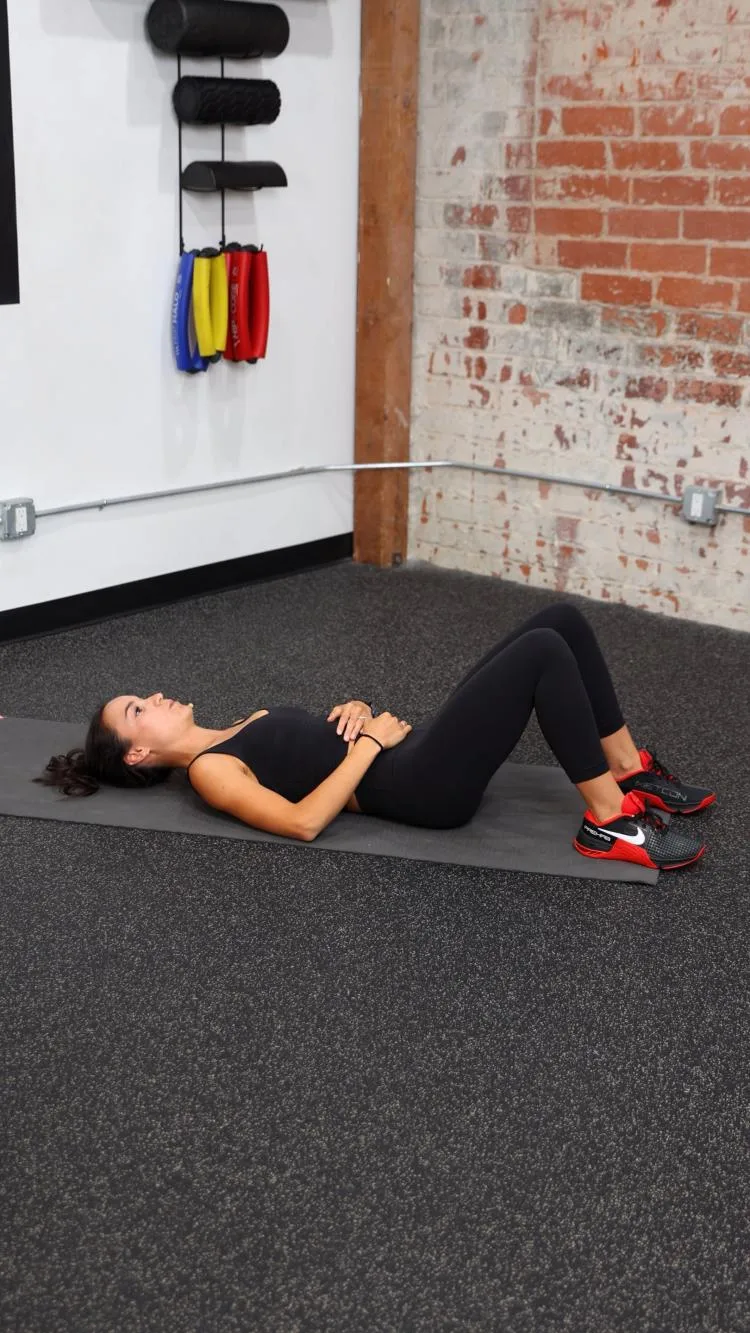
Supine Pelvic Floor Contraction
View exercise instructions
- HOW: Begin by lying on your back with your knees bent, feet resting on the ground. Place both hands on the belly. Breathe in, and as you breathe in, relax your pelvic floor. This is the area between the sit bones. As you breathe out, engage the pelvic floor. Squeeze and lift the area between the sit bones.
- FEEL: You should feel the area between the sits bones engaging.
- COMPENSATION: Avoid flaring the ribs up.
Exercise 02 of 03
Exercise demonstration
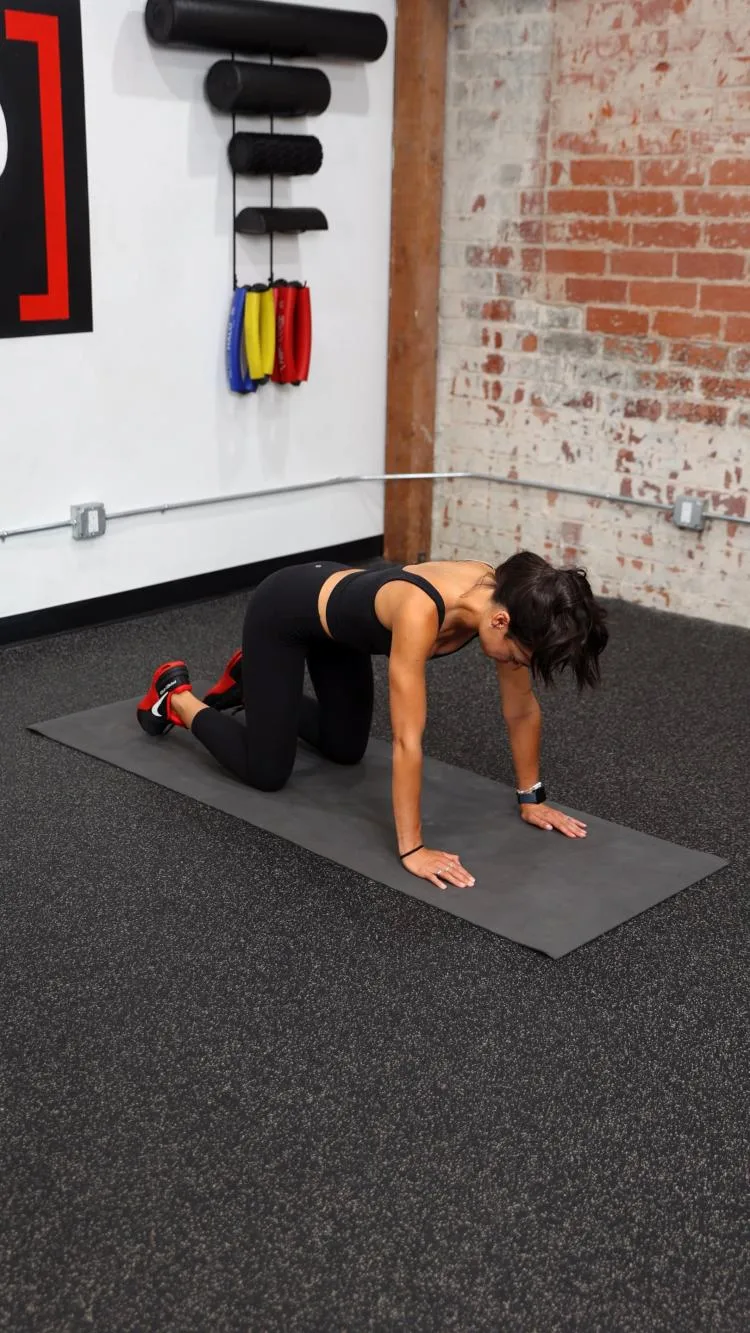
Quadruped Hold - Pelvic Floor Contraction
View exercise instructions
- HOW: Begin by positioning onto the hands and knees. Bring the ribs down to the pelvis, making the back flat. As you breathe in, drop the belly towards the floor. Fill the belly with air lengthening, flexing, and softening the area between the sits bones. As you breathe out, keep the ribs down toward the pelvis squeezing and lifting the pelvic floor.
- FEEL: You will feel your belly expanding on the inhale and your core contracting on the exhale.
- COMPENSATION:Avoid arching the back. Avoid twisting through the trunk.
Exercise 03 of 03
Breaking down big goals into smaller, achievable goals can be a huge mental win for so many. If you are navigating returning to run postpartum and are experiencing musculoskeletal discomfort, incontinence, pelvic heaviness, or feelings of instability in the core and the hips this is a fantastic opportunity to work on those weaknesses as the body continues to heal. A health professional with training in pelvic health and postpartum care can appropriately prescribe strength exercises to work on noticed deficits. As runners, we all love training goals. Trying to improve strength goals, walk goals, yoga goals, or sleep goals can be a fantastic way to feel like you are working towards something.
Instead of lacing up for some miles, lace up for some bird dogs. You’ll reap the benefits.
Exercise demonstration
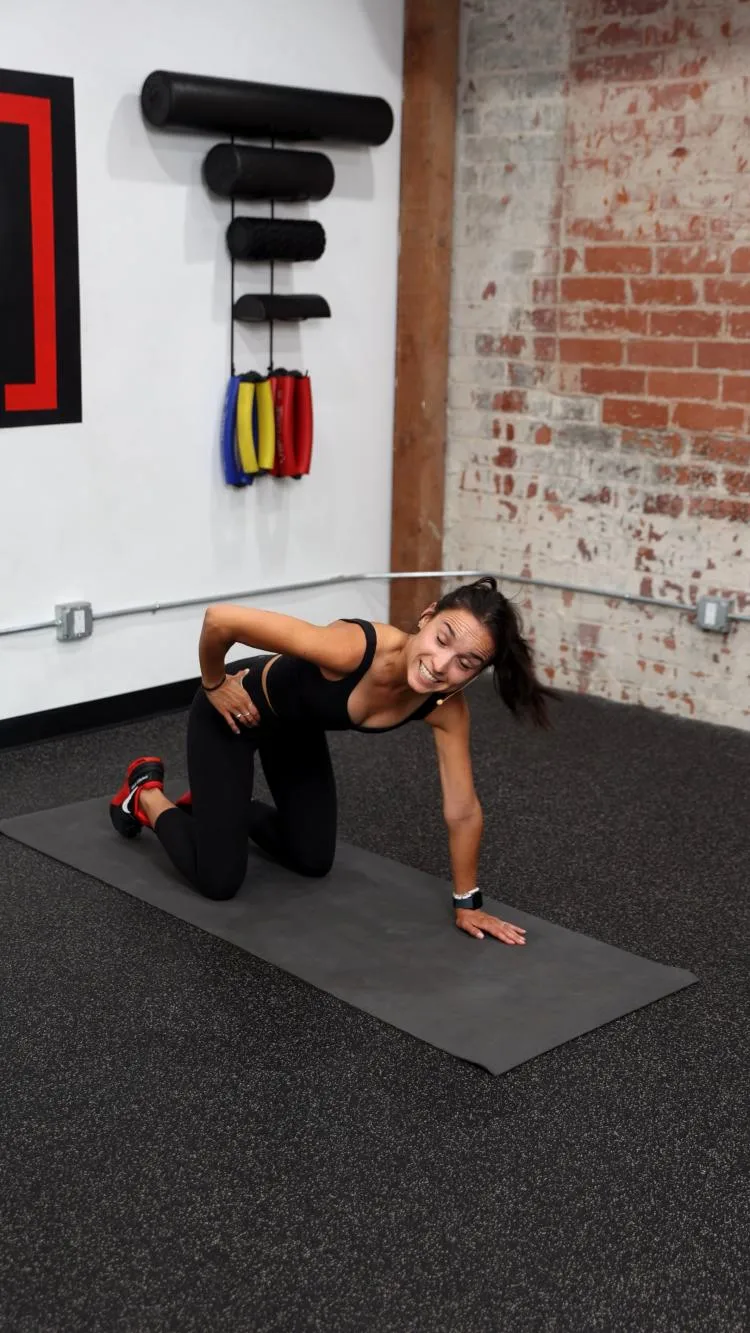
Bird Dog - Pelvic Floor Contraction
View exercise instructions
- HOW: Begin by positioning on hands and knees. As you breathe in, breathe into the belly and the area between the sits bones, letting the pelvic floor relax. Breathe out bringing the ribs down, contracting the pelvic floor as you lengthen the arm and opposite leg away from you. Return to the starting position.
- FEEL: You will feel your core, glutes, and shoulder blades working.
- COMPENSATION: Avoid arching the back. Avoid shifting or rotating the hips.
Closing Thoughts
The journey to returning to run postpartum can look many different ways and can often leave moms feeling discouraged and confused. While some individuals are able tocan return to running at a quicker pace, current guidelines do recommend a timeline of closer to three to six months postpartum prior tobefore lacing up and logging some miles.
Upon the return to running postpartum, individuals may experience musculoskeletal pain, feelings of weakness and instability in the core and hips, or urinary and fecal incontinence. While many other symptoms of pelvic floor dysfunction can present themselves, these are some of the most common. These symptoms are a direct sign that the body is not yet prepared for running, and opportunities for pelvic floor strengthening and musculoskeletal strength training may be welcomed! A pelvic floor physical therapist can best guide you through an exercise program and get you well on your way to tackling pavement or trails.
Ultimately, there are 5 things that you can do to navigate the process of returning to run postpartum. These include prioritizing yourself, staying active through pregnancy, becoming best friends with a pelvic health PT partaking in a postpartum program designed by a pelvic health PT (pssst check out our program through the [P]rehsb App), breathing with your diaphragm, and starting small to work towards something big!
We spend 280 days preparing for the arrival of our child. Let’s be kind to ourselves, practice patience, and spend some time preparing our bodies to run again.
Are you ready? Get set, and go make a return to running postpartum plan.
References
About The Author
Lyndsay Centrowitz, PT, DPT
Prehab Writer & Content Creator

Dr. Lyndsay Centrowitz graduated from Colorado State University with a BS in Health and Exercise Science and a concentration in Sports Medicine. After multiple personal sports-related injuries and discovering a passion for healing through movement, Lyndsay attended Creighton University to receive her Doctorate of Physical Therapy. An avid runner herself, she has a particular interest in working with high school, recreational, and elite endurance athletes and has undergone specialty training in pelvic floor rehabilitation, postpartum care, and management of the female athlete to better serve her clientele. Through this specialty training, she has acquired a Certificate of Achievement in Pelvic Health Physical Therapy through the American Physical Therapy Association. Lyndsay now owns her own practice StrongHER in Park City, UT where she specializes in female athletics and care of pregnant and postpartum individuals. Additionally, Lyndsay is BSPTS C2 certified in scoliosis specific exercises and has found a niche working with adolescents with scoliosis to improve overall spinal health. No, you’re not seeing double! Lyndsay is an identical twin to Lauren Lynass, one of our Prehab rockstars. A native of Colorado, Lyndsay is an adventure seeker who loves to hike, camp, and race her twin sister on the mountain trails. When she isn't exploring Park City's outdoor playground, you can find her curled up with a cup of tea and a good book. Follow along @strongher_dpt on Instagram!